
The government’s administrative functions in Indonesia would be transferred from Jakarta to Kalimantan, president Joko Widodo has announced after parliament approved a new bill to set Indonesia’s new capital city.
“On this happy afternoon, I would like to convey that the government has conducted an in-depth study, especially in the last three years. As a result, the most ideal location for the new capital city is in East Kalimantan, partly in Kab. Penajam Paser Utara and some in Kab. Kutai Kartanegara.” Widodo announced the plan in 2019, but it was delayed due to the pandemic.
Pada siang yang berbahagia ini, saya menyampaikan bahwa pemerintah telah melakukan kajian mendalam, terutama tiga tahun terakhir.
Hasilnya, lokasi ibu kota baru paling ideal adalah di Kalimantan Timur, sebagian di Kab. Penajam Paser Utara dan sebagian di Kab. Kutai Kartanegara. pic.twitter.com/CjxTz3joQ4— Joko Widodo (@jokowi) August 26, 2019
The decision is based on concerns about the environmental, political and economic problems that have made Jakarta a troubled city in recent years
In addition to being one of the most overcrowded urban regions in the world, it is heavily polluted, congested with traffic and prone to flooding and earthquakes. Congestion is estimated to cost the economy $6.5 billion (Dh24bn) a year.
According to CNN “Jakarta sits on swampy ground near the sea – making it especially prone to flooding – and is one of the fastest-sinking cities on Earth, according to the World Economic Forum. The former capital has been dropping into the Java Sea at an alarming rate due to over-extraction of groundwater.”
Indonesia’s new capital city will be named Nusantara, which means “archipelago” in Javanese
Indonesian Finance Minister, Sri Mulyani, stated in a press conference that the new name, Nusantara, had been selected from more than 80 options and was chosen because it reflected Indonesia’s geography, and was iconic internationally.
Kalimantan, about 2,000 km (1,250 miles) away from Jakarta, is the Indonesian part of the island of Borneo, which it also shares with Malaysia and Brunei. Despite the move, most of Jakarta’s nearly 10 million inhabitants are expected to remain in the city, as it is projected to remain the country’s commercial and financial center.
“The location is very strategic – it’s in the center of Indonesia and close to urban areas. – The burden Jakarta is holding right now is too heavy as the center of governance, business, finance, trade and services.” Said Widodo in a televised speech.
The relocation will have five phases of development
The first phase of the project is scheduled to start in 2022 and run until 2024, with development extending to 2045. The government have examined examples of capital relocation in other countries like Brazil, whose capital moved from Rio de Janeiro to Brasilia in 1960.
The relocation of the capital is an ambitious project: It would cost $32.7 billion (466 trillion rupiah), of which 19 per cent will come from the state budget and the rest will be funded by co-operation between the government and business entities from the private sector. This price tag includes new government offices and housing for about 1.5 million civil servants.
Environmental activists have warned the move risks accelerating pollution and contributing to the destruction of rainforests that are home to primates and mammals
East Kalimantan was entirely covered by tropical rainforest but logging and oil palm plantations as well as illegal deforestation has eliminated much of its original growth; and to make matters worse, big corporations have obtained official permits to cut down the forest to allow for their mining activities. It is home to 3.5 million people and is surrounded by Kutai National Park, known for orangutans, long-nosed monkeys and sun bears.
“We don’t want the new capital to end up just moving [Jakarta’s] problems and disasters to East Kalimantan.” Yohana Tiko, the executive director of the East Kalimantan branch of Walhi told ABC News.
The development of a new capital city, from scratch, is a major threat to the environment, especially in an area with the presence of energy extraction industries and forest fires, this could mean a risk to biodiversity and animals.
According to India Today “Critics argue that the construction of Nusantara will lead to the expansion of palm-oil plantations and logging in an area rich in diverse wildlife and lush rainforests.”
However, planning minister Bambang Brodjonegoro has assured “We will not disturb any existing protected forest, instead we will rehabilitate it.”
The government has pointed to the goal of building a smart, sustainable and green city.
Indonesia’s president stated in his 2020 Population Census’s speech, evoking an ideal urban environment: “Everything is new and renewable energy. Mass transportation is all electric vehicles, autonomous vehicles, private vehicles are also autonomous, also electric. Many people walk, many people cycle. There are no floods, no traffic jams.”
In “Analyzing the Relocation Process of the Indonesian Capital City”, Lucas Romero, an urban planning intern at Transformasi, an Indonesian think tank, explains: “It is important to see what the environmental issues are in the area planned for the capital, and then try to examine the mechanisms that the government plans to try to limit a destructive expansion.”
Widodo, highlights that the most important thing for him is the development of what he calls ‘a new civilization’, meaning a new lifestyle model. People will become accustomed to living with patterns of environmentally friendly activity.
The plan seeks for a more centralized and balanced national management, the construction of a new system and the establishment of new work and cultural patterns.
In his analysis, Lucas Romero concluded “Regulations and long term control tools for the protection of protected areas as well as the control of the consumption of local resources used are essential for the development of a sustainable city.”
EDITOR’S NOTE: THE OPINIONS EXPRESSED HERE BY IMPAKTER.COM COLUMNISTS ARE THEIR OWN, NOT THOSE OF IMPAKTER.COM
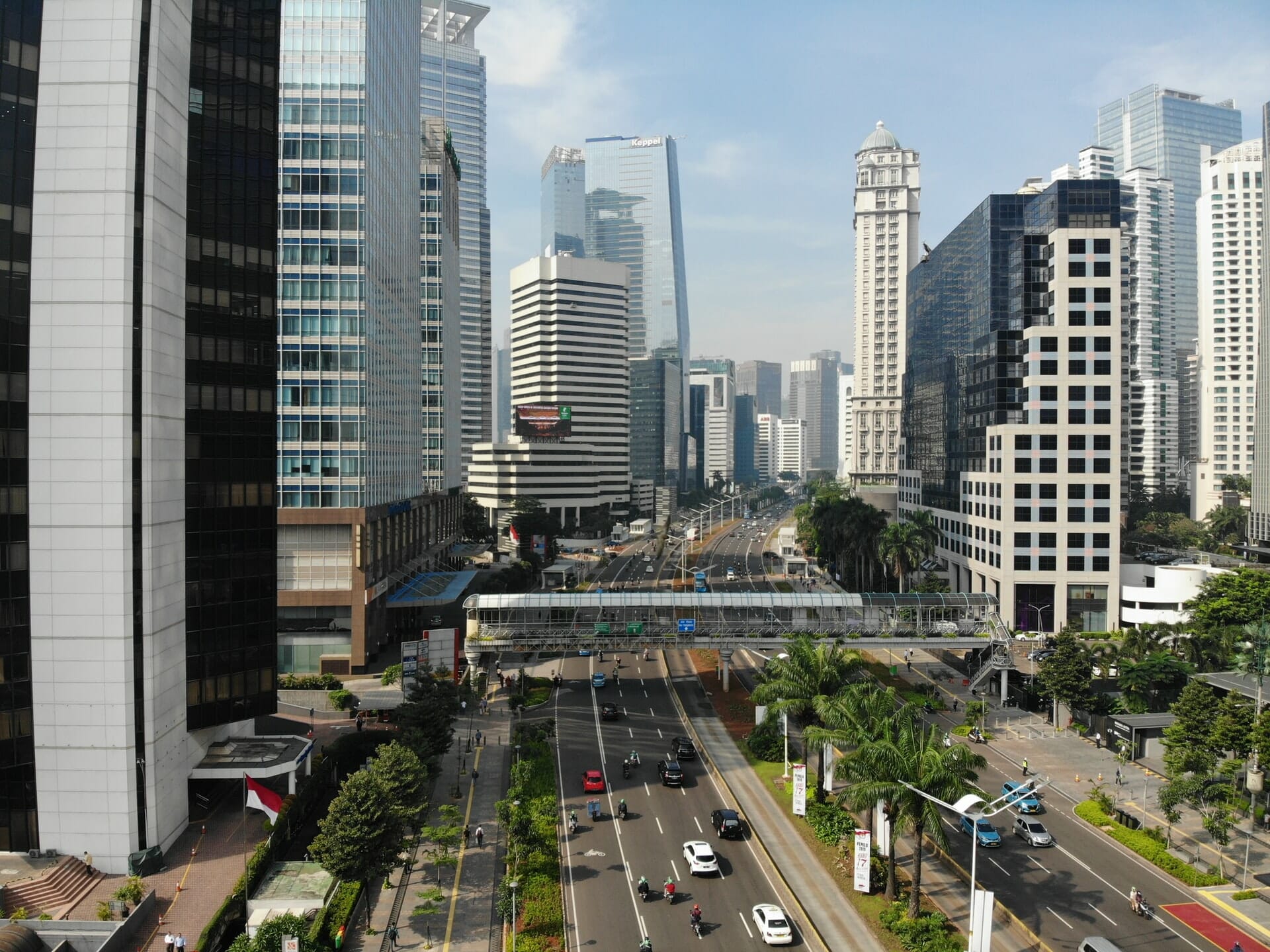
FEATURED IMAGE: Opposite the Astra Tower, South Jakarta City, Special Capital Region Of Jakarta, Indonesia. SOURCE: Afif Kusuma