Impakter
  • Environment
    • Biodiversity
    • Climate Change
    • Circular Economy
    • Energy
  • FINANCE
    • ESG News
    • Sustainable Finance
    • Business
  • TECH
    • Start-up
    • AI & Machine Learning
    • Green Tech
  • Industry News
    • Entertainment
    • Food and Agriculture
    • Health
    • Politics & Foreign Affairs
    • Philanthropy
    • Science
    • Sport
  • Editorial Series
    • SDGs Series
    • Shape Your Future
    • Sustainable Cities
      • Copenhagen
      • San Francisco
      • Seattle
      • Sydney
  • About us
    • Company
    • Team
    • Global Leaders
    • Partners
    • Write for Impakter
    • Contact Us
    • Privacy Policy
No Result
View All Result
Impakter logo
No Result
View All Result
Tropical Forests Regenerate Without Human Interference

Tropical Forests Regenerate Without Human Interference

A new study finds that tropical forest’s regrowth in just 20 years is more beneficial than human tree planting, indicating hope for climate recovery 

Henrietta McFarlanebyHenrietta McFarlane
December 14, 2021
in Climate Change, Environment
0

A new study published in Science, suggests tropical forests can regain roughly 78% of their old growth status if left untouched by humans for 20 years. This surprisingly quick regeneration has implications for how conservation efforts to preserve forests should operate in the future. The findings also indicate that it might not be too late to undo humanity’s damage to the planet. 

It is commonplace for natural regrowth to be ignored in favour of tree plantations. However, according to the lead author of the study, Lourens Poorter, natural regrowth actually produces better results than planting more trees. 

Forests previously decimated by agricultural development were able to recover in a 20-year period, scientists found. Maintaining positive results proves a new challenge. via @ScienceNewshttps://t.co/VMhqQmzvNm

— NOVA | PBS (@novapbs) December 14, 2021

Over 90 researchers from all over the world worked on this study to analyse how tropical regrowth takes place. They analysed 12 different forest attributes in over 77 sites across the tropics to examine how well they can recover. Using a technique called chronosequencing, they were able to model long term trends in forest recovery. 

They found that different aspects of the land take longer to recover than others. For example, the study states that soil takes an average of 10 years to recover from its previous state, plant community and animal biodiversity take 60 years, and overall biomass takes a total of 120 years. Many of these changes are due, in part, to a multidimensional mechanism called “secondary succession” where old forest flora and fauna help a new generation of forest growth. 


Related Articles: A Battle for the Amazon Rainforest: Are the “Lungs of the Earth” Collapsing? | 10 Major Companies Responsible for Deforestation 

So, why do we need forests?

Poorter urges people to see the value of secondary forests in biodiversity conservation, climate change mitigation, and landscape restoration. 

The World Wildlife Fund is not making an understatement when it says “forests are vital to life on earth.” They purify the air we breathe, filter the water we drink, prevent erosion, and act as an important buffer against climate change. Forests are also home to much of the world’s biodiversity as well supporting the lives of local communities. They are central in humanity’s fight to reversing the environmental impacts of climate change. 

Despite this, forests around the world are under threat from deforestation. In 2020, more than 12 million hectares of tree cover was lost in the tropics alone. With deforestation being particularly severe in some of the world’s most biologically diverse forests, it is essential that illegal logging, poor forest management practises, and growing demand for forest and agricultural products are stopped now. 
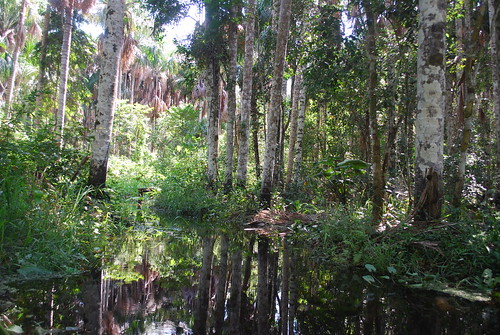
Swamp in Amazon rainforest


This study reveals that it is not enough to simply plant more trees, we have to let nature heal itself. 

In recent decades, there has been a global push from businesses, organisations and governments to plant more trees as a way of offsetting carbon emissions. However, many of the promises made to restore forests across the world by planting trees have been proven to be false. 


According to Poorter, 30-50 per cent of those trees die and only a few species are able to mimic the natural biodiversity of forests. Planting new trees has really become another variation on the theme of “greenwashing”. It is crucial that we listen to this study and stop interfering. 

Limitations of the study

Thus far, the findings of the study are merely calculations. One of the disadvantages of chrono sequencing is that every location analysed is assumed to have the same history and successional dynamics. 

However, as long as the findings are applied on a “case-by-case basis”, taking into consideration the local conditions and needs of residents, this study will provide a significant starting point for change around the way forest conservation efforts are carried out. 

Poorter concludes by imploring people to “value those secondary forests, and in areas where you can, please let those forests regrow back again naturally.” It remains to be seen whether the study will bring about any significant changes to conserving the world’s forests but it certainly reminds us again, that the less humans interfere with nature, the better.


Editor’s Note: The opinions expressed here by Impakter.com columnists are their own, not those of Impakter.com. — In the Featured Photo: Half way Up/Down Duns Falls Jamacia Looking in the Direction of Cuba. Featured Photo Credit: Rab Lawrence

Tags: deforestationforestsGreenwashingSustainabilitytrees
Previous Post

Reflections on the Future of the Planet: Antimicrobial Resistance (AMR), Leadership and Humanity 

Next Post

Healthy Beaches and Mangroves: Talking to Zsuzsanna Ferrao

Related Posts

ESG news regarding Deforestation Mandate Being Pushed; EUs Acceleration on Hydrogen and Net Zero Revolution; AT&T Will End All DEI; UK Watchdog Blocks Nike and Lacoste Ads Over Green Claims.
Business

U-Turn in Europe: Deforestation Mandate Pushed Back Again

Today’s ESG Updates EU Lawmakers Agree to Delay Deforestation Rules: The EU has delayed and simplified its Deforestation Regulation until...

byEge Can Alparslan
December 5, 2025
A Sacred Duty
Biodiversity

A Sacred Duty

As dawn breaks over the Ororubá Mountains in Pernambuco, Brazil, a group of Indigenous youth of the Xukuru do Ororubá...

byThe Food and Agriculture Organization of the United Nations (FAO)
November 25, 2025
ESG news covering the EU’s delay of deforestation rules, rising U.S. housing risks from climate impacts, IFC’s $100M clean-energy investment in emerging markets, and ABN AMRO’s appointment of a new Chief Sustainability Officer.
Business

EU Delays Deforestation Regulation Again

Today’s ESG Updates EU Delays Deforestation Law: Europe postpones the EUDR by one year and loosens compliance rules, raising concerns...

byEge Can Alparslan
November 21, 2025
Turkey to Host COP31, Australia to Lead Negotiations
ESG News

Turkey to Host COP31, Australia to Lead Negotiations

Today’s ESG Updates COP31 Host Deal: Turkey to host next year’s UN climate summit, with Australia to lead negotiations. COP30...

byLena McDonough
November 20, 2025
Encouraging Evidence of Momentum in Negotiations at COP30
Biodiversity

Encouraging Evidence of Momentum in Negotiations at COP30

With the second week of negotiations now underway at COP30, WWF is encouraged by an announcement by the Brazilian Presidency...

byWWF
November 18, 2025
nature finance
Biodiversity

New Tested and Scalable Investment Model Can Unlock Billions in Much-Needed Financing for Nature

The Landscape Finance Approach comes at a critical juncture when the global biodiversity funding gap has reached almost a trillion...

byWWF
November 14, 2025
Australia’s Clean Energy Push Faces Setback for COP31
Business

Australia’s Clean Energy Push Faces Setback for COP31

Today’s ESG Updates Australia-Turkey Standoff Puts COP31 Hosting at Risk: Australia’s plan to host next year’s climate summit is delayed...

byJana Deghidy
November 13, 2025
Native American Sovereignty
Society

Native American Sovereignty and Environmental Sustainability

Sustainability is defined as harvesting or using a resource so that it is not depleted or permanently damaged. Environmental sustainability...

byDr. Annis Pratt
November 11, 2025
Next Post
Healthy Beaches and Mangroves: Talking to Zsuzsanna Ferrao

Healthy Beaches and Mangroves: Talking to Zsuzsanna Ferrao

Recent News

ESG News regarding Microsoft’s wind power deal with Iberdrola in Spain, OECD and EPO findings on the quantum sector’s maturation, SBTi’s pilot of a net-zero standard for power companies, and the European Commission’s proposed expansion of the Carbon Border Adjustment Mechanism.

Microsoft Signs 150 MW Wind Power Agreements in Spain With Iberdrola 

December 17, 2025
Australia Social Media Age Ban

What Australia’s Social Media Age Ban Really Means

December 17, 2025
women and extreme heat

Women and Extreme Heat: Simple Adaptations Make a Big Difference

December 17, 2025
  • ESG News
  • Sustainable Finance
  • Business

© 2025 Impakter.com owned by Klimado GmbH

No Result
View All Result
  • Environment
    • Biodiversity
    • Climate Change
    • Circular Economy
    • Energy
  • FINANCE
    • ESG News
    • Sustainable Finance
    • Business
  • TECH
    • Start-up
    • AI & Machine Learning
    • Green Tech
  • Industry News
    • Entertainment
    • Food and Agriculture
    • Health
    • Politics & Foreign Affairs
    • Philanthropy
    • Science
    • Sport
  • Editorial Series
    • SDGs Series
    • Shape Your Future
    • Sustainable Cities
      • Copenhagen
      • San Francisco
      • Seattle
      • Sydney
  • About us
    • Company
    • Team
    • Global Leaders
    • Partners
    • Write for Impakter
    • Contact Us
    • Privacy Policy

© 2025 Impakter.com owned by Klimado GmbH