Climate change, future resilience, low carbon and environmental challenges are concepts we hear about very often. With the latest developments on global warming and the Intergovernmental Panel on Climate Change (IPCC) accepting that a warming greater than 1.5°C is not geophysically unavoidable, but future emission reductions will determine if and how it will occur, an increasing number of professionals and the public are exploring their relationship with nature. The momentum built in recent years in relation to the concepts of climate adaptation, land use, food security, behavioural change and a resilient way of living, recognise climate change as a concern that urgently needs to be addressed (United Nations, 2015). The landscape relates to food, agriculture, deforestation, water insecurity, urban sprawl, Greenhouse gas emissions, culture, history and also…..our identity. Therefore it is important to understand that what a low carbon landscape offers is much more than the term can describe. It is a concept supporting a new way of living, a new idea for landscape developments and the interest to climate resilience and collaboration.
In the landscape field, concepts like Design with Nature, environmental design and nature inspired solutions are not new. Although there is still uncertainty on what a low carbon landscape means and how this can be interpreted or materialised in a project. It is time to explore the role landscape design has in creating a low carbon, resilient and environmentally sound place. Whatever the term, the creation of sustainable infrastructure developments, resilient regions and communities, is necessary and can support towards awareness as well as a low carbon vision.
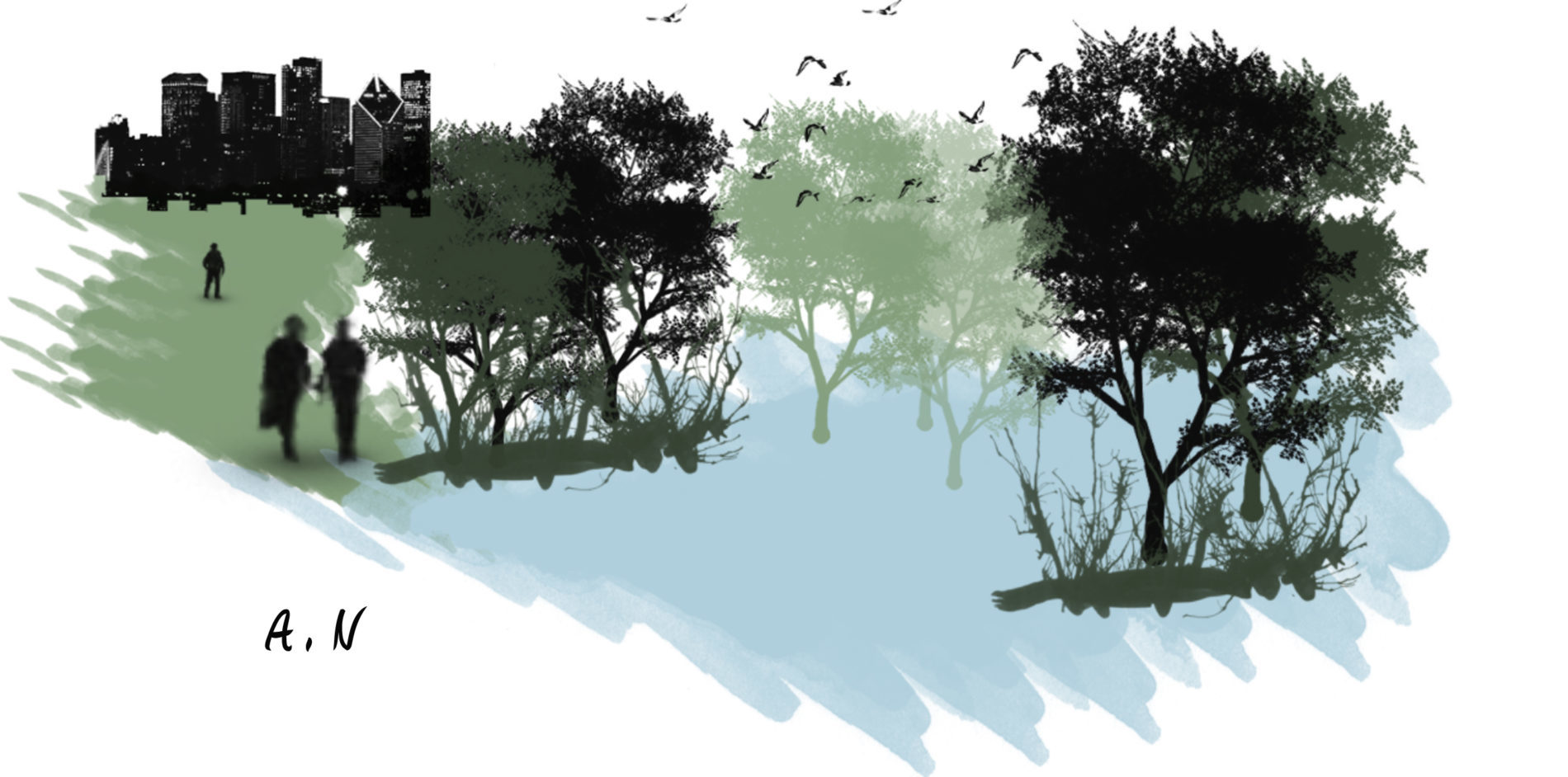
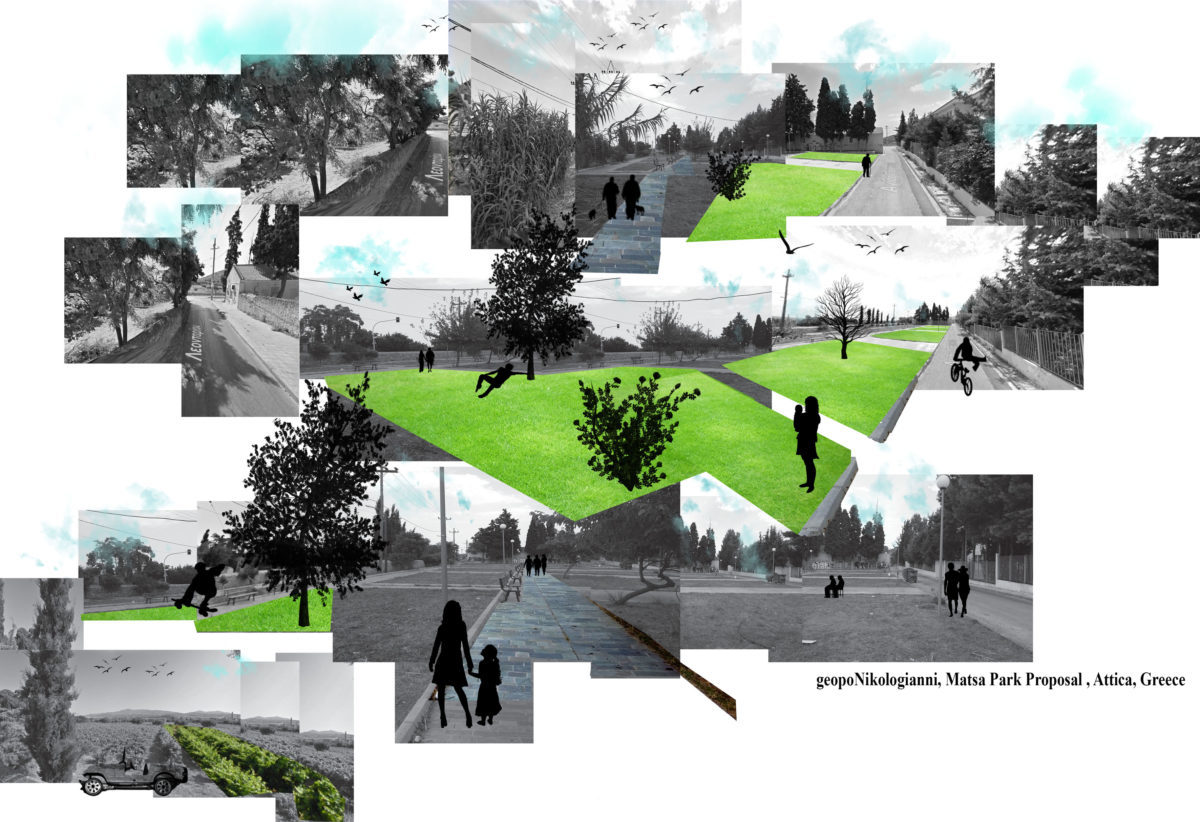
In the photo: drawing illustrating the importance of proximity to open space in urban environments Photo Credit: Dr Anastasia Nikologianni
NASA revealed that CO2 levels surpassed 400 parts per million (ppm) for the first time in recorded history in 2013 (NASA Climate, 2017). This is twice the level reached during the last Ice Age (200 ppm) and significantly higher than during the warmer interglacial periods (approximately 280 ppm). The Intergovernmental Panel on Climate Change (IPCC) shows projections that CO2 concentrations could continue to rise to as much as 500–1000 ppm by the year 2100, impacting not only on the atmosphere, but also to the environment and our daily life. It is not rare that even though people recognise climate change as the most significant challenge of our times, they still believe this to be a distant problem that affects wildlife, secluded landscapes or remote locations.
So what does a low carbon landscape mean? Is the low carbon way of living only defined by carbon footprint and the carbon cycle process? Or are these terms lacking a broader interpretation? There is much discussion around the topics of low carbon, sustainability and CO2 emissions in relation to climate change and yet their relationship to the spatial context challenges both professionals and the public. Low carbon is often treated as a gas emission indicator or a new technological approach related to climate change. But how do we create a large-scale scheme embedding environmental concepts and promoting a resilient attitude? Sustainable communities and infrastructure have begun to receive attention in the planning literature and therefore ‘plans’ are now considered either as a ‘product of the process or as a guide for promoting a sustainable community’ (Conroy and Berke, 2004). It is encouraging that such terms are starting to be linked with strategic schemes and planning, however at the moment low carbon is interpreted in relation to spatial development with a variety of different approaches. Examples such as ‘wind farm plants’, ‘solar energy’, ‘photovoltaics’, ‘energy and landscape’, and transport show that we are still trapped in the single sided view that the spatial interpretation of ‘low carbon’ is just about technological projects or the decision on the best possible location for renewable activities.
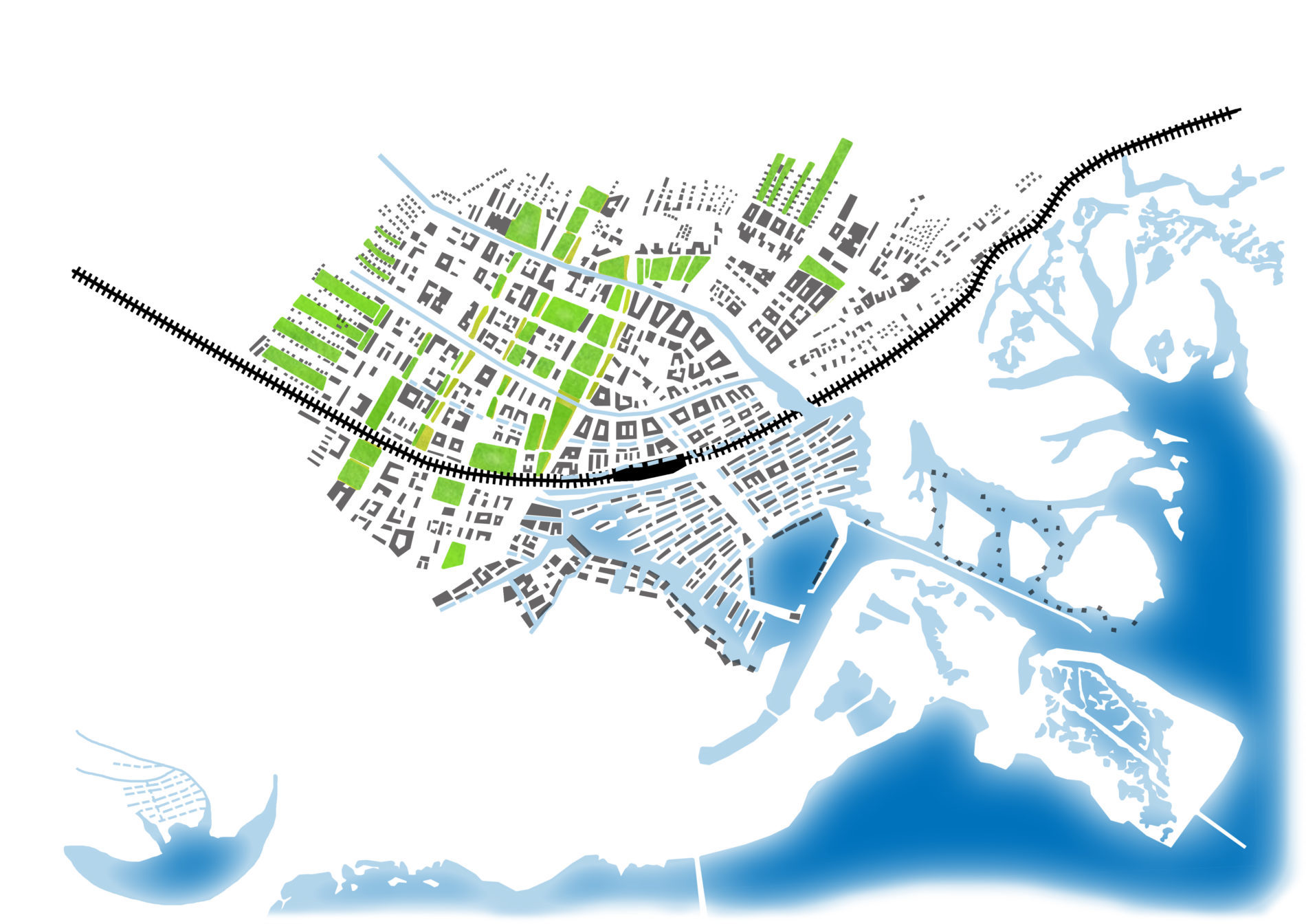
In the photo: Potential of a low-carbon landscape and the impact of water and green strategy in Stoke Harbour Photo credit: Dr Anastasia Nikologianni
It can be argued that the extreme events are inseparable from the landscape resulting to major impacts in urban and rural environments. Green House Gas (GHG) emissions can be mitigated by reducing waste, providing alternative more sustainable ways of living and through experiential learning. Design professionals play a major role in the ways in which such issues are understood, communicated, visualised and hopefully addressed. And it will not be with regard to extremes, but for a ‘new normal’ that the design and planning professions should be involved in mitigation and adaptation. There is no other way than by putting landscape at the core of development and creating a sustainable vision for the future; but for this to be achieved we need to lead the way towards a low-carbon lifestyle.
One way to improve the understanding of what low carbon means for the landscape is to examine how climate change impacts on it and the whole planet. Not only are the warmer temperatures, rising sea levels, extreme climatic effects, more frequent droughts and harder rainfalls going to affect the planet for centuries, but they all become concerns when designing, planning and managing.
Innovative landscape-based sustainable examples can be successful
The variability demonstrated between large-scale projects across the world shows that the principle of the environmental mentality at the strategic scale is feasible, and that visuals can affect the way in which a project evolves and decisions are being made (Nikologianni et al., 2016). Such landscape projects have managed to develop unique ways of delivery that suit their needs, integrating policies, legislation and various processes of project development, considering the physical, natural, cultural and social characteristics of the area, with a significant impact on low-carbon management in large-scale landscape developments. These innovative landscape schemes help us understand that the term low carbon can be symbolic to behavioural change and a new lifestyle that promotes, environmental, cultural, social, historic and economical sustainability through exploration and understanding of the land is developing (Nikologianni, 2017). The landscape designer can create a vision and interpret low carbon elements in ways that engage the visitor and promote a healthy and environmental way of living.
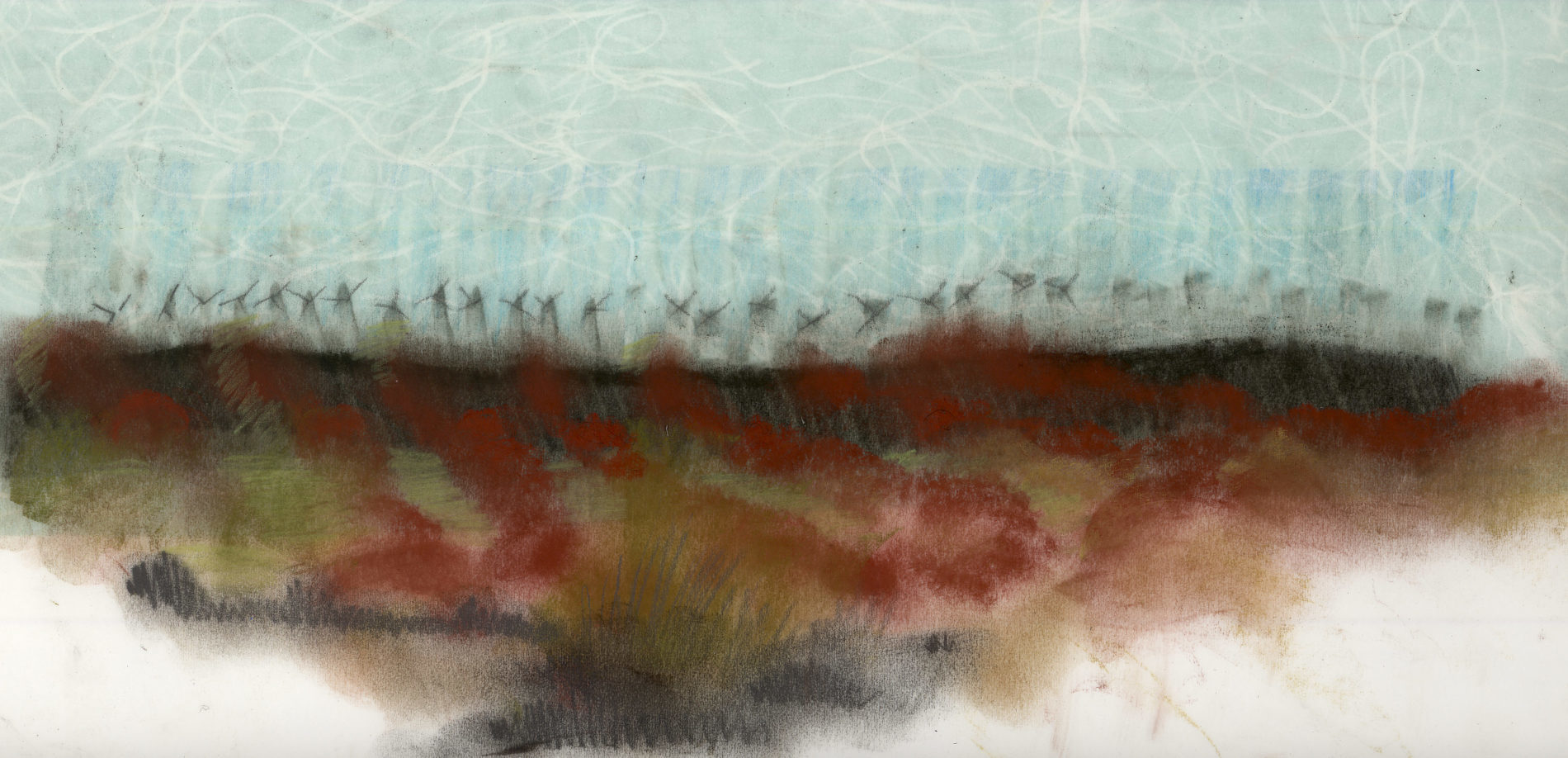
In the photo: Intensive agriculture, ecological habitat diversification and wind farms on the edge of the West Midlands Plateau Photo credit: Professor Kathryn Moore, CATiD BCU
Drawing upon innovative examples where a low carbon vision has been developed and implemented, this article introduces the climate adaptation project Room for the River and the landscape vision HS2LV. The pioneer schemes have developed individual processes through the various conceptual ideas of the landscape projects, generating a richness of interpretations and methods to make a project successful. The economic support provided in some cases shows the governmental and political commitment to design quality and environmental stability, creating a political agenda relating to such key ideas.
The Room for the River national programme of the Netherlands is one of the few examples where design, a holistic vision, a low carbon concept, multidisciplinary teams and policy are coming together. Building on the constant problem of rising sea levels the scheme provides a resilient landscape where climate adaptation meets culture, businesses, awareness and challenges on behavioural change.
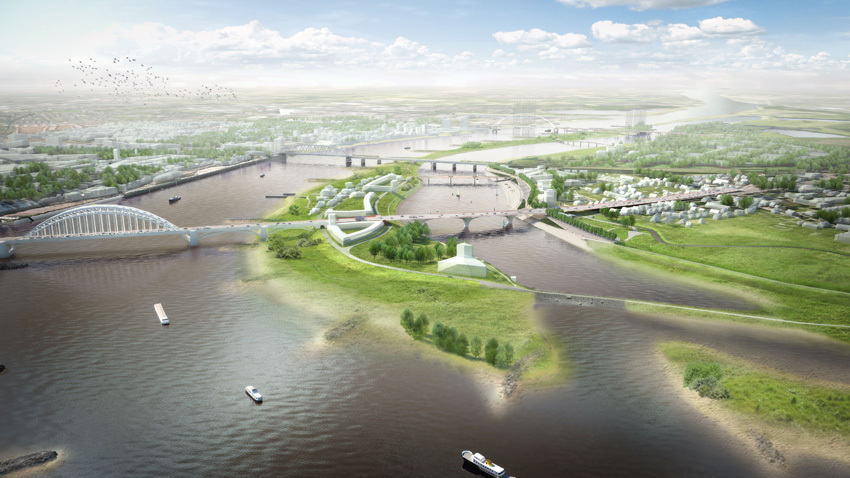
In the photo: Climate adaptation project in the city of Nijmegen, the Netherlands Photo Credit: The city of Nijmegen
The High Speed 2 Landscape Vision in the UK is changing perceptions on the importance of the landscape. Dealing with an economic and environmental proposal for the West Midlands region, demonstrates how landscape design can communicate a holistic vision for future resilience in the region.
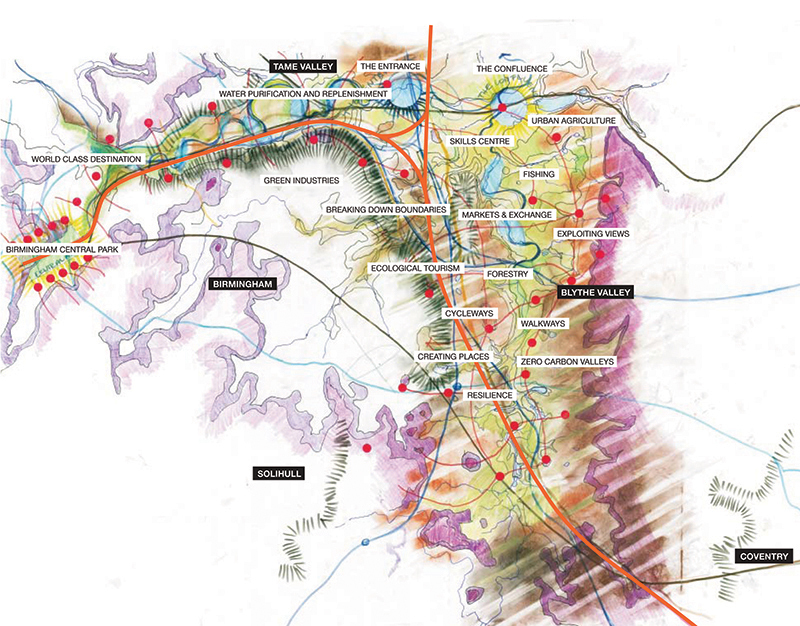
In the photo: Proposal to transform the High Speed 2 (HS2) rail link, the UK’s largest infrastructure project for generations, from a linear engineering scheme into an iconic land-scape vision. Photo Credit: Professor Kathryn Moore, CATiD BCU
The creation of a nature network, recreation opportunities, strong identity for the natural, historical and cultural structures of an area are only a few of the elements landscape design can contribute to a low carbon vision. However, for these designs to be successful they need to integrate cultural, social and historic elements that will engage the visitor and create positive memories. Places need to create a bond with the user generating behavioural change. Once this strategic vision has been created, elements such as open spaces, parks, tree avenues, interaction with water, woodlands and grasslands, cycling and walking routes, boat cruises, can be brought in to increase the absorption of the greenhouse gas emissions and ‘defend the effect’. But the practitioners’ real strength is not just providing this corner of green space that will have beneficial outcomes to counter any unsustainable behaviour. Our real strength is to educate, design, and spread awareness about such concepts through the daily routine and assist in the mitigation as well as adaptation of the climate challenges.
Through the exploration and evaluation of landscape schemes that deal with climate adaptation and mitigation on a regional scale such concepts can be addressed in a strategic level and successful examples have begun emerging across the world: showing that much can be learned from practice, however an in-depth understanding of project processes and strong communication is important.
Successful delivery of sustainable strategic schemes is not a one-way process and requires the engagement of various actions. Policies, legislation and the establishment of a project framework all have significant impact on the extent to which key ideas are being delivered at the strategic scale. Design also plays a significant communication and interpretation role for those concepts, allowing better integration in large-scale strategies. The establishment of an alternative project framework that addresses the needs of each project individually is considered necessary, but it requires support from policy and governmental legislation, especially on a broader scale. The suggestion for such a framework focuses on recognition of the increasing importance of concepts such as low carbon, climate change, spatial quality and visual representation for improved communication. Therefore a process that will successfully provide integration of all these individual elements to a large-scale scheme will be a step towards long-term and real sustainable implementation and a formula to more clearly address climate challenges through landscape architecture.