


Today’s ESG Updates
- Grid Queues Are Pushing AI Data Centres Onto Gas: Delays in connecting to national grids have produced plans for 181 gigawatts of gas generation at data centre sites in the US, UK and Europe, with the American plants alone adding about 345 million tonnes of carbon dioxide equivalent a year.
- At Cop31 the Argument Has Shifted to Household Costs:Guterres, Stiell and Kerry framed emissions cuts in Antalya as a defence against fuel-driven inflation, aiming the case at governments under pressure over living costs.
- Restricted Nvidia Chips Keep Reaching Chinese Defence Universities: A blacklisted defence university bought two H200 chips through a local reseller last month, one of several such deals visible in 26 procurement records from this year.
- Eight Foundations Back Brazil’s Forest Fund, Far Short of Target: Philanthropic donors put $85 million into a facility that needs $125 billion to meet its goal of one billion protected hectares.
Grid queues are pushing AI data centres onto gas
Developers of AI data centres in the United States, the United Kingdom and mainland Europe have proposed 181 gigawatts of on-site gas-fired capacity, according to research by BloombergNEF. The plans respond to delays in connecting to national grids. Great Britain’s entire peak demand is about a quarter of that figure.
Around 90% of the proposed plants are in the United States, where the report estimates annual emissions of about 345 million tonnes of carbon dioxide equivalent if the projects proceed. That is comparable to the yearly output of about 72.8 million petrol cars.
Mark Daly, who leads data centre research at BloombergNEF, said developers present the gas as temporary, pending grid connections. He warned that once such a plant is running, the economics tend to favour keeping it in service, which would lock in emissions for years. Quicker grid connections, the report argues, would be the better route.
In the United Kingdom, Chancellor John Healey has cleared data centres waiting for a connection to run their own fossil fuel generation on a temporary basis, under what the government calls a data centre covenant. Sites at Wapseys Wood and Quest Park are pursuing on-site gas plants after being fast-tracked past local planning authorities. Oliver Hayes of Global Action Plan said: “No one seriously believes these gas power stations will be temporary.”
Klimado – Navigating climate complexity just got easier. Klimado offers a user-friendly platform for tracking local and global environmental shifts, making it an essential tool for climate-aware individuals and organizations.
At Cop31 the argument has shifted to bills
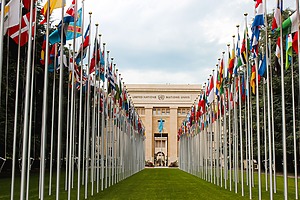
Leaders and UN officials at Cop31 in Antalya are presenting emission cuts as a way to stabilise prices and ease pressure on household budgets. Organisers adopted the framing to reach governments that have moved climate down their priorities.
Inflation provides the context. Disruption to crude oil shipments from the Middle East since the start of the Iran war has pushed up fuel and food costs. Voters registered those costs at the US midterms, where Democrats took Congress, and the same pressure weighs on governments in Europe and Asia.
António Guterres told the summit that three-quarters of the world’s population depends on imported fossil fuels and has no influence over the price swings that follow. Simon Stiell, head of the UN climate office, set out the same argument in fiscal terms, pointing to higher household bills and strained government budgets. “The political costs of fossil fuel dependency are unforgiving.”
John Kerry endorsed the shift, saying climate advocates need to change how they discuss the issue. Dan Jorgensen, the EU energy commissioner, argued that reducing dependence on fossil fuels is sound security policy regardless of one’s view on climate science. Slovenian President Natasa Pirc Musar said policy should be guided by scientific evidence rather than immediate political advantage.
Related Articles
Here is a list of articles selected by our Editorial Board that have gained significant interest from the public:
Restricted Nvidia chips keep reaching Chinese defence universities
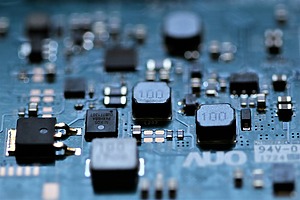
Northwestern Polytechnical University paid 874,700 yuan last month for two Nvidia H200 chips, according to a procurement record dated October 21 and first reported by Reuters. The university’s work covers military aviation, missile and satellite research, and it has sat on the US Entity List since 2001, which means American technology under export control is normally refused to it. The seller was a Chinese firm, not Nvidia.
The records point to a pattern. Defence-linked institutions are reaching American processors through local resellers, whether by purchase or by renting time on machines that hold them. In January, the same university’s cybersecurity school signed two contracts, each running seven months, for servers carrying eight H200 chips. The stated work was model fine-tuning and reinforcement learning.
The review covers 26 procurement records from this year, and comparable deals appear elsewhere. Shenzhen University took three H100 processors in September. Wuhan University of Technology acquired an H100 server in June and four A100 processors in a separate order. Beihang University, linked to the country’s aerospace and defence sector, bought four A800 chips in April.
The purchases come as Nvidia faces scrutiny in Washington. Jensen Huang has pushed Washington to ease the limits on AI chip sales to China. Three Republican committee chairmen have asked to be briefed by him on November 18, following reports of his contacts with a person alleged to work for Chinese intelligence.

Eight foundations back Brazil’s forest fund, far short of target
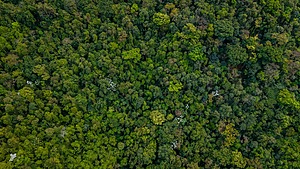
Brazil’s Tropical Forest Forever Facility picked up $85 million in pledges at Cop31 on Wednesday, from eight philanthropic donors. The Nature Conservancy, Conservation International, Minderoo, Quadrature, the Children’s Investment Foundation, the Bacon Foundation and the Packard and Moore foundations are on the list. None of them said when the money would be paid.
The facility dates from Cop30, held in Brazil a year ago. It is built to pay roughly $4 for every hectare of tropical forest left standing, with around 80 developing countries eligible to receive it. The full ambition is $125 billion, enough to cover one billion hectares.
President Luiz Inácio Lula da Silva told the leaders’ summit that $7.8 billion has come in so far through international partnerships, and that the total should pass $10 billion by the end of the year. Forests are widely valued, he said, but nobody is yet paying for them “at the scale needed.”
Sixty-seven countries and the European Union stand behind the facility, and between them they hold nine-tenths of the planet’s tropical forest, by the fund’s own reckoning. The donors want governments and other backers to follow, with this year’s goal still unreached.
Editor’s Note: The opinions expressed here by the authors are their own, not those of impakter.com — Cover Photo Credit: panumas nikhomkhai