
EDITOR’S NOTES: THIS PIECE WAS AUTHORED BY Betsy Beaumon. Betsy is the President of Benetech: A Silicon Valley non-profit, whose mission is to create scalable technology solutions for communities in need, including the human rights sector. THIS PIECE IS PART OF A SERIES EXPLORING THE SUSTAINABLE DEVELOPMENT GOALS. SEE THE INTRODUCTION TO THE SERIES HERE.
The United Nations 2030 Agenda for Sustainable Development, outlines a bold vision in which all of the world’s 7,000,000,000+ inhabitants, are empowered to reach their full potential. Together, the 17 Sustainable Development Goals (SDGs), 169 targets, and 230 indicators not only provide an inspiring vision for the world, but also a framework for measuring progress. It is now up to the government of each Member State along with the global community of stakeholders to make the SDG’s ambitious vision a reality.
At the heart of the SDGs, is the necessity to establish data-driven baselines and to track progress at the global, national, and sub-national levels. According to the Global Action Plan for Sustainable Development Data;
Quality and timely data are vital for enabling governments, international organizations, civil society, private sector and the general public to make informed decisions and to ensure the accountability of representative bodies.

IN THIS PHOTO: “United Nations conference with disabled and non-disabled people” PHOTO CREDIT: Getty Images /abalcazar
This clearly articulated data imperative must serve as a rallying cry for the global SDG community. High-level government data mechanisms exist, and organizations such as Global Partnership for Sustainable Development Data are at the center of harnessing data to address SDG efforts. But the SDG data imperative must not stop with governments; every non-governmental organization (NGO) working toward the SDGs must build data collection and analysis into every facet of its work. As stated in the Addis Ababa Action Agenda of the Third International Conference on Financing for Development: “National statistical systems have a central role in generating, disseminating and administering data. They should be supplemented with data and analysis from civil society, academia and the private sector.”
PHOTO CREDIT (as below): Benetech
 Benetech, a non-profit focused on empowering communities in need through scalable software solutions, and where I serve as President, defines the SDG data imperative for international organizations and civil society in terms of Data for Action and Impact:
Data for Action is data used to respond to today’s needs, to manage teams better, and to improve efficiency.
Data for Impact is data used to establish interventions that lead to lasting change.
For example, Data for Action for an NGO focused on SDG 10: Reduced Inequalities could be the number and locations of local healthcare providers that restrict access based on gender orientation, disability, race, ethnicity, origin, religion, or other status. The Data for Impact may be the increase of inclusive clinics over time, and more broadly, the change in how many people from key populations access healthcare in a region resulting in improved health outcomes.
Data for Action and Impact, are inherent to each SDG Member State’s commitment to disaggregate data by various demographics “to ensure that no one is left behind.” Collecting and analyzing such disaggregated data is a challenging commitment.
The reality is that the most vulnerable members of society—those most likely to be left behind—are also the groups most underrepresented in data collection efforts. Many of the organizations serving these vulnerable groups, the organizations that could best help to augment and corroborate government reporting; lack the technical expertise, tools, and funding to accurately and regularly collect data. When they do collect data, it is typically in isolation from other efforts and related organizations.
For these reasons, Benetech is on a mission to empower organizations around the world to collect quality, timely, and reliable data for action and impact starting with one of the world’s most vulnerable populations, People with Disabilities (PWD).
VIDEO CREDIT: Devex
There are more than 1,000,000,000 PWDs worldwide. Luckily, many governments are improving their collection and reporting of PWD data due in large part to the 2006 United Nations Convention on the Rights of People with Disabilities (CRPD). Those efforts provide a data foundation but just scratch the surface of the insights needed to determine the true level of attainment across the SDGs for the vast and diverse PWD population.
Benetech’s proposed strategy to achieve this massive data-driven undertaking by 2030; relies on a global network of disability-focused NGOs, PWDs, Disabled Persons Organizations (DPOs), data experts, philanthropists, and governments. Together, these groups must identify, collect and analyze SDG data for action and impact that allows each organization to deliver greater impact to more people.
First; philanthropists and governments must prioritize funds for SDG data for action and impact. These funds must ensure that NGOs and local DPOs can participate and that each participating organization understands the benefits of data to its direct work—their data for action—and to address the time and technical challenges inherent in data collection and analysis. With the advent of the smartphone, the fundamental technology platform already exists to allow participation by putting data reporting power into the pockets of individuals across the world. Funds for training, capacity building, secure mobile data collection applications, and ongoing data management must become a philanthropic priority.
Related article: “PROFILA: A CONSUMER’S DESIRE FOR PRIVACY AND DATA”
Second; a global group (or groups) of disability data experts, NGOs, DPOs, and PWDs must develop standardized questions that on-the-ground DPOs can use to collect data that provide a meaningful rollup to the SDGs and the CRPD. The data group(s) should build on existing data norms and standards, leveraging the work set forth by organizations including the Washington Group on Disability Statistics.
Third; sub-national organizations with similar missions must come together to set data collection and reporting goals that advance their individual and collective work. These data collaboration groups can leverage standardized questions from the global sphere as a foundation, adding country or issue-area specific questions as needed to extract more insights. However, the effort to identify and bring together sub-national organizations should not wait until global standardized questions are fully established. Global efforts will evolve over time, likely in conjunction with national and sub-national projects. Additionally, since local and regional DPOs are often starting from a point of minimal data expertise, initiating partnership, capacity building, and data collection among collaboration groups is a critical activity that must begin as soon as possible. Over time, these mission-aligned collaboration groups supplementing and corroborating Member State data at the sub-national level will grow to encompass national and global ecosystems of mission-aligned organizations.
A fundamental component of this strategy, is enlisting the support of PWDs in conjunction with DPOs to participate at all levels, including data collection and reporting about their daily experiences. Individuals with disabilities could seamlessly leverage the data expertise built into accessible mobile data survey templates, contributing to a measurement baseline and providing another path to track ultimate progress. People with disabilities will be empowered to speak out and become part of the solution. The NGOs, DPOs, and their funders can use this additional data to inform what services are most urgently needed and the end result of interventions, their data for impact.

IN THIS PHOTO: “Disabled Youth Plead for Inclusion at UN Meeting on Disability Rights Treaty” PHOTO CREDIT: UN Photo /Eskinder Debebe
A vision as grand as the SDGs requires bold ideas to make it a reality. My bold vision is uniting a global network of disability-focused NGOs, PWDs, DPOs, data experts, and philanthropists to ensure no person with a disability is left behind.
The clock is ticking toward 2030. I hope you join me on this incredibly important journey.
Recommended reading: “EMPOWERING COMPETENCY: WORKING TOWARD A JUST AND EFFECTIVE DEVELOPMENT”
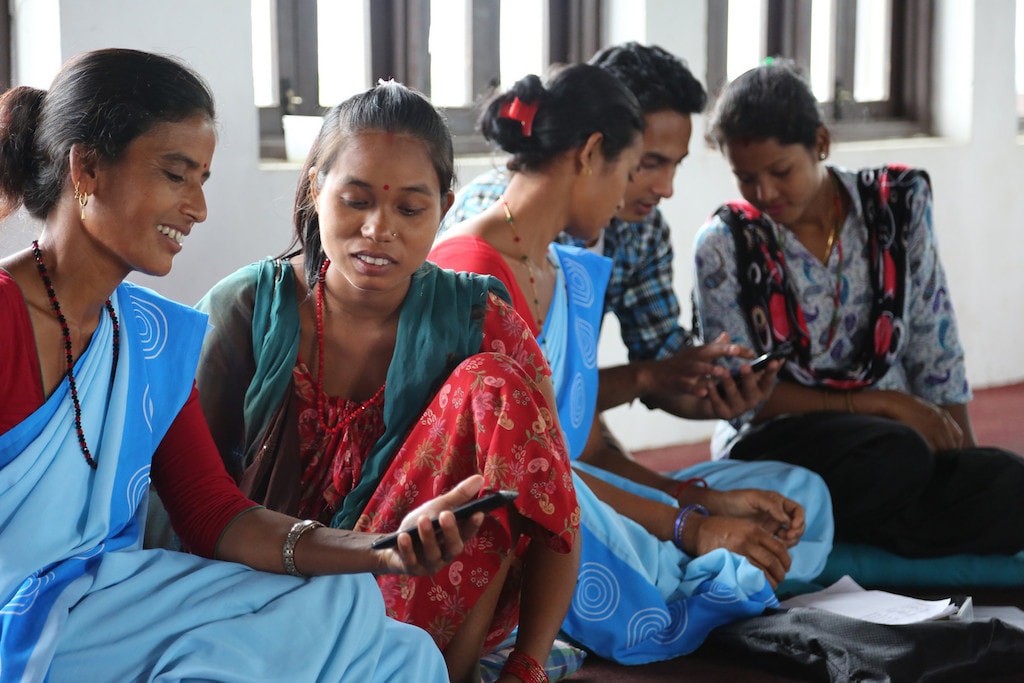
EDITOR’S NOTE: THE OPINIONS EXPRESSED HERE BY IMPAKTER. COM COLUMNISTS ARE THEIR OWN, NOT THOSE OF IMPAKTER. COM. IN FEATURED PHOTO: “Women in Nepal receive prenatal care via mobile app” PHOTO CREDIT: Amakomaya Gallery
To learn more about Benetech, you can find them on: Facebook, Instagram, Twitter, LinkedIn and YouTube.