Impakter
  • Environment
    • Biodiversity
    • Climate Change
    • Circular Economy
    • Energy
  • FINANCE
    • ESG News
    • Sustainable Finance
    • Business
  • TECH
    • Start-up
    • AI & Machine Learning
    • Green Tech
  • Industry News
    • Entertainment
    • Food and Agriculture
    • Health
    • Politics & Foreign Affairs
    • Philanthropy
    • Science
    • Sport
  • Editorial Series
    • SDGs Series
    • Shape Your Future
    • Sustainable Cities
      • Copenhagen
      • San Francisco
      • Seattle
      • Sydney
  • About us
    • Company
    • Team
    • Global Leaders
    • Partners
    • Write for Impakter
    • Contact Us
    • Privacy Policy
No Result
View All Result
Impakter logo
No Result
View All Result
social media fact-checking

Why Social Media Fact-Checking Promised Too Much

Many lament social media companies are dropping independent fact-checking but perhaps "false-checking" is a more honest and achievable target

Will Grant - Associate Professor at the Australian National UniversityFabien Medvecky - Associate Professor at the Australian National UniversitybyWill Grant - Associate Professor at the Australian National UniversityandFabien Medvecky - Associate Professor at the Australian National University
February 14, 2025
in Business, Society
0

Fact-checking has gone out of fashion, at least for much of the social media “broligarchy” — that billionaire tech group typified by Meta boss Mark Zuckerberg and X’s Elon Musk.

Zuckerberg announced earlier this year that Meta had disbanded Facebook and Instagram’s independent fact-checking programme. Meta will instead use a form of Community Notes, similar to that introduced by X after owner Musk dumped third-party fact-checking when he bought the company, then known as Twitter, in 2022.

Instead of independent experts being used to verify information in a third-party model, the Community Notes model leaves it to the social media community to decide if posts are potentially misleading.

This has led to concerns there will be an onslaught of conspiracies and misinformation. But while that’s certainly a danger, those in what could be called the “fact-hunting world” might caution against simplistic assertions of fact.

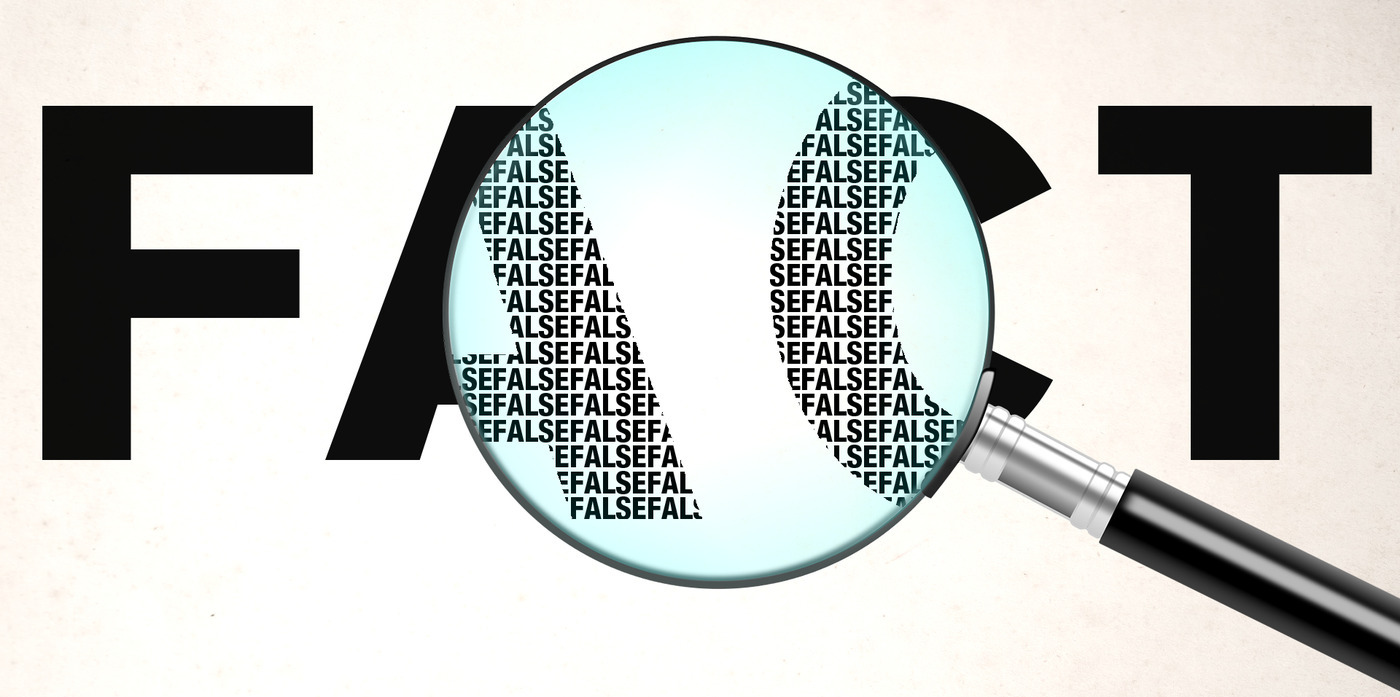
There is a strong argument that true fact-checking might always have been unobtainable and that “false-checking” — or calling out obviously false statements — might be a more realistic goal.

The problem with fact-checking

Ironically, a test used to identify people most likely to subscribe to conspiracies hints at some of the obstacles to genuine fact-checking.

The Generic Conspiracist Beliefs Scale is popular in academic psychology for measuring how likely someone is to think in conspiratorial ways.

The scale does not measure how much someone follows a particular conspiracy theory — for example, “the moon landing was faked,” “the Kennedy assassination was an inside job” or “Harold Holt was taken by a Chinese midget submarine” — but instead how likely they are to endorse any alternative explanation for how the world works.

You can see this in the 15 statements the scale asks participants to consider, which include:

  • “The government is involved in the murder of innocent citizens and/or well-known public figures, and keeps this a secret.”
  • “The power held by heads of state is second to that of small unknown groups who really control world politics.”
  • “Secret organizations communicate with extraterrestrials, but keep this fact from the public.”

Someone who ticks “agree” to lots of these sorts of questions is probably more likely to accept a particular conspiracy theory.

But if you look at some of these questions more carefully — as others have done in the past — a more complicated picture emerges.

Consider question 10: “New and advanced technology which would harm current industry is being suppressed.” Here the decades-long campaign by the fossil fuel industry against decarbonisation could be seen as a good example.

Or question 5: “Groups of scientists manipulate, fabricate, or suppress evidence in order to deceive the public.” Sadly, it has been well-established that fraud can — and does — occur in a range of academic settings.

Some facts about “facts”

Many have condemned Meta’s decision to abandon independent fact-checking, suggesting it is opening up a world of heightened conspiratorial thinking.

That’s probably true but perhaps it is also time for those who like the idea of good knowledge to consider the construction of facts with more care.

Even assertions of fact stemming from the world of science — for example, the assurance early in the COVID-19 pandemic that wearing masks wasn’t important — can quickly unravel.

This leads to a direct loss of trust in science and government.

Facts just aren’t that simple: there is actually relatively little known about the world with the certainty that’s implied by the term “fact.”

Scientists — or indeed anyone in the fact-hunting world — tend to talk less in terms of facts and more in probabilities and likelihoods. For example, the Intergovernmental Panel on Climate Change typically avoids bold statements of facts about climate change, instead presenting its conclusions qualifiers like “very high confidence” or “likely.”

Sure, this is messier, muddier, less sure-footed communication, but it’s a little more humble. It’s a little more honest about what is and is not known with certainty.

Perhaps fact-checking should be considered in this light.


Related Articles: The Fox in the Henhouse: On Steven Brill’s ‘The Death of Truth’ | Can ‘Prebunking’ Outpace Fake News? | How Education and Social Media Regulation Can Combat Science Denial | Is Wikipedia Furthering Climate Denial and Other Conspiracy Theories? | Going Beyond Fact-Checking to Tackle Conspiracies | How Misinformation, Disinformation and Hate Speech Threaten Human Progress

In a sceptical world, there should be a distinction between acknowledging there are facts and that they might be known, but also that, in some cases at least, the truth can never really be confirmed.

It’s well accepted that it’s much easier to prove something is false (falsification) than to prove it is true (verification). Indeed, this realisation underpins much of modern science.

If verifying facts is so hard, the fact-checking challenge becomes how far from “not false” is good enough.

Fact-checking is complex and nuanced. There is a difference between providing the analysis of claims, like the ABC used to do, and only highlighting what is viewed as misinformation and then linking to fact-checking, which is what Meta did.

And there are questions over what level of information fact-checking should target: should it examine a single claim, an article, or go all the way to the group, individual or company making the claims? In the past, Meta has talked in terms of posts, pages and groups.

So what can be done in the current climate?

It is good to call out falsehoods wherever they are raised but it’s also important to be a little more humble when claiming to be asserting “facts.”

In that context, “false-checking” might be a more honest — and more achievable — aim than fact-checking.

** **

This article was originally published by 360info™.


Editor’s Note: The opinions expressed here by the authors are their own, not those of Impakter.com — Cover Photo Credit: Michael Joiner, 360info.

Tags: Community NotesConspiraciesdisinformationElon Muskfact-checkingfalse-checkingMark ZuckerbergMetamisinformationSocial mediaTwitterX
Previous Post

South Korea Fines JP Morgan, Morgan Stanley, Nomura and UBS

Next Post

Rubio Is in Talks With Russia to End the Ukraine War

Related Posts

influencer doing a makeup tutorial
Lifestyle

Turbulent Economic Times Are Reshaping the Influencer World

In an unlikely corner of the internet, between glossy skincare reviews and postcard-perfect summer getaways, the signs of a cooling...

byHannah Fischer-Lauder
November 6, 2025
Europe far-right
Society

Europe’s Far-Right Find Happy Hunting Grounds in Social Media

In the digital age, social media has become a powerful tool for connection, expression and community-building, helping reduce isolation and giving...

byAlessandra Pugnana - Research Analyst at the Italian Team for Security, Terroristic Issues & Managing Emergencies (ITSTIME)
November 5, 2025
Meta to Use Chats With AI to Tailor Ads and Content: Should You Be Concerned?
AI & MACHINE LEARNING

Meta to Use Chats With AI to Tailor Ads and Content: Should You Be Concerned?

The evolution of technology has brought with it an unprecedented capacity to collect, analyse, and monetise personal data. Today, big...

byYuxi Lim
October 15, 2025
US Supreme Court to decide legality of Trump’s tariffs amid global trade tensions, Lawyer Mark Zuckerberg sues Meta after his account kept being deactivated, Amazon accused of firing 150 unionized third-party drivers in Queens, Teamsters say, US fashion brands fear anti-American backlash abroad after Trump’s tariffs and policies
Business

Trump’s Tariffs Face Supreme Court Test That Could Reshape US Trade Policy

Today’s ESG Updates Trump’s Tariffs Head to Supreme Court: Justices will decide if his sweeping duties are lawful — a...

byAda Omar
September 9, 2025
Elon Musk’s xAI sues OpenAI and Apple over AI and smartphone monopoly claims, Marks & Spencer opens eBay store for preloved clothes with Oxfam partnership, Keurig Dr Pepper buys Peet’s Coffee owner JDE Peet’s in $18B deal, plans corporate split, India’s data centre industry expands with $6.5B in investments but faces energy and water challenges.
Business

Musk’s xAI Sues OpenAI and Apple, Alleges Conspiracy to Control AI and Smartphones

Today’s ESG Updates Musk Takes Apple and OpenAI to Court: Elon Musk’s AI startup xAI claims the companies struck an...

byAda Omar
August 26, 2025
Tesla vs. Waymo robotaxi
AI & MACHINE LEARNING

Tesla vs. Waymo: The Trillion Dollar Robotaxi Battle

A rundown of the essential differences between Tesla's and Waymo’s robotaxi technology and strategy Since the early 2010s, several companies...

byMaaz Ismail
August 20, 2025
Tesla robotaxi
Society

Tesla Robotaxi Rollout: What to Know

Last month, Tesla launched its robotaxi service in a limited area in Austin, with a select number of pro-Tesla influencers...

byMaaz Ismail
July 29, 2025
climate disinformation
Environment

Climate Disinformation Is Derailing Action: What Can Be Done?

Climate disinformation is rampant and is causing havoc in the fight to save the planet and ourselves The production and...

byMaaz Ismail
July 15, 2025
Next Post
ESG news regarding Rubio to talk to Russia to end the Ukraine war, Eu president calls for stronger europe, Microsoft’s Sustainability Progress, China’s Carbon Capture Ship

Rubio Is in Talks With Russia to End the Ukraine War

Recent News

The Best Virtual Office Address In London For Your Startup

How To Choose The Best Virtual Office Address In London For Your Startup

December 5, 2025
Granddaddy Purple Strain

Where Granddaddy Purple Strain Gets Its Iconic Grape Flavor

December 5, 2025
ESG news regarding Deforestation Mandate Being Pushed; EUs Acceleration on Hydrogen and Net Zero Revolution; AT&T Will End All DEI; UK Watchdog Blocks Nike and Lacoste Ads Over Green Claims.

U-Turn in Europe: Deforestation Mandate Pushed Back Again

December 5, 2025
  • ESG News
  • Sustainable Finance
  • Business

© 2025 Impakter.com owned by Klimado GmbH

No Result
View All Result
  • Environment
    • Biodiversity
    • Climate Change
    • Circular Economy
    • Energy
  • FINANCE
    • ESG News
    • Sustainable Finance
    • Business
  • TECH
    • Start-up
    • AI & Machine Learning
    • Green Tech
  • Industry News
    • Entertainment
    • Food and Agriculture
    • Health
    • Politics & Foreign Affairs
    • Philanthropy
    • Science
    • Sport
  • Editorial Series
    • SDGs Series
    • Shape Your Future
    • Sustainable Cities
      • Copenhagen
      • San Francisco
      • Seattle
      • Sydney
  • About us
    • Company
    • Team
    • Global Leaders
    • Partners
    • Write for Impakter
    • Contact Us
    • Privacy Policy

© 2025 Impakter.com owned by Klimado GmbH