Impakter
  • Environment
    • Biodiversity
    • Climate Change
    • Circular Economy
    • Energy
  • FINANCE
    • ESG News
    • Sustainable Finance
    • Business
  • TECH
    • Start-up
    • AI & Machine Learning
    • Green Tech
  • Industry News
    • Entertainment
    • Food and Agriculture
    • Health
    • Politics & Foreign Affairs
    • Philanthropy
    • Science
    • Sport
  • Editorial Series
    • SDGs Series
    • Shape Your Future
    • Sustainable Cities
      • Copenhagen
      • San Francisco
      • Seattle
      • Sydney
  • About us
    • Company
    • Team
    • Global Leaders
    • Partners
    • Write for Impakter
    • Contact Us
    • Privacy Policy
No Result
View All Result
Impakter logo
No Result
View All Result
Methane emissions from waste

Why Reducing Methane Emissions Is Key to Sovling the Climate Crisis

In the fight against climate change, there is a focus on reducing levels of carbon dioxide (CO2) in the atmosphere generated by the use of fossil fuels. However, there is also another powerful contributor to climate change – methane

David BassbyDavid Bass
September 6, 2023
in Environment
0

A report published by the International Energy Agency (IEA) details that methane is responsible for around 30% of the current rise in global temperature since the Industrial Revolution. The main sources of methane emissions are currently agriculture, energy and waste.

“Cutting methane is the strongest lever we have to slow climate change over the next 25 years and complements necessary efforts to reduce carbon dioxide. The benefits to society, economies, and the environment are numerous and far outweigh the cost,” said Inger Andersen, Executive Director of UNEP. “We need international cooperation to urgently reduce methane emissions as much as possible this decade.”

How do methane emissions heat the planet?

When it comes to global warming, methane, a potent and second most important greenhouse gas, works alongside CO2 in a complementary way, emitting the sun’s heat back into the atmosphere as infrared radiation and trapping more energy.

This heat is made up of different wavelengths, with each greenhouse gas absorbing different wavelengths. A large amount is absorbed by CO2, but there is a window that lets some heat through. Methane blocks this window, so adding even small amounts of methane to the atmosphere can make a big difference to global warming.

“That is why molecule by molecule, adding methane is disproportionally more potent than CO2 in terms of warming,” explains Dr. Neil Donahue, an atmospheric chemist at Carnegie Mellon University.

What can be done to reduce methane emissions?

Thankfully, although methane in the atmosphere is an enormous issue, there is hope. It should be noted that methane breaks up naturally in around 12 years – whereas CO2 can take around 100,000 years.

There is also much that can be done on a practical level. Most methane emissions originate from three areas.

Agriculture is the main sector, with 40% of emissions. Of this, most can be accounted for by something called enteric fermentation – or, in plain language, cow burps. Rice cultivation and manure management contribute to this. Innovations in agricultural methods and a switch to a more plant-based diet could help reduce agriculture’s methane emissions.


Related Articles: New Research Discovers Bacteria That ‘Eats’ Methane | UAE, COP28 Host, Haven’t Reported Methane Emissions for Almost a Decade | Feeding Fish With Methane – and How It Could Offset 14% of Global Fishmeal Emissions

Accounting for 35% of methane emissions, energy is the second largest contributor by sector. Methane is emitted through oil and gas production, but interestingly, much of this is from avoidable causes such as leaking equipment and excessive flaring and venting, all of which it is possible to reduce.

Waste is the third, accounting for 20% of emissions. This includes food, paper, textile, wood, and yard waste. Among them, food waste is the main source of methane as it provides conditions such as moistness and raw ingredients that are perfect for methane production. However, there are technologies available to capture methane from these sources and turn it into a source of energy for a variety of uses.

Methane emissions food waste
In the Photo: The crisis in waste management and plastic pollution is a reflection of our unsustainable lifestyles. We are consuming and producing at an unbridled pace. Bogotá generates more than 11 million tons of greenhouse gases. Waste management is the third cause (13%) of the climate crisis and one of the main pollutants of ecosystems such as rivers, soils and wetlands. In Bogotá, the culture of separating waste at source is incipient and consequently, recycling rates are low (17%) compared to other cities. Thanks to the work of 25,000 professional recyclers, 1,600 tons of garbage are recovered daily. Photo Credit: Greenpeace.

What does the future hold for the methane problem?

There are several practical ways to keep excessive methane in the atmosphere under control. Due to its powerful contribution to the climate crisis, reducing methane emissions could directly help with the achievement of the Paris Agreement’s goal to limit the global temperature rise to 1.5 degrees Celcius compared to pre-industrial levels.

If the right measures are put into place across the energy and agricultural industries, and innovations in using waste to produce methane for energy use are implemented, the goal of fighting climate change could be aided and real progress made.


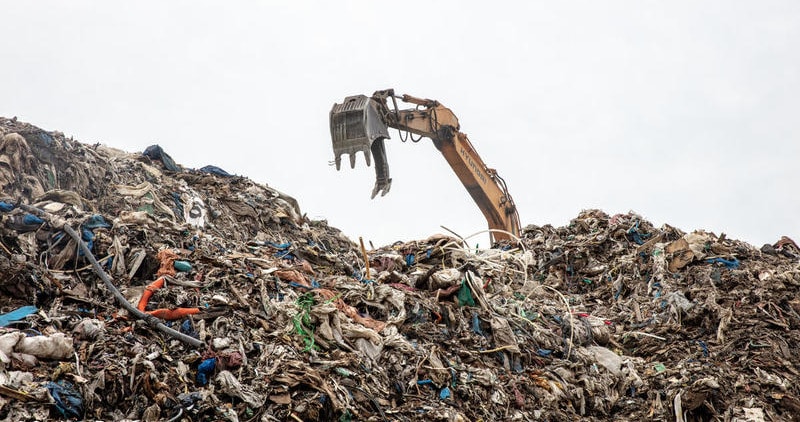
Editor’s Note: The opinions expressed here by the authors are their own, not those of Impakter.com — In the Featured Photo: An excavator is stirring the trash where a fire is expected to start, caused by the methane gas produced naturally from the decomposition of trash at and illegal plastic waste dump site in rural Uiseong, S. Korea Featured Photo Credit: Greenpeace.

Tags: Agricultureenergyfood wasteMethaneMethane EmissionsWaste
Previous Post

Draft Global Plastics Treaty Shows Promise

Next Post

Africa Climate Summit: Diverse Visions for a Resilient Continent

Related Posts

soil
Biodiversity

To Prevent Ecological Collapse, We Must Start With the Soil

Soil is the single most biodiverse habitat on Earth, home to at least 59% of all species, including over 80%...

byMarcela Quintero - Associate Director General of Research Strategy and Innovation at the Alliance of Bioversity International and CIATand1 others
December 29, 2025
AM Green and Mitsui explore investment and offtake opportunities for renewable-powered aluminium production in India
Business

India and Japan Consider Joint Move Into Green Aluminium

Today’s ESG Updates India and Japan Explore Green Aluminium Collaboration: AM Green and Mitsui are assessing investment and offtake opportunities...

byJana Deghidy
December 18, 2025
As power generation methods like natural gas, nuclear, and renewables continue to become more viable, the demand for coal is expected to decline.
Business

Global Coal Demand Has Plateaued and Might Decline by 2030

Today’s ESG Updates: The IEA Forecasts That Coal Demand Might Decline by 2030: Other power generation methods like natural gas,...

byAriq Haidar
December 18, 2025
How Climate Change Could Help Foster Peace in Yemen
Climate Change

How Climate Change Could Help Foster Peace in Yemen

Yemen's tragedy is traditionally depicted through the limited perspective of humanitarian need and political divisiveness, but there is a greater...

byTareq Hassan - Executive Director of the Sustainable Development Network Canada (SDNC)
December 17, 2025
ESG News regarding Germany’s fast-tracking of infrastructure, rollback of the heating law, digital-only approval reforms, and revised building emissions policy ahead of 2026 elections
Business

Germany Moves to Fast-Track Infrastructure, Retreats From Heating Law

Today’s ESG Updates Germany Overhauls Climate Rules: Germany moves to fast-track major infrastructure projects while replacing its contested heating law...

byJana Deghidy
December 11, 2025
Home Heating and Cooling performance
Architecture

Energy-Saving Tips for Better Heating and Cooling Performance

It creates comfort inside while also helping to lower the utility bills due to efficient temperature control. Most homes want...

byHannah Fischer-Lauder
December 9, 2025
ESG News regarding climate-driven agricultural disruption, extreme weather impacts on commodities, and supply chain risks. Visuals include flooded rubber plantations, farmers navigating waterlogged fields, and maps highlighting affected southern Thailand regions.
Energy

Severe Floods Threaten $140M of Thailand’s Rubber Production

Today’s ESG Updates Serentica Plans $8B Clean Energy Expansion in India: KKR-backed Serentica aims to more than double its renewable...

byJana Deghidy
November 27, 2025
Animal Health
Biodiversity

Better Animal Health Is the Low-Risk, High-Reward Climate Investment We Need

Imagine if there was a way to reduce emissions from the meat, egg and dairy sector by nearly a quarter,...

byCarel du Marchie Sarvaas
November 26, 2025
Next Post
Africa Climate Summit: Diverse Visions for a Resilient Continent

Africa Climate Summit: Diverse Visions for a Resilient Continent

Recent News

ESG News regarding China restricting industrial renewable exports, UN warning that US climate treaty exit harms economy, UK firms lowering wage forecasts despite inflation, Meta partnering with TerraPower for new nuclear reactors.

To Save the Grid, China Forces Industries to Go Off-Network

January 9, 2026
Cleaner Air in Hospitals

How Cleaner Air in Hospitals Can Cut Infections and Climate Impact at the Same Time

January 9, 2026
Search cleanup, key activity to protect your data and tech devices.

A Simple “Search Cleanup” Plan for Busy People

January 9, 2026
  • ESG News
  • Sustainable Finance
  • Business

© 2025 Impakter.com owned by Klimado GmbH

No Result
View All Result
  • Environment
    • Biodiversity
    • Climate Change
    • Circular Economy
    • Energy
  • FINANCE
    • ESG News
    • Sustainable Finance
    • Business
  • TECH
    • Start-up
    • AI & Machine Learning
    • Green Tech
  • Industry News
    • Entertainment
    • Food and Agriculture
    • Health
    • Politics & Foreign Affairs
    • Philanthropy
    • Science
    • Sport
  • Editorial Series
    • SDGs Series
    • Shape Your Future
    • Sustainable Cities
      • Copenhagen
      • San Francisco
      • Seattle
      • Sydney
  • About us
    • Company
    • Team
    • Global Leaders
    • Partners
    • Write for Impakter
    • Contact Us
    • Privacy Policy

© 2025 Impakter.com owned by Klimado GmbH