
As enterprises embed cloud platforms, real-time collaboration tools, and AI systems into daily operations, network reliability has quietly moved from a back-office IT concern to a board-level risk issue. A decade ago, internet connectivity was treated as a utility, something purchased once and largely forgotten. That assumption no longer holds.
Today, a company’s revenue, customer experience, and even regulatory standing can depend on whether its network stays up during a single afternoon. For senior decision-makers accustomed to thinking in terms of operational risk and capital allocation, connectivity has become core infrastructure, not a line item to defer.
The Rising Cost of Network Downtime
The financial exposure tied to outages has grown sharply in recent years. According to the Splunk and Cisco “Hidden Costs of Downtime 2026” report, the average cost of downtime has reached roughly $15,000 per minute, and the average organization loses about $300 million a year in revenue from unplanned outages. Separately, ITIC’s 2025 Hourly Cost of Downtime Survey found that 93% of enterprises with more than 1,000 employees now report that a single hour of downtime costs over $300,000.
These figures explain why more executives are treating connectivity as an insurable risk rather than a technical detail. One response gaining traction among mid-size and large enterprises is dedicated internet access, a connection type that provides guaranteed, symmetrical bandwidth rather than a connection shared with other tenants or businesses in the same building or region. For companies whose operations depend on cloud applications, video conferencing, or transaction processing, that guarantee can be the difference between a minor disruption and a costly outage.
Why Shared Broadband Falls Short at Enterprise Scale
Most standard business broadband connections are contended, meaning bandwidth is shared among multiple customers and fluctuates depending on local demand. That arrangement works reasonably well for basic email and browsing. It becomes a liability when hundreds of employees are simultaneously running video calls, syncing files to the cloud, and pulling data through enterprise software.
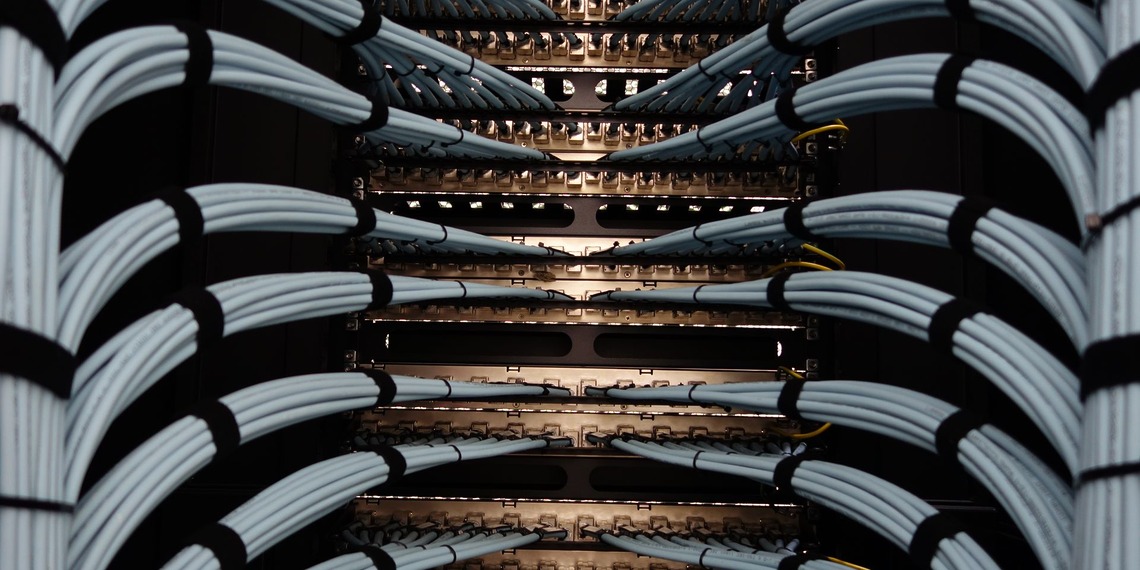
Dedicated, symmetrical connections avoid that congestion entirely. Upload and download speeds remain consistent regardless of what neighboring businesses are doing, and service-level agreements typically guarantee uptime and repair windows that consumer-grade broadband simply does not offer.
The scale of the problem is not shrinking. IT and networking issues caused 23% of impactful outages in 2024, according to Uptime Institute’s Annual Outage Analysis. Even as organizations invest in monitoring and redundancy, network-related failures remain one of the largest single causes of enterprise downtime, a pattern that has held steady for several years running.
Connectivity as a Governance and Risk Decision
Framed this way, the decision to invest in more resilient connectivity starts to look less like an IT purchase and more like a governance question, similar to how a company might evaluate property insurance or supply chain redundancy. Boards and CFOs already apply this logic to physical infrastructure. Extending it to digital infrastructure is a natural next step, particularly as more revenue-generating processes move online.
The financial stakes support that shift. Uptime Institute’s Annual Outage Analysis found that 54% of organizations reporting a significant outage in 2024 said it cost more than $100,000, and one in five reported losses exceeding $1 million. For a company generating meaningful revenue through digital channels, a single major outage can erase months of operating margin in a matter of hours.
Viewed against those numbers, a dedicated connection with a guaranteed service-level agreement functions similarly to an insurance premium: a predictable, budgeted cost that reduces exposure to a much larger, unpredictable one. Executives who have internalized this framing tend to evaluate connectivity contracts alongside other enterprise risk controls, not separately from them.
Building Resilience Into Digital Transformation
Network reliability is also becoming inseparable from broader digital transformation efforts. As companies migrate more workloads to the cloud, adopt AI-driven tools, and support distributed or hybrid teams, the bandwidth and consistency demands on their networks keep climbing. Over 65% of new dedicated internet contracts signed in 2024 were provisioned above 1 Gbps, a reflection of how quickly enterprise data needs have scaled alongside these workloads.
That trend is unlikely to reverse. AI applications in particular are sensitive to latency and interruption in ways that older, batch-oriented software was not. A model training pipeline or a real-time analytics dashboard that depends on constant data flow has little tolerance for the kind of intermittent slowdown that shared broadband can introduce during peak hours.
Companies that treat their network as foundational, rather than incidental, tend to move through digital transformation initiatives with fewer disruptions. The infrastructure decisions made now, quietly and often outside the spotlight, shape how well an organization performs when its digital dependency is tested.
Conclusion
As digital dependency deepens across every industry, the businesses best positioned to compete are the ones that treat connectivity reliability as a core component of enterprise risk management, not a discretionary upgrade left to the IT department.
That reframing does not require a dramatic shift in strategy. It requires the same discipline organizations already apply to other forms of operational risk: identifying the exposure, pricing it accurately, and investing in the infrastructure that keeps it contained.
Editor’s Note: The opinions expressed here by the authors are their own, not those of impakter.com — Cover Photo Credit: Artem Podrez.