By the evening of August 24th, the last ISIS stronghold on the Turkey-Syria border fell to Turkish military forces that had stormed the city earlier that day. Supported by American air strikes, Turkish tanks, aircraft and special operation forces cleared the city of Jarabulus for Syrian rebels, scattering ISIS fighters into the dessert night.
As successful as the operation was for Turkish forces, it came at a diplomatic cost for the United States: in addition to ridding the border of ISIS, Turkish forces actively targeted Syrian Kurdish militias, which remain American allies in the regional conflict.
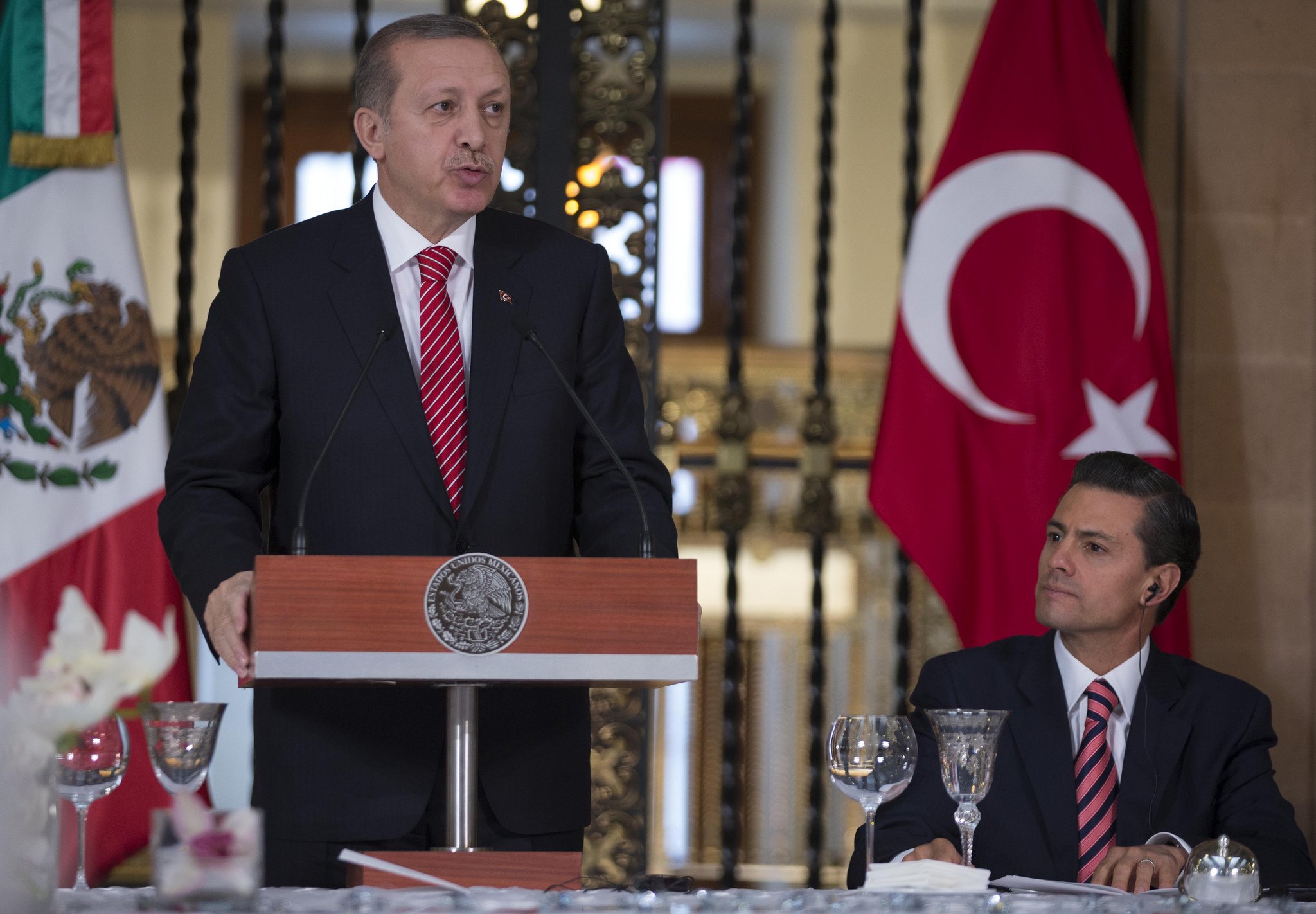
The August 24th operation represents the duality of America’s relationship with the Turkey and its leader, President Recep Tayyip Erdogan. For much of the summer, Erdogan has enforced a brutal crackdown on civil liberties in Turkey, targeting his political opposition, the Kurdish minority and, more recently, members of his own military. Nonetheless, the NATO member is seen by many as an integral ally as the military alliance works to defeat ISIS and deter Russian aggression in the region.
However, Erdogan’s new draconian policies that followed the unsuccessful July 15-15 coup have led many analysts and political commentators to call for the removal of Turkey from NATO. After all, these proponents argue, the Cold War is over and Russia no longer poses the existential threat that it once did. Furthermore, ISIS appears to have hit a wall within the natural confines that the Syrian civil war power vacuum initially provided.
So has the time come for a break with Turkey?
When it comes to geo-politics, the answer is rarely simple and therefore requires a deeper exploration of all the players and factors at a stake.
“The New Turkey”
On the morning of July 16, Turkish President Recep Tayyip Erdogan emerged from hiding shaken, but victorious. Throughout the night and into the early morning, his loyal followers had managed to crush a violent and imposing coup that threatened to topple the President’s shaky grasp of power. As Turkish civilians gathered themselves and as the death toll rose — it would ultimately hit 270 persons — Erdogan began to plan his next move that would consolidate his power indefinitely.
The Great Purge, as many media sources and analysts are now dubbing it, has been so effective in re-establishing Erdogan as the strong man leader that there has been hardly a whisper of dissent emerging from his opposition. So far, around 5000 state employees have been fired for their alleged participation in the coup and another 77,000 employees were suspended, according to the BBC. In conjunction, Erdogan and his AKP party quickly rolled out a semiotic campaign to celebrate their victory, complete with commemorations for valiant government defenders, public rallies in Taksim square and plans for future statues.
“Mr. Erdogan’s purpose is to ensure not only that nothing is lost to history, but also that this latest chapter in Turkey’s history will be largely owned by his Islamist supporters,” wrote Tim Arango for The New York Times. “In doing so, historians and analysts say, he has found an opportunity to celebrate what he has long called the ‘New Turkey.’”
“The New Turkey,” as Arango calls it, is a sharp break from the country’s secular democracy that was established by Mustafa Kemal Ataturk following the collapse of the Ottoman Empire after World War I. For Erdogan and the Justice and Development Party [AKP], the country would break with that tradition and begin to embrace an Islamist ideology. To enforce his new vision, Erdogan began an authoritarian crack down on labor groups, universities and media outlets.
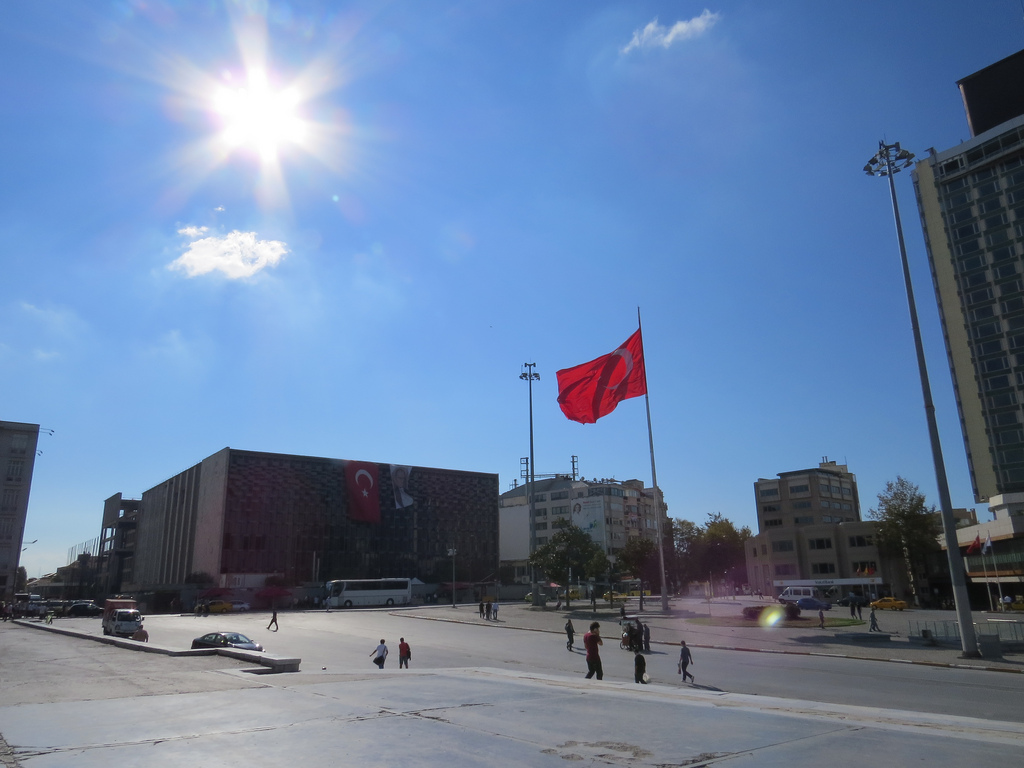
In the photo: Taksim Square, Istanbul. The site is traditionally hosts democratic demonstrations. The square is now used by the Turkish government for Islamist rallies. Photo courtesy Flickr.
“Turkey’s brief democratic moment is ending,” Doug Bandow wrote in Newsweek. “The rise of Recep Tayyip Erdogan and the [AKP] in 2002 signaled the collapse of the militarized secular republic created by Mustafa Kemal Ataturk. The recent failed coup effectively killed the semi-liberal democracy that briefly replaced Kemalism.”
Bandow contends that the Great Purge was planned well in advance and that Erdogan was waiting for such an opportunity as the July 15 coup to launch his new movement.
While the impetus of the coup is still debated — with some Turks accusing the United States of instigating the episode — some analysts have begun to demand a sharp break with Turkey, including its banishment from NATO.
A Civil Divorce?
Erdogan’s violent and unapologetic crackdown on the Turkish people was met with fervent opposition from much of Europe and the United States, where civil liberties and democratic institutions are protected and promoted. It has now become a paradox that Turkey, once an important ally in the Cold War, remains a member of NATO. Some observers, such as Bandow, don’t believe that the Middle Eastern nation, with its war against its Kurdish minority and other conflicts, would even qualify to join the alliance if it were to apply today.
“Turkey undermines U.S. and European security,” Bandow said. “As Ankara moves toward an authoritarian one-party state, a civil divorce would be best for all parties.”
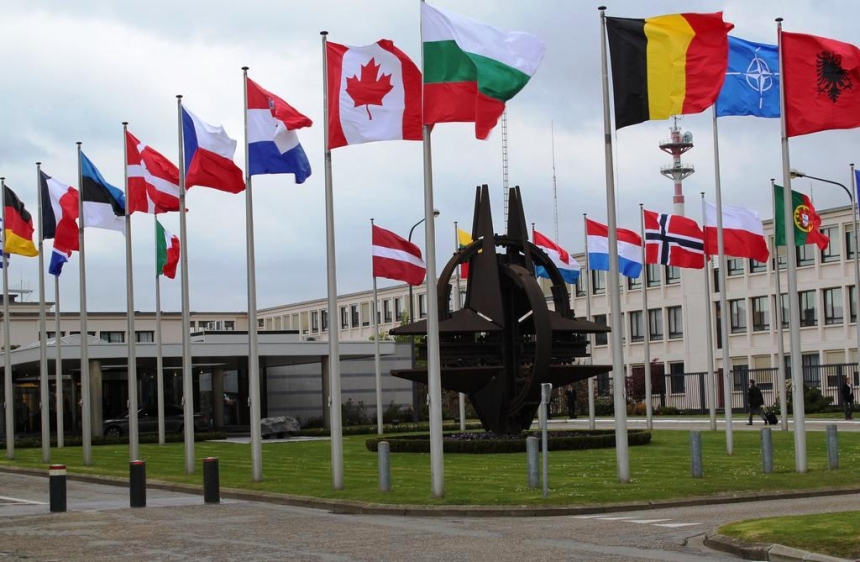 In the photo: NATO Headquarters, Brussels. Turkey has been a member of the military alliances since the 1950s. Photo courtesy of Flickr.
Although unlikely that Turkey would voluntarily leave the military alliance, it is feasible for the rest of NATO to remove Turkey from the fold. By ousting Turkey, Europe and the United States could claim a moral victory by refusing to tolerate such repression against the Turkish and Kurdish peoples.
Consequentially, NATO would be able to form a more cohesive strategy regarding the Syrian civil war. For much of the five-year conflict, Turkey has supported rebel factions that NATO and the United States oppose. NATO thus would be able to operate more in sync as it attempts to negotiate a peace and streamline military and humanitarian support to its allies in the region.
No break would necessarily be permanent, however, and NATO could ultimately welcome Turkey back into its graces after Erdogan resigned or reversed his current policies. It may also be possible to encourage Turkish reform through incentives. The carrot to NATO’s rod being the inclusion of Turkey into the European Union, a major plank in Erdogan’s 2023 Vision that he has been striving for since he first came to power in 2003.
Whether these methods could eventually compel Erdogan to return to his country’s secular, democratic tradition is the subject of much debate. Many critics of such radical proposals often dismiss hardliners as being naïve at best and irrational at worst. These critics instead argue that the Turkish alliance is too important to simply ignore and must be tolerated regardless of Erdogan’s abuses.
The Russo-Turkish Threat
Despite Turkey’s embrace of what some outsiders see as an Ottoman revival, many critics and analysts can’t bring themselves to cast aside Erdogan and his iron handed government.
Although the Cold War has remained dormant for the last quarter century, numerous analysts are in agreement that Turkey remains a critical NATO ally in the region. To the east, the Syrian civil war continues to wage as millions of refugees flood across the Turkish border and into Europe. To the north, an aggressive Russia under President Putin faces Turkey across the Black Sea.
The later threat is particularly pivotal as Erdogan may shift loyalties to Russia, thereby entering Putin’s sphere of influence as he seeks to re-establish Russian power in the region. Despite the disagreements between Russia and Turkey over the Syrian conflict, with both sides supporting rival parties, Putin and Erdogan met in St. Petersburg in early August to repair ties after nine months of diplomatic strain, the NYT reported.
“It is true that we lived through a complicated moment in our interstate relations,” President Putin said at a joint news conference in St. Petersburg. “But we all would like to — and we feel that our Turkish friends want the same — overcome those complications.”
Prior to the meeting, Erdogan had refused to apologize for shooting down a Russian fighter jet that had flown into Turkish airspace. Although Erdogan ultimately did apologize for the incident in a letter to President Putin, the Turkish leader has defied Russian interests by refusing to seal its border with Syria. To do so would effectively cut off support to rebel factions that are fighting against Syrian President Bashar al-Assad, Putin’s ally.
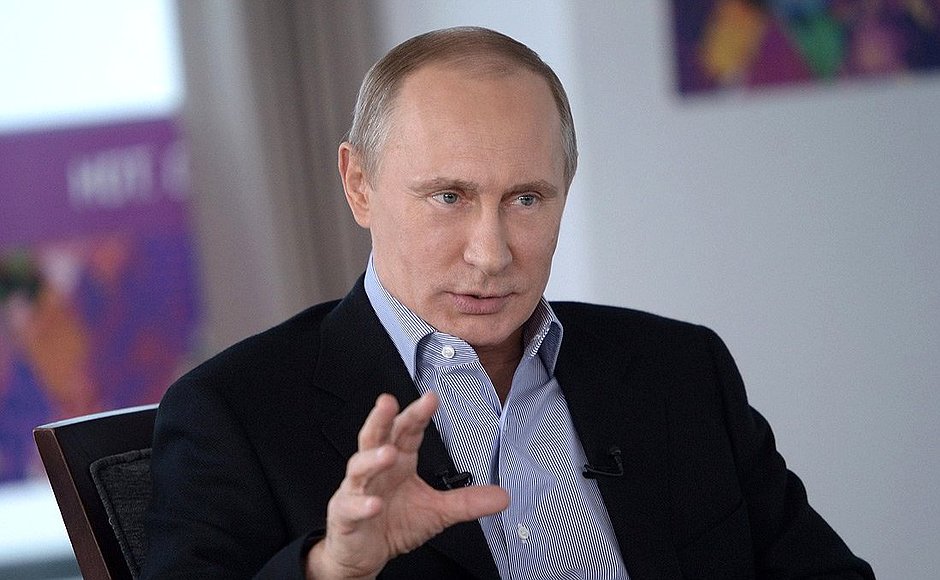
In the photo:Russian President Putin. Putin has tried to expand Russian influence in the Middle East in recent years. Photo courtesy of Flickr.
As rocky as the relationship may be, removing Turkey from NATO may nudge the Middle Eastern nation into Russia’s graces, opening a host of new complications in the Syrian civil war and on other fronts. A long term Russo-Turkish alliance could feasibly pose an existential threat to NATO and the independence of Eastern European nations.
While this last point may be dismissed as merely a fantastical geo-political war game, analysts maintain that it is nonetheless remains paramount that Turkey’s unique position at the crossroads of Eurasia can’t be forfeited for principles alone. One only has to look at the American Incirlik air base in southern Turkey to see the strategic asset of having NATO allies in such a region beset with armed conflict.
The Enemy of My Enemy…
Although Erdogan’s crackdown has been alarming to say the least, Turkey remains too vital to NATO for it to be ousted from its alliance. Russia’s bellicose policies, coupled with the chaos surrounding the Syrian civil war, have forced the United States and NATO to accept Erdogan and turn a blind eye on his policies.
Nevertheless, the United States could utilize its resources to influence the discordant Turkish leader. The Turkish military, which is significantly weaker and more vulnerable following the Great Purge, would readily employ American intelligence and technological resources that would be instrumental in thwarting future terrorist attacks and combating ISIS. Such aid could potentially persuade Erdogan to accept American input and possibly relax his hardline policies against the Turkish and Kurdish peoples.
“As threats to Turkey’s stability grow, Mr. Erdogan may become more receptive to American advice and agree to change his approach in Syria,” wrote Stephen Kinzer for NYT.
As Turkey approaches its centennial birthday, it’s important to remember that for much of its history the Middle Eastern nation has embraced secularism and democracy. Erdogan’s “New Turkey” may ultimately prove to be simply growing pains as the country adjusts to a more globalized world. For the present, however, regional crises such as the Syrian civil war necessitate that Western powers tolerate Erdogan and his government in order to promote global stability and long-term peace.