

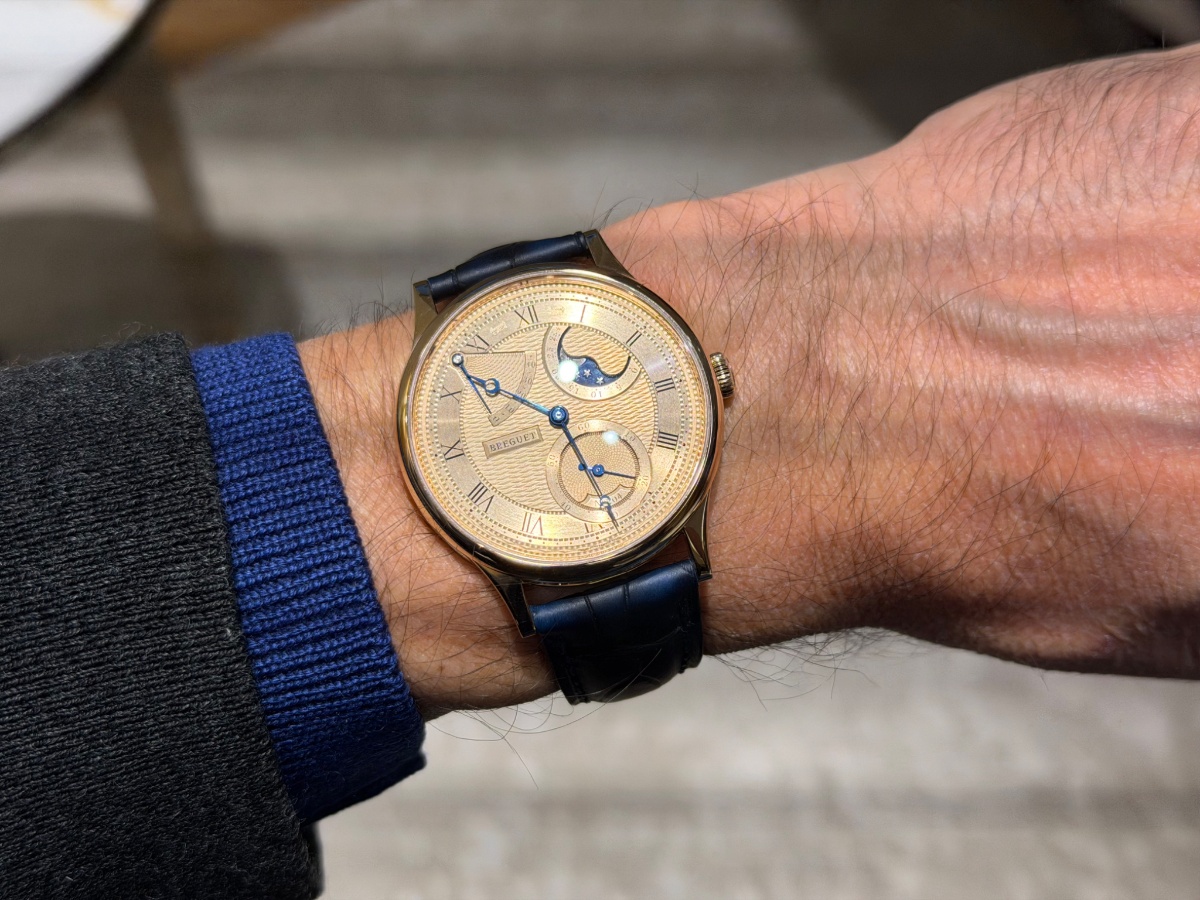
In a luxury watch, the smallest details often reveal the most about its maker. Breguet is a compelling example: the brand’s identity can be recognized in the shape of a hand, the texture of a dial, or the architecture of a movement. Its roots go back to 1775, when Abraham-Louis Breguet established his workshop in Paris.
Design Details With a Story
The slender hands associated with Breguet feature distinctive hollow, apple-shaped tips. Alongside elegant numerals and finely decorated dials, they give many models a character that remains recognizable without a prominent logo.
Guilloché is another important signature. Created by engraving repeating patterns into metal, it adds depth while helping different sections of a dial stand apart. Certain Classique models instead feature Grand Feu enamel, whose smooth surface has a different appeal. These finishes are not universal across every Breguet watch, so examining the exact reference matters.
From Classique to Type XX
Breguet’s collections offer contrasting interpretations of luxury. Classique focuses on traditional proportions, refined finishes and, in some references, sophisticated complications. Tradition turns the mechanical components into part of the visible design, bringing gears and bridges to the foreground.
Marine presents a more contemporary approach, with sporty cases and nautical influences. Type XX draws on aviation chronographs, making it attractive to buyers who prefer a functional, instrument-inspired aesthetic. Reine de Naples, meanwhile, is known for its distinctive oval case and jewelry-like presence.
The Craft Behind the Complications
Breguet’s historical contribution to watchmaking includes the tourbillon, patented by Abraham-Louis Breguet in 1801. Its rotating mechanism was devised to help address positional timing errors in pocket watches. In modern wristwatches, a tourbillon also demonstrates a high level of mechanical artistry, although it should not be treated as an automatic guarantee of superior accuracy.
When exploring Breguet watches, look beyond the complication count. Check the movement type, case dimensions, dial legibility and service requirements.
Buying With Confidence
Request the precise reference number and compare its specifications with reliable documentation. Examine the quality of the dial, engravings and case finishing, but do not rely on appearance alone to judge authenticity. Seller reputation, original paperwork, warranty coverage and service history all deserve attention.
Breguet’s strength lies in its combination of recognizable design and serious watchmaking. Choosing thoughtfully means finding the expression of that heritage that genuinely fits your taste rather than simply selecting the most complicated watch available.
Editor’s Note: The opinions expressed here by the authors are their own, not those of Impakter.com — In the cover photo: A Breguet Classique Phase de Lune watch displaying the brand’s traditional dial design, refined proportions and mechanical craftsmanship. — Photo Copyright: swisswatchesforsale.com / Link