Impakter
  • Environment
    • Biodiversity
    • Climate Change
    • Circular Economy
    • Energy
  • FINANCE
    • ESG News
    • Sustainable Finance
    • Business
  • TECH
    • Start-up
    • AI & Machine Learning
    • Green Tech
  • Industry News
    • Entertainment
    • Food and Agriculture
    • Health
    • Politics & Foreign Affairs
    • Philanthropy
    • Science
    • Sport
  • Editorial Series
    • SDGs Series
    • Shape Your Future
    • Sustainable Cities
      • Copenhagen
      • San Francisco
      • Seattle
      • Sydney
  • About us
    • Company
    • Team
    • Partners
    • Write for Impakter
    • Contact Us
    • Privacy Policy
No Result
View All Result
Impakter logo
No Result
View All Result

Why Weaker US Teachers’ Unions Are Good for Africa

Mr. Morrison Rwakakamba - Director of Bridge Schools in UgandabyMr. Morrison Rwakakamba - Director of Bridge Schools in Uganda
October 26, 2018
in Equal Rights, SDG Series, Society
1

When the United States sneezes, as the old adage goes, the rest of the world often catches a cold. The US Supreme Court’s decision in Janus v. American Federation of State, County, and Municipal Employees, which ruled that public-sector unions cannot force fees on non-union employees, could have significant implications for education in Africa.

It is well known that US teachers’ unions have long used their resources for political campaigning and lobbying, often fighting – to the detriment of students – against needed reforms. What is less known is that this activism has extended beyond US borders, with some teachers’ unions having established their own international affairs departments that focus on campaigning in developing economies. That may come as a surprise to members across the US who believe their unions are focused on their interests at home.

This is not purely an American phenomenon. Many of the world’s teachers’ unions, including the American Federation of Teachers, are affiliates of Education International (EI), a powerful Brussels-based global lobbying federation.

In the photo: Teachers in a Bridge classroom using the teacher guide to improve learning

In the last reported year, 2017, EI received over €10.3 million ($11.4 million) in membership fees to fund activities advancing five priorities – all with an African focus. In 2017, it spent over €341,000 – and in 2016 €406,000 —  on its first priority: to protect education systems against the introduction of detrimental market mechanisms.

This might sound well and good, but in practice, this amounts to opposing parental choice and new school models in underprivileged African communities. Including through activity in Nigeria – where a DFID report has revealed equity of learning in the very schools being agitated against – and; against a Liberian programme where a 60% increase in learning was proven in an RCT. What EI – through the African unions to which it provides guidance and funding – is actually supporting is the status quo, which does not work for most African teachers or students.

Indeed, using imported rhetoric – largely from the US debate over charter schools – African teachers’ unions are encouraged (and funded) to oppose reform and innovation. This includes the development of public-private partnerships or affordable schools, both models advocated by Bridge (for which I am a country director). Western-based lobby groups like EI drive campaigns against African education reform, despite having only one executive member from the continent limiting their exposure to, and understanding of, the context in which education is delivered outside of South Africa.

The reality is that teaching in Africa is in trouble, plagued by high rates of absenteeism, poor literacy, and an absence of training or support. This has contributed to a global crisis in which education systems are failing 600 million children worldwide.

In the photo: Morrison Rwakakamba, Country Director at Bridge

Many teachers in Africa want reform. They want to feel empowered and proud of their chosen profession, and they want their pupils to learn. Innovative solutions can help, and have been shown to produce better education outcomes in Africa than traditional public-education systems. In Uganda, for example, over 93% of Bridge pupils scored in division one or two of the primary school-leavers (PLE) exam, compared to just 56% nationally, falling to just 44% in Eastern Uganda where Bridge pupils sat the exam.

African teachers’ voices have for too long been drowned out by internationally backed union lobbyists. After all, in much of Africa, the majority of public teachers were represented by unions, with fees taken directly from salaries by education ministries. This gave union leadership little incentive to actually listen to their members.

African teachers’ voices have for too long been drowned out by internationally backed union lobbyists.

The Janus decision may change this for several reasons. First, local African unions will likely receive less funding from their counterparts in the West once people can opt out of paying fees. Reduced funding and political cover will not only reduce African unions’ overall lobbying capacity, it may also force them to be more responsive to their local members’ calls for reform. If African high courts emulate the US Supreme Court ruling, the impact would be even greater.

In the photo: Teachers in a Bridge classroom spend over half their time moving round the classroom in every single lesson

Moreover, once membership is a choice, those US non-union teachers who do choose to continue paying fees may look more closely at how their money is being spent. According to a survey carried out for Bridge by the research company OnePoll, three-quarters of Americans surveyed believe that there should be more education public-private partnerships in developing countries. If US teachers express opposition to funding campaigns against education reform abroad, the overall budget for foreign lobbying could shrink further, or be reallocated to different priorities.

Ultimately, these shifts could drive African unions to think more critically about their approaches, developing their own agendas based on their cultural contexts and local imperatives, rather than on the priorities of international umbrella groups. This would be an important first step toward tackling the continent’s education crisis.

Unsurprisingly, within the US, Janus has been denounced by unions. But, when it comes to education in Africa, the decision could be a coup.  If it results in local teachers’ unions paying more attention to their own members, this could be the start of desperately needed education reform.
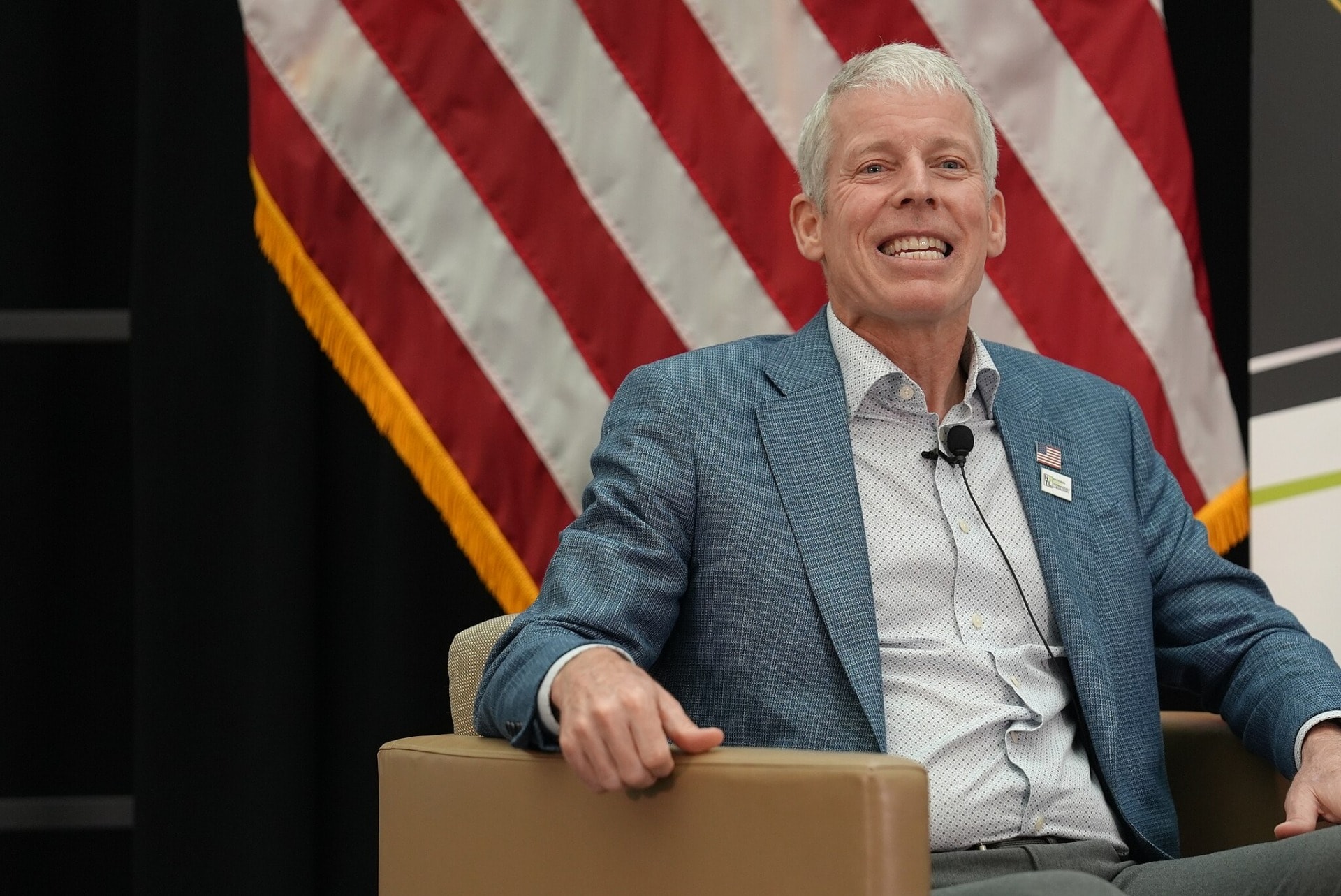
EDITORS NOTE: THE OPINIONS EXPRESSED HERE BY IMPAKTER.COM COLUMNISTS ARE THEIR OWN, NOT THOSE OF IMPAKTER.COM   FEATURED PHOTO CREDIT: SHARON MCCUTCHEON
Tags: #sustainabledevelopmentgoalsafricaAmerican Federation of TeachersEducationEducation InternationalImpakterJanusMorrison RwakakambaSDGsteachers' unionsteachingUSUS Supreme Court
Previous Post

World Food Security – What needs to be done

Next Post

How to Achieve Clean Water and Sanitation

Related Posts

ESG news regarding Chris Wright warning IEA, Alcoa paying A$55 million for illegal bauxite mining in Western Australia, GEAPP raising $100 million to digitise India’s electricity grids, and U.S. and Japan unveiling $36 billion energy and minerals investment plan.
Business

U.S. Threatens IEA Withdrawal Over Renewable Energy Focus

Today’s ESG Updates Energy Secretary Threatens IEA Exit: U.S. Energy Secretary Chris Wright warned the U.S. may leave the IEA...

byAnastasiia Barmotina
February 18, 2026
ESG News regarding Tehran Dispatches Technical Team for Renewed Nuclear Dialogue; Italy Proposes Temporary Sea Entry Bans; Labour Market Slowdown in UK; India Hosts Global Tech Leaders in AI Investment Push
Business

Iran-US Nuclear Diplomacy Returns to Geneva

Today’s ESG Updates Switzerland Maintains Intermediary Role in U.S. - Iran Contacts: Iran’s Foreign Minister Abbas Araghchi arrives in Geneva...

byPuja Doshi
February 16, 2026
ESG News regarding EU’s competitiveness summit, Trump’s endangerment finding repeal, Trump’s coal push, and Deutsche Bank’s first European Green Bond
Business

EU Leaders Meet to Discuss Competitiveness

Today’s ESG Updates EU Leaders Meet on Competitiveness: European Union leaders gathered at an informal summit in Belgium to strengthen...

bySarah Perras
February 13, 2026
GHG Protocol Establishes First Global Agricultural Standard
Business

GHG Protocol Establishes First Global Agricultural Standard

Today’s ESG Updates GHG Protocol Launches First Land Sector Accounting Standard: The GHG Protocol unveiled its new Land Sector and...

bySarah Perras
February 2, 2026
ESG News regarding AI datacenters fueling U.S.-led gas power boom, Lukoil selling foreign holdings, England and Wales households paying more for water bills, and Trafigura investing $1 billion in African carbon removal projects.
Business

AI Datacenters Fuel U.S.-Led Gas Power Boom

Today’s ESG Updates U.S.-Led Gas Boom Threatens Climate: Global Energy Monitor reports 2026 could see record new gas plants, many...

byAnastasiia Barmotina
January 30, 2026
One Health Education Is Essential for Pandemic Preparedness and Global Security
Education

One Health Education Is Essential for Pandemic Preparedness and Global Security

The One Health concept/approach offers a powerful tool for public health and biomedical research globally. The combined integration of human medicine,...

byDr. Bruce Kaplan - Epidemiologist formerly at the CDC/EIS and USDA-FSIS Office of Public Health and Science & Co-Founder of the One Health Initiativeand2 others
January 29, 2026
ESG News regarding a powerful snowstorm leaving more than 400,000 U.S. customers without power, the Doomsday Clock being set to 85 seconds to midnight, Kazakhstan losing more than 40 million barrels of crude exports, and many Europeans brands labelling their plastic as recycled when it comes from fossil fuels.
Business

Massive Snowstorm Leaves Hundreds of Thousands Without Power Across U.S.

Today’s ESG Updates Winter Storm Cuts Power to Over 400,000: A severe storm hit much of the U.S., causing over...

byAnastasiia Barmotina
January 28, 2026
ESG News regarding US withdrawal from the Paris Agreement, China and India emissions decline offset US emissions growth, Michigan suing oil giants, and Nigeria’s new 100mw solar power facility
Business

US Officially Cuts Ties With the Paris Agreement

Today’s ESG Updates U.S. Officially Exits Paris Climate Agreement, Again: The U.S. formally withdrew from the Paris Agreement for a...

bySarah Perras
January 28, 2026
Next Post
Small Loans for Safe Water: Unleashing Women’s Power

How to Achieve Clean Water and Sanitation

Please login to join discussion

Recent News

A woman going through the checking account guide

How Checking Accounts Work: Simple Steps to Get Started Fast

February 20, 2026
Coal plants get reprieve on mercury limits, Striking unions fail to halt Milei's sweeping labor bill, Sweden's regulator reviews Swedbank's compliance controls, France backs INEOS decarbonization with €300M

Trump Admin Weakens Coal Plant Mercury Regulations

February 20, 2026
Crowds and filmmakers on the red carpet at the 76th Berlin International Film Festival in 2026

At Berlinale 2026, Artists Refuse the Comfort of Neutrality

February 20, 2026
  • ESG News
  • Sustainable Finance
  • Business

© 2025 Impakter.com owned by Klimado GmbH

No Result
View All Result
  • Environment
    • Biodiversity
    • Climate Change
    • Circular Economy
    • Energy
  • FINANCE
    • ESG News
    • Sustainable Finance
    • Business
  • TECH
    • Start-up
    • AI & Machine Learning
    • Green Tech
  • Industry News
    • Entertainment
    • Food and Agriculture
    • Health
    • Politics & Foreign Affairs
    • Philanthropy
    • Science
    • Sport
  • Editorial Series
    • SDGs Series
    • Shape Your Future
    • Sustainable Cities
      • Copenhagen
      • San Francisco
      • Seattle
      • Sydney
  • About us
    • Company
    • Team
    • Partners
    • Write for Impakter
    • Contact Us
    • Privacy Policy

© 2025 Impakter.com owned by Klimado GmbH