Impakter
  • Environment
    • Biodiversity
    • Climate Change
    • Circular Economy
    • Energy
  • FINANCE
    • ESG News
    • Sustainable Finance
    • Business
  • TECH
    • Start-up
    • AI & Machine Learning
    • Green Tech
  • Industry News
    • Entertainment
    • Food and Agriculture
    • Health
    • Politics & Foreign Affairs
    • Philanthropy
    • Science
    • Sport
  • Editorial Series
    • SDGs Series
    • Shape Your Future
    • Sustainable Cities
      • Copenhagen
      • San Francisco
      • Seattle
      • Sydney
  • About us
    • Company
    • Team
    • Global Leaders
    • Partners
    • Write for Impakter
    • Contact Us
    • Privacy Policy
No Result
View All Result
Impakter logo
No Result
View All Result
The Warby Parker for Luxury Leather Bags – Linjer founders revealed

The Warby Parker for Luxury Leather Bags – Linjer founders revealed

Courtney CarterbyCourtney Carter
September 29, 2015
in Design, Fashion, Lifestyle, Style
1

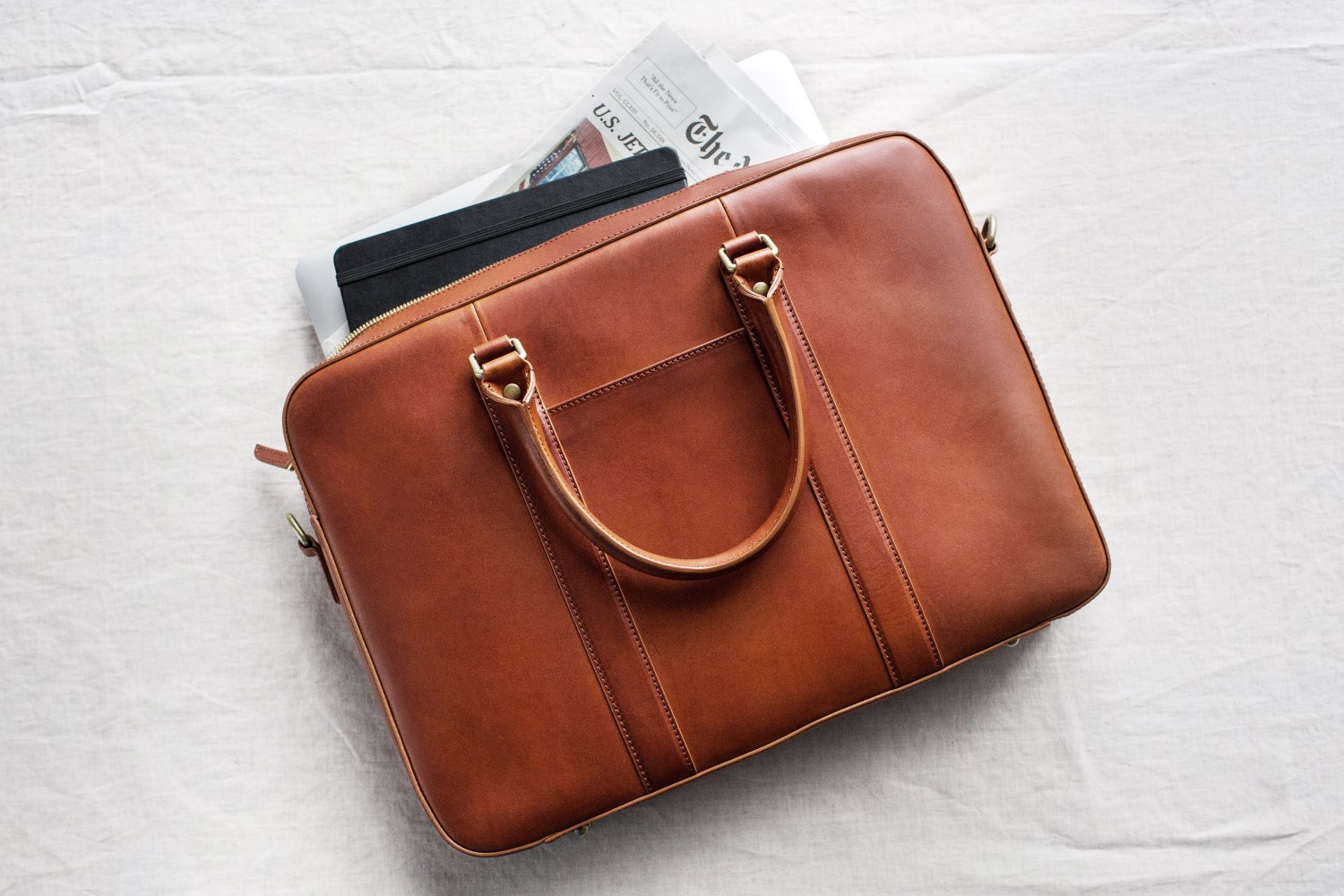
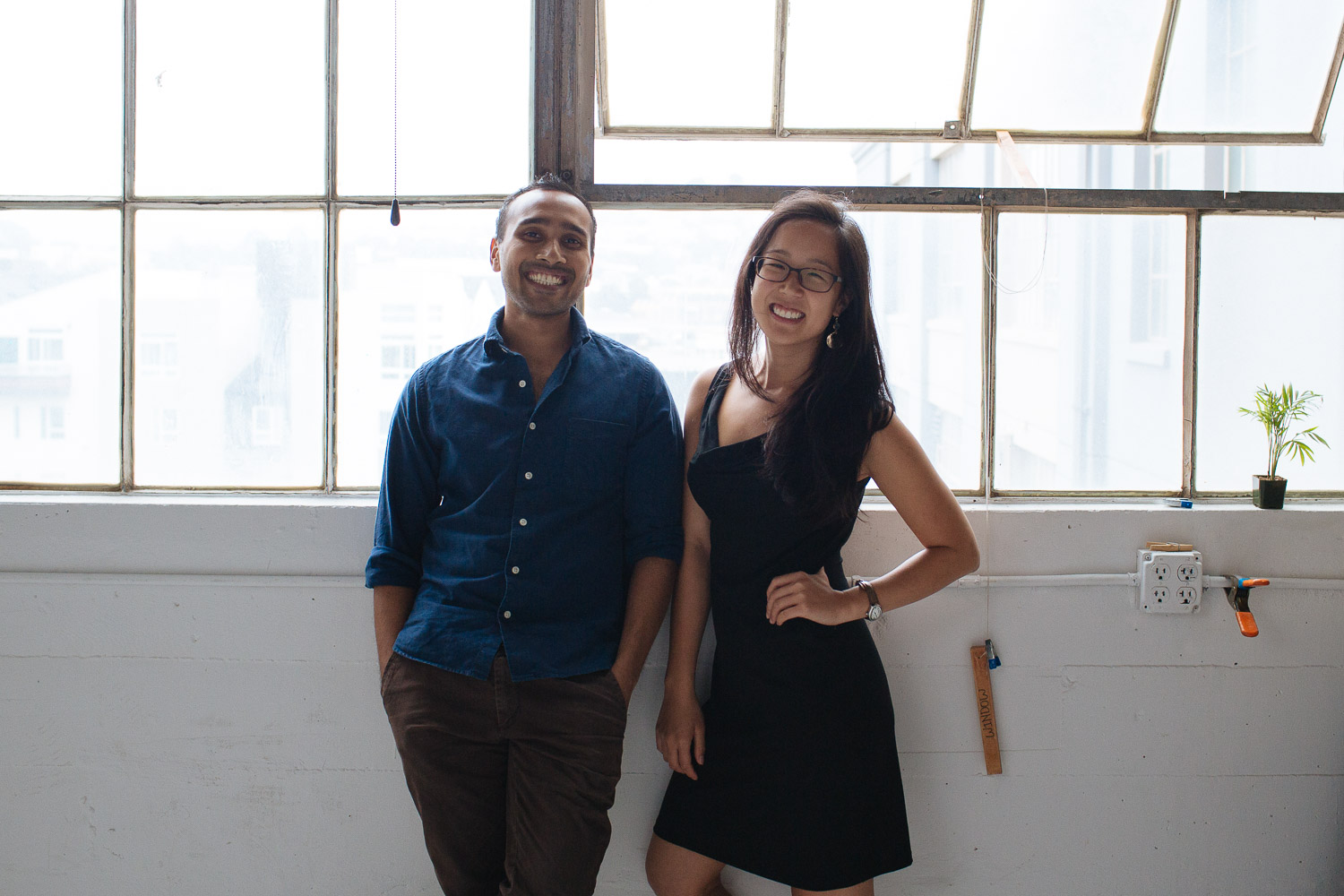
Prada, Gucci, Hermès, Birkin– what do these all have in common? They’re all the names of well-known brands, which offer high end luxury bags at prices up to $150,000. For those who want a luxury leather bag, that won’t break your bank account, look no further. Roman and Jenn created Linjer as a way to bring affordable luxury leather bags to the market. Curious about their process, I contacted Roman, co-founder of Linjer, with my questions regarding their production and company.
172A6624

Q. What inspired you to start Linjer?

A. The idea for Linjer was born of our own needs. Both Jenn and I used to work in conservative industries where it was critical to dress well. We had tailor-made suits and nice shoes, but we were missing that last piece that would have completed the look: a great leather bag.

The problem was that the high-quality leather briefcases we saw on the market all cost well above $1000. That was just way too far out of our price range. And the more affordable leather bags used substandard materials and were of poor construction — and we are both philosophically against buying low-quality things that last for a few months. So we were both using these horrid nylon bags that we’d gotten for free with our laptops.

Style woes aside, Jenn was starting up her own direct-to-consumer women’s shoe company. She was learning a lot about manufacturing and leather (and the horrors of shoe sizing). At one point, we realized that we could leverage a lot of that knowledge to address our own need for awesomely-made, awesomely-priced leather goods. We knew that many of our peers shared this need and we decided to just go for it.
Messenger

Q. How are you able to reduce cost while providing a high quality product to market?

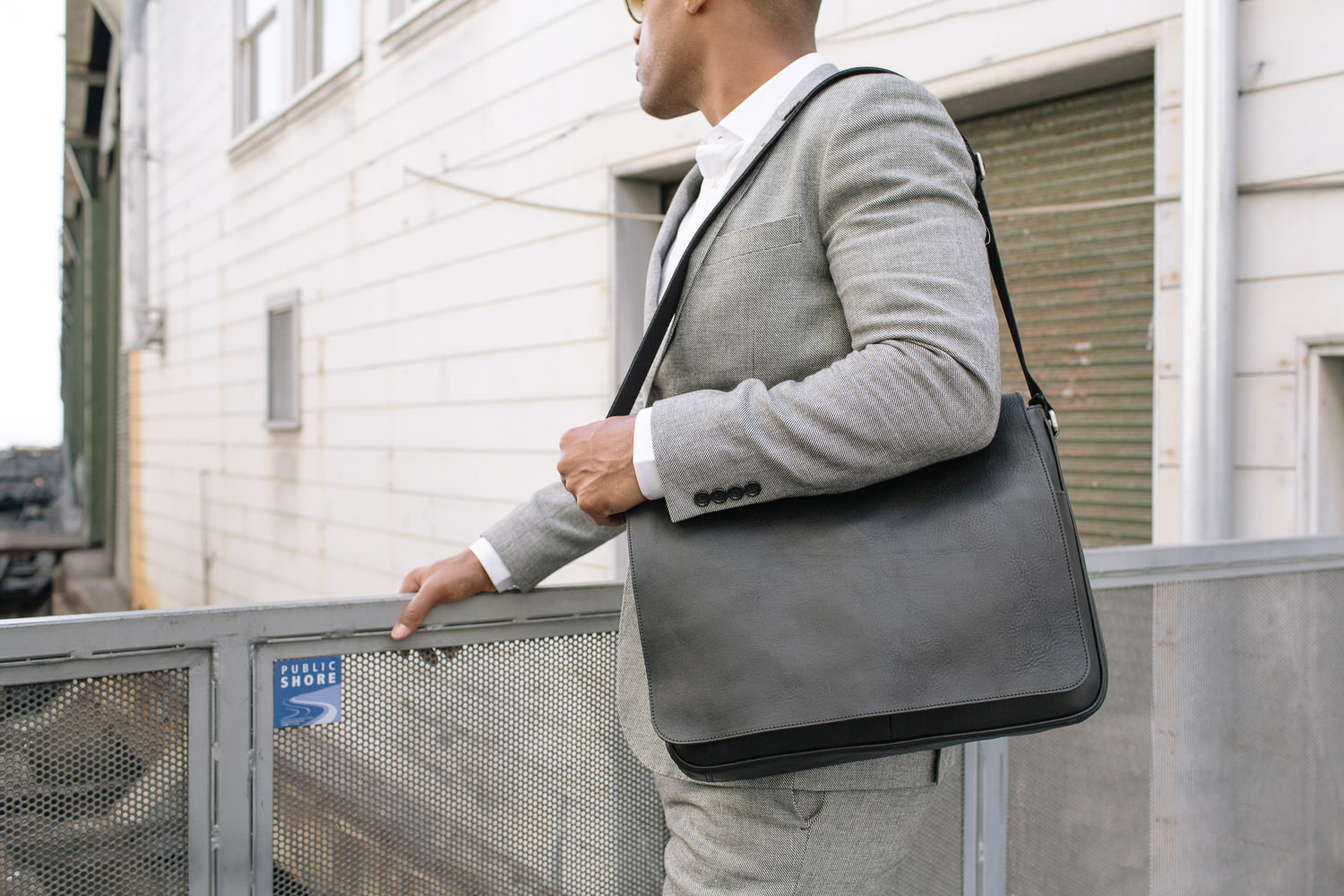
A. We work with the exact same suppliers that many luxury brands use, so our cost of production works out to be roughly the same for similar products. However, there’s a big divergence in retail prices. A product we would sell for $449 (say, a briefcase) would probably cost $1,500+ if it had a luxury logo on it.

Q. What explains the big price differential?

A. First, luxury brands keep their prices artificially high to create an air of exclusivity. Our mission is quite the opposite — we want to make it easier for people to own fine leather goods. We dislike the concept of the “luxury premium” and we’ve done away with it.

Secondly, luxury brands have a lot of costs that we don’t have. They have to maintain fancy retail spaces, give up margin to distributors, and pay for celebrity endorsements, glossy magazine ads, billboards, etc.

We sell directly to consumers online, so there are no middlemen taking cuts and we don’t have to pay for expensive real estate. We also don’t spend excessively on marketing; we’re relying on the quality of the products and the passion of our community to drive awareness of what we’re doing.

Q. How would you like your customers to feel about touching and feeling your product?

A. There’s a sense of pride and confidence that you feel when you wear something that is well-made. I feel that whenever I put on my tailored suit from Jantzen. That’s the same feeling we hope that others feel when they use Linjer products.
Passport holder 2

Q. What does “good design” mean to you, and how does it factor into the way your products are made?

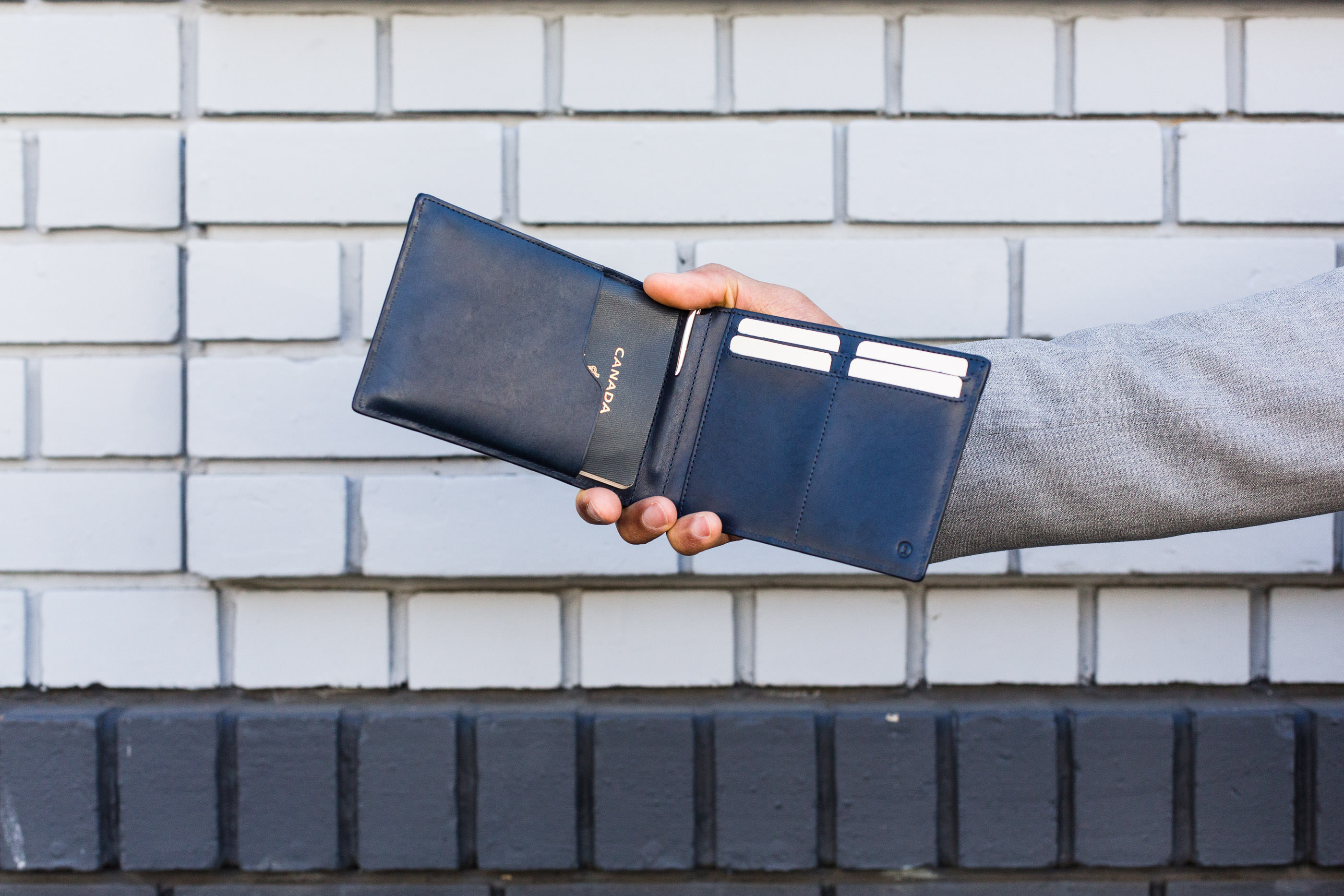
A. Good design starts with a deep understanding of users’ needs. When we design each products, we start by creating a profile of a user. We imagine all the situations in which this person would use the product and from there, we create a list of required functions. After that comes the most difficult (and fun) part: designing a product that addresses these needs yet is beautiful and simple, without extraneous details.

It’s easy to make something functional, but it’s challenging to create something that is both functional and elegant.
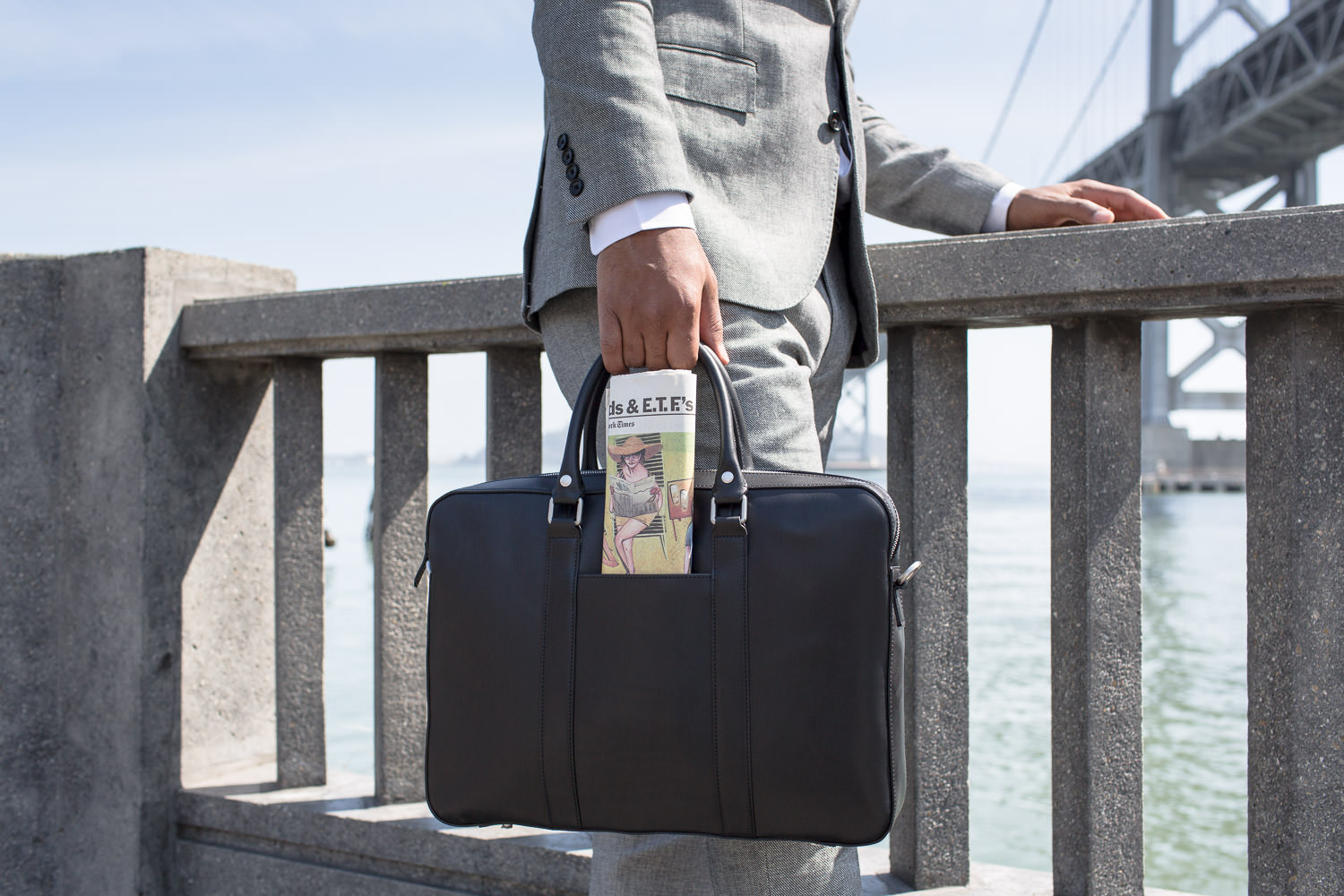
Softbriefcase black 001

Q. What makes a bag of “good quality” and how do you incorporate those elements into your products?

A. In short, it’s about  using the very best materials and the highest level of craftsmanship.

For materials: we use full-grain, vegetable-tanned leather, YKK Excella zippers and industrial-grade polyester thread. Full-grain, vegetable-tanned leather is really special stuff, and usually only niche leather brands use it.

For craftsmanship: we work with a factory that supplies top luxury brands and they take a lot of pride in getting every detail right. We work closely with the factory to ensure that our products are made to last: we don’t take shortcuts that compromise the structural integrity of our products, e.g. gluing pieces together or shaving down the leather.

Q. Why is leather such a crucial material to you for your products, and what does it represent?

A. Quality vegetable-tanned leather is classy and aspirational, yet also very grounded. We wouldn’t necessarily say the same of other types of leather.

Q. How would you describe the typical Linjer customer?

A. The typical Linjer customer appreciates quality.

For more from Courtney Carter check out: www.thingser.com

Linjer Instagram

Tags: Apple Inc.Cape CodFashion designFrench languageGucciHermèsJonathan IveLeatherLuxury goodsLVMH
Previous Post

Sand: The Most At-Risk Resource on Earth after Water

Next Post

Whitney Pollett – Artist Spotlight

Related Posts

Elon Musk’s xAI sues OpenAI and Apple over AI and smartphone monopoly claims, Marks & Spencer opens eBay store for preloved clothes with Oxfam partnership, Keurig Dr Pepper buys Peet’s Coffee owner JDE Peet’s in $18B deal, plans corporate split, India’s data centre industry expands with $6.5B in investments but faces energy and water challenges.
Business

Musk’s xAI Sues OpenAI and Apple, Alleges Conspiracy to Control AI and Smartphones

Today’s ESG Updates Musk Takes Apple and OpenAI to Court: Elon Musk’s AI startup xAI claims the companies struck an...

byAda Omar
August 26, 2025
fashion Sustainability
Business

Fashion Giants and Sustainability: 5 Brands Reshaping the Industry

A look at recent efforts by fashion giants Chloé, Stella McCartney, Patagonia, LVMH, and MUJI to position themselves as sustainable...

byShah Ibrahim Ahmed
June 13, 2025
Mannequins in front of the letters Balenciaga
Fashion

Is Balenciaga Sustainable?

Balenciaga is one of the biggest luxury fashion brands out there. The French-owned Spanish brand has long been known for...

byDiana Croce
January 29, 2024
To Foster Climate Justice and Social Equality: Is a Carbon Tax on Luxury Goods the Answer?
Climate Change

To Foster Climate Justice and Social Equality: Is a Carbon Tax on Luxury Goods the Answer?

Ten months ago, Canada slapped a 10 to 20 per cent tax on cars, planes or other goods with a...

byValentina Morando
July 14, 2023
circularity in fashion and beauty
Index

Can Circularity Turn the Fashion and Beauty Industries Sustainable?

Circularity in the fashion industry is defined as processes that “close the loop on production, including responsible manufacturing, use, and...

byLaurie Melchionne
March 6, 2023
Apple Leather: The Game Changer Among Leather Alternatives
Beauty

Apple Leather: The Game Changer Among Leather Alternatives

Leather is one of the most common materials for luxury goods. It is a robust, flexible, and long-lasting material made...

byNapat Siriyium
June 28, 2022
black leather handbag
Eco Life

Scraps to Success: Bringing Small Businesses Toward a Circular Economy

According to BBC, in 2020 the fashion industry was responsible for 20% of global waste. This occurs through toxic production...

byRachel Cross
March 20, 2022
Waste Not, Want Not: An Interview with Leather Bag Maker, Alicia Linz
Eco Life

Waste Not, Want Not: An Interview with Leather Bag Maker, Alicia Linz

Alicia Linz is the founder of Alicia Victoria, an accessories brand from Munich specializing in sustainable leather. By using the...

byClara Aseniero
December 22, 2021
Next Post
Whitney Pollett – Artist Spotlight

Whitney Pollett - Artist Spotlight

Please login to join discussion

Recent News

Sustainable Poltrona Frau in a living room in the Tuscan country side villa

Can Design Furniture Be Sustainable? These Brands Are Rethinking Materials, Production, and Responsibility

November 17, 2025
Solar panels in China

China’s Carbon Emissions Flat or Falling for 18 Months: What’s Driving the Shift?

November 17, 2025
EU Parliament cuts corporate sustainability reporting; BlackRock relaxes ETF ESG exclusions; Aegon sets 2025 US growth targets; Google proposes adjusting EU AdTech policy.

EU Parliament Slashes Corporate Sustainability Reporting, Shaking ESG Landscape

November 17, 2025
  • ESG News
  • Sustainable Finance
  • Business

© 2025 Impakter.com owned by Klimado GmbH

No Result
View All Result
  • Environment
    • Biodiversity
    • Climate Change
    • Circular Economy
    • Energy
  • FINANCE
    • ESG News
    • Sustainable Finance
    • Business
  • TECH
    • Start-up
    • AI & Machine Learning
    • Green Tech
  • Industry News
    • Entertainment
    • Food and Agriculture
    • Health
    • Politics & Foreign Affairs
    • Philanthropy
    • Science
    • Sport
  • Editorial Series
    • SDGs Series
    • Shape Your Future
    • Sustainable Cities
      • Copenhagen
      • San Francisco
      • Seattle
      • Sydney
  • About us
    • Company
    • Team
    • Global Leaders
    • Partners
    • Write for Impakter
    • Contact Us
    • Privacy Policy

© 2025 Impakter.com owned by Klimado GmbH