
This month the US military has destroyed its last remaining chemical weapon. The achievement took place at the Blue Grass Army Depot in Kentucky. An M55 rocket containing sarin nerve agent – an extremely toxic and potent chemical agent that blocks nerve ending causing asphyxiation – was safely disposed of.
In an official press release, US Under Secretary of Defense for Acquisition and Sustainment Dr. William A. LaPlant commented: “We have a national security imperative and moral obligation to work toward eliminating the threat posed by weapons of mass destruction.”
LaPlant also said:
“This is the first time an international body has verified destruction of an entire category of declared weapons of mass destruction – reinforcing the United States’ commitment to creating a world free of chemical weapons.”
This move is a part of the Chemical Weapons Convention (CWC), a commitment to control the manufacture and use of such weapons ratified back in 1997, and also completes a mandate by Congress in 1986 to destroy the entire US stockpile.
Why is it so important that chemical weapons are banned?
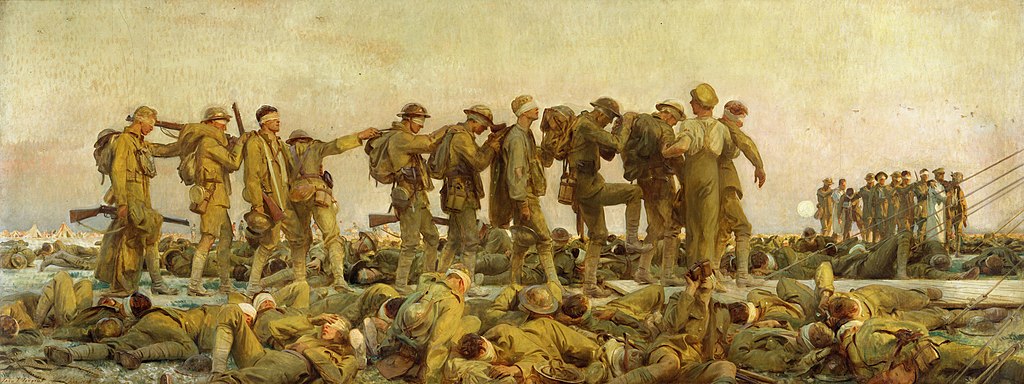
In an article by the International Committee of The Red Cross, Johnny Nehme, a chemical biological, radiological and nuclear expert gives his view on why chemical weapons are now banned:
“Their indiscriminate nature. They could kill or maim any person, whether that person is participating in a given conflict or not. A second issue is that the effect of certain chemical weapons could bring lifelong damage that would remain after the conflict ends. To make and use a weapon that prevents people from using the air, from breathing, was considered too horrible and damaging.”
Although the world has reached a point where chemical weapons are now considered inhumane and are now capable of such devastation that international conventions are being made to ban them, they are nothing new.
The use of poison arrows and other such weapons dates back to ancient times, but the first time scientific methods were directly employed was during WW1 with the use of chlorine and phosgene gas and other weapons that could cause horrifying effects such as the blistering of exposed skin, choking and extreme damage to lungs.
The terrible effects on casualties led to the 1925 Geneva Protocol, which made it illegal to deploy chemical weapons but not to manufacture them. During the cold war there was a colossal build-up on both sides by the US and the Soviet Union until the Chemical Weapons Convention (CWC)was introduced in 1997 to remedy the dire situation.
Unfortunately, although most countries now recognise the horror of chemical warfare and are determined to make it a thing of the past, some countries are still using them to deadly effect.
A report from the Organisation for the Prohibition of Chemical Weapons (OPCW) dated 27th January 2023, states “there are reasonable grounds to believe that the Syrian Arab Air Forces were the perpetrators of the chemical weapons attack on 7 April 2018 in Douma, Syrian Arab Republic.”
Furthermore, a statement by the G7 on 17th April 2018 regarding the Salisbury nerve agent attack indicated that they “share, and agree with, the UK’s assessment that it is highly likely that the Russian Federation was responsible for the attack.”
Despite its continuing use by rogue nations, the recent final destruction by the US military of its once vast chemical stockpile can be seen as a major leap forward to a world free of these horrific weapons.
The Hon. Deborah G. Rosenblum, Assistant Secretary of Defence for Nuclear, Chemical and Biological Defense Programs, stated: “I applaud the successful efforts of the leadership and workforce on achieving this extraordinary milestone.”
Rosenblum also said:
“The level of determination and resolve to overcome challenges has been nothing short of outstanding. This achievement demonstrates our credibility to the international community and has helped move the U.S. government toward closing this particular chapter of U.S. military history.”
Editor’s Note: The opinions expressed here by the authors are their own, not those of Impakter.com — In the Featured Photo: Blue Grass Chemical agent weapon- Destruction Pilot Plant Munitions Demilitarization Building. Source: Flickr.