
Today’s ESG Updates
- US Energy Secretary Insists It Is Not “Stealing Venezuelan Oil”: U.S. Energy Secretary Chris Wright denies that Washington is “stealing” Venezuelan oil, even as new deals give the U.S. majority control of ~65 billion barrels.
- Trump Targets UK Energy Policy and Migration in Fresh Criticism: Trump said Britain faces energy and immigration crises, urging more North Sea oil and gas as the government weighs new projects while maintaining its clean-power transition.
- AI Tech Rally Lifts Wall Street Despite Oil and Rate Risks: U.S. stocks rose as strong AI demand boosted tech shares, offsetting concerns over high oil prices, inflation and interest rates.
- Asia Bolsters Oil and Gas Buffers After Hormuz Shock: Asian governments are expanding strategic fuel reserves, storage partnerships and pipelines after disruption in the Strait of Hormuz exposed their dependence on Gulf energy supplies.
US energy secretary insists it is not “stealing Venezuelan oil”
U.S. Energy Secretary Chris Wright rejected claims Washington is “stealing Venezuelan oil,” insisting the resource belongs to Venezuelans and that royalties and taxes flow to their government. Under new energy deals signed in Caracas, the U.S. will take majority control of nearly 20% of Venezuela’s oil reserves, estimated at 65 billion barrels, with Caracas projecting $209 billion in earnings over 25 years. A tiny slice of the theoretical ~$5.95 trillion potential gross revenue at current WTI Crude prices, before factoring in any production costs, taxes, or other government receipts.
Despite this, Chris Wright framed the accord as mobilising private capital and technology to develop an “idle, underground asset,” while linking oil-output recovery to fixing Venezuela’s electricity sector under a five‑year plan. He said elections will come only after infrastructure and judicial reforms, including a Supreme Court overhaul, echoing interim President Delcy Rodriguez and President Trump’s view that Venezuela is “not ready yet.” The deal, announced August 28 and overseen during Wright’s September 2 visit to Caracas, is described by Trump as “the biggest oil deal in world history.”
Klimado – Navigating climate complexity just got easier. Klimado offers a user-friendly platform for tracking local and global environmental shifts, making it an essential tool for climate-aware individuals and organizations.
Trump targets UK energy policy and migration in fresh criticism
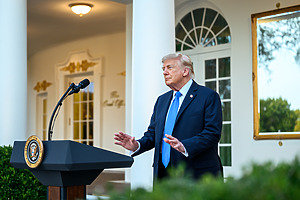
Trump’s intervention amplifies pressure on Britain’s government over two politically salient vulnerabilities: high energy costs and irregular migration. It also exposes an increasingly strained UK-U.S. relationship, with Trump urging a more fossil-fuel-led policy direction.
Trump frames net zero as a driver of excessive energy prices and advocates further development of North Sea oil and gas. However, this is primarily political messaging rather than a detailed policy assessment: the government maintains that a transition to cleaner electricity remains necessary as it considers two major North Sea projects.
On migration, Trump’s rhetoric aligns with a domestic issue already strengthening Reform UK, despite government claims that small-boat crossings have recently fallen through action against launch networks and smuggling gangs.
Related Articles
Here is a list of articles selected by our Editorial Board that have gained significant interest from the public:
AI tech rally lifts Wall Street despite oil and rate risks

Wall Street rebounded as AI-linked technology strength and stabilising Treasury yields outweighed immediate oil-market anxiety, but the rally looks fragile ahead of U.S. employment and inflation data. The S&P 500 gained 0.5%, the Dow 0.6% and Nasdaq 0.5%; Dell surged 15.8% on stronger AI-computing demand, while Nvidia rose 3.2%.
The market is effectively pricing a tug-of-war, where AI CAPEX (capital expenditure) remains a powerful earnings catalyst, but higher energy prices and yields threaten margins, consumer purchasing power, and inflation expectations. And with Brent settling at $95.63/bbl (price per barrel) as the Iran conflict and Strait of Hormuz disruption continue, the 10-year Treasury yield stayed elevated at 4.78%.
For investors, Friday’s jobs report and next week’s inflation data are the near-term catalysts. A weak labour reading alongside persistent inflation would complicate the Fed’s choices and could revive bond volatility, putting high-valuation technologies back under pressure despite AI’s strong fundamentals.

Asia bolsters oil and gas buffers after Hormuz shock
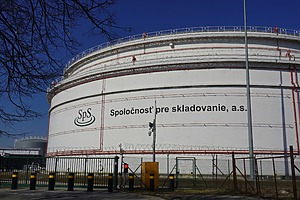
The Strait of Hormuz disruption is accelerating an Asian energy-security pivot, as countries are expanding strategic oil and LNG storage, domestic pipelines and supplier-linked overseas reserves to reduce vulnerability to a single maritime chokepoint.
Japan’s proposed $10 billion POWERR Asia initiative, India’s planned 13-million-barrel addition, potential South Korean reserve expansion, and China’s pipeline/LNG build-out illustrate a regional shift from “just-in-time imports” to resilience infrastructure. The immediate winner is storage and midstream investment; Gulf producers also benefit by placing barrels nearer Asian demand centres. However, more stockpiles mitigate short disruptions rather than address structural import dependence: several Southeast Asian states remain below the IEA’s 90-day benchmark, while new fossil infrastructure can create cost and transition-risk lock-in. The strategic test is whether governments pair buffers with demand reduction, efficiency, renewables and diversified supply routes, not simply larger oil tanks.
Editor’s Note: The opinions expressed here by the authors are their own, not those of impakter.com — Cover Photo Credit: U.S. Department of Energy