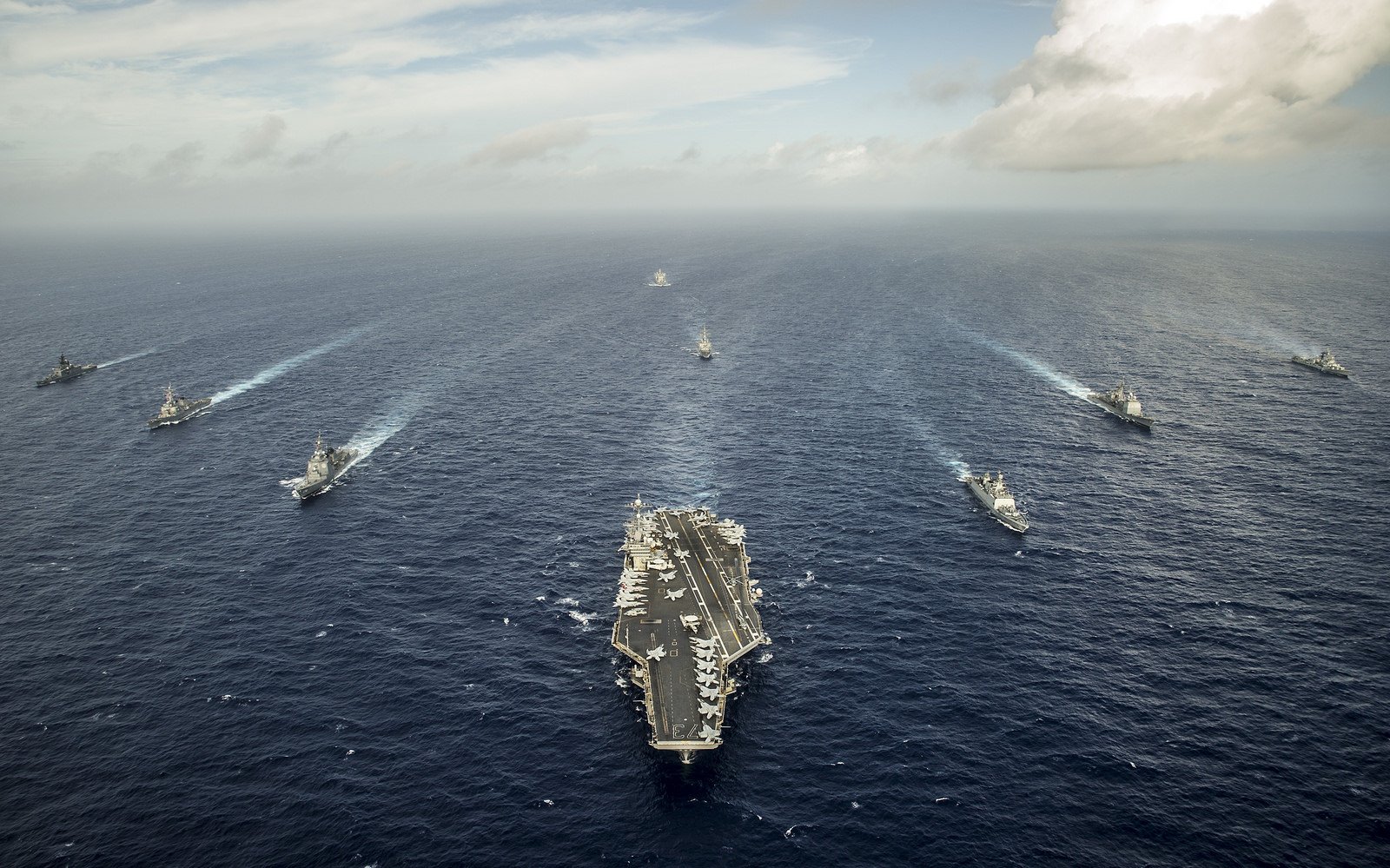
Against fast-changing geopolitics, with the global centre of gravity shifting away from the Trans-Atlantic, the term ‘Indo Pacific’ has entered the policy dictionary as the term capturing the amalgamation of the Indian and Pacific Oceans into a larger interconnected space where the bulk of the world’s economic weight now lies. This strategic construct supports the possibility of a multipolar future in the region by focusing on preserving its dynamism and a rules-based order that has contributed to the phenomenal rise of the Indo Pacific countries — notably, China, India, Australia, Japan, the South East Asian states, and even the United States of America.
However, there are challenges aplenty in the region: despite benefiting from an “open” Indo Pacific, China’s militarization of the South China Sea and its attempts to establish significant control over key Sea Lanes of Communication (SLOCs) and land routes through its complementary foreign policy mega-projects of Belt and Road Initiative (BRI) and the Maritime Silk Road undermine freedom of navigation and equality of access to the region.
Along with adopting the strategic Indo Pacific over the traditional “Asia Pacific,” countries and regional blocs have laid out their individual understanding of the Indo Pacific. These range from the clearly articulated Indo Pacific Strategy of the US and the Free and Open Indo Pacific (FOIP) of Japan to the all-encompassing Indo Pacific Outlook of ASEAN. In addition to identifying challenges and opportunities in this large geopolitical space, states have also devised mechanisms to enhance their cooperation in defense, infrastructure development, and capacity enhancement through multiple forums.
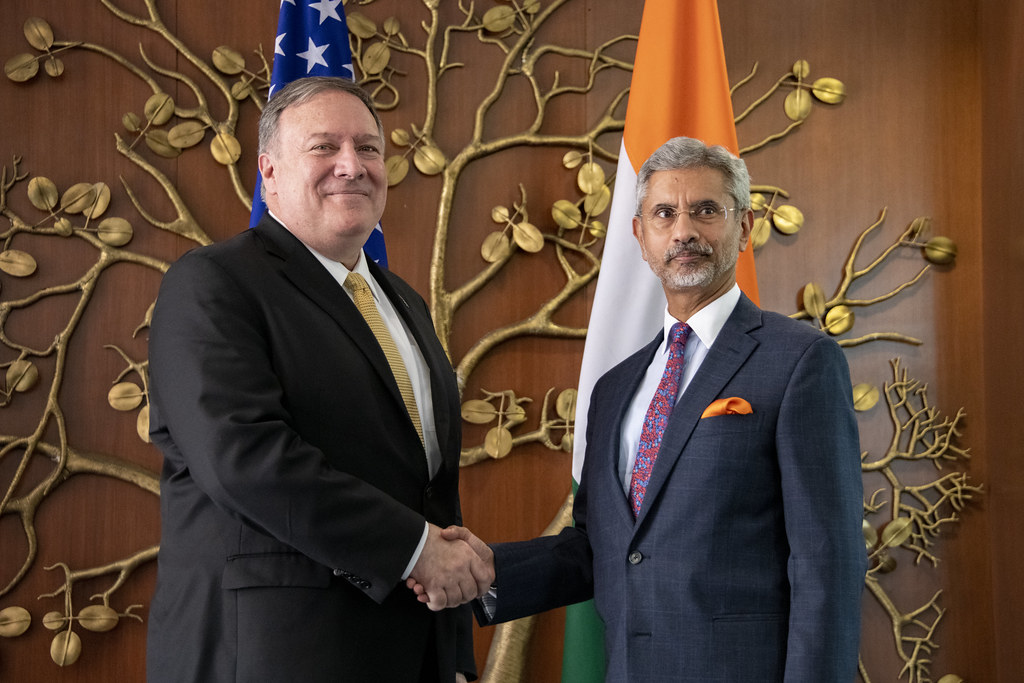
Key among Indo Pacific partnerships is that of India and the US — painstakingly developed after overcoming the “hesitations” of their history, plagued by high-doses of bilateral mistrust. The Indo Pacific has become the cornerstone of their evolving relationship. This is reflected in the countries’ decision to set up a high-level 2+2 dialogue mechanism, their rising defense trade, and increased number of military exercises and key agreements regarding interoperability and technology transfer.
In fact, the two have been trying to rectify the much-critiqued differences in their respective visions of the Indo Pacific—both by enhancing cooperation between the Indian military and AFRICOM and CENTCOM as well as by planning to upgrade engagement in the Western Indian Ocean, an area not included in the Indo Pacific map of the US, but vital to India’s primary interests.
It becomes especially important that two of the strongest Indo Pacific partners sustain this forward flow in their relationship.
However, as threats continue to loom large for India and the US in the Indo Pacific, the last few months have seen tensions surfacing in their bilateral relations, especially over trade, India’s lingering love for Russia, its difficult Iran manoeuvrings and the possibility of US reviving talks with the Taliban over a quick Afghanistan “exit strategy.”
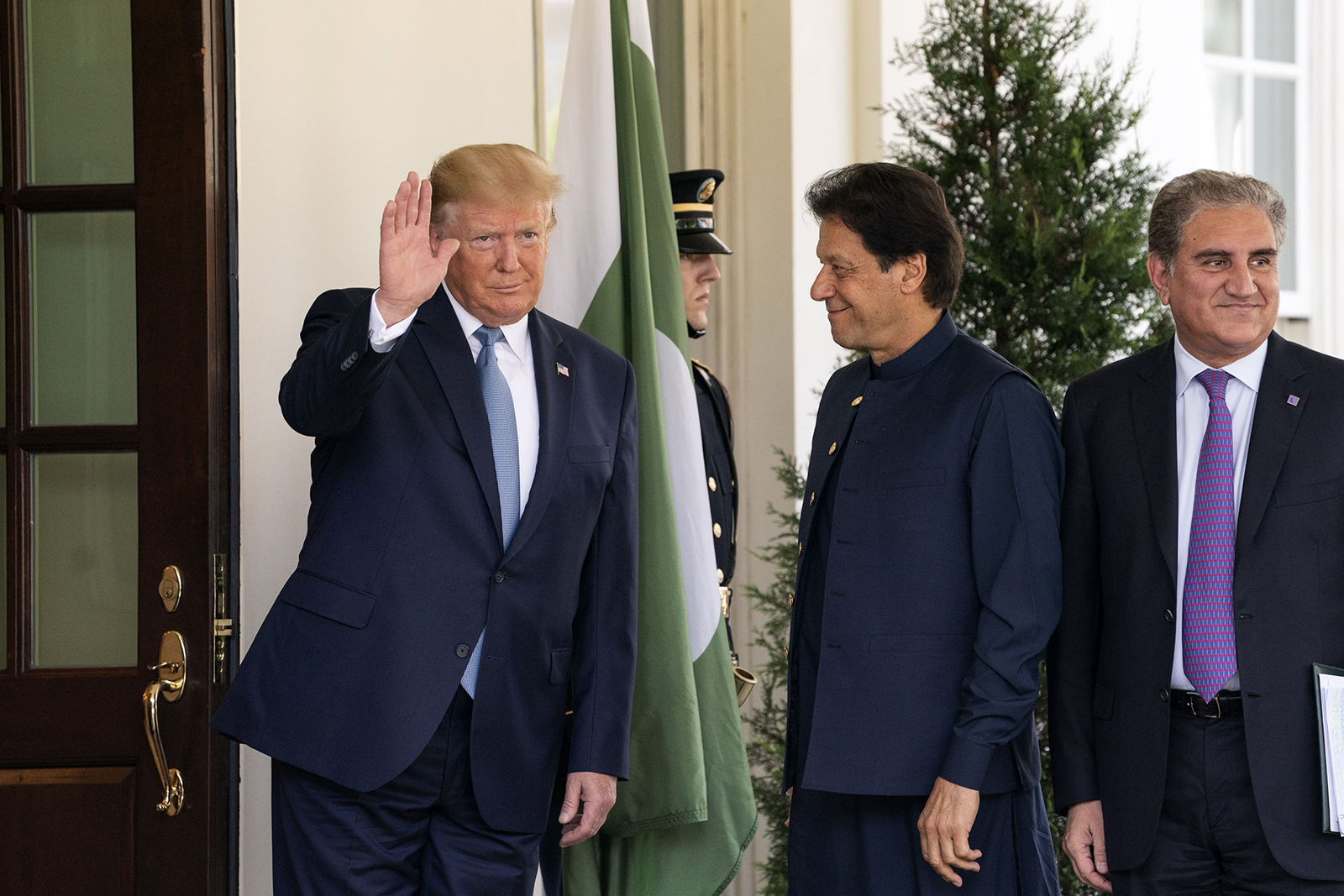
These concerns could come crashing down upon the hard-wrought strategic gains made over the last few years. However, as recent events have made clear — with an unprecedented display of Trump-Modi camaraderie at the ‘Howdy, Modi’ mega-gala in Houston, and later with Indian Foreign Minister’s skillful efforts to “re-introduce” an assertive and confident India to the who’s who of Washington — this is a relationship both the US and India deeply value.
As fragilities appear in the larger US-Asian alliance system with Japan and South Korea, it becomes especially important that two of the strongest Indo Pacific partners sustain this forward flow in their relationship.

Barriers to Trade (and to Strategic Partnership)?
While the US has always criticised India’s “illegal” trade practices — like when the Obama administration raised the issue of India’s tariff and non-tariff barriers for a range of US products, from poultry to solar modules — these complaints were relatively low-key.
Now with “America First” defining President Trump’s global trade policy, India has earned the unique distinction of “Tariff King” from the frustrated President. Trade restrictions together with concerns over India’s new data localisation policy and e-commerce regulations have added unprecedented friction to US-India ties.
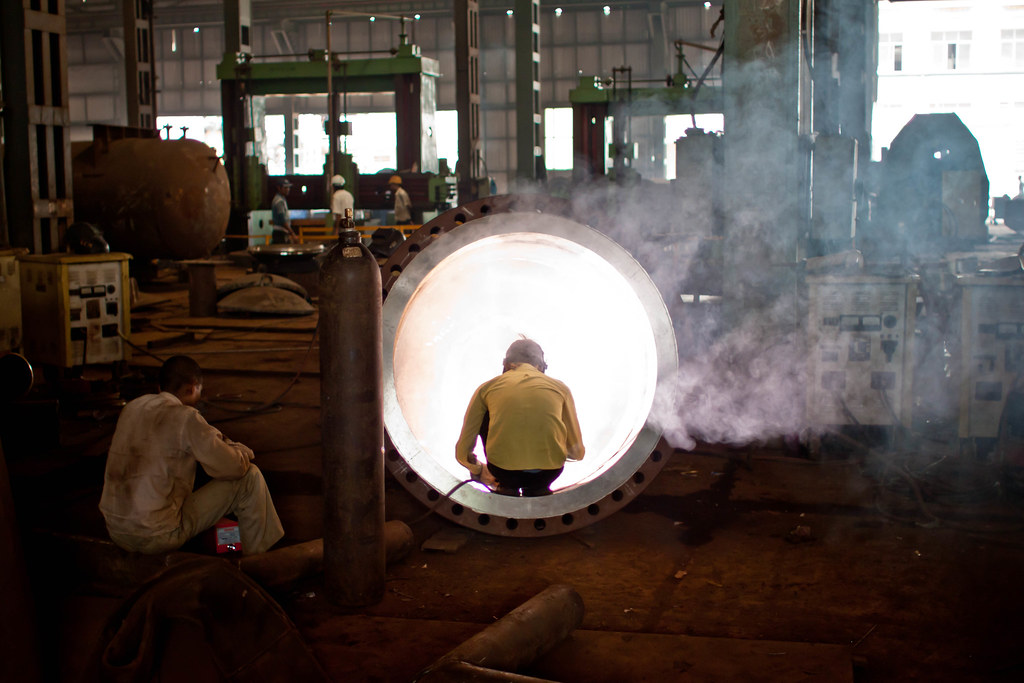
Last year, the Trump administration levied tariffs on the import of steel and aluminium, a move which particularly affected India’s export of steel to the US, which stood at around USD 160.3 million in 2017. Failing to get a waiver from the duties on steel— a product that has its origins in the iron ore mines of relatively impoverished central and eastern states of India, New Delhi also saw its trade benefits under the Generalized System of Preferences (GSP) revoked by the US.
In retaliation, India levied tariffs on 28 US products, hitting US nuts and fruits exports — India is one of the US’s top buyers of these goods.
The trade deficit—albeit in India’s favour—has been shrinking and India has acquiesced to the oft-touted demand for reducing duties on the Harley Davidson motorbikes. Additionally, India assured Trump of more imports from the US during the G20 and G7 summits. Yet President Trump continues to find India’s tariff regime “unacceptable.”
If not adequately addressed, these tensions pose a real threat to the hard-fought India-US strategic partnership in the Indo Pacific.
The US will have to ensure that short-sighted trade policies do not jeopardize India’s economic growth to the detriment of the US’s rebalance in Asia.
India, for its part, will need to ascertain whether trade barriers on imports have boosted domestic manufacturing to the extent that exposure to world markets could. Additionally, India needs to address issues related to its lack of transparency regarding the tariff structure, which adds to the complexity of determining rates for the exporter. While recently held top-level meetings have not culminated in the much-anticipated trade deal, the sustained engagement to reach one — despite the complexities — is surely a positive development.
Russian Roulette
India’s balancing act between the United States and Russia is another complication.
To illustrate. Just as India’s Ministry of Defense green lighted a $3.1 billion deal to buy US-built patrol aircrafts for the Indian Navy and the Indian Air Force inducted eight Apache Guardian Attack Helicopters, Modi was in Vladivostok announcing a $1billion loan package for the development of the Russian Far East and discussing joint manufacturing of Russian armaments.
Since the end of the Cold War, India’s lingering affair with Moscow continues to hurt India’s foreign policy approach towards the United States. This became most visible recently following New Delhi’s recent decision to buy Russia’s $400 air defense systems — an order that violates the US’s Countering America’s Adversaries Through Sanctions Act (CAATSA).
Reportedly, concern over the purchase stalled the process of upgrading India’s status at par with that of US’s NATO allies.
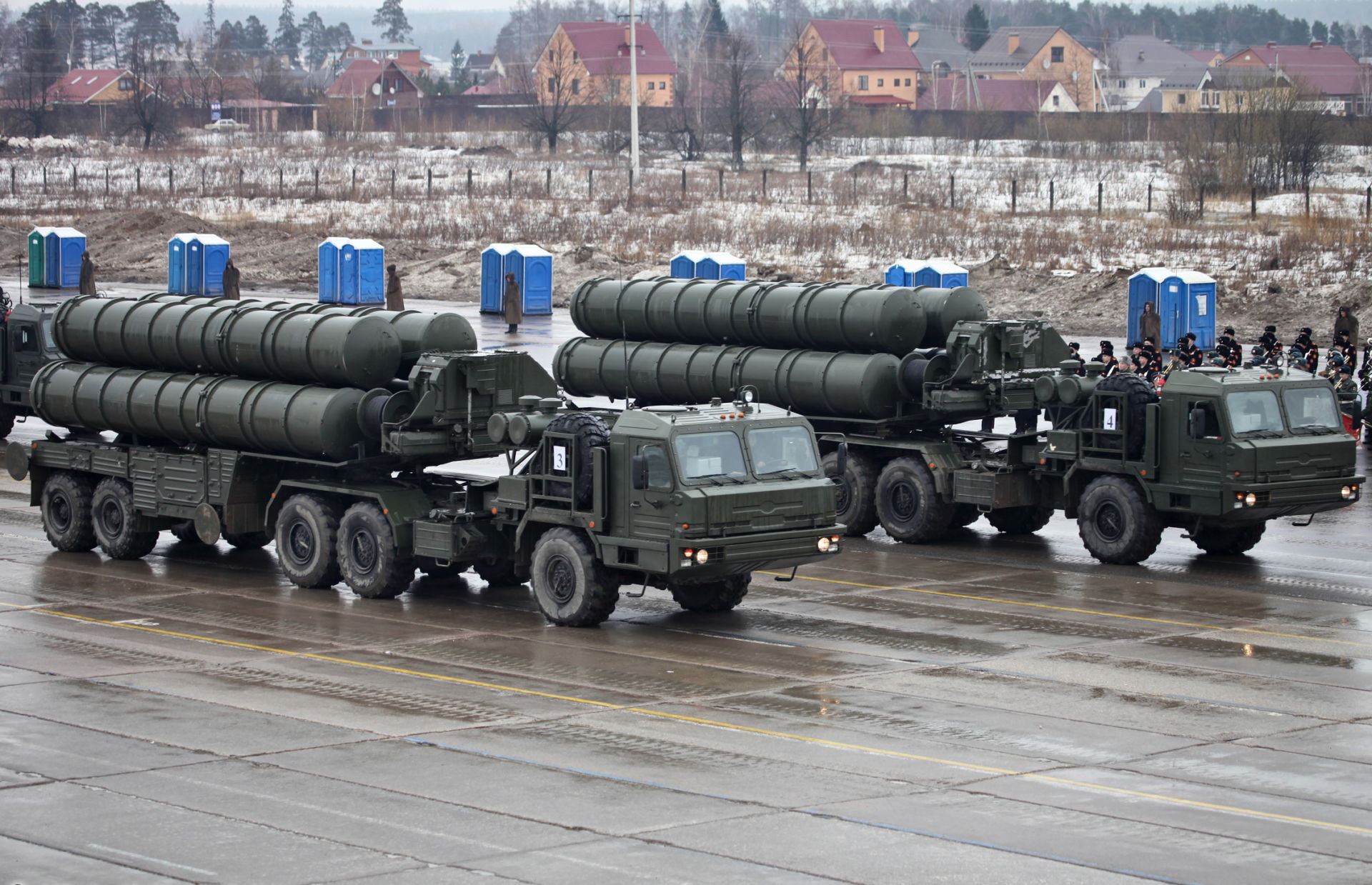
In addition, the Russian missile system also traps India in a difficult “China paradox.”
Although, justifiable given the lack of an equally capable alternative to train against the Chinese S-400 next door, the system poses a real risk of adversely affecting India’s interoperability with western militaries. This would in turn deepen India’s reliance on Russian defense equipment and stifle the development of a closer Indo Pacific defense partnership with the US — to China’s ultimate advantage.
Although India has already reduced its share of defense imports from Moscow, it cannot continue to distance itself from Russia, a traditional partner valuable to India’s Eurasia plans, and one that continues to offer Delhi much needed support in its efforts to attain membership to the permanent group of the UNSC and the Nuclear Suppliers Group, as well as on issues regarding Kashmir.
Yet with fears of fading Russian clout and Moscow turning into a “Chinese tributary,” India will have to rethink its long term Russia strategy. So far, it seems that Delhi doesn’t want Russia to become subordinate to China, and is attempting to instill confidence in Moscow as a claimant to a multipolar order in the “open, free and inclusive” Indo Pacific.
However, with Russia occupying the position of a “revitalised malign power” in the US’s Indo Pacific threat perception, India’s Indo Pacific outreach to Russia will put its “multi-alignment” manoeuvring to test.
Iran: Tight Spot
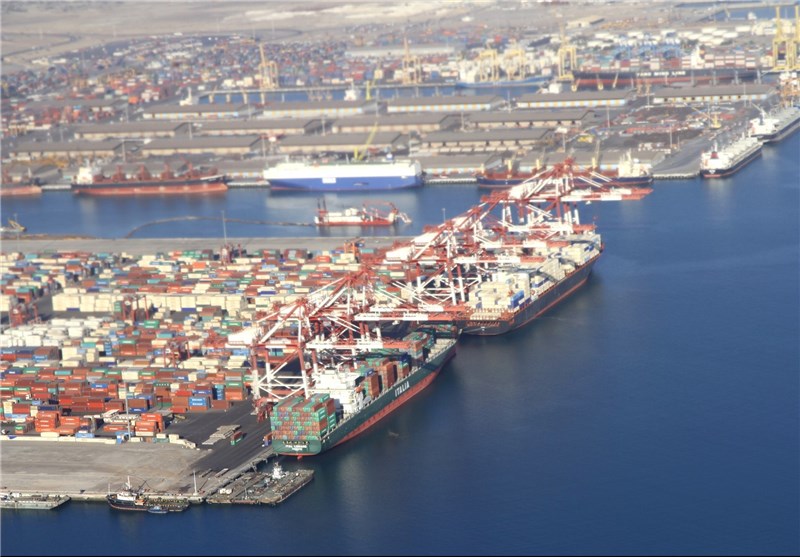
Iran is also vital to India’s plans of extending its influence towards Central Asia and the wider Eurasian region, offering India access to the region, in the absence of a direct land route via Pakistan.
Notably, the Indian-developed port of Chabahar in Iran’s Sistan-Baluchestan province — key to India’s Eurasia connectivity plans — has become a casualty of the Iran sanctions, despite receiving a CAATSA waiver from the United States.
Since India’s regional connectivity ambitions suffered as a result of the Iran deal pull-out, commentators began to view the Trump administration’s Iran strategy as aiding China.
However, with Iran’s developing strategic partnership with China, its India-balancing with Pakistan, and powerful religious bodies’ growing dislike for India, one wonders how much legroom India, an ever-closer partner of Saudi Arabia and UAE , has in Tehran — sanctions or no sanctions.
Afghanistan: The Art of the (Bad) Deal
Chabahar is also the only viable path to Afghanistan, where India exercises substantial re-development and capacity building activity as Kabul’s largest regional donor. A trilateral transit corridor through Iran arguably reduces landlocked Afghanistan’s dependence on Pakistan, whose notorious role as the sponsor of the Taliban in the country has been well-recognised.
The on-again off-again US-Taliban engagement over the US ‘withdrawal agreement,’ brokered by Islamabad, could very well establish the Taliban in a leadership position in Kabul. This possibility could translate into disastrous national security consequences for Delhi, which has historically seen a rise in terror attacks at home whenever Pakistan exercised influence in Afghanistan through its Taliban proxies.
In fact, Trump appearing to cut such a deal with Islamabad—despite previously identifying it for its “lies and deceit”— is seen as a primary motivation behind India’s recent revocation of the special status of Jammu and Kashmir. Although it is unclear whether Trump will agree to a hasty arrangement that benefits the Taliban, if the terrorist group is mainstreamed in Afghan politics as a result of such a deal, India — which has refrained from taking a “well designed” hard power approach in Kabul — will also have to shoulder some of the responsibility for its misfortune.
Editor’s Picks — Related Articles:
 “Water Scarcity: How Climate Crisis is Unfolding in India”
“The Implications of the United States’ Aid Suspension in Pakistan”
There is a sustained effort to retain a common India-US strategic course as the two countries, which have already participated in the foreign ministers’ Quad consultations on the Indo Pacific , now await the results of a 2+2 cabinet-level dialogue on the same.
However, unless quickly dealt with, their bilateral complications carry enough weight to feed the “India Fatigue” in the defense circles of Washington DC. Weary of India’s attempts at dodging strategic engagement as an “ally” — despite US efforts to leave a bitter history behind to accommodate India in the UNSC and NSG, and US measures to allow high-end defense technology transfers and occasional policy exceptions and waivers to India.
These complications could also push sections of the policy elite in Delhi to revisit chapters of “US mistrust”— characterized by skepticism towards a US that might overlook and even reward Pakistan for its terror antics in the region. This mistrust could also be shaped by concerns about the US embroiling India in an Indo Pacific strategy against its difficult next-door neighbour China only to then seek a rapprochement with Beijing for itself.
As both India and the US experience widening rifts in their relationships with China in a contested Indo Pacific, the two have to meet somewhere between Delhi’s consideration of Businessman-turned-President Trump’s transactional foreign policy, and Washington DC’s strategic altruism towards a promising India.