Impakter
  • Environment
    • Biodiversity
    • Climate Change
    • Circular Economy
    • Energy
  • FINANCE
    • ESG News
    • Sustainable Finance
    • Business
  • TECH
    • Start-up
    • AI & Machine Learning
    • Green Tech
  • Industry News
    • Entertainment
    • Food and Agriculture
    • Health
    • Politics & Foreign Affairs
    • Philanthropy
    • Science
    • Sport
  • Editorial Series
    • SDGs Series
    • Shape Your Future
    • Sustainable Cities
      • Copenhagen
      • San Francisco
      • Seattle
      • Sydney
  • About us
    • Company
    • Team
    • Global Leaders
    • Partners
    • Write for Impakter
    • Contact Us
    • Privacy Policy
No Result
View All Result
Impakter logo
No Result
View All Result
UN Declares a Clean and Healthy Environment as a Fundamental Human Right

UN Declares a Clean and Healthy Environment as a Fundamental Human Right

To further fuel climate change efforts, United Nations General Assembly passes a resolution which recognizes environmental rights as part of human rights

Elizabeth PartschbyElizabeth Partsch
July 29, 2022
in Climate Change, Environment, Politics & Foreign Affairs
0

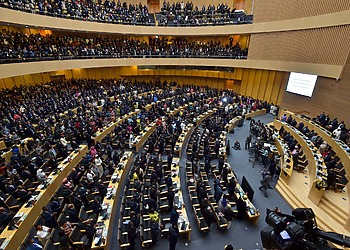
On Friday, a resolution by the UN General Assembly was passed effectively declaring access to a clean and healthy environment as a fundamental human right. The resolution calls on international organizations and business enterprises to increase efforts to ensure everyone has access to a clean environment.  

UN Secretary-General Antonio Guterres praised the decision noting the resolution shows how member states can join together in the fight against the triple planetary crisis — which refers to the issues of climate change, pollution and biodiversity loss.

“The resolution will help reduce environmental injustices, close protection gaps and empower people, especially those that are in vulnerable situations, including environmental human rights defenders, children, youth, women and indigenous peoples”, Guterres said in a statement. 

The resolution was in the works for years

The first time the mention of establishing a resolution recognizing environmental rights was back in 1972 at the United Nations Conference on the Environment in Stockholm.

The conference ended with a historic declaration on topics such as economic growth in developing countries, the pollution of air, water and the ocean and the well-being of people across the globe. 

In almost identical wording, UN Member States wrote that everyone has a fundamental right to “an environment of a quality that permits a life of dignity and well-being,” later calling upon the recognition of this right and the need for action.

After decades of work from nations at the forefront of climate change disaster, the right was finally recognized by the Human Rights Council in October of 2021.

Following this recognition, the Human Rights Council called upon the UN General Assembly to follow suit which led to an official declaration of environmental rights as a human right on Friday.

What does the resolution entail?

The resolution was originally presented by a number of nations including Costa Rica, the Maldives, Morocco, Slovenia, and Switzerland last June, and now has the support of over 100 countries. 

The original text states the right to a healthy environment is related to existing international law and affirms that its promotion requires the full implementation of multilateral environmental agreements.

Alongside acknowledging environmental rights, the resolution mentions briefly the impacts of climate change, of unsustainable management and (mis-)use of natural resources as well as the pollution of land, air and water, poor management of chemicals and waste and the loss of biodiversity.

By addressing the plethora of environmental issues, the text attempts to link these issues as an attack on our fundamental human rights — that environmental damage has mass negative implications, both direct and indirect to our human rights.

Elated over the decision’s future implications, UN Special Rapporteur on Human Rights and the Environment David Boyd is convinced the resolution will change the framework of international human rights laws.

“Governments have made promises to clean up the environment and address the climate emergency for decades but having a right to a healthy environment changes people’s perspective from ‘begging’ to demanding governments to act” Boyd said.

The declaration is supposed to get nation’s and citizens’ attention as well as encourage citizens to hold their governments accountable when they feel their environmental human rights have been wronged.

However, the declaration is not legally binding, thus meaning nations don’t actually have to comply with the UN. 

From the start, several nations had abstained from recognizing these rights including China, the Russian Federation, Belarus, Cambodia, Iran, Syria, Kyrgyzstan and Ethiopia. 

Russia’s abstention was a given since it is a petrostate at war, presently engaged in massive environmental destruction in Ukraine – not to mention the human tragedy this involves. 

China’s abstention comes as a surprise as they could have voted and joined the effort, but clearly they prefer siding with Russia on this, which is a matter of concern. As to the other countries, this was to be expected since they have all shown support for Russia’s war in Ukraine at one point or another. 

Despite several nations refusing to take action, the UN’s resolution to recognize an environmental right has certainly sparked a climate change revolution bound to make noise and garner the attention of other countries across the globe.

Perhaps the most important achievement is that it places the environmental right firmly in the framework of human rights and international law — and once there, is bound to become stronger and impossible to dislodge.


Editor’s Note: The opinions expressed here by the authors are their own, not those of Impakter.com – In the Featured Photo: Picture of a mountain range on May 28, 2006. Source: Elisa Bracco, Flickr.
Tags: Climate ChangeEnvironmental rightsHuman rightsinternational lawUnited Nations General Assembly
Previous Post

Climate Change Is Making Heatwaves at Least 10 Times More Likely

Next Post

Despite Sanctions, Russia Is Not Isolated

Related Posts

coal mine
Business

Can the War on Coal Still Be Won?

Ten years ago, I embedded in the war on coal. I spent a month inside the Sierra Club’s Beyond Coal campaign, watching an organization...

byCanary Media
January 6, 2026
Impakter’s Most-Read Stories of 2025
Society

Impakter’s Most-Read Stories of 2025

In 2025, as in previous years, Impakter readers turned in large numbers to stories examining climate change and pollution, environmental...

byImpakter Editorial Board
December 31, 2025
Year in Review: Trump 2.0 and the Environment
Editors' Picks

Year in Review: Trump 2.0 and the Environment

So much has happened this year. It seems that every day there is a new headline that is just as...

bySarah Perras
December 30, 2025
Is It Time to Recognize Climate Refugees?
Climate Change

Is It Time to Recognize Climate Refugees?

Climate displacement has become a defining feature of our present. Climate shocks now shape human (im)mobility, humanitarian crises, and political...

byDr. Shepherd Mutsvara - Research Fellow at the University of Münster, Germany
December 30, 2025
What’s Next for Sustainable Development in 2026
Climate Change

What’s Next for Sustainable Development in 2026

As governments confront rising misinformation, constrained budgets, and intensifying climate risks, the need for evidence-based policy has never been greater....

byInternational Institute for Sustainable Development (IISD)
December 23, 2025
women and extreme heat
Climate Change

Women and Extreme Heat: Simple Adaptations Make a Big Difference

One of the more damaging impacts of climate change is extreme heat. From Spain to Bolivia to Burkina Faso, unusual...

byKate Schecter - CEO of World Neighbors
December 23, 2025
Canada Sets Green Investment Rules; UK Regulator Probes WH Smith; Louvre Workers Call Off Strike;Trump Allies Clash With Fannie, Freddie Staff.
Business

A New Rulebook for Green Capital: Canada

Today’s ESG Updates Canada Sets Green Investment Rules: Canada will introduce a sustainable investment taxonomy by 2026 to label green...

byEge Can Alparslan
December 19, 2025
How a Framework Convention Could Address Climate and Socio-Economic Displacement
Editors' Picks

How a Framework Convention Could Address Climate and Socio-Economic Displacement

The unprecedented shift in human (im)mobility has seen over 120 million forced to flee their homes due to war, violence,...

byDr. Shepherd Mutsvara - Research Fellow at the University of Münster, Germany
December 18, 2025
Next Post
Despite Sanctions, Russia Is Not Isolated

Despite Sanctions, Russia Is Not Isolated

Recent News

ESG News regarding Dimon warning that Trump’s attacks on Fed could raise inflation and rates, Venezuelan oil shipments to China setting to plunge under U.S. blockade, UK awarding offshore wind contracts to power 12m homes, 2025 being the third-hottest year on record as climate science faces political pushback

Dimon Warns Trump’s Attacks on Fed Could Raise Inflation and Rates

January 14, 2026
Billionaires Became Richer Than Ever in 2025: Who Are They and What Drove Their Wealth Growth

Billionaires Became Richer Than Ever in 2025: Who Are They and What Drove Their Wealth Growth

January 14, 2026
When Food Waste Becomes Fashion: Emerging Innovations

When Food Waste Becomes Fashion: Emerging Innovations

January 14, 2026
  • ESG News
  • Sustainable Finance
  • Business

© 2025 Impakter.com owned by Klimado GmbH

No Result
View All Result
  • Environment
    • Biodiversity
    • Climate Change
    • Circular Economy
    • Energy
  • FINANCE
    • ESG News
    • Sustainable Finance
    • Business
  • TECH
    • Start-up
    • AI & Machine Learning
    • Green Tech
  • Industry News
    • Entertainment
    • Food and Agriculture
    • Health
    • Politics & Foreign Affairs
    • Philanthropy
    • Science
    • Sport
  • Editorial Series
    • SDGs Series
    • Shape Your Future
    • Sustainable Cities
      • Copenhagen
      • San Francisco
      • Seattle
      • Sydney
  • About us
    • Company
    • Team
    • Global Leaders
    • Partners
    • Write for Impakter
    • Contact Us
    • Privacy Policy

© 2025 Impakter.com owned by Klimado GmbH