Russian state entities are threatening to use the 1989 Belgium-Luxembourg (BLEU)–USSR bilateral investment treaty (BIT) to sue Belgium over the European Union’s (EU’s) plan to back a EUR 140 billion Ukraine support loan with immobilized Russian Central Bank assets held in Belgium. No case has been filed yet, but Belgian officials treat it as a credible risk and are currently not supporting the EU proposal.
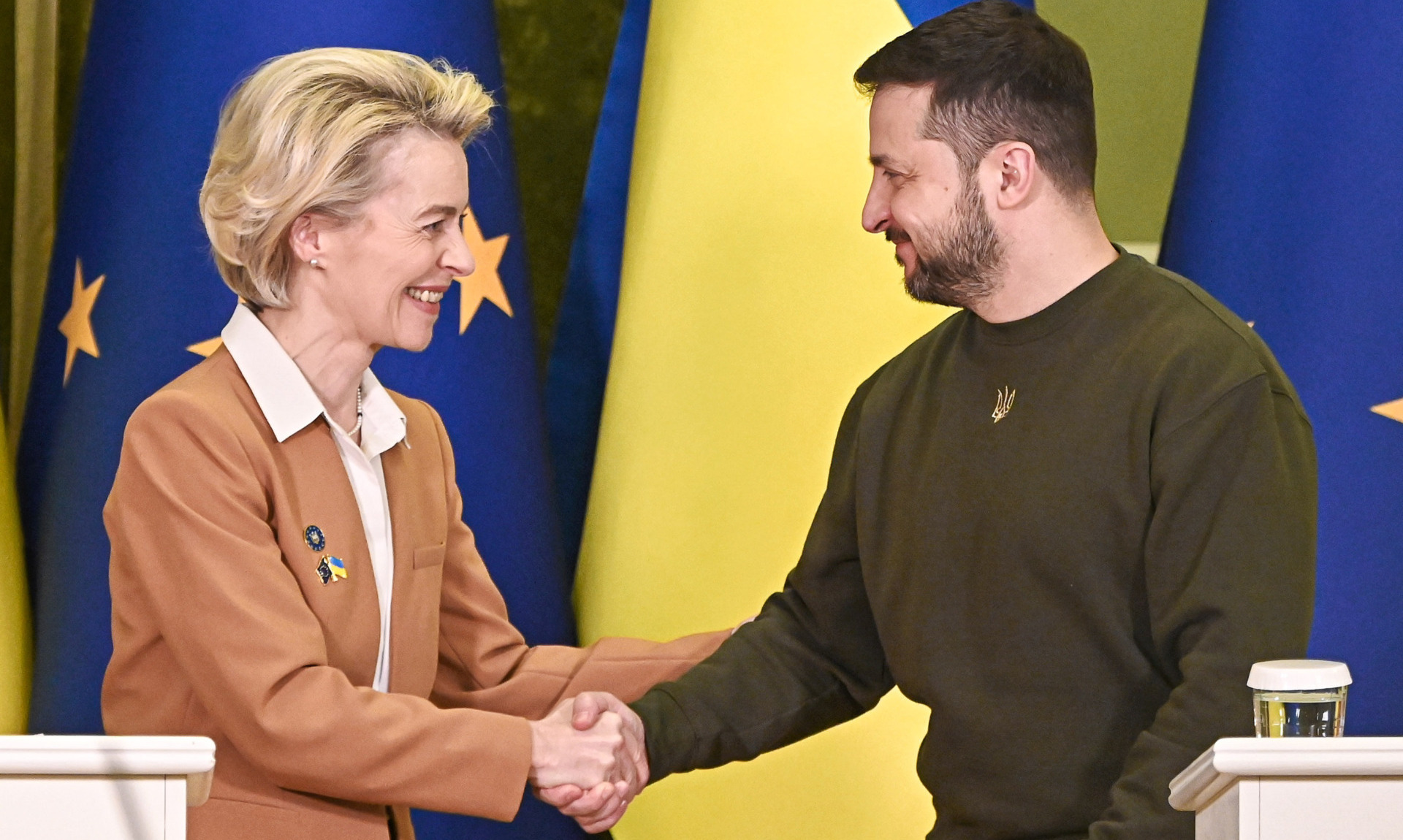
Using the immobilized Russian assets “is the most effective way to sustain Ukraine’s defense and its economy,” European Commission President Ursula von der Leyen recently told the European Parliament, stressing that this is about defending Europe’s freedom and democracy. The EU is not the only actor considering the immobilized assets: a recent U.S. plan proposed to use a large portion of these assets for Ukraine’s reconstruction, but with the United States taking 50% of the profits generated.
That Belgian decision-makers now refrain from backing the crucial Ukraine proposal for fear of arbitration based on investment treaties only adds to longstanding concerns about these instruments. Over the past decades, these treaties have increasingly been misused in ways their drafters never intended. From climate policy to public health, they now put collective security decisions at risk. Reform is more urgent than ever.
Peace Talks, the EU’s Support to Ukraine, and the Threat From Outdated Treaties
While Ukrainian and U.S. negotiators continue discussions to bring Russia’s war in Ukraine to an end, Brussels is seeking to agree on its latest economic support package for Kyiv. A final decision is expected at the European Council meeting on December 18–19.
When European Commission President Ursula von der Leyen met Belgian Prime Minister Bart De Wever on November 14, part of their conversation focused precisely on the legal risks Belgium is facing under the BLEU–Russia BIT — if the EU presses ahead with the Ukraine loan. BITs are international agreements between two countries that set rules to protect and promote investments made by investors of one country in the territory of the other.
The immobilized Russian assets are concentrated at Euroclear in Brussels, an international central securities depository (immobilized assets refer to sovereign assets such as central bank reserves, whereas frozen assets refer to the property of sanctioned private individuals or companies).
Roughly EUR 185 billion in Russian Central Bank holdings are immobilized there, with about EUR 176 billion in cash. The EU renews the immobilization every six months, creating a rolling legal framework for custody and potential use. This concentration in a Belgian market infrastructure makes Belgium, as host of the institution, the target for any arbitration claim under a BIT.
De Wever has publicly described the risk of Russian state entities, or the Russian state, using the BLEU-Russia treaty to challenge the use of the immobilized Russian assets through investment arbitration as a “Sword of Damocles” hanging over his government.
This is one recent example of a fast-evolving problem posed by investment treaties between the EU, or its member states, and Russia. A growing number of private investors affected by the EU’s response to the war in Ukraine are already using these treaties to launch investor–state dispute settlement (ISDS) claims — a system that allows foreign investors to bring arbitration claims directly against host states.
In many BITs, including the one between BLEU and Russia, ISDS co-exists alongside state–state dispute settlement, which is used far more rarely. In this case, both the ISDS and state–state avenues seem to alarm the Belgian government.
That public and private Russian actors could use a Cold War-era treaty between the Soviet Union and Belgium to undermine Europe’s support for a state resisting the Kremlin’s aggression is a stark reminder that the investment law regime was not designed for today’s security realities. Far-reaching investment treaty reform is crucial to safeguard collective security measures moving forward.
For now, the international community’s failure to modernize or terminate outdated treaties could be exploited by Russia and Russian investors — with the political cost borne by Ukraine, which depends on urgent support to withstand the invasion.
Euroclear and the BLEU–Russia Treaty
Euroclear continues to receive income on the Russian state assets, including coupon payments and maturities, but cannot transfer funds to Russia due to the sanctions. The amounts involved are significant and have generated large windfall profits for Euroclear, part of which is already taxed in Belgium and other jurisdictions.
As mentioned, European leaders are now debating a plan to use the immobilized assets as collateral for a long-term support loan to Ukraine. Belgium is so far not supporting the loan, insisting on strong guarantees that any legal risks or financial liabilities arising from this structure, including under its BIT with Russia, will be shared across the Union.
The BLEU–Russia BIT contains typical so-called protection clauses for investors — fair and equitable treatment, protection against expropriation, and free transfer of payments. It includes investor–state arbitration, limited to disputes concerning the amount of compensation for expropriation, alongside state–state dispute settlement. Crucially, the treaty does not contain an explicit security exception allowing parties to justify measures adopted in response to armed conflict or threats to international peace and security.
Public commentary by Russian counsel suggests how this treaty might be used in relation to Euroclear and the EU’s Ukraine scheme. It argues that the EU’s restrictions on Russian Central Bank assets amount to creeping expropriation of sovereign property and that immobilizing these assets is incompatible with sovereign immunity and the law of state responsibility. The commentary underlines that the BLEU–Russia BIT offers both investor–state and state–to-state arbitration options for challenging the EU’s scheme.
In relation to the investor–state avenue, the commentators suggest that not only private Russian investors but also the Russian Central Bank could launch an ISDS claim against Belgium, as the host of Euroclear and the immobilized Russian assets. There are many open questions about the legal merits of this narrative. Commentary often amounts to advocacy rather than legal analysis, and it relies on bold readings of investment treaty definitions and the relationship between immunity and jurisdiction.
However, this seems to be part of the “legal risk” Belgium’s government argues must be solved before it can agree to back the EU’s loan for Ukraine with the immobilized Russian sovereign assets.
A Surge in Sanctions-Related ISDS Claims
Belgium’s concerns arise against a surge of sanctions-related ISDS claims brought by private Russian entities. Since 2014, and especially since Russia’s full-scale invasion of Ukraine in 2022, private investors affected by the EU’s Russia sanctions have increasingly used ISDS in BITs and the Energy Charter Treaty (ECT) to challenge state measures.
There are already more than two dozen known cases or threats of ISDS claims linked to sanctions or related emergency measures, with claimed amounts rising to billions of USD. Each dispute signals to governments that decisive action against aggression may carry a hefty price tag while these outdated treaties are in place — a phenomenon called regulatory chill.
These disputes involving different Russian actors fall into two categories. The first concerns ISDS claims over frozen private financial assets brought by Russian or Belarusian entities challenging Western sanctions or asset freezes. Examples include notices of dispute by Russian business figures over frozen assets in Belgium and in other European jurisdictions, such as the United Kingdom, Luxembourg, and Lithuania, as well as threats of claims contesting their inclusion on EU or national sanctions lists of particular individuals or companies under EU restrictive measures or national regimes. These listing decisions are asset-related because they automatically freeze assets and block access to banking, settlement, and transfers.
The second category concerns ISDS claims targeting broader economic response measures that affect Russian corporate revenues or physical assets, including windfall taxes on energy producers or restrictions on certain export sectors (e.g., the oil refinery operator Klesch’s ISDS claims against Denmark, Germany, and the EU).
This context shapes Belgium’s assessment of legal risks, and possible financial liabilities, if it agrees to use the Russian Central Bank assets held at Euroclear to back the Ukraine loan. Belgian officials seem to be concerned about two types of claims that could potentially be initiated against them under the BIT: A claim brought by Russia’s Central Bank attempting to act as a private claimant in investor–state arbitration under the BIT, or Russia launching a state-to-state claim under the treaty.
Belgium also worries about the potentially high damages they could be ordered to pay if they were to lose such arbitration claims — creating financial liabilities that could far exceed the nominal value of the Russian Central Bank assets held at Euroclear.
These developments are reshaping the investment disputes landscape, injecting heightened political sensitivity and raising questions about how dispute settlement provisions in treaties interact with domestic emergency powers and general international law on state responsibility, immunity, and countermeasures.
The controversy extends beyond private investors to sovereign assets and the financial market infrastructures central to sanctions implementation. The combination of sovereign assets held at Euroclear and the potential legal effect of the BLEU–Russia BIT on Belgium, as Euroclear’s host, is now demanding EU leaders’ attention.
Can Russian state entities benefit from treaty protections designed for private investors?
A central question of any Russian attempts to challenge the Euroclear-backed loan through investment treaties is whether a central bank, or other governmental entity, actually can qualify as an investor and bring claims under a BIT.
Practice under the International Centre for Settlement of Investment Disputes (ICSID) Convention, the set of rules most frequently used for treaty-based investment arbitration, has tended to exclude state entities from the category of investors — meaning they are barred from launching ISDS claims under those rules. Whether this interpretation extends beyond the ICSID Convention and to alternative investment arbitration rules — such as those under the United Nations Commission On International Trade Law, Stockholm Chamber of Commerce, International Chamber of Commerce — is less clear.
Outside of ICSID, many treaties define an investor simply as a natural or legal person constituted under the law of a contracting party. The broad definitions in the BLEU–Russia treaty invite arguments that certain state-controlled entities or vehicles could fall within the investor category.
Russian counsel appear willing to explore this grey area to challenge the EU’s scheme, treating Russian Central Bank assets as sovereign for immunity and countermeasure purposes. Yet, at the same time, they hint at ways in which these same assets could be seen as an investment protected under a treaty originally intended for private investments—which would give the Russian Central Bank access to ISDS under the BLEU–Russia BIT. It is not clear whether an arbitral tribunal would accept such a dual presentation and confirm that it has jurisdiction.
However, the mere availability of plausible legal arguments, even if they might ultimately fail, can generate perceived risk, shape states’ choices on national security sanctions, and influence the use of frozen or immobilized assets.
What can be done?
Given that arbitration awards are typically final and binding, attention should shift to domestic courts, where parties will go to enforce awards. Governments should put into place legal avenues to block the enforcement of awards that contradict fundamental public policy or international sanctions regimes, such as the EU’s response to Russia’s invasion. This could include building international coalitions that pledge not to enforce sanctions-related ISDS awards related to collective security responses.
This could include building international coalitions that pledge not to enforce sanctions-related ISDS awards related to collective security responses.
The EU is already taking targeted measures at the enforcement stage. Its 18th Russia sanctions package, released in July this year, includes provisions seeking to block the recognition and enforcement in the EU of awards or judgments arising from Russia-related disputes that undermine the effectiveness of sanctions. It also allows member states ordered to pay damages in such disputes to seek recovery from Russian assets covered by the sanctions regime.
Switzerland has likewise amended its legislation to bar the recognition and enforcement of ISDS awards from sanctions-related disputes. This increases uncertainty about whether an award or judgment will translate into actual payment and may help in safeguarding EU policy insofar as the enforcement is contained in the EU. This approach could be extended beyond the EU to include other jurisdictions where ISDS awards are typically enforced.
While dealing with blocking the enforcement of sanctions-related awards is an effective way to addressing some of the unintended consequences of investment treaties, the core of the problem — the fact that investment treaties will continue to be misused to chill legitimate public policy and that enforcement remains largely available outside the EU — will not be resolved by dealing solely with enforcement.
To avoid this type of misuse of investment treaties, the EU and its member states, as well as other states seeking to maintain control over their national security and sanctions, should also critically assess their stock of investment treaties. They should accelerate their reform and the review of dispute settlement policies to help counter the blocking of legitimate measures and choices in times of war.
** **
This article was originally published by the International Institute for Sustainable Development (IISD) and is republished here as part of an editorial collaboration with the IISD.