Impakter
  • Environment
    • Biodiversity
    • Climate Change
    • Circular Economy
    • Energy
  • FINANCE
    • ESG News
    • Sustainable Finance
    • Business
  • TECH
    • Start-up
    • AI & Machine Learning
    • Green Tech
  • Industry News
    • Entertainment
    • Food and Agriculture
    • Health
    • Politics & Foreign Affairs
    • Philanthropy
    • Science
    • Sport
  • Editorial Series
    • SDGs Series
    • Shape Your Future
    • Sustainable Cities
      • Copenhagen
      • San Francisco
      • Seattle
      • Sydney
  • About us
    • Company
    • Team
    • Global Leaders
    • Partners
    • Write for Impakter
    • Contact Us
    • Privacy Policy
No Result
View All Result
Impakter logo
No Result
View All Result
How Sustainable Is Second-Hand Clothing? 

The rise of vintage fashion has led to a surge in secondhand consumption

How Sustainable Is Second-Hand Clothing? 

If done right, pre-loved apparel has the power to tip today's fashion in a more sustainable direction.

Yuxi LimbyYuxi Lim
December 11, 2025
in Climate Change, Environment, Fashion, Lifestyle
0

The fashion industry is one of the world’s largest polluters, accounting for about 2%-8% of global greenhouse gas emissions. This is because fast fashion relies heavily on energy-intensive production and supply chains, materials derived from fossil fuels, and a model that drives overconsumption and waste. In 2023, approximately 2.5-5 billion surplus garments were produced, with most ending up in landfills or incinerators. . The fast fashion industry is also responsible for various social injustices, including labour abuses, across different countries. 

In response, second-hand clothing is emerging as a more sustainable alternative. As sourcing materials and clothing production generate the most pollution, buying secondhand clothing avoids these processes altogether. It also gives clothes new life instead of them going to landfills and contributing to pollution. 

Other, non-environmental perks of secondhand clothing include their affordability and uniqueness. From higher-end items to one-of-a-kind pieces, secondhand shopping lets people find things that match their personal tastes for good prices.

According to a recent survey, secondhand items now account for 28% of people’s existing wardrobe, including approximately 30% for clothing and 40% for handbags. Data also suggests that the secondhand fashion and luxury market is growing three times faster than the firsthand market, with the global resale market projected to hit up to $360B by 2030, up from $210B – $220B from today.

However, a recent study suggests that the growth in secondhand consumption is starting to mimic the patterns of primary consumption, raising the question: how sustainable is second-hand clothing really? 

Second‑Hand’s Hidden Costs
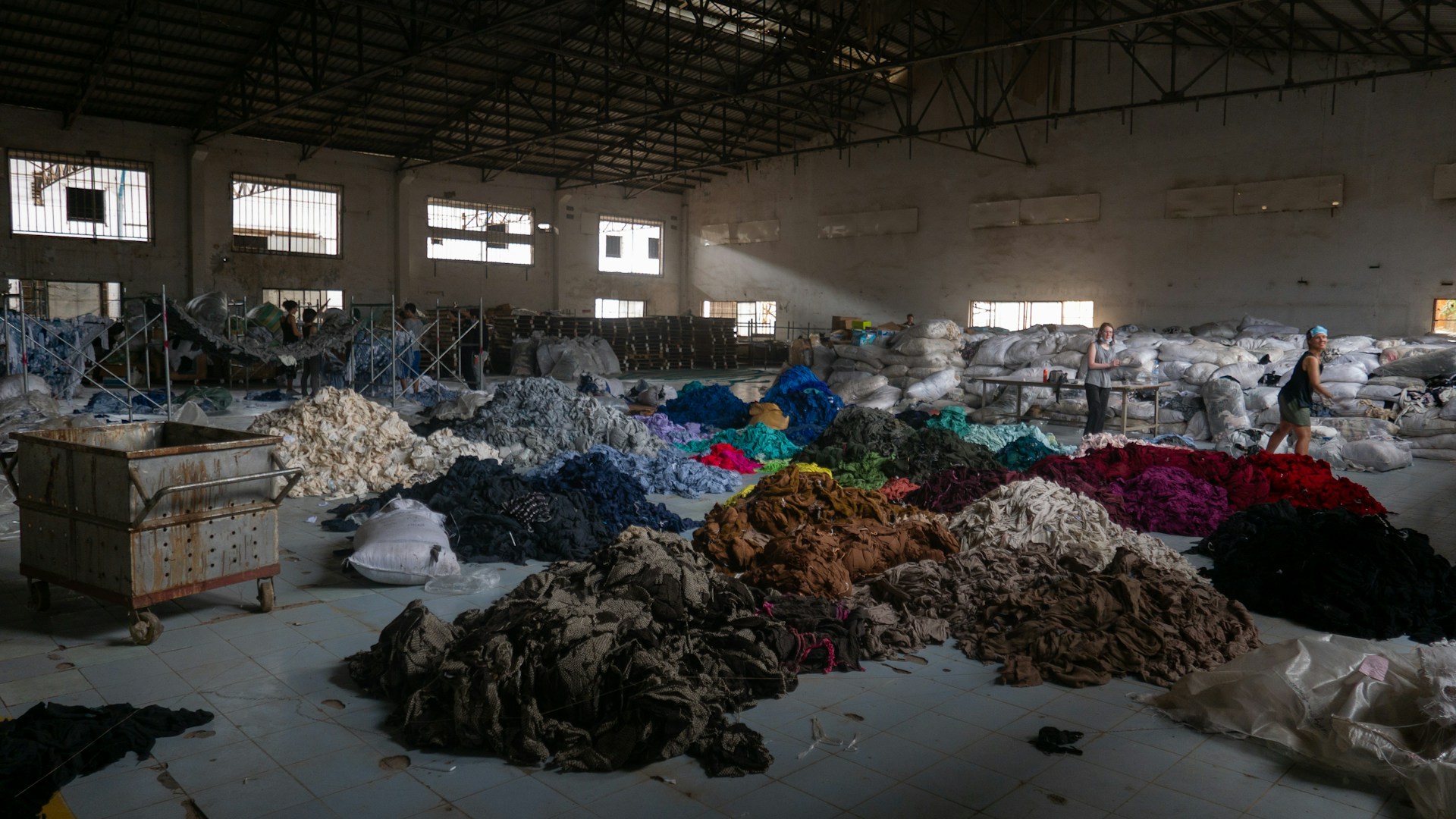
The discarded items are sorted and refurbished by Cambodian workers before reselling them to local thrift stores. The unwearable ones will be sorted and sent to incinerators. Photo Credit: Wason Wanichakorn / Greenpeace

Despite its reputation as the more sustainable shopping choice, there is limited empirical evidence that it curbs fast fashion demand. Major resale platforms have been under scrutiny for their capacity to reinforce fast fashion dynamics, especially if their revenue depends on the disposal of wearable clothing, driven by either trend fatigue or space constraints. 

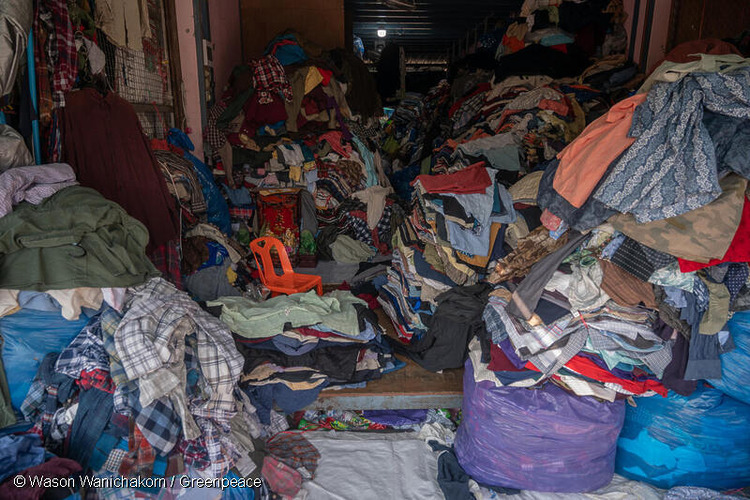
A significant amount of surplus garments produced by the fast fashion industry ends up in global secondhand markets through donation streams. Large quantities of clothing are exported to other developing nations, oversaturating their local markets and affecting domestic production. These export processes further exacerbate the climate crisis due to their large emission volumes.

Why “Ethical” Shopping Isn’t Enough

Furthermore, studies show positive correlations between consumers’ spending in primary and secondhand markets, indicating that consumers’ increased clothing donation practices occur alongside their continuous acquisition of clothing. Disposal behaviours appear to be motivated by the desire for novelty and keeping up with trends, as most people reported making donations to either make room for new purchases. This signals that secondhand consumption adds to primary consumption instead of replacing it. 

The perceived ethics of secondhand consumption may lead to higher consumption rates by alleviating guilt and justifying additional purchases. Consumers’ behaviours may then offset the environmental benefits obtained through the secondhand market.
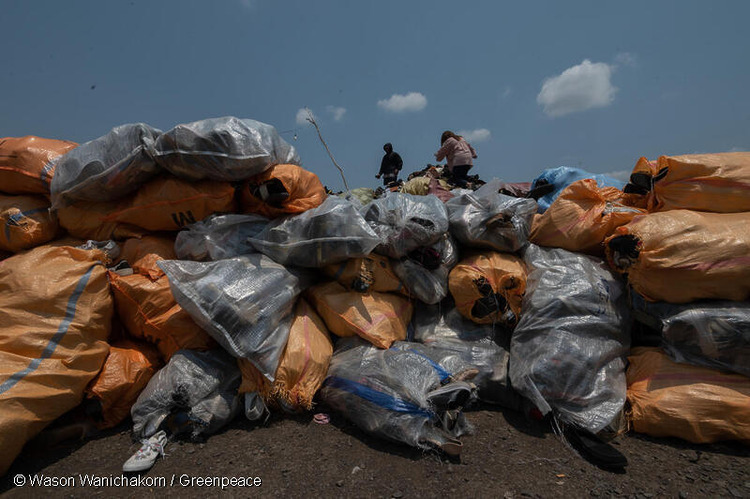
Pile of secondhand apparels found at the dumpsite in Sa Kaeo, about 48 kilometers from Thai-Cambodian border. Photo Credit: Wason Wanichakorn / Greenpeace

Related Articles

Here is a list of articles selected by our Editorial Board that have gained significant interest from the public:

  • Greenwashing Is Trending, But It Shouldn’t Be!
  • Fashion Giants and Sustainability: 5 Brands Reshaping the Industry
  • Sustainable Retail: How QR Codes Reduce Waste and Improve Transparency for Consumers

Rethinking Fashion: From Consumers to Industry

This is a significant cause for concern, especially with the projected growth of the secondhand market alongside the steady rise of the primary market. Consumers can do their part by making more mindful choices. Apart from simply wearing existing clothes in their wardrobe, mixing and matching their clothing in different combinations, or upcycling worn-out pieces can add a fresh twist to their usual rotation. 

Though easier said than done, people should also refrain from making impulsive purchases that will be thrown out of their closets after one or two wears when a new trend arises. Instead, consumers should aim to invest in timeless, good quality secondhand pieces that they can see themselves wearing frequently. 

Beyond Individual Choices

Unfortunately, there are gaps between consumers’ intentions and their actions, and their expressed sustainability concerns do not translate into their consumption choices. This underscores the limitations of consumer-driven solutions to tackle the challenges posed by the fashion industry. 

Research has emphasised the need to tackle the root cause of overconsumption, starting from within the fashion industry. There is an urgent need to implement policies and regulations that target the systemic challenges by increasing transparency and accountability. 

Examples of such policies include the required disclosure of sustainability metrics, promoting certification systems to improve accountability, and clarifying the environmental impact of donation-based organisations. These may help to facilitate positive changes in the market, moving in a more sustainable direction. 

Style Without Sacrifice

At the end of the day, the climate crisis is a global concern, and every person matters. While the secondhand market has the potential to mitigate the issues posed by the fast fashion industry, industries and consumers must make a collective effort to prioritise more sustainable long-term goals over fleeting trends for a greener, stylish future.

Editor’s Note: The opinions expressed here by the authors are their own, not those of Impakter.com — In the Featured Photo: Clothes hanging on rack in vintage store. Featured Photo Credit: Francois Le Nguyen

Previous Post

Germany Moves to Fast-Track Infrastructure, Retreats From Heating Law

Next Post

Unexpected Consequences of Investment Treaties in Times of War

Related Posts

Marathoners
Health

8 Must-Know Websites for Marathoners

Running 26.2 miles takes months of preparation, and the training itself is only part of the equation. You need the...

byHannah Fischer-Lauder
January 16, 2026
Why Glyphosate, the World’s Most Widely Used and Sued Herbicide, Is Under New Scrutiny
Business

Why Glyphosate, the World’s Most Widely Used and Sued Herbicide, Is Under New Scrutiny

Glyphosate, the active ingredient in "Roundup," is applied on millions of acres of farmland worldwide. Its use has triggered a...

byRichard Seifman - Former World Bank Senior Health Advisor and U.S. Senior Foreign Service Officer
January 16, 2026
The Imperative of a Nature-Positive Future
Biodiversity

The Imperative of a Nature-Positive Future

For most of human history, survival was a gamble. Half of all children never reached puberty. Life expectancy hovered around...

byMarco Lambertini
January 16, 2026
ESG News regarding Equinor wind farm project to resume in US, Blue Earth Capital raises $100 million, Google Signs Major 1.2 GW Carbon-Free Energy Deal, and US to Finalize 2026 Biofuel Quotas by March
Business

U.S. Court Clears Equinor to Resume $5B Wind Project Halted by Trump

Today’s ESG Updates Court Clears Equinor to Resume $5B Wind Project: A federal judge overturned Trump’s suspension order, allowing Equinor...

byEge Can Alparslan
January 16, 2026
The Consciousness Era Arrives for Film
Cinema

The Consciousness Era Arrives for Film

I sat in the dim glow of the Cannes Cinéma de la Plage, pondering the fractured state of modern distribution....

byJ.L. Morin
January 16, 2026
American Seizure of Greenland Would Threaten the Global Order
Politics & Foreign Affairs

American Seizure of Greenland Would Threaten the Global Order

U.S. President Trump has repeatedly called for the annexation of Greenland, an autonomous territory within the Kingdom of Denmark. U.S. officials insist they...

byBenjamin Clabault
January 16, 2026
Russia Raises Alarm Over NATO Military Presence in Greenland, US and Taiwan Seal Semiconductor Trade Deal With Major Investment Commitments, Growing Concerns Over Medical Care in US Immigration Detention, Machado Seeks Influence After High-Stakes Meeting With Trump
Climate Change

Trump’s Greenland Ambitions Strain NATO Unity

Today’s ESG Updates Russia Accuses NATO of Militarising the Arctic: Russia has warned that NATO’s planned deployment to Greenland risks...

byPuja Doshi
January 16, 2026
Costumes for Purim
Business

What to Consider When Selecting Costumes for Purim

Purim is a celebration that is full of storytelling, music, and joy. The choice of costume, which can take a...

byHannah Fischer-Lauder
January 15, 2026
Next Post
Corporate Wellness: woman taking care of herself in a quick 5min break

Corporate Wellness 3.0: How Online Therapy Helps Build Sustainable Workforces

Recent News

Marathoners

8 Must-Know Websites for Marathoners

January 16, 2026
Why Glyphosate, the World’s Most Widely Used and Sued Herbicide, Is Under New Scrutiny

Why Glyphosate, the World’s Most Widely Used and Sued Herbicide, Is Under New Scrutiny

January 16, 2026
The Imperative of a Nature-Positive Future

The Imperative of a Nature-Positive Future

January 16, 2026
  • ESG News
  • Sustainable Finance
  • Business

© 2025 Impakter.com owned by Klimado GmbH

No Result
View All Result
  • Environment
    • Biodiversity
    • Climate Change
    • Circular Economy
    • Energy
  • FINANCE
    • ESG News
    • Sustainable Finance
    • Business
  • TECH
    • Start-up
    • AI & Machine Learning
    • Green Tech
  • Industry News
    • Entertainment
    • Food and Agriculture
    • Health
    • Politics & Foreign Affairs
    • Philanthropy
    • Science
    • Sport
  • Editorial Series
    • SDGs Series
    • Shape Your Future
    • Sustainable Cities
      • Copenhagen
      • San Francisco
      • Seattle
      • Sydney
  • About us
    • Company
    • Team
    • Global Leaders
    • Partners
    • Write for Impakter
    • Contact Us
    • Privacy Policy

© 2025 Impakter.com owned by Klimado GmbH