Roughly eighty years ago an organization was established after the end of World War II designed to set the global framework for dealing with our common future. In the intervening years it had great success, but in the closer present, it has not been able to deal with the most pressing conflicts.
This has largely been the result of the structure and veto powers of the five permanent members, several of whom in recent years have repositioned their global roles and actions in contravention of basic UN rules, witness Russia vis-à-vis Ukraine or the U.S. vis-à-vis Venezuela and Iran, reflecting global political strategy reformulation away from globalization and the principles of global public goods. It brings into focus the disregard for the notion that a rising tide lifts all boats, i.e., global economic growth is a good thing for prosperity even in smaller communities, and, instead, celebrates nationalism, me-first strategies and the willingness to insert raw military and economic power into global bilateral and multilateral diplomatic relationships between countries.
But this is not the only factor likely to shape the future of the United Nations’ basic underpinnings and functionality; another is the institution’s unreliable financing writ large, and the number of disillusioned countries that apply rhetoric but not the rules.
In short, without major reform, the UN risks becoming less relevant and simply a multilateral sideshow. What would be vastly preferable is for a new vigor, a robust United Nations that has adapted to the twenty-first century and provides critical guardrails for the Global North and Global South to abide by its terms.
This prospect is reinforced by the Security Council’s or the Secretary-General’s inability to deal with the Ukraine War, or the United States, with its most recent actions in Venezuela and Iran, in which it looks strictly to its military and economic power to set the table as it sees fit. And while not alone, the U.S., as both the originator and largest global economy, both in the past and now, has shown disinterest in meeting its assessed financial contributions.
Subsequently, its behavior was and is copied by other UN Member States, making financial bankruptcy not inconceivable, or much nearer than many would expect, and, due to the complex financial arrangements of the UN, could catch many governments by surprise if and when it were to happen, even in the current calendar year.
Support for Specialized Entities
If the entirety of the UN, including its peace missions with UN troops stationed (the Blue Helmets), were no longer supported, some “pieces” might continue, similar to a large conglomerate breaking apart, with some segments continuing to function usefully and profitably. This would involve identifying which entities and their functions would be essential to agreed international coordination and cooperation.
There are several valuable UN-associated organizations that would meet such criteria, e.g., providing essential, concrete oversight or services that matter to both the Global North and the Global South. These regulate shared systems, manage global public goods, or deliver services no single country can provide alone. Below are a few such specialized entities. Each, in some form, manages global public goods, provides technical standards that make global systems interoperable, is designed to provide neutral oversight, and reduce systemic risks no country can manage alone, and, by implication, therefore, from which all countries benefit, even the most powerful.
- The World Health Organization (WHO) sets global health standards, coordinates disease surveillance, and manages international health emergencies. Infectious disease control (e.g., epidemic, and pandemic response) requires worldwide coordination. (While these functions get the current world’s attention due to the recent dynamics of the COVID-19 pandemic, critical is the organization’s role in defining the classification of disease (imagine that the diagnosis of cancer in the U.S. would mean something different in Japan or India?), its guardianship of the quality of pharmaceuticals worldwide, standardization of diagnostics and even the practice of medicine, and so on.)
- The International Civil Aviation Organization (ICAO) regulates international aviation safety, security, and technical standards. Air travel is a single global system; safety in one region affects all others. Ensures interoperability of aircraft, airports, and air traffic control worldwide.
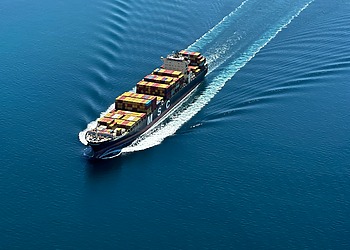
- The International Maritime Organization (IMO) sets global standards for shipping safety and environmental protection. Over 80% of world trade moves by sea; both North and South depend on safe, predictable shipping. Regulates pollution, shipping lanes, and vessel standards.
- World Meteorological Organization (WMO) coordinates global weather data, climate monitoring, and early-warning systems. Climate change, storms, and droughts affect all regions.
- The International Telecommunication Union (ITU) provides global standards for telecommunications, radio spectrum, and satellite orbits. Ensures that phones, satellites, and internet systems work across borders. Prevents spectrum interference and allocates orbital slots — resources no country controls alone.
- The International Atomic Energy Agency (IAEA) monitors safety and safeguards nuclear materials and inspects facilities. As has already been experienced and we know too well, nuclear accidents or proliferation threaten all states.
- The Food and Agriculture Organization (FAO) monitors global food systems, supports agriculture, which affects global food availability and markets, and provides crucial data.
- The International Seabed Authority (ISA) regulates mining and environmental protection in international seabeds.
Again, there are other invaluable UN organizations, such as UNICEF and UNHCR, with primarily humanitarian mandates, that have broad community-based support in many countries; they would likely continue in some form or another.
Another Alternative Scenario: Coordinated Regional Entities
To be explored in another setting is the possible reliance on existing regional public sector entities, possibly complemented by non-profit and private sector participants, to form networks for coordination and collaboration of concrete global challenges.
Such an effort is being tried by multilateral regional and global development banks (MDBs). As described in the Viewpoint Note, approved in 2024, ten major MDB leaders outline key deliverables for joint and coordinated action to better support clients in addressing regional and global challenges, focusing on five critical areas, namely:
- MDB financing with innovative financial instruments to shareholders, development partners and capital markets, including hybrid-capital and risk-transfer instruments.
- Boosting joint action on climate change with outlining a first common approach to measuring climate results on adaptation and mitigation;
- Supporting collaboration and co-financing for country-owned and country-led platforms, including a Collaborative Co-Financing Portal;
- Catalyzing private-sector mobilization to finance development goals.
- Enhancing development effectiveness and impact by focusing on the impact of their work.
These could potentially be a major improvement in external financing, “if” what follows are concrete and sustained efforts to achieve the stated goals. And there is, of course, the issue of how to deal with major actors not signing on, such as the China-based and initiated Asian Infrastructure Investment Bank (AIIB).
But this approach by the MDB regional banks and the World Bank Group suggests a potential pathway to greater effort toward a common cause on issues of global interest.
Related Articles
Here is a list of articles selected by our Editorial Board that have gained significant interest from the public:
The Best Outcome Is an Effective United Nations, But…
There is a need for greater global coherence in addressing matters that affect all our well-being, safety, and security. It is what the UN should do, but as of the beginning of the 21st Century it has increasingly been unable to fulfill the aspirations of its founders and members.
The recognition last year that the organization is in trouble and needs reform was a useful first step (the UN80 Initiative; its plans to decentralize away from New York and Geneva), but fell far short of fundamental structural reform: the three aspects requiring not repair but structural repositioning include drastic reform, such as:
- Expansion of the Security Council to expand its permanent members to include a large number of the current G20, and modify voting rules to address veto authority, or possibly its elimination.
- Significantly enhance the pro-activity powers of the Secretary-General and her or his engagement and involvement in all early stages of conflict and the “open” and public engagement towards the prevention of war.
- Redefine notions of UN membership to adjust to modern times, including consideration of transnational companies and other global private sector entities. (for example drawing on the membership in the UN Global Compact, in which 15,000 companies participate and which are committed to a set of 10 critical principles, or some form of inclusion for transnational corporations, whose revenues or capitalization are in the trillions of dollars (such as Apple or Nvidia, or financial asset managers such as Vanguard or BlackRock), and each of which significantly exceed the Gross Domestic Product of many UN members.)
This article illustrates the kinds of profound questions, orders of magnitude, comparisons of different alternatives, political will, and constituency support that will be central to better coping with the next quarter-century.
What we have now is not working — we must do better, and this is for all of us.
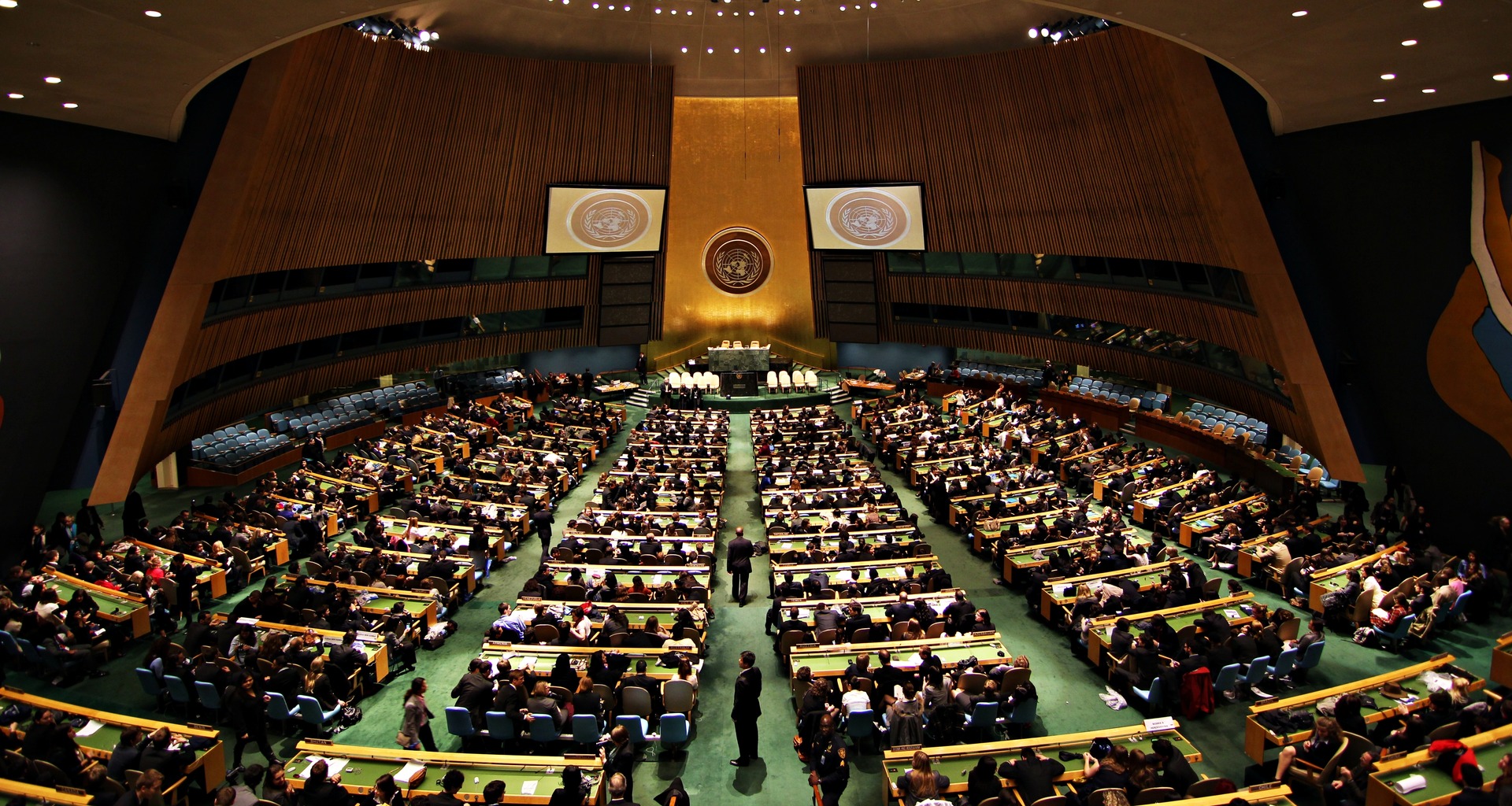
Editor’s Note: The opinions expressed here by the authors are their own, not those of impakter.com — In the Cover Photo: United Nations General Assembly Hall in the UN Headquarters, New York, U.S., April 2011. Cover Photo Credit: Basil D Soufi.