

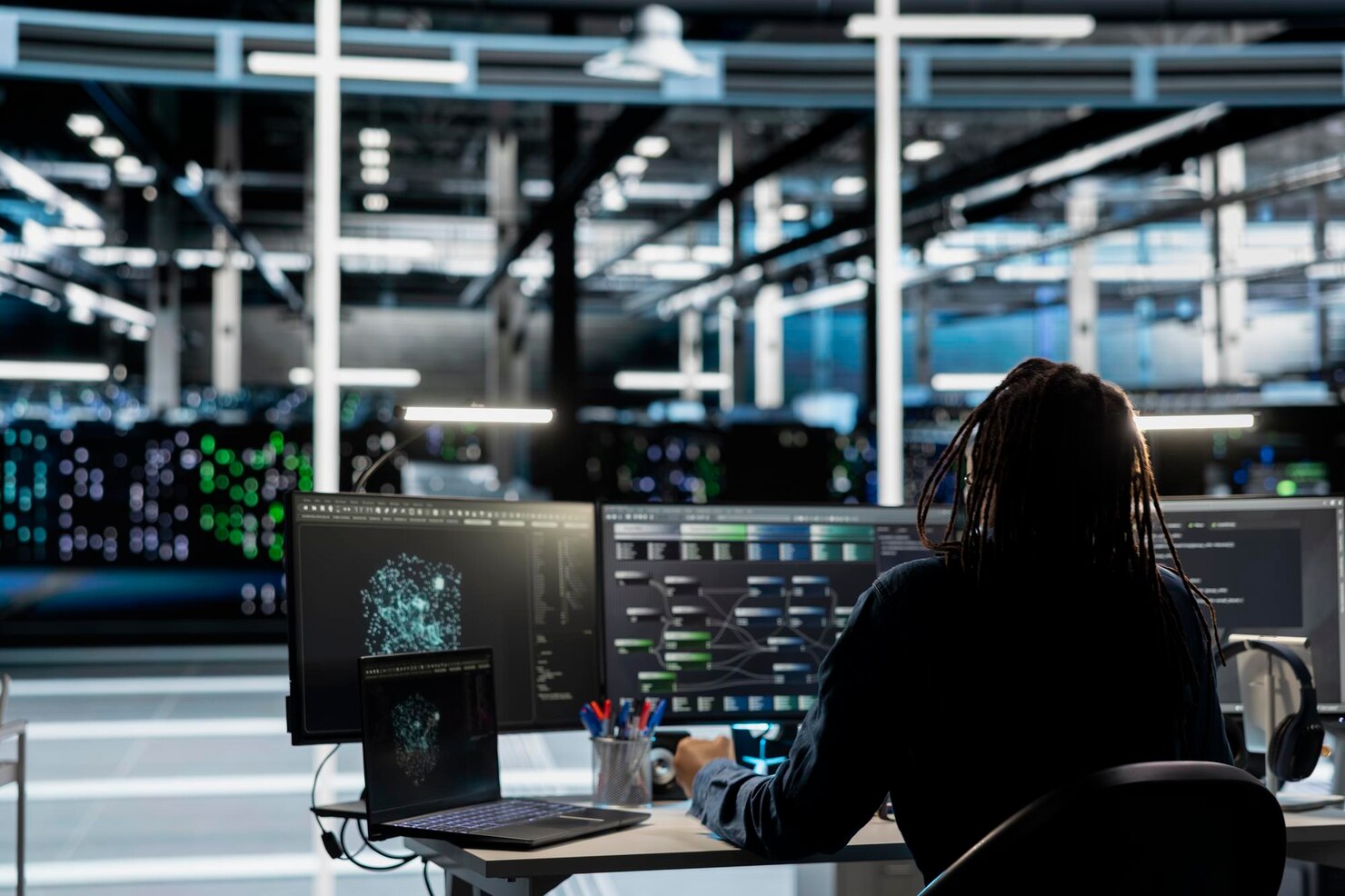
A ransomware alert at 2 a.m. lands differently on a factory floor. When the network that schedules production, tracks inventory and connects to suppliers goes dark, lines stop, orders slip and recovery costs climb by the hour. IBM X-Force has ranked manufacturing as the most-attacked industry for several years running, yet many plants still run security with a small IT team and no overnight coverage.
Managed detection and response (MDR) closes that gap. An MDR provider supplies analysts who watch your security data around the clock, investigate alerts, and contain or remediate threats within limits you agree in advance. This guide compares six leading MDR services against the criteria that matter most to manufacturers in 2026.
Key Takeaways
- MDR gives lean manufacturing IT teams 24/7 analyst coverage without the cost of building an in-house security operations center.
- The most important contract detail is response authority: what the provider may isolate or remediate on its own, and what needs your approval, especially near production systems.
- Coverage of operational technology (OT) such as PLCs and SCADA servers varies widely. Confirm it in writing rather than assuming it.
- Plants with a mixed-vendor stack should weigh integration breadth, while single-platform shops can favor fully managed remediation.
- Compare proposals on scope, exclusions and onboarding before comparing price.
What Is MDR and Why Does Manufacturing Need It?
MDR combines detection technology, usually endpoint detection and response plus wider telemetry, with a human team that monitors, hunts, investigates and responds. Unlike a traditional managed security service that mainly forwards alerts, an MDR provider is expected to act on them.
Manufacturers face a particular mix of pressures. Plants often run around the clock, but IT staff usually do not. Legacy Windows machines sit beside newer cloud tools. Engineering workstations, remote vendor access and flat networks give attackers room to move between business IT and the plant floor, and industrial control environments carry cybersecurity risks of their own. Because downtime is measured in lost output, the speed of containment matters as much as detection.
That creates a tension. Fast isolation is exactly what stops ransomware from spreading, yet isolating the wrong host can halt a line. The best MDR arrangements for manufacturers resolve that tension up front, with clear approval rules for production-critical assets.
How to Evaluate MDR Providers for Manufacturing
Use these criteria to compare proposals on equal terms:
- 24/7 human-led coverage. Confirm that analysts, not only automation, review and act on alerts overnight and at weekends.
- Response authority. Ask which actions the provider takes without approval, such as isolating endpoints, disabling accounts or stopping processes, and which require a call to your team first.
- Remediation depth. Some services contain a threat and hand cleanup back to you; others perform full remediation. Get the boundary in writing.
- Threat hunting. Proactive hunting finds intruders who have not yet triggered an alert, which matters when attackers dwell quietly in plant networks.
- Integration with existing tools. Plants rarely run a single security vendor. Check which firewalls, identity systems and endpoint tools the provider can ingest data from and act through.
- OT visibility. If PLCs, HMIs or SCADA servers are in scope, ask how the provider sees them, or whether you will need a dedicated OT monitoring tool alongside MDR.
- Onboarding and reporting. Find out who deploys agents, tunes detections and sets escalation contacts, and how incidents are reported back to plant and IT leadership.
MDR Providers at a Glance
| Provider | Best for | Response model |
| ESET MDR | Lean teams needing expert-led 24/7 monitoring and hunting | Human-led detection and response with AI assistance |
| Huntress Managed EDR | Plants buying security through an MSP | Managed endpoint response alongside existing antivirus |
| Sophos MDR | Mixed-vendor security stacks | Included third-party integrations and incident response |
| Arctic Wolf MDR | Teams wanting ongoing guidance | Concierge-led monitoring with guided improvements |
| Zscaler MDR | Existing Zscaler Internet Access users | Investigations enriched with ZIA context |
| CrowdStrike Falcon Complete | Falcon platform customers | Fully managed remediation by the provider |
Top 6 MDR Services for Manufacturing in 2026
1. ESET MDR
Best for: manufacturers with lean IT teams that want expert-led 24/7 detection, response and threat hunting.
ESET delivers MDR as a 24/7 human-led service with AI assistance, backed by threat intelligence from more than 100 million sensors and 11 R&D centers. The company reports a 6-minute mean time to respond, compared with 22 minutes for average MDR providers, and was named a Market Leader in KuppingerCole’s Leadership Compass 2026. Two tiers are offered: a standard MDR tier for small and mid-sized businesses and an Ultimate tier for enterprises.
Key strengths
- Round-the-clock human-led monitoring, investigation and response
- Proactive threat hunting informed by a large global sensor network
- Separate tiers sized for mid-market plants and enterprise groups
Watch-outs
- OT and ICS coverage is not detailed on the service page, so confirm scope for plant-floor assets
- Response and support entitlements differ by tier, so request a written breakdown
2. Huntress Managed EDR
Best for: manufacturers that buy security through a managed service provider (MSP).
Huntress pairs its endpoint agent with a 24/7 security operations center staffed by human analysts. Because it runs alongside existing antivirus, including Microsoft Defender, a plant can add managed response without replacing current protection. Huntress sells heavily through MSPs, which suits smaller manufacturers that already outsource IT support.
Key strengths
- 24/7 human-led SOC investigating and responding to endpoint threats
- Works alongside Microsoft Defender and other existing antivirus
- Agents for Windows, macOS and Linux
Watch-outs
- Endpoint-focused, with identity and SIEM coverage sold as separate products
- Clarify whether the MSP or Huntress approves each remediation step
3. Sophos MDR
Best for: plants running a mixed-vendor security stack.
Since November 2025, Sophos MDR subscriptions include third-party integrations spanning endpoint, firewall, network, cloud, email, identity, backup and productivity tools at no extra cost. That lets a manufacturer keep its existing firewalls and endpoint tools while Sophos analysts monitor and respond around the clock. Incident response is part of the service rather than billed by the hour.
Key strengths
- Broad third-party integrations included in the subscription
- Compatible with tools such as Microsoft Defender, CrowdStrike and SentinelOne
- Incident response included without hourly caps
Watch-outs
- The smoothest response actions still run through Sophos endpoint protection
- Confirm which actions each integration supports, not just which data it ingests
4. Arctic Wolf MDR
Best for: manufacturers that want an ongoing advisory relationship.
Arctic Wolf delivers 24/7 monitoring on its Aurora Platform, paired with a Concierge Security Team that learns the customer’s environment and guides security improvements over time. For a plant with no dedicated security specialist, that guidance helps prioritize hardening work between incidents as well as during them.
Key strengths
- 24/7 monitoring, investigation and response
- Named concierge team familiar with your environment
- Guidance on improving security posture, not only incident handling
Watch-outs
- Some remediation is guided rather than performed, so confirm who does the work
- Surrounding capabilities differ by bundle, so compare the quoted package carefully
5. Zscaler MDR (formerly Red Canary)
Best for: manufacturers already using Zscaler Internet Access (ZIA).
Zscaler acquired Red Canary in 2025 and now runs its MDR service under the Zscaler name. For plants already on ZIA, investigations can draw on that traffic context, and confirmed threats can trigger policy actions where the relevant integrations and permissions are in place.
Key strengths
- 24/7 human-led detection and response with AI assistance
- Investigations enriched with ZIA context
- Broad cloud and endpoint integrations
Watch-outs
- ZIA-specific benefits require an existing Zscaler deployment
- Automated, guided and active remediation modes need contractual clarity
6. CrowdStrike Falcon Complete
Best for: Falcon platform customers that want remediation fully handled.
Falcon Complete is CrowdStrike’s fully managed service. Its team monitors the Falcon platform around the clock and performs remediation itself instead of handing cleanup back to the customer. For a plant already standardized on Falcon, it is the most delegated option on this list.
Key strengths
- 24/7 managed detection, response and hands-on remediation
- Automation paired with expert validation
- Tight integration across the Falcon platform
Watch-outs
- Built around the Falcon agent, so it fits best where Falcon is already deployed
- Pricing is quote-based, and optional modules change scope and cost
Questions to Ask Before You Sign
Send every finalist the same asset inventory and ask them to answer in writing:
- Which assets are covered, and which are excluded?
- What can analysts isolate or block without approval, and what are the rules for production-critical systems?
- Who are the overnight escalation contacts on both sides?
- How long are logs retained, and where is data stored?
- Which incident work, if any, is billed separately?
- Who handles agent deployment, tuning and onboarding?
Matching answers side by side reveals real differences in scope far faster than comparing headline features.
Conclusion
For a manufacturer, MDR is less about buying another tool and more about deciding who responds when something goes wrong at 2 a.m. The six services above take different routes to that answer, from MSP-delivered endpoint response to fully managed remediation and integration-heavy coverage of mixed-vendor stacks.
Start with the criteria that reflect your plant: how lean your IT team is, which tools you already own, and how much OT sits on the network. Then shortlist two or three providers, insist on written response authority and exclusions, and agree on approval rules for production systems before the first alert arrives.
FAQ
What is the best MDR service for manufacturing?
It depends on your team and existing tools. Lean IT teams benefit most from a provider that combines 24/7 human-led response with proactive threat hunting. Mixed-vendor plants should prioritize integration breadth, while companies standardized on one endpoint platform may prefer that vendor’s fully managed service.
How much does MDR cost for a manufacturer?
Most MDR services are quote-based and priced per endpoint, user or asset, with costs shaped by coverage scope, remediation depth and optional modules. Compare what each proposal includes, especially incident response and onboarding, rather than headline rates alone.
Does MDR cover OT systems like PLCs and SCADA?
Not automatically. Most MDR services focus on IT endpoints, identities, cloud and network telemetry. If OT assets are in scope, ask the provider how it gains visibility into them and whether a dedicated OT monitoring tool is needed alongside the service.
What is the difference between MDR and an MSSP?
A managed security service provider (MSSP) typically manages security tools and forwards alerts for your team to handle. An MDR provider investigates alerts itself and takes response actions, such as isolating a compromised host, within the authority you grant.
Editor’s Note: The opinions expressed here by the authors are their own, not those of Impakter.com — In the Cover Photo: Manufacturing MDR services monitor digital systems for threats around the clock. — Cover Photo Credit: DC STUDIO