Impakter
  • Environment
    • Biodiversity
    • Climate Change
    • Circular Economy
    • Energy
  • FINANCE
    • ESG News
    • Sustainable Finance
    • Business
  • TECH
    • Start-up
    • AI & Machine Learning
    • Green Tech
  • Industry News
    • Entertainment
    • Food and Agriculture
    • Health
    • Politics & Foreign Affairs
    • Philanthropy
    • Science
    • Sport
  • Editorial Series
    • SDGs Series
    • Shape Your Future
    • Sustainable Cities
      • Copenhagen
      • San Francisco
      • Seattle
      • Sydney
  • About us
    • Company
    • Team
    • Global Leaders
    • Partners
    • Write for Impakter
    • Contact Us
    • Privacy Policy
No Result
View All Result
Impakter logo
No Result
View All Result
Three Ways To Ease Investments In Fragile Contexts

Three Ways To Ease Investments In Fragile Contexts

 Anne-Marie Vettorel | Joshua Folkema - Origin Capitalby Anne-Marie Vettorel | Joshua Folkema - Origin Capital
January 10, 2020
in Business, Society
0

Investors in the global North can sometimes be hesitant to make investments in emerging markets, let alone some of the world’s least-developed countries. Risks may very well be greater in developing nations, but much of this hesitancy comes from a perception of risk – these places are far away and, to the unfamiliar, might appear impenetrably foreign in language, culture and business climate. In some cases, the perception is warranted, in others, it is not.

Investors’ perceived risk is only amplified when it comes to investing in fragile contexts, places where war, civil conflict or political instability add an additional layer of complexity and uncertainty to the equation.

In the photo: Watching the stock market on the screen. Photo Credit: Unsplash

The problem is that these two things, conflict and a lack of economic stability, perpetuate each other. In our view, an unstable economy can promote conflict over resources, which then further destabilizes the economy. Neglecting investment in these areas does not promote long-term peace.

At Origin Capital, we’re pursuing market-based solutions to reduce inequality and transform the lives of the world’s most vulnerable people, a mandate that necessarily means we go where others won’t and encounter risks that even other impact investors are uncomfortable with.

Here’s how we suggest others join us in thinking about catalyzing private investment capital to make a difference in the lives of the world’s most vulnerable communities.

1 – Mitigate the largest risk: currency volatility

Through our partners at VisionFund International, we manage a portfolio of loans to small and growing businesses in Mexico, Ghana, Myanmar and Sri Lanka. Our biggest, most persistent challenge in doing this is currency risk.

We believe this is where governments have the opportunity to do immense good, by subsidizing hedging costs to spur foreign direct investment even into contexts more fragile than these. Without governments or other concessionary finance providers, either some investors will have to take on the risk (which could be prohibitive) or small businesses take on the risk (which could severely hamper their growth).

Doing this effectively requires a conversation about the cost of capital. To determine the cost of capital, it helps to start with a few back-of-the-envelope calculations. For the sake of argument let’s say you begin with a capital of $500,000. That gets invested and repaid over two years, interest-free.

But because of the currency fluctuations and the cost of converting the capital back and forth from Canadian or US dollars to local currency, you only really recover $450,000, so the net loss is $50,000, even though you were technically repaid in full. Now, when it comes time to structure an impact investment that provides a 5% return, you still need to cover that gap, which remains at $50,000 (plus the return of $25,000). This is the perfect opportunity for a subsidy.

As impact investors build track records, we’ll become more and more sophisticated at pinning down exactly what the cost of capital is for each context, so that when we work with our public-sector partners we’re able to leverage grant funding to its highest and best use.


Related Articles: The Role Of Impact Investing In Combating Climate Change: Ghana’s Example | Investing with impact: a look at Bodossaki Foundation | How Investing in Young People Sets Coffee Businesses Up for Long-term Success

2 – Prioritize social impact

At Origin Capital, we’re working closely with economists at Queen’s University in Canada to develop a cost-benefit analysis (CBA) framework that will allow us to map out both the financial and non-financial effects of a transaction and help us better understand where value is extracted at different points along the supply chain. Examples of non-financial effects could be a cleaner (or more polluted) environment, or better (or worse) health and educational outcomes. The CBA is essentially a matrix that allows us to see who benefits and how those benefits (both wealth and non-financial benefits) are distributed among investors, producers, consumers, the labor force, governments, community members and so on. This will allow us to structure deals in a non-extractive way and give us the data we need to prioritize effective social impact.

Whether it’s our CBA model (other impact investors are welcome to get in touch with us to discuss it) or another methodology, we highly recommend that anyone looking to work in fragile contexts begin to use an integrated impact measurement framework that folds in financial information. Especially in high-risk circumstances, using a framework like this can help investors focus on projects that have a high potential for a social return on investment while also making financial sense.
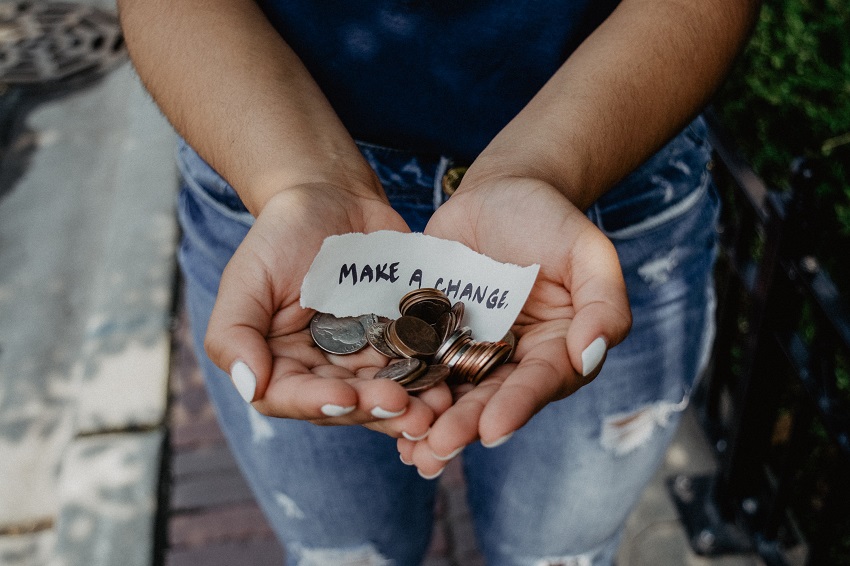
In the photo: Change For Change. Photo Credit: Unsplash

3 – Think long-term and build a track record

For decades, humanitarian organizations have addressed resource scarcity in fragile contexts by providing aid, but food aid, particularly when “used poorly on a recurring basis … can also exacerbate some of the root causes of social discontent.” If in a given context, aid does not address self-sufficiency or reduce conflict over resources, it’s worth looking at blended financial models that use grant money to improve economic stability, and in doing so reduce some of the disparities that are driving conflict.

All around us, we can see a widening gap in wealth distribution, but we sometimes don’t have the evidence to show if any particular investment is contributing to that dysfunction or reducing it.  At Origin Capital, we’re beginning to build a track record of evidence that shows the unvarnished effects of our investments, and we hope to inspire other investors, “impact” focused or not, to do the same.

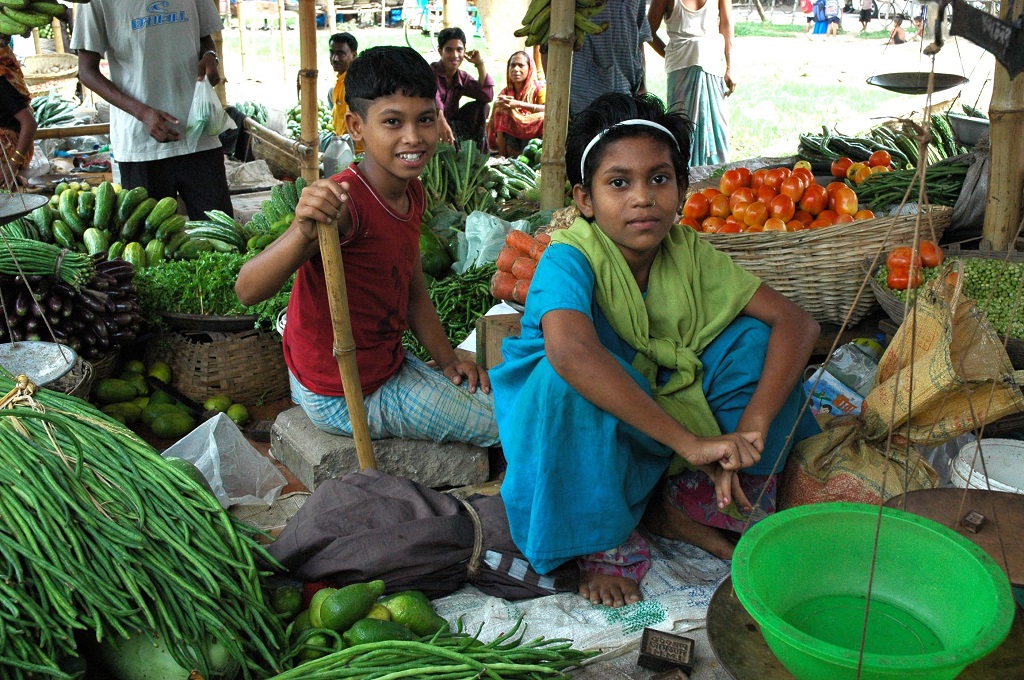
In the cover picture: A Girl And a Boy in Rural Market. Photo Credit: Unsplash


EDITOR’S NOTE: The opinions expressed here by Impakter.com columnists are their own, not those of Impakter.com.

Tags: ESGimpactImpact investingOrigin CapitalSDGsSustainability
Previous Post

The clothes we wear tell a story to the world about who we are

Next Post

Silos Are for Farming, Not for Funding 

Related Posts

Discovery of a carbon sponge under the ocean; HSBC survey shines positive acceptance of climate transition; New catalyst for clean hydrogen production; Google signs deal with Ebb for carbon removal.
Business

Scientists Find CO2 Buildup Under the Sea

Today’s ESG Updates Eroded Lava Under the Ocean Stores CO2: Work led by the University of Southampton demonstrates that these...

by Anne-Marie Vettorel | Joshua Folkema - Origin Capital
December 12, 2025
ESG news covering EFRAG's new ESRS Knowledge Hub, Bank of England's private equity climate stress test, Singapore's green-power data centre rules, and Amazon's climate dispute with rivals.
Business

Europe Boosts ESG Transparency With New ESRS Knowledge Hub

Today’s ESG Updates EFRAG Unveils ESRS Knowledge Hub: Centralized EU platform to support CSRD-aligned sustainability reporting. Bank of England Tests...

by Anne-Marie Vettorel | Joshua Folkema - Origin Capital
December 8, 2025
ESG news regarding Deforestation Mandate Being Pushed; EUs Acceleration on Hydrogen and Net Zero Revolution; AT&T Will End All DEI; UK Watchdog Blocks Nike and Lacoste Ads Over Green Claims.
Business

U-Turn in Europe: Deforestation Mandate Pushed Back Again

Today’s ESG Updates EU Lawmakers Agree to Delay Deforestation Rules: The EU has delayed and simplified its Deforestation Regulation until...

by Anne-Marie Vettorel | Joshua Folkema - Origin Capital
December 5, 2025
Regulatory update on the EFRAG ESRS
Business

European Financial Reporting Advisory Group Releases Simplified Reporting Standards Draft

This Week’s Regulatory Updates: EFRAG releases simplified European sustainability reporting standards: EFRAG claims it will increase competitiveness and reduce the...

by Anne-Marie Vettorel | Joshua Folkema - Origin Capital
December 5, 2025
ESG MIcrosoft funds Pantheon for projects aimed at providing climate solutions; Number of Nurses and Health Care workers in a decline in U.K. amid rising racism and regulation changes; Scientists capture human cells being invaded by Influenza; Red Squirrels thriving after re-introduction.
Business

Microsoft Makes an Investment in Startup Pantheon

Today’s ESG Updates Microsoft Funds Startup Pantheon: As part of its carbon removal strategy funds Pantheon which is a startup...

by Anne-Marie Vettorel | Joshua Folkema - Origin Capital
December 5, 2025
Shock After Shock After Shock, Warns ECB
Business

Shock After Shock After Shock, Warns ECB

Today’s ESG Updates Higher Threat of Shocks to the Economy: The ECB warns of the high level of threats to...

by Anne-Marie Vettorel | Joshua Folkema - Origin Capital
November 28, 2025
COP30 softens climate language; Private climate data firms see surge; South Korea partners on sustainable aviation fuel; Freedom Holding publishes 2025 sustainability report.
Business

COP30 Draft Drops Fossil-Fuel Language, Alarming Climate Advocates

Today’s ESG Updates COP30 Draft Drops Fossil-Fuel Language: Weakening climate signals sparks concern for corporate transition plans. Private Climate Data...

by Anne-Marie Vettorel | Joshua Folkema - Origin Capital
November 24, 2025
ESG news covering the EU’s delay of deforestation rules, rising U.S. housing risks from climate impacts, IFC’s $100M clean-energy investment in emerging markets, and ABN AMRO’s appointment of a new Chief Sustainability Officer.
Business

EU Delays Deforestation Regulation Again

Today’s ESG Updates EU Delays Deforestation Law: Europe postpones the EUDR by one year and loosens compliance rules, raising concerns...

by Anne-Marie Vettorel | Joshua Folkema - Origin Capital
November 21, 2025
Next Post
Silos Are for Farming, Not for Funding 

Silos Are for Farming, Not for Funding 

Recent News

Finix Reviews

Finix Reviews: Payment Service Provider Features & More

December 15, 2025
ESG News regarding increased grid stress slowing growth, US demanding exemption from EU emissions law, Google invests in solar in Malaysia, China reduces fossil fuel output

Increased Grid Stress Threatens Economic Growth

December 15, 2025
Advanced Healthcare Data Analytics Solutions

The Transformation of Modern Medicine Through Advanced Healthcare Data Analytics Solutions

December 15, 2025
  • ESG News
  • Sustainable Finance
  • Business

© 2025 Impakter.com owned by Klimado GmbH

No Result
View All Result
  • Environment
    • Biodiversity
    • Climate Change
    • Circular Economy
    • Energy
  • FINANCE
    • ESG News
    • Sustainable Finance
    • Business
  • TECH
    • Start-up
    • AI & Machine Learning
    • Green Tech
  • Industry News
    • Entertainment
    • Food and Agriculture
    • Health
    • Politics & Foreign Affairs
    • Philanthropy
    • Science
    • Sport
  • Editorial Series
    • SDGs Series
    • Shape Your Future
    • Sustainable Cities
      • Copenhagen
      • San Francisco
      • Seattle
      • Sydney
  • About us
    • Company
    • Team
    • Global Leaders
    • Partners
    • Write for Impakter
    • Contact Us
    • Privacy Policy

© 2025 Impakter.com owned by Klimado GmbH