Impakter
  • Environment
    • Biodiversity
    • Climate Change
    • Circular Economy
    • Energy
  • FINANCE
    • ESG News
    • Sustainable Finance
    • Business
  • TECH
    • Start-up
    • AI & Machine Learning
    • Green Tech
  • Industry News
    • Entertainment
    • Food and Agriculture
    • Health
    • Politics & Foreign Affairs
    • Philanthropy
    • Science
    • Sport
  • Editorial Series
    • SDGs Series
    • Shape Your Future
    • Sustainable Cities
      • Copenhagen
      • San Francisco
      • Seattle
      • Sydney
  • About us
    • Company
    • Team
    • Partners
    • Write for Impakter
    • Contact Us
    • Privacy Policy
No Result
View All Result
Impakter logo
No Result
View All Result
The Tyre Collective, Preventing Microplastic Pollution From Tires

The Tyre Collective, Preventing Microplastic Pollution From Tires

The startup is developing a device that can collect tire debris. Those are the second largest cause of plastic pollution on the planet

Alessandro du Besse' - Tech EditorbyAlessandro du Besse' - Tech Editor
September 15, 2022
in Start-up, Tech
0

When driving, tires wear and tear leaving dangerous microplastic around. The Tyre Collective is a startup that was launched with a mission to capture and monitor plastic pollution from tires, accelerating the shift towards zero-emission mobility.

Even if driving an electric, or hydrogen-powered car your tires will still have a negative impact on the environment, this time in the form of plastic pollution. According to the Tyre Collective, when vehicles accelerate, brake, or corner their tires can cause very serious plastic pollution. Tires are actually the second-largest microplastic pollutant in our oceans and an invisible source of air pollution as well.

Ironically, switching to electric vehicles will have a negative effect and increase tire-related plastic pollution since electric vehicles are on average heavier compared to ice-powered vehicles and they also have more torque. Those both generate more “stress” on the tires and cause more tire wear. 


RELATED ARTICLES: 19 Startups That Will Shape Our Cities Selected By Mobility Lab 2022 | Three Mobility Startups That Are Shaping Shared Transport | 5 Cities, 5 Ways to Make Urban Mobility More Sustainable and More Equitable |

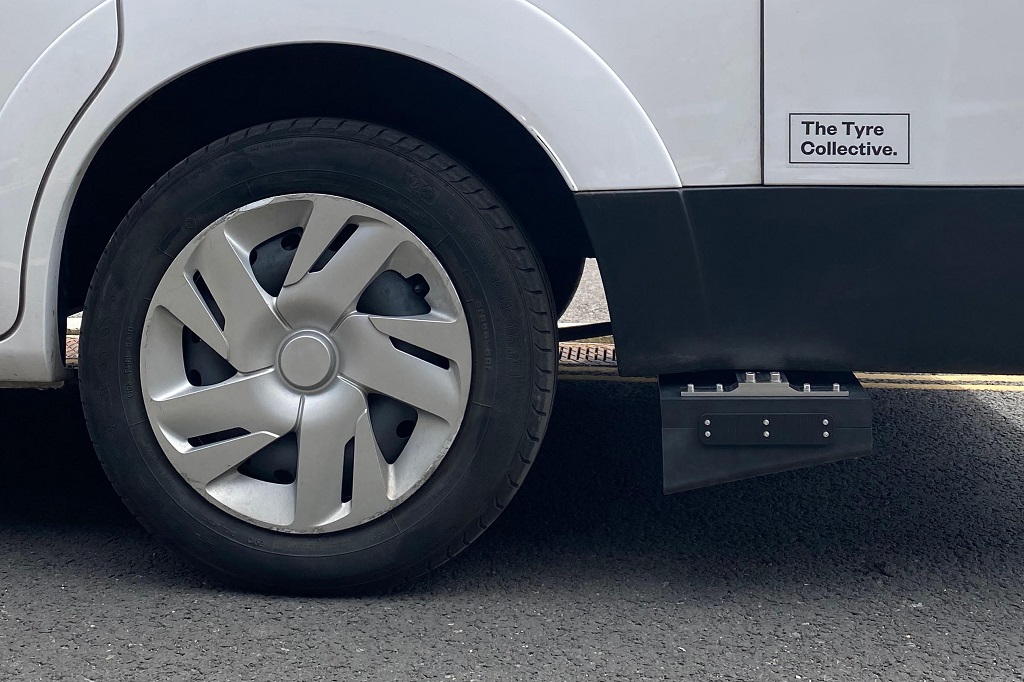
The Tyre Collective is developing the first on-vehicle device to capture tire wear at the source. Their patent-pending technology uses electrostatics and airflow to attract tire particles. Once captured, these particles are processed and can be upcycled in new tire production, creating a circular economy closed-loop system. Other applications include other rubber products, soundproofing, inks, and dyes.
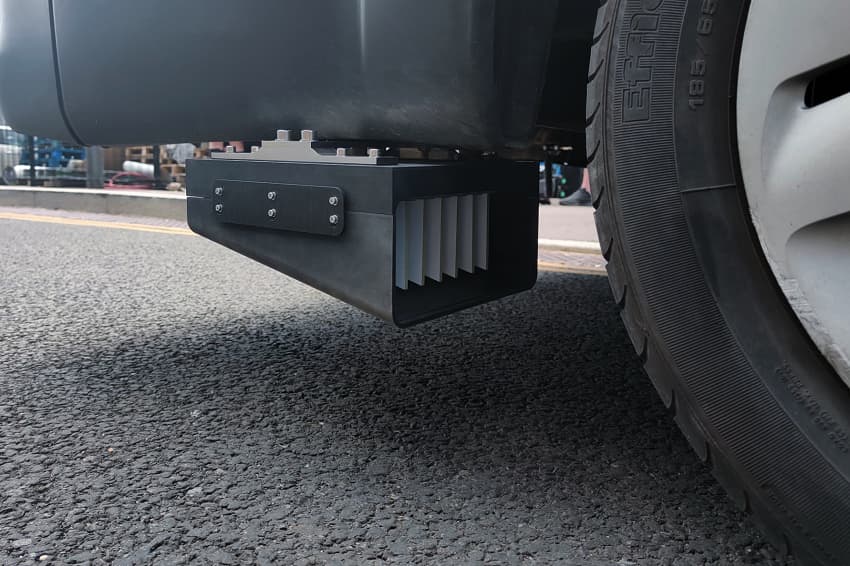
The device capturing tires debris while driving.

Only recently, microplastic from tires has started to be considered a pollutant. In 2019 the death of a large number of salmons on the US west coast was linked to microplastics from tires. The same year, the UK Department for Transport and Department for Environment, Food & Rural Affairs (DEFRA) issued a call for action on tire emissions.

The Tyre Collective Founders.

The Tyre collective has a serious goal: so far emission standards have only been focused on exhaust emissions, and the startup would like regulators to consider tire wear as well. The Tyre Collective also aims for their device to become a standard feature of all vehicles, just like anti-pollutant filters on the exhaust pipes.

With the carmaker industry being one of the slowest and most conservative industries, this all might take some time but considering the dangers related to microplastic pollution, we should all support The Tyre Collective initiative.


Editor’s Note: The opinions expressed here by Impakter.com columnists are their own, not those of Impakter.com –In the Featured Photo: Prototype of the device that can collect tires’ debris. Photo credit: The Tyre Collective.

Tags: microplastcsmobilityPlastic Pollutionsustainable mobilityThe Tyre Collectivetirestyres
Previous Post

Ukraine’s Spectacular Counter-Offensive: How Solid?

Next Post

UN Warns That Human Development Is Reversing for the First Time in History

Related Posts

The Imperative of a Nature-Positive Future
Biodiversity

The Imperative of a Nature-Positive Future

For most of human history, survival was a gamble. Half of all children never reached puberty. Life expectancy hovered around...

byMarco Lambertini
January 16, 2026
Impakter’s Most-Read Stories of 2025
Society

Impakter’s Most-Read Stories of 2025

In 2025, as in previous years, Impakter readers turned in large numbers to stories examining climate change and pollution, environmental...

byImpakter Editorial Board
December 31, 2025
plastic diseases
Biodiversity

Plastic Can Now Help Spread Diseases

There has been growing attention to the “Great Pacific Garbage Patch” by those who correctly recognize it as an environmental disaster....

byRichard Seifman - Former World Bank Senior Health Advisor and U.S. Senior Foreign Service Officer
December 8, 2025
New GHG Protocol Structure Plans to Expand Reporting Beyond Scope 1–3
Business

New GHG Protocol Structure Plans to Expand Reporting Beyond Scope 1–3

Today’s ESG Updates GHG Protocol Develops New Multi-Statement Framework: Planned structure separates climate actions from scope 1–3 inventories. G20 Experts...

byLuis Guillermo Valdivia Chavez
November 26, 2025
plastic pollution
Environment

Biodegradable Plastics: Help or Hype?

The global annual production of plastics rose to 400 million metric tons in 2022 and is projected to double by 2050. Many items...

byThe Revelator
November 21, 2025
Plastic pollution coral reefs
Biodiversity

Protecting Coral Reefs From Plastic Pollution: The IUCN Congress as a Catalyst for Action and Collaboration

This week, the International Union for the Conservation of Nature (IUCN) sees its World Conservation Congress kick off in Abu...

byJanne van Eerten - Sr. Global Public Affairs Manager at The Ocean Cleanupand1 others
October 8, 2025
global plastics treaty
Circular Economy

No Resolution for the World’s $1.5 Trillion Plastic Problem

Standing along the shores of a beach in Vung Tau, Vietnam, a man finishes his plastic bottle of juice, and...

bySarah Perras
August 16, 2025
mnps soil
Environment

How Microplastics Are Destroying Soil and Human Health

Soil health is a critical global issue. World Soil Day reminds us that degraded soils affect food security, water quality and ecosystems....

byDr. Abhilasha Shourie - Professor at the Manav Rachna International Institute of Research and Studies
December 4, 2024
Next Post
UN Warns That Human Development Is Reversing for the First Time in History

UN Warns That Human Development Is Reversing for the First Time in History

Recent News

Software testing tool

How AI-Powered Testing Tools Are Revolutionizing Flutter App Development

February 2, 2026
Architectural visualization

From Blueprint to Visual Story: How Buildings Are Presented Today

February 2, 2026
Business Applications found on a Website Platform

How to Choose a Website Platform Without Technical Knowledge

February 2, 2026
  • ESG News
  • Sustainable Finance
  • Business

© 2025 Impakter.com owned by Klimado GmbH

No Result
View All Result
  • Environment
    • Biodiversity
    • Climate Change
    • Circular Economy
    • Energy
  • FINANCE
    • ESG News
    • Sustainable Finance
    • Business
  • TECH
    • Start-up
    • AI & Machine Learning
    • Green Tech
  • Industry News
    • Entertainment
    • Food and Agriculture
    • Health
    • Politics & Foreign Affairs
    • Philanthropy
    • Science
    • Sport
  • Editorial Series
    • SDGs Series
    • Shape Your Future
    • Sustainable Cities
      • Copenhagen
      • San Francisco
      • Seattle
      • Sydney
  • About us
    • Company
    • Team
    • Partners
    • Write for Impakter
    • Contact Us
    • Privacy Policy

© 2025 Impakter.com owned by Klimado GmbH