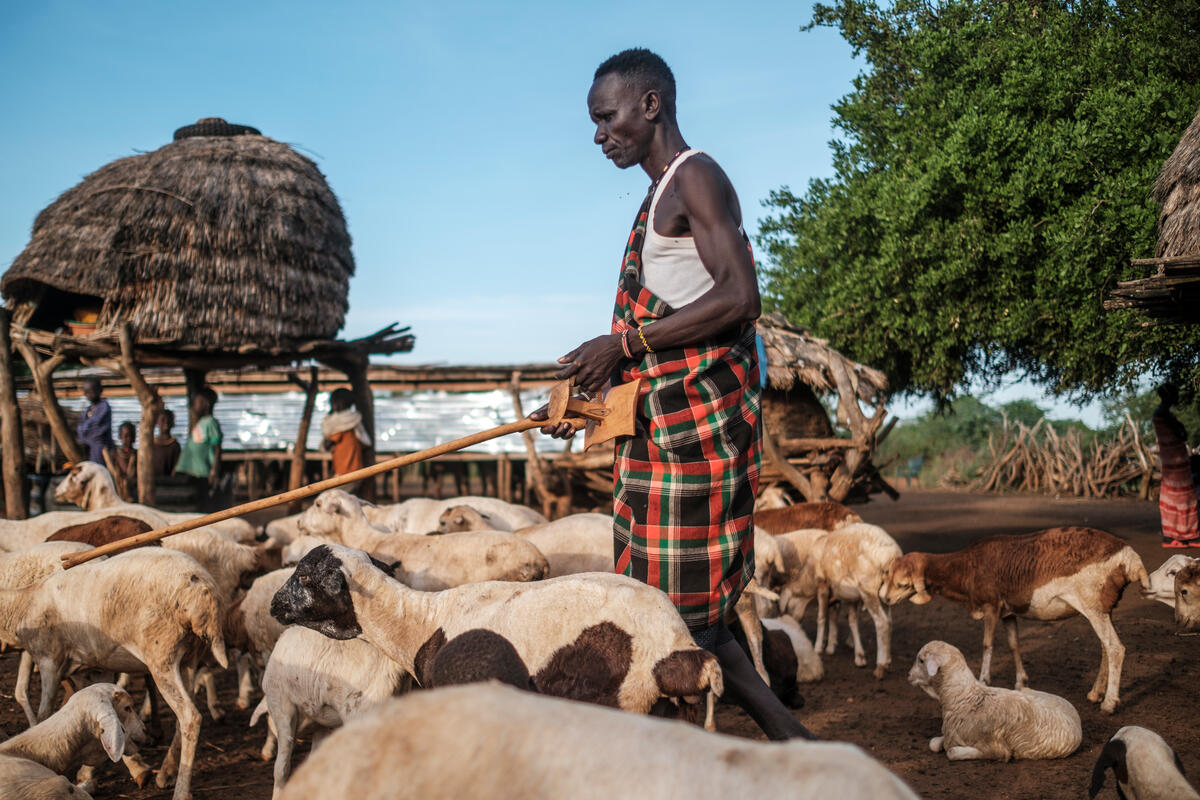
It is early morning, and Michael Lokuru Kuri is taking his cattle out to graze as he does every day when the sun rises, to beat the heat. It’s a peaceful enough scene as he marshals his livestock out of the compound.
It hasn’t always been like that. “I have been raided twice,” says Lokuru, as he is known. He explains that there are tense relations with neighbouring communities in Kapoeta South County, Eastern Equatoria State in this southeastern part of South Sudan.
“They want to take our livestock by force and also try to kill us. All my cattle were taken so that I was only left with five.” He closes his fist to denote the number five and recounts how he had to struggle again to get more animals.
But at least some of the challenges he faces with his cattle have been eased. Earlier, the prolonged dry season had forced him to take his animals far from his village of Nakoringomo for grazing and thus heightened the risk of conflict over water resources.
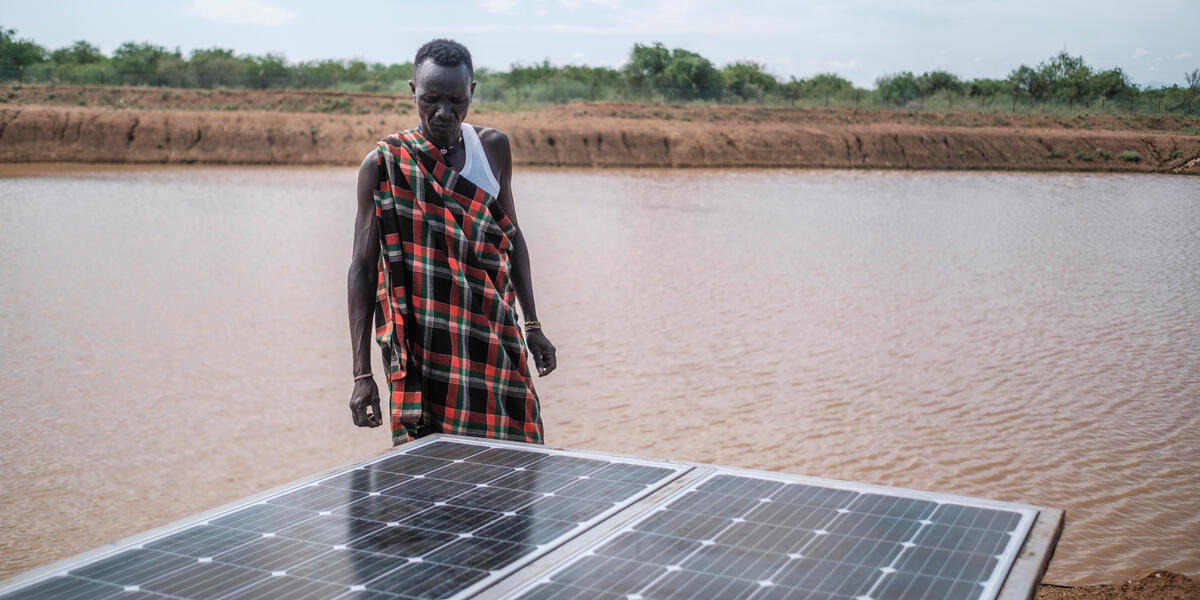
This was before the Food and Agriculture Organization of the United Nations (FAO), with funding from the African Development Bank (AfDB), provided support to excavate a 30 000 m3 reservoir and installed a solar-powered water pump in his community.
“Now we don’t need to take our animals to other locations for water because we have enough water for the animals,” the 34-year-old says.
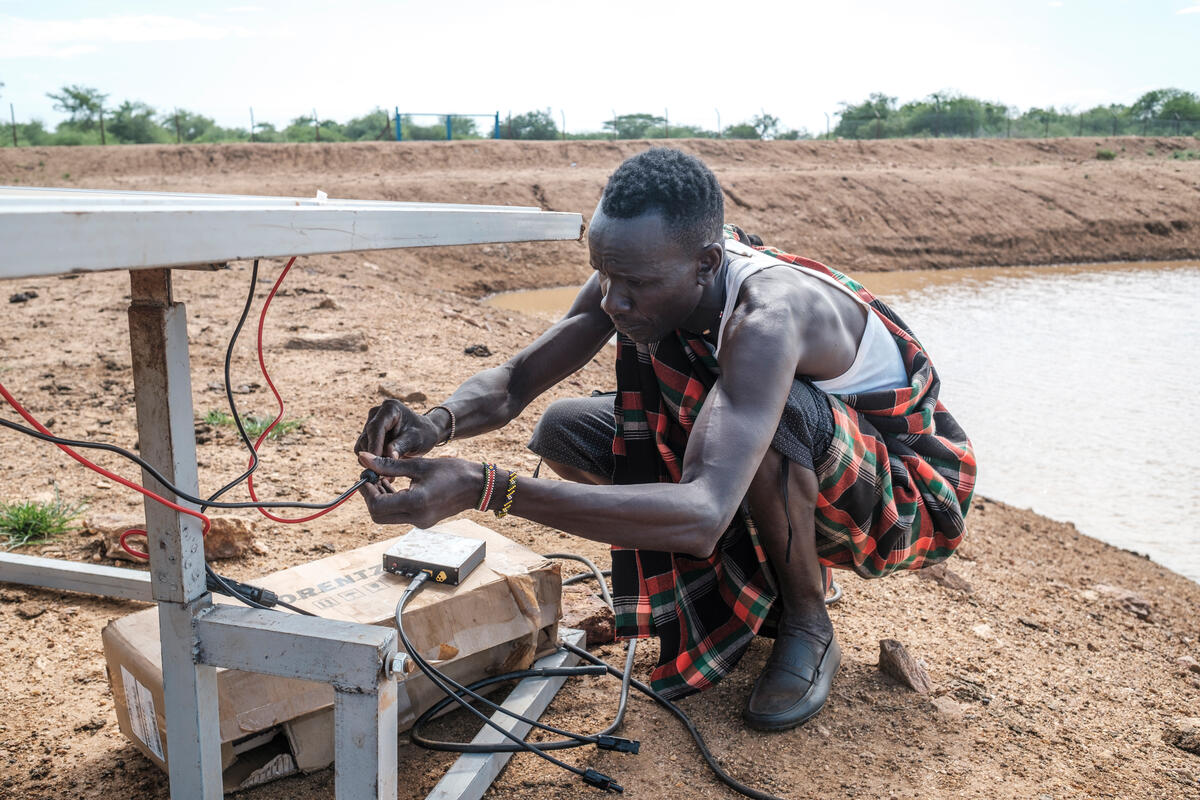
Powered by two solar panels that generate the electricity to pump water sustainably from the reservoir, this installation means that he and his community no longer have to laboriously collect water from a catchment basin. “The solar water pump has simplified everything for us.”
“Our livestock now drink clean water pumped by the solar pump to the troughs,” Lokuru says, as he fills one from a hosepipe for the cattle to drink. Having clean water available means that the animals stay healthier, a fundamental concern for people who rely on livestock for their living.
On Lokuru’s farm, the ravages of climate change are clearly visible in the cracked soil and withered crops on his fields. “There have been changes in the weather,” he says. “This year has been the worst; all crops were destroyed by the sun,” he describes, crumbling the desiccated crop through his fingers. “We have not harvested anything this season.”
So it’s all the more important for his family to keep their livestock healthy. For three-quarters of the community here, “their livelihood is livestock, and they actually depend on livestock,” says Quinto Asaye Alex, Inspector for Veterinary Services Eastern Equatoria, as he prepares to vaccinate Lokuru’s goats.
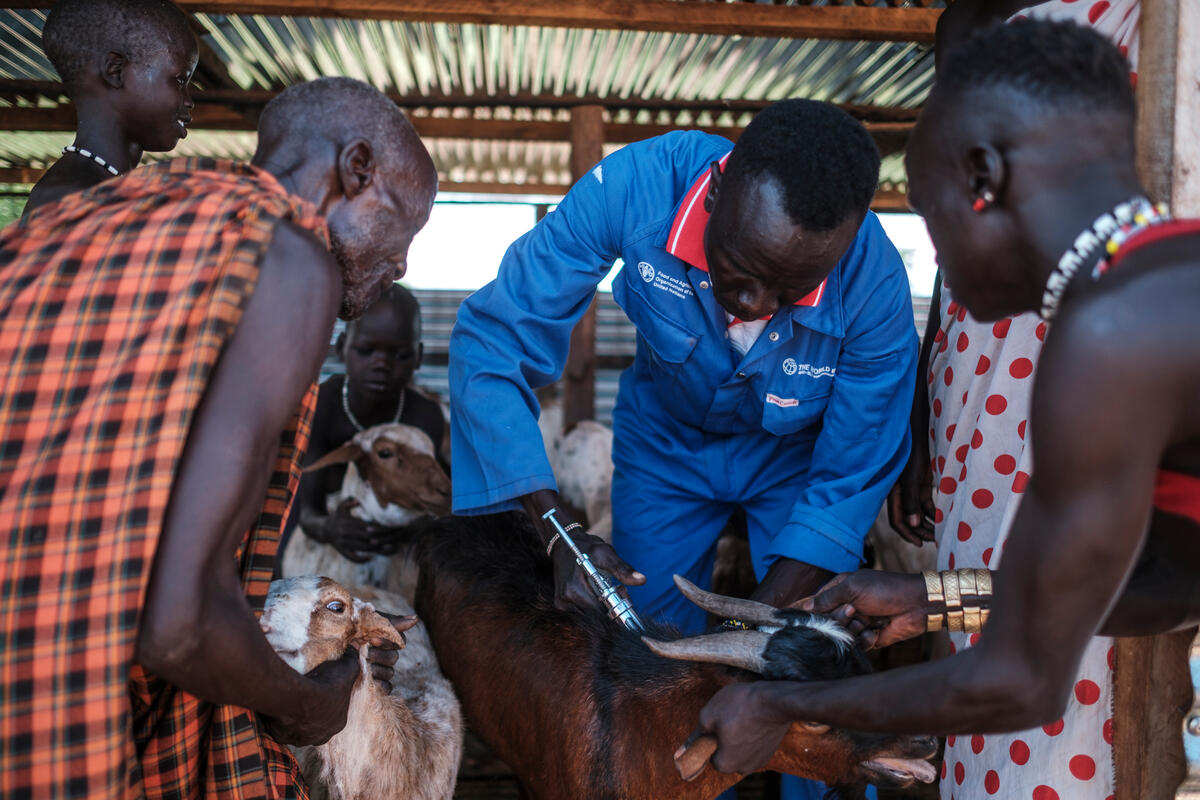
An even more crucial purpose for the vet’s visits is training Lokuru himself to administer the jabs to his animals and those of his fellow villagers. The FAO-supported training for community workers like Lokuru, who was nominated by his own village, includes administering vaccines, identifying diseases, dividing the sick animals from the healthy ones and treating them, Quinto explains.
Lokuru is one of 30 community workers who have been trained in the whole of Kapoeta South. “I consider myself as a leader because I have the knowledge. FAO has trained me in so many things. I give treatment and vaccinations, something that other people cannot do. I still have the strength. I will train the youths and ensure they become like myself in the community.”
Situation in South Sudan
Implemented by FAO on behalf of the AfDB and the Government of South Sudan, the support is part of an initiative to boost the resilience and adaptive capacity of communities in South Sudan in the face of climate change.
Meshack Malo, FAO Representative in South Sudan, says the country’s concerning level of food insecurity is a major challenge:
“In this country, we still have over 70% of people who, at one time or another, are not sure where they’re going to get their next meal.”
Added to that, there is the continuing impact of fighting in large areas of the country and climate change. “And so the country finds itself in this double challenge and sometimes even triple challenge with floods or dry conditions,” Malo says.
FAO has an overview of the changes to weather patterns occurring in the region, Malo says. “But it’s not that easy for the communities to understand. We are able to give the climate-adaptive seeds and varieties and tools, so it’s a package that begins from understanding the information and really knowing the change that you need to make given the new climatic factors that are in place.”
Malo explains that FAO, with a number of partners, helped launch a weekly radio programme, called Ziraa Tanna, to disseminate climate-related information to farming communities.
But this learning is a process. In the meantime, farmers need to tackle the impact of these climate changes.
“The weather changes have affected us a lot,” says 38-year-old farmer Lilly Kiden as she and her friends dig the dry-looking ground of their communal vegetable patch.
“This year has been one of the worst years,” she says, explaining that in past years the crops had somehow survived with little rainfall, “but this time everything we planted got destroyed by the sun,” she laments, adding: “I feel much energy and time has been wasted.”
Related Articles: Hands That Heal Our Soils | As Cities Grow Across Africa, They Must Plan for Water Security | Health Flows From Safe Water | Soil Health, Fertiliser Use and Agricultural Sustainability | Strengthening Urban Food Systems in Times of Crisis | Can We Fix Our ‘Broken’ Food Systems? | Reimagining Generational Gaps to Transform Africa’s Agri-food Systems | Soil Health is Key Component of Healthy Food System Says Jeff Tkach of Rodale Institute | What Is Happening to Our Soil?
As her family’s sole breadwinner, with seven children to feed and 10 other relatives who dependent on her, Lilly’s ability to make a living by growing and selling her vegetables is crucial for their survival.
“If the weather continues like this my children will have nothing to eat and some will stop going to school,” Lilly says as she sends them off for their morning’s lessons.
With FAO introducing solar powered irrigation to this region of South Sudan, Lilly will not be at the total behest of the weather anymore. “The FAO project has helped us by excavating for us a pond to store water for our vegetables and a solar water pump for irrigation,” she explains as she weeds the plot of land.
This has given her and her neighbours a sufficient supply of water for their vegetables “and we have managed to expand our farm,” she says proudly.
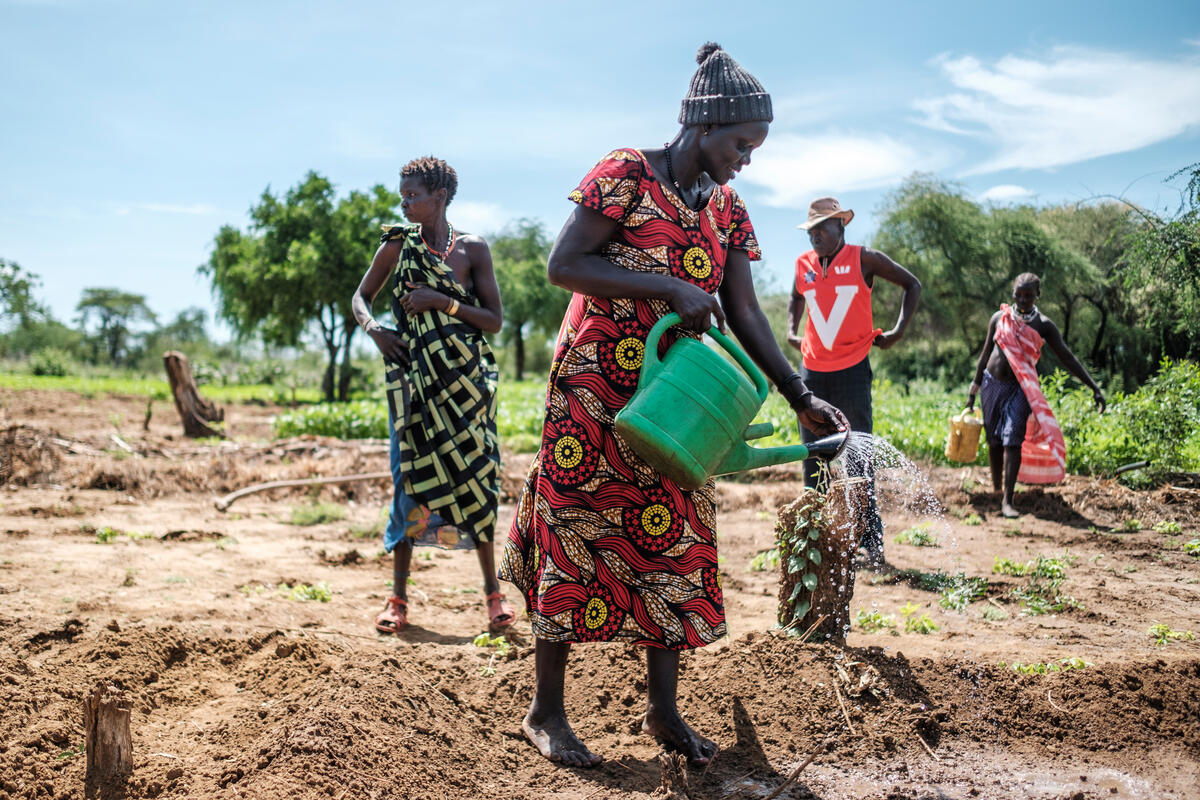
Lilly describes the importance of working in a group, as the women labour and laugh together. “Our group is a very peaceful group of 25 members, we work and sell as a team. Everyone in the group has a duty of selling in the market,” she says. “After making our sales, we sit down at the end of our month to see how much we have made as a group then the profit is divided.”
Lolibay Joyce Marco, who has been working as a FAO field officer for the last two years, says that women act as the main breadwinners for their families in this community. “This [irrigation] helps them a lot in building their capacity to getting more income to support their families,” she says.
“I get the opportunity to interact with them and them seeing me as a female they will freely talk to me about issues affecting them.”
Key among these issues of course is how to forge a decent livelihood amid the harsh conditions in this part of South Sudan, where the sense of solidarity in the community is also of great importance. Village savings and loans associations (VSLAs) are principal in this theme of working together.
As she sits down at a meeting of the VSLA meeting with her neighbours, Lily explains: “The money made from our vegetable sales have helped me a lot, I am able to buy food for my family and put some for saving in the Village Saving Loan and Association box.”
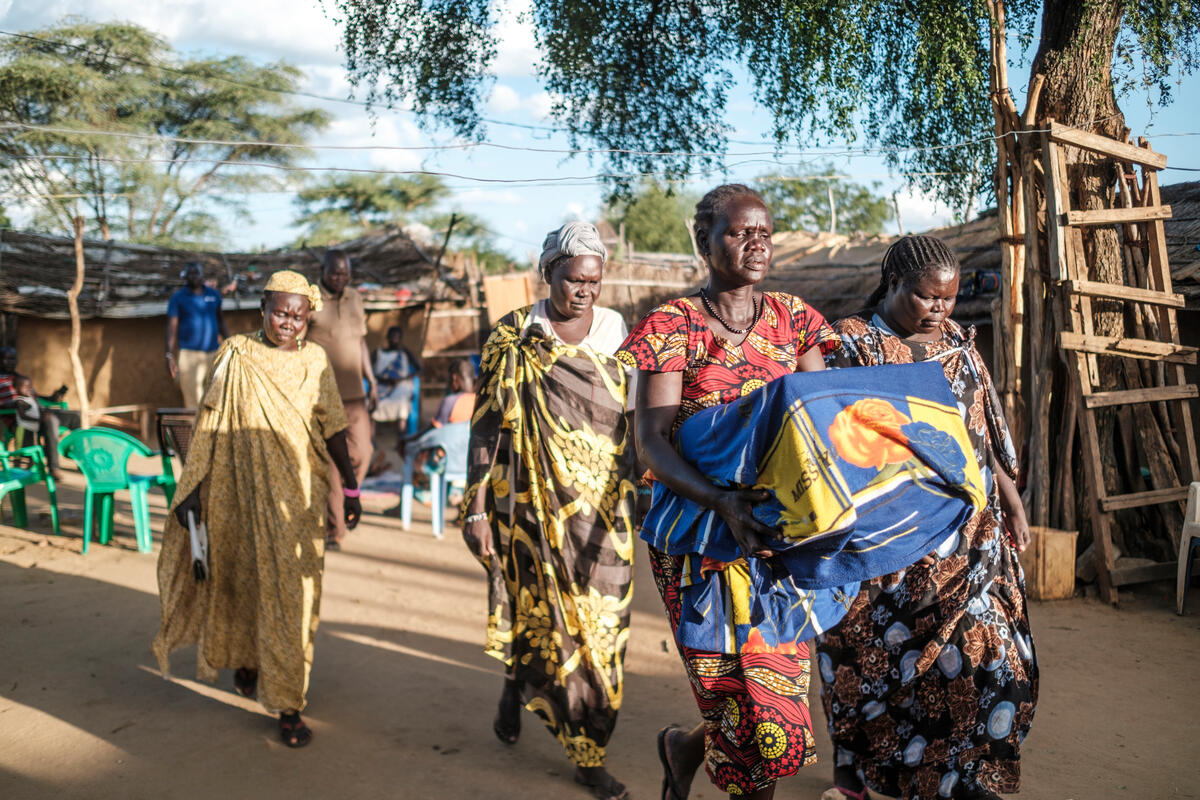
Just like Lokuru, Lilly is determined to put something back into her community. Rising from her seat, she hands over 500 South Sudanese Pounds (SSP) (USD 3.85) to the woman in charge, who puts the money on two separate plates. “400 SSP is for the VSLA and 100 SSP for assisting any member of the group whenever there’s an emergency.”
Making all this possible has been the assistance from FAO, which includes seeds to cultivate the vegetables and trainings, explains Lilly. She migrated to this district of Kapoeta from her native village in Torit about 120 kilometers to the southwest, in search of a better livelihood and is grateful that with the assistance of the project, she doesn’t need to pack up and relocate all over again.
Instead, she says: “My dream is to work extra hard so that my children will continue going to school.” She adds: “I will never sit and relax. I will continue putting so much effort for them to go to school.”
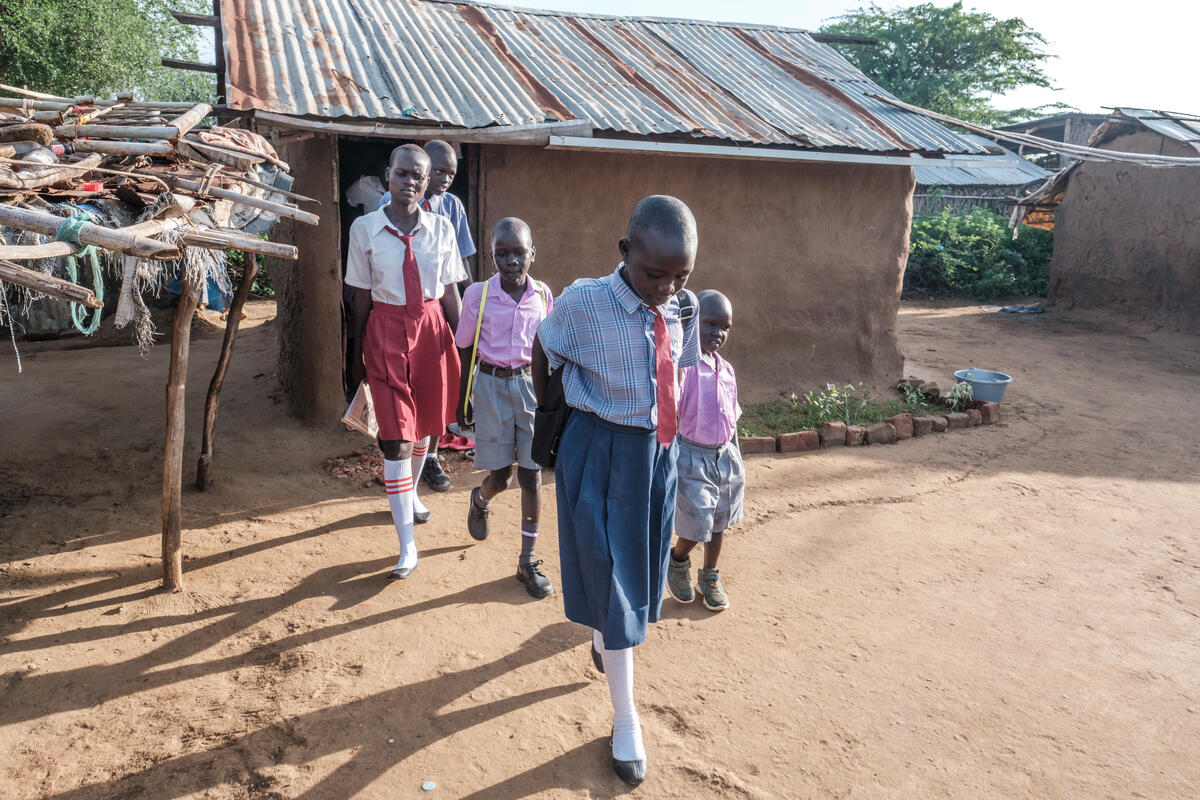
With the support of the initiative run by FAO and its partners, Lokuru and Lilly are passing on their knowledge and success to other members of their communities to support livelihoods and train young people, even amid the challenges faced by their country.
** **
 This article was originally published by the Food and Agriculture Organization of the United Nations (FAO) and is republished here as part of an editorial collaboration with the FAO.
Editor’s Note: The opinions expressed here by the authors are their own, not those of Impakter.com — In the Cover Photo:FAO excavated a water reservoir and provided a solar-powered water pump so that Lokuru and other pastoralists could provide water for their livestock while staying close to their village. Cover Photo Credit: ©FAO/Eduardo Soteras.