Today’s terrorism is fragmented and flexible. New counterterrorism strategies must adapt by focusing on effects, not ideology
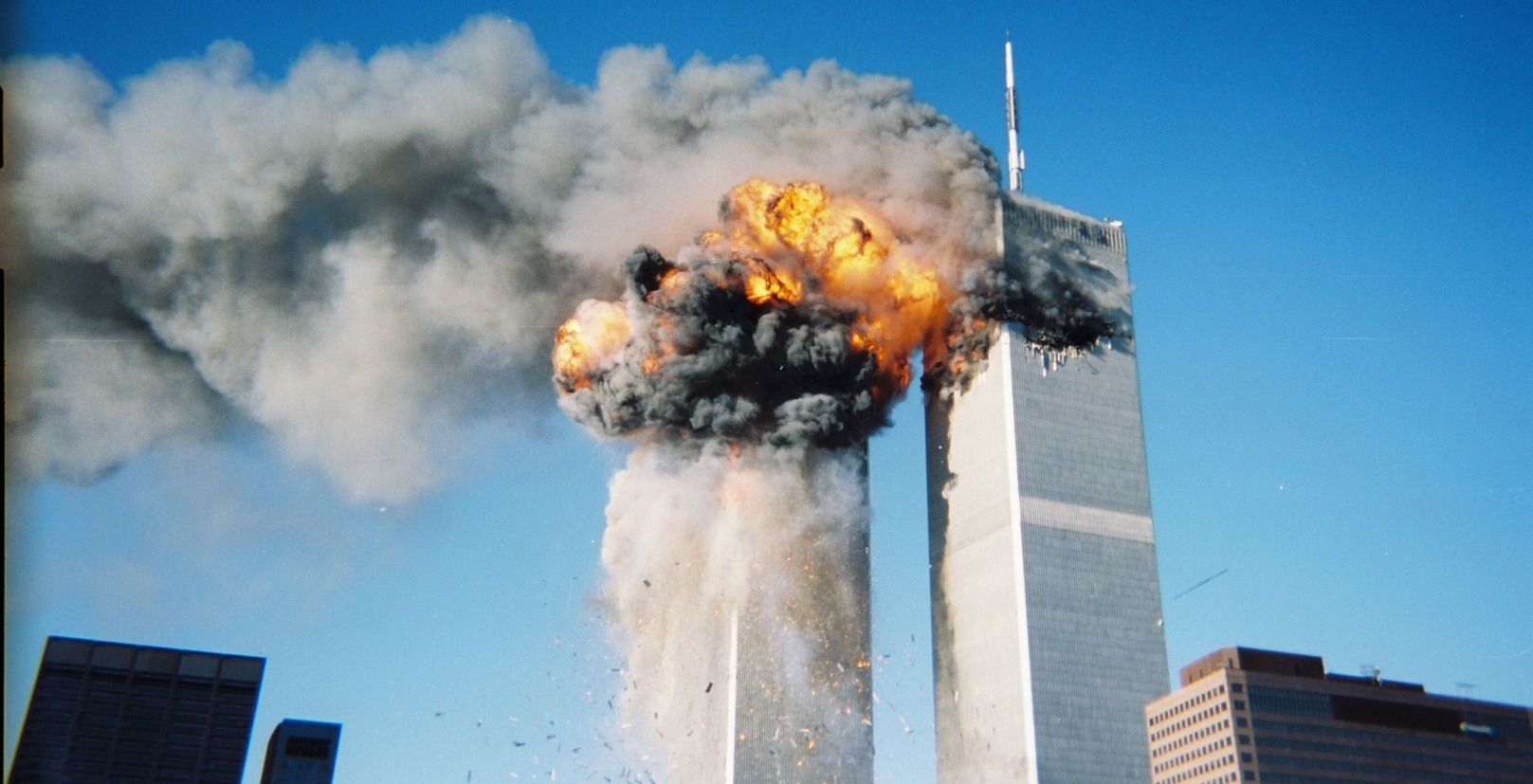
When members of Al-Qaeda flew commercial jetliners into New York’s World Trade Center on September 11, 2001, the idea of who was a terrorist crystallised for the world. But, 23 years on, the reality is there is no one “kind” of terrorist.
As security forces around the world grapple with myriad threats from all manner of groups, an essential agreement on who the opponent is becomes crucial.
An effective definition of terrorism is necessary to provide the operational rules of engagement to national security agencies and, at an international level, to facilitate combined efforts based on the shared perspective of peace and war, of friends and enemies, of the threat scenarios.
Good, evil and the terrorist
A person is a terrorist because of what they do, not because of what they believe, and for their actions, they are prosecuted.
Discussing terrorism on the theoretical level of “good and evil” is counterproductive and pointless. Even if we all agree that terrorism is the expression of evil, it is not possible to reach an agreement on who the terrorists are.
This is because the category of evil, in today’s fragmented world, is understandable only at a local level, difficult to share outside one’s cultural boundaries. Evil as a concept depends on cultural perspectives and therefore it cannot lead to a definition of terrorism based on an objective assessment of damages and threats.
Furthermore, in a world of conflict, the same effect can be generated by terrorists, insurgents, freedom fighters, and other groups using violence and doing the same thing, for different reasons, with a different label.
The whole question about the “good or evil” of an action depends on the reasons that motivate that action, so again it is a vague criterion. The acceptance or rejection of actions cannot depend on the value of “good or evil,” nor on the reasons that generate them.
So this is one more reason to change how we measure terrorism, forgetting “good and evil,” instead focusing on the results of terrorism, banning its effects we cannot accept. Those effects, unlike the ideas that constitute motivations, can be counted and measured.
When “an act of terrorism is such because of the effects that the act generates, and not because of the causes that drove it,” then the way is open for all to agree to a common counter strategy to terrorism.
Defining terrorism
Ten years after 9-11, Alex P. Schmid, Distinguished Fellow at the International Centre for Counter-Terrorism (ICCT) and Director of the Terrorism Research Initiative (TRI), collected the opinions of dozens of experts to arrive at a scientific definition of terrorism for the 21st century.
The result has been a long list of characteristics, among which the objective of “terrorising” is emphasised, identifying communication as a specific element of terrorism, and the use of violence, indiscriminately directed towards “civilian” targets.
This plethora of definitions makes it difficult to come up with a common operational perspective for countering terrorism threats.
Unfortunately, too many definitions of terrorism refer to the experience around this phenomenon gained in a world that no longer exists.
Italy is a fine example of this.
A history of violence
Italy is notorious for the violence it experienced during the last 30 years of the 20th century from groups on the far left, such as the Brigate Rosse (Red Brigades) to those on the far right (Nuclei Armati Rivoluzionari) along with the mafia and other organised crime.
Italy experienced violent political terrorism that wanted to change the state to affirm another idea of the state.
Counterterrorism laws that still address the phenomenon were created based on that experience.
However, today’s terrorism no longer has anything to do with the terrorism of that time. So old regulatory tools are still used to regulate a phenomenon that has changed.
This means that for an effective, updated response to terrorism, we have to go back to identifying the phenomenon as it appears today, asking the basic question: “What is terrorism?”.
In recent years, terrorism has proven to be flexible, adaptable and opportunistic. It is very skilled in exploiting an enemy’s vulnerabilities and from this ability it gains strength.
Europol, in the TE-SAT Terrorism Situation and Trend Report 2023, lists current terrorism types and dangerous groups, and warns that “the lines between different types of terrorism, including right-wing, left-wing, anarchist, jihadist, and other ideologies, are likely to become more blurred in the future.”
Europol highlights that points of convergence have already been observed among terrorists and violent extremists across the whole ideological spectrum.
Salad Bar terrorism
Ideologically, today one can talk about Salad Bar terrorism (or Mixed Ideology terrorism), where the ideological dimension is present, but it is articulated according to a personal taste, to justify the choice of violent affirmation of one’s ideas.
Yet, the actual reasons for terrorism can be found in terrorism itself as a choice and action. They lie in the conviction terrorists have that only violence can change a situation already irrecoverable, urgent, and dramatic. The personalised ideology terrorists create for themselves is the justification for the terrorist action and not the real motivation.
In this framework, recruitment and propaganda are strategic pieces of the ideological puzzle: ideas are to be reassembled according to a flexible and adaptable image that constitutes the scenario in which the terrorist’s violence will be expressed.
This fragmentation is the main feature of terrorism affecting young people’s identities (since young people are the main victims of terrorist propaganda and recruitment). A fragmentation where geographical, political and cultural borders are no longer useful, reorganised by the global network of communication technologies.
More than ideology
The first challenge that comes out is the need to reconsider the meaning of nation and state.
The paths that can lead to terrorism are many and this is why the definition of terrorism based on reasons and motivations does not work: the unpredictable Salad Bar Ideology offers many ways to become a terrorist.
Ideologies no longer provide sufficient analytical categories to identify and, subsequently, prevent threats effectively. The reasons that drive radicalization today are multiple and come from various inputs.
A good example of the failure to adequately address terrorism today is the numerous tools developed by law enforcement to identify potential terrorists, the so-called Terrorist Risk Assessment Instruments.
All these have, so far, led to poor results, because they are based on the wrong assumptions of continuity, linearity, and ideal coherence, while today’s Salad Bar Terrorism offers a circular route, rapid and unpredictable, always original for everyone.
Related Articles: Global Terrorism Continues Its 5-Year Decline | Global Terrorism Takes a New Turn: Sahel is Impacted | Preventing Violent Extremism: Bridging the Development and Security Divide | The Threat to Human Rights Posed by Anti-Terrorist Laws after 9/11
For example, the Australian Institute of Criminology recently released a report on the use of four risk assessment tools designed to gauge the threat posed by radicalised offenders and, in some cases, justify them being held behind bars or closely supervised after their sentences have been served.
The AIC report found there was a “relative lack of research into the efficacy of these tools,” something it found was a “barrier to their use and undermines confidence in expert assessments that rely on these tools”.
There are often no credible signs to identify the “typical terrorist” until it is too late.
Today, a more effective method for identifying a potential terrorist risk could be adopting a so-called “Digital Humint” approach, which analyses both the “real” and “virtual” dimensions together, exploring not only the network of offline relationships and habits but also the social media ecosystem and chat rooms.
A new approach
A new approach, abandoning the ideological dimension as a founding dimension of terrorism, is pivotal and it means “an act of terrorism is such for the effects that this act generates, not for the causes that drove it.”
This approach is not just backed up by the previous empirical results and failures of counterterrorism efforts. It also has a theoretical foundation from the field of crisis management, where a crisis is defined as an event whose effects are not controlled by a system.
It also has a practical basis, in seeking an agreement on “what terrorism is” by referring to the effects, to the damage caused, for which an objective assessment can be agreed.
This is in total alignment with the needs of the criminal justice system and legal framework.
In the EU, terrorism is defined by its aims to: “a) seriously intimidating a population; b) unduly compelling a government or an international organisation to perform or abstain from performing any act; c) seriously destabilising or destroying the fundamental political, constitutional, economic or social structures of a country or an international organisation”, without any reference to a typology of ideological motivations.
Terrorism is no longer what it used to be, but those who fight terrorism have not realised this.
Bold decisions have to be made to abandon obsolete approaches and tools that cannot deliver any more results.
What worked 50 years ago to fight terrorism in the 70s and 80s is irrelevant today, because contemporary terrorism bears little resemblance to its previous expressions. After all, human society has changed.
** **
This article is based on the presentation at the conference of the Regional Anti-Terrorism Structure of the Shanghai Cooperation Organisation (4-5 September 2024), where the author was invited as an expert. It was originally published by 360info™.
Editor’s Note: The opinions expressed here by the authors are their own, not those of Impakter.com — In the Cover Photo: The September 11, 2001 attacks on the Twin Towers was a turning point in the global fight against terrorism. Cover Photo Credit: rds323.