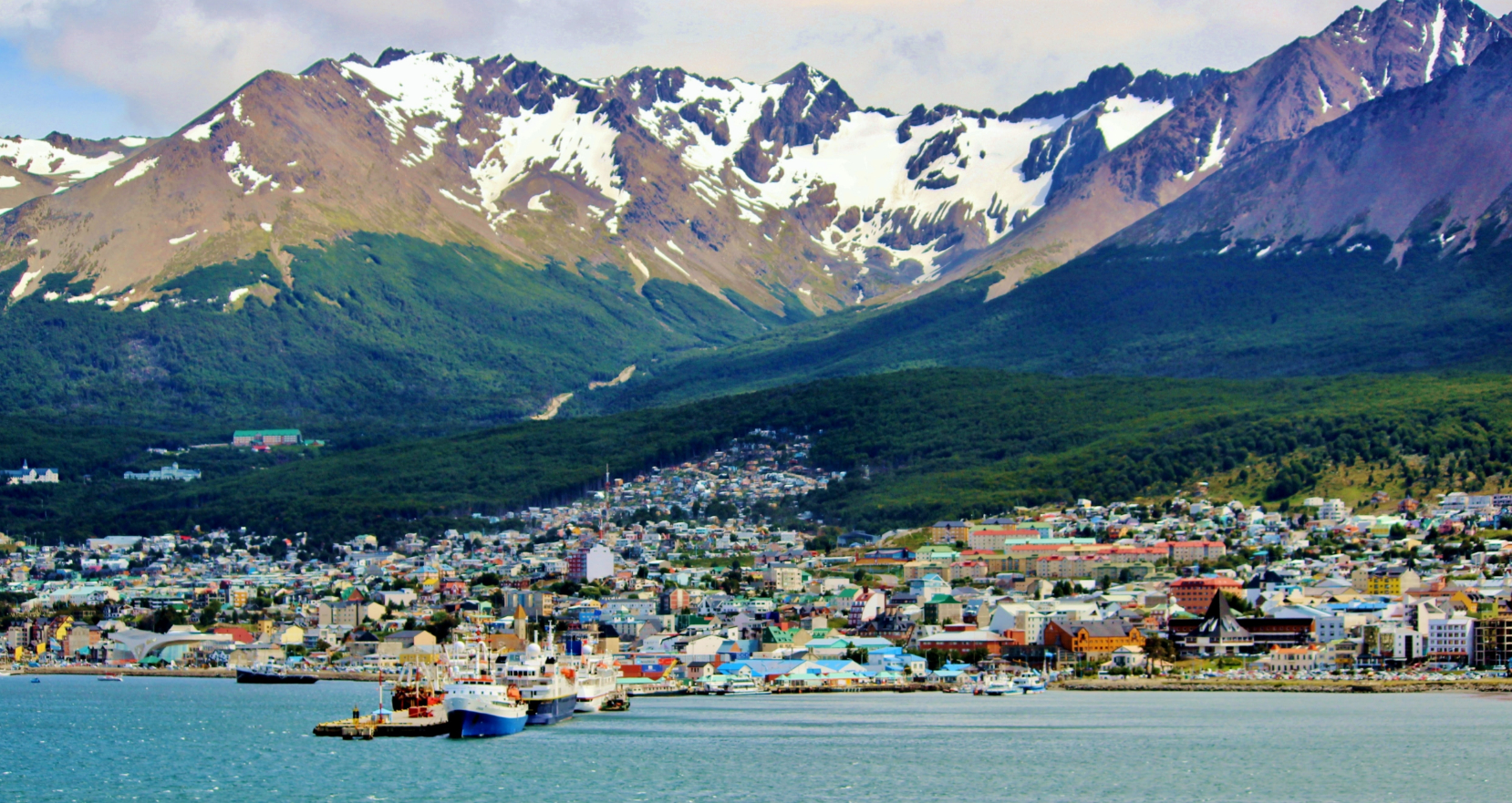
On the southern edge of Argentina, a once-isolated port city has become an unlikely test case for what climate-conscious travel can look like.
Three thousand kilometres south of Buenos Aires, wedged between the Beagle Channel and the Fuegian Andes, Ushuaia carries one of the most literal titles in tourism: the southernmost city in the world. More than half a million travellers reach this Patagonian outpost every year, drawn by something increasingly hard to find at other established destinations — landscape in its raw state, wildlife untethered to a script, and the unmistakable sense of standing at the edge of the map.
But Ushuaia is not a city you visit so much as a city you use as a base. Almost everything that justifies the trip happens outside it: on the water, inside the subantarctic forest, or climbing the lateral moraine of a retreating glacier. The local term for these outings — excursiones en Ushuaia — has become shorthand for a tourism model that, quietly, is starting to ask serious questions about how it grows.
A subantarctic frontline
The ecological context matters. Tierra del Fuego is an island; its climate is maritime, cold and humid year-round; its dominant vegetation is the subantarctic forest of lenga, ñire and guindo, which burns red in autumn. It is also one of the most climate-sensitive regions on the continent. Glaciers in the Fuegian range are receding visibly. Beaver populations introduced from Canada in the 1940s have reshaped riverine ecosystems. Krill stocks in the Beagle Channel — the base of the food chain for the cormorants, sea lions and penguins that draw most visitors — are tracked closely by Argentine and Chilean researchers.
That fragility is no longer a footnote in how tourism operates here. Argentina’s national park service, alongside the provincial tourism authority InFueTur, has tightened visitor caps, group sizes and landing protocols on the most sensitive sites over the past decade. The result is a destination that is both increasingly accessible and increasingly regulated — a balance that other wilderness destinations are watching with interest.
What anchors a visit
Beyond personal preference, a handful of experiences structure almost any itinerary in Ushuaia. Each operates under conservation guidelines that are stricter than what most international travellers expect.
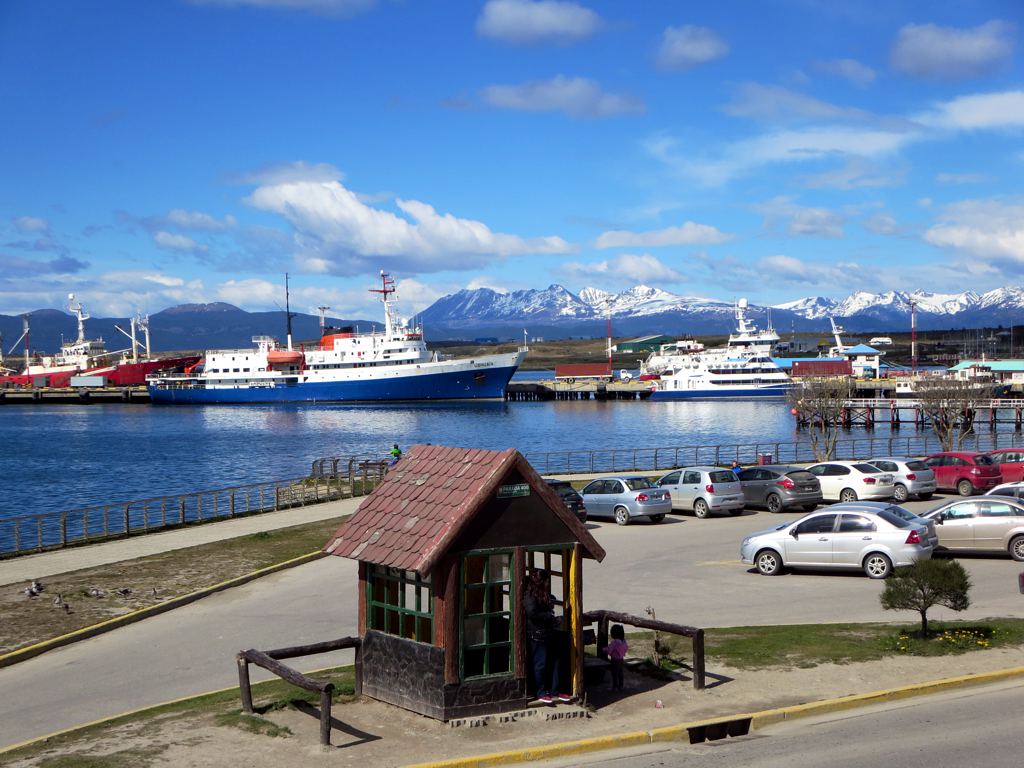
The Beagle Channel by sea. The signature outing of any visit. Boats depart from the city harbour and trace islets populated by South American sea lions and imperial cormorants, before reaching the iconic Les Eclaireurs lighthouse — popularly, if inaccurately, claimed as the inspiration for Jules Verne’s “lighthouse at the end of the world.” Catamaran capacities are capped, and smaller-vessel operators (typically 40 passengers or fewer) deliver the most ecologically considerate version of the experience.
Tierra del Fuego National Park. Twelve kilometres west of the city, this is the only Argentine national park with a marine coastline. Half a day is the minimum required to walk meaningfully through it — the Costera, Hito XXIV and Mirador Lapataia trails offer the most rewarding contrasts of forest and bay. Visitors can extend the experience by boarding the End of the World Train, a narrow-gauge line that follows the route used by inmates of the former penal colony to haul firewood, now operating with diesel-electric hybrid rolling stock.
Penguin landings on Martillo Island. This is where Ushuaia plays a card unique in Argentina. A single operator, working under the Administration of National Parks, is licensed to bring small groups ashore to walk among a mixed colony of Magellanic and Gentoo penguins between October and March. The visit is silent, single-file and restricted to a delimited path. It is one of the few wildlife experiences in South America where “intimate” is not a marketing word but a regulatory one.
Trekking to Laguna Esmeralda. A 9-kilometre round-trip walk through peat bogs, lenga forest and a wooden boardwalk ending at a glacier-fed lake the colour of jade. The trail has no major elevation but the surface is wet most of the year — sturdy waterproof footwear is essential. Four to five hours total, with time to eat lakeside.
Martial Glacier. A two-hour hike above the city offering the best panoramic views of the Beagle Channel. In winter, the area becomes a small cross-country skiing and sledding spot — a reminder that the Fuegian Andes are also home to Cerro Castor, the southernmost commercial ski resort on Earth.
When to travel
Peak season runs from December to March, when daylight stretches past 17 hours at the summer solstice and average temperatures sit between 9 and 15 °C. This is the only window for penguin landings and the most reliable for navigation and trekking.
Winter (June through September) is a different proposition: dependable snow at Cerro Castor, husky-sled excursions, snowmobile traverses of Lago Fagnano, and a noticeably quieter city. Four full nights is the minimum a traveller should plan; three leaves at least one defining experience out of reach.
How to choose a responsible operator
The local industry is fragmented — dozens of providers compete on price, scale and access. The range of tours en Ushuaia spans large fleet operators running 200-passenger catamarans to small outfits running custom 4×4 expeditions, and the difference in environmental footprint between them is substantial. A short checklist before booking:
- InFueTur registration. The Fuegian Institute of Tourism is the official provincial registry. Legitimate operators publish their registration; ask if it isn’t displayed.
- Group size. For wildlife and photography, smaller is always better — both for the experience and for the animals.
- Departure point. Some “National Park + Train” packages add two hours of transfer time when operators pick up outside the city centre. Ask directly.
- Weather policy. Ushuaia’s weather changes several times a day. Reputable operators reschedule or refund without negotiation when conditions force a cancellation, rather than running marginal trips.
A different ending
What Ushuaia rewards, more than the accumulation of experiences, is the traveller willing to pace them. A walk along the city’s coastal road. A coffee on Calle San Martín. A king crab dinner watching the wind push clouds across the Beagle. The city functions less as a parallel destination than as a pause between landscapes.
That posture — slower, more deliberate, less extractive — is what gives the end of the world its quiet relevance as a model. The places that can still be travelled this way are not many. Ushuaia, for now, is one of them.
Editor’s Note: The opinions expressed here by the authors are their own, not those of impakter.com — In the Cover Photo: Excursion in Ushuaia, Argentina. Cover Photo Credit: pickpik