This interview is part of an editorial collaboration with ICLEI — Local Governments for Sustainability. It was first published on the ICLEI blog.
Since the last interview with Peter Defranceschi on the global food crisis and the role of cities, the global food landscape has changed further. The war in Ukraine has amplified many of the challenges we’ve been facing on account of anthropogenic climate change and the COVID-19 pandemic. Rising and volatile food, feed and energy prices and hampered trade flows have affected people’s abilities to access healthy and nutritious diets.
This has created ripple effects with far-reaching consequences: the UN estimates that 1.7 billion people – one-fifth of the world’s population – are now at risk of falling into poverty and hunger, and the greatest strain is put on the most vulnerable of us.
We have recently caught up with Peter Defranceschi, coordinator of the ICLEI Global CityFood Program, who in this interview provides insights into ways local governments can sustainably transform their food systems for crisis recovery, and how the ICLEI Global CityFood Program is supporting them along the way.

What implications of the global food crisis do you see for cities?
Cities have differing mandates on food markets, food procurement and food waste management and mayors are the first to face the big challenge of enabling access to sustainable and healthy foods, while food prices and inequalities are rising.
Since the start of the pandemic, we’ve seen a greater number of people in cities around the world relying on emergency relief services, such as food banks. People tend to buy less fresh food as it became more expensive, and services such as public canteens are weighing heavier on municipal budgets.
2020 was a challenging year from many points of view, highlighting the need for food systems change at the local and regional level as a tool for recovery. What followed were intensive multi-stakeholder dialogues worldwide on how to do this sustainably and inclusively, culminating at the UN Food Systems Summit in September 2021.
With the urgency created by recent events, 2022 needs to be the year we start implementing what was said and decided. Cities and mayors in particular are asking for concrete solutions to tackle the multiple food systems challenges within a changing global food systems environment.
You mentioned that cities are asking for concrete solutions. What advice would you give to cities?
My main advice to local governments is to clearly position food as a strategic tool to improve urban sustainability. Let’s take the example of school meals in Belo Horizonte, Brazil. In addition to improving the nutrient intake of vulnerable children, Belo Horizonte used their food procurement mandate for school meals as a lever to increase regional food production, including from small-scale and family farmers, with locally-produced food now representing around 30% of the city’s total food purchases.
That being said, regional production is especially vital in times of crisis: higher food sovereignty and shortened supply chains allow cities to be more resilient to external shocks and ease the road to recovery.
Secondly, a way for cities to drive food systems transformation is by forming multi-stakeholder food policy councils. Committed citizens can spark innovative solutions to the ongoing food challenges and the example of Ghent in Belgium highlights this point.
Under the guidance of its institutionalized food policy council, Ghent collected over 1000 tonnes of food surplus within two years, benefitting 40.000 citizens affected by food poverty. At the same time, the city was able to employ 25 people with difficulties entering the job market.
Thirdly, cities should conduct a thorough food systems assessment on place-based enablers for food systems transformation, also looking beyond city borders. These assessments have gained importance in our highly interconnected and uncertain world. As such, Quito’s example in Ecuador teaches us that taking a systemic approach helps cities take quick actions on the ground in times of unforeseen crisis. Having conducted a food systems and vulnerability analysis back in 2018, Quito’s emergency food relief during the pandemic was able to reach the most vulnerable members of the community right from the start.
Related Articles: UN Food Systems Summit Ends in Crisis | EU Unveils Law to Halt Biodiversity Loss and Improve Food Systems
All this being said, policies cannot be effectively implemented without adequate resources. This remains a huge hurdle to cities, and with rising costs of providing services in times of crisis, city capacities and budgets are stretched. This is where multi-level governance comes into play.
On the one hand, we have decision-makers at the national and international level – often with the funds to go along – that are searching for actions to address global challenges. On the other, we have city practitioners with on-the-ground expertise on pathways that lead us out of the crisis. Creating the link between these parties is key.
At this point, let me offer you a short anecdote. Just a few weeks ago, we connected and hosted two delegations from Ghent and the European Commission in our Brussels office, discussing Ghent’s innovative food strategy in detail. The European Commission was impressed and is now planning a separate assessment to build lessons learned into its Farm to Fork Strategy. I could not think of more tangible advocacy – and it just goes to show that trusted partners like ICLEI play an important role in driving exchange for the mutual benefit of all stakeholders, including people and the planet.
What does the ICLEI Global CityFood Program offer to cities? With its two-year anniversary soon approaching, how has the ICLEI Global CityFood Program grown?
Our Global CityFood Program is driven by a sense of urgency. Our ambition is to actively contribute to urban food systems transformation worldwide, at the same time generating financial resources for our cities, ourselves and strategic partners.
In the past two years, we were able to attract considerable funding, working hard with our regional offices to ensure the financial sustainability of our big visions. Having secured SchoolFood4Change, a project on sustainable school meals and food education, we will soon support member cities to amplify innovative food sharing initiatives in a project called CULTIVATE, and through FEAST, a pioneer on how cities can effectively enable healthy food behaviour and create healthier food landscapes.
I am also very excited about our revamped CITYFOOD program, a network of local and regional governments on resilient urban-rural food systems, which lies at the heart of our Global CityFood Program. We have already started engaging with strategic, globally operating partners and will soon relaunch the CITYFOOD website with hands-on approaches to foster healthy people, landscapes and climate. We have several other projects on concrete tools for cities, which I will be happy to share in our next interview!
What can cities expect from ICLEI and the global food systems community in the second half of 2022?
There is a strong movement to unite the voice of cities in the global food landscape. Together with FAO and GAIN, ICLEI’s Global CityFood Program has a leading role in the global Coalition on Sustainable and Inclusive Urban Food Systems. Like in other crucial domains, we advocate for multi-level governance: pilot actions, capacity building, mapping, and policies can only be effectively implemented when local and national governments pool resources and funding to overcome the food crisis together.
That is why over the next months, we will engage with national governments to enable transformative action at multiple scales and policy levels.
At COP27 in Egypt, we then want to raise the bar. According to the IPCC, food systems could account for up to 37% of global GHG emissions. Nevertheless, there is no single country as of yet that effectively links food to climate commitments.
ICLEI will address the role of food systems in building sustainable and resilient societies across different channels – from the Local Governments and Municipal Authorities Constituency (LGMA) pavilion we are leading to advocacy within the various food pavilions that cities and regions are highly welcome to participate in.
Any final messages?
Given the growing challenges of ensuring food security worldwide, policy leaders are justifiably calling for innovations to increase agricultural productivity. That being said, there is no moratorium on climate change and biodiversity loss. When we take a food systems perspective, we are looking to target long-term food security in terms of sustainability and region-specific food sovereignty, rooted in biodiversity, climate and social justice.
For urban policymakers, food is the opportunity for transformative change, impacting other areas such as public health, employment, and education, ultimately fostering equity within our communities.
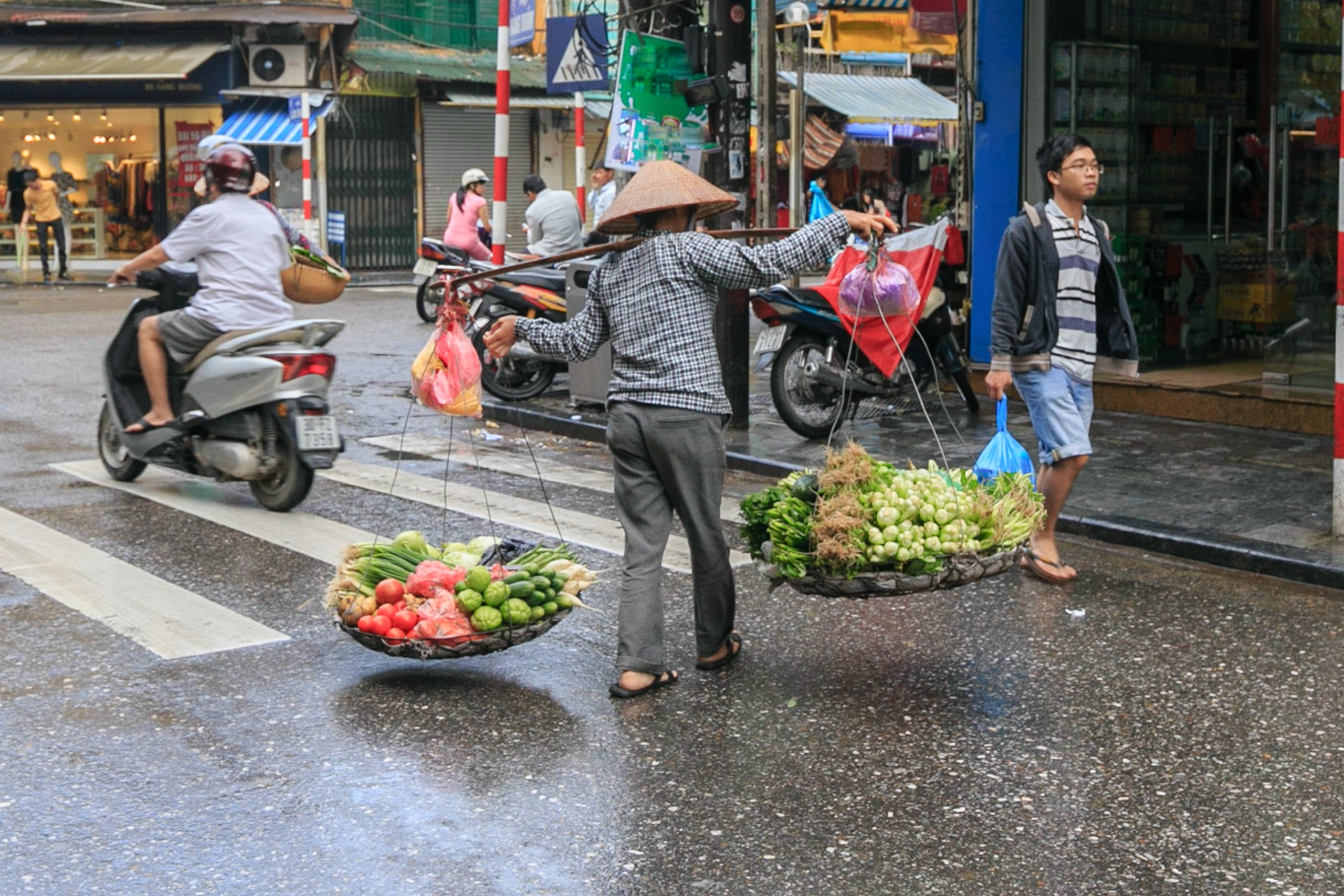
Editor’s Note: The opinions expressed here by the authors are their own, not those of Impakter.com – In the Featured Photo: Person carrying vegetables passing on road. Featured Photo Credit: Quang Nguyen Vinh.