How London-based tech startup Sorted is leading the charge against plastic pollution with innovative waste management solutions
A spike in plastic usage across the globe presents imminent threats to the environment. Since the 1970s, the rate of plastic production has outshined any other material, with projections stating that primary plastic production will reach 1.1 billion tonnes by 2050.
As we reach a point where we produce plastic faster than we can manage, leftover plastics leak into surrounding environments through improper disposal. According to the United Nations Environment Programme, 19 to 23 million tonnes of plastic are lost in aquatic environments each year.
Current Plastic Disposal Processes
Current plastic disposal metrics show that only 9% of global plastic waste is recycled, with 22% littered, 49% in landfills and 19% incinerated. This disproportionate recycling rate is a consequence of the tremendous variety of plastics.
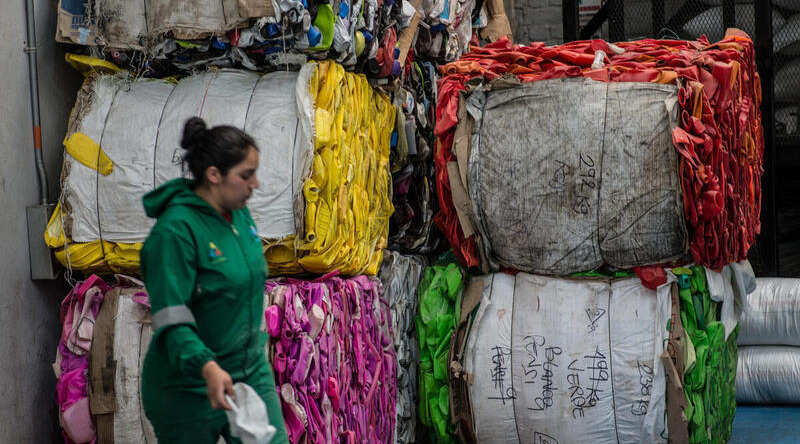
Each kind of plastic includes different chemical additives and colorants, making it difficult to sort and process every piece accurately. This results in increased costs in the recycling chain. According to WWF, it costs the United States over $32 billion annually to collect, sort and recycle plastic waste. Consequently, waste management companies resort to landfills and incineration to remove the build-up of plastics, creating a new set of problems.
Since plastics are mainly made from oil and gas, incinerating them has a similar effect to burning fossil fuels: CO2 emissions. In the UK, nearly 750,000 tonnes of CO2 are released into the atmosphere annually, just from burning plastics.
Furthermore, incineration can cause damage to human health, with heavy metals and dioxins released into the air. Short-term exposure to dioxins can result in skin lesions, and chronic exposure has been linked to damaged nervous systems, immune systems, and cancer. A 2018 study conducted by Zero Waste Europe also found that chicken eggs within two kilometers of incinerators were considered inedible.
Similarly, the build-up of plastics in landfills has created complications. Primarily, the world is running out of space for well-managed landfills. As waste accumulates in the same landfills, long-term concerns arise from soil and groundwater contamination. Additionally, landfills present a linear disposal method, with no return on the resources used to produce the plastic in the first place.
With global climate and health concerns, waste management needs massive improvements to reach net-zero waste.
Enter Startup Sorted
Addressing this challenge head-on is London-based startup Sorted. The startup leverages cutting-edge technology to revolutionize waste management, using recent innovations like computer vision and spectroscopy to create “superpickers,” which use AI-controlled lasers to highlight plastic waste for human sorters.
The solution offered by startup Sorted targets waste management and recycling companies with human sorters, aiming to reduce the amount of materials sent to incineration or landfill.
“We help them to reduce the recyclable materials that end up in landfills and incineration,” their website says. “We help [partners] sort recyclable plastic at the most granular level, based on resin and usage. To meet the most demanding requirements of the recycling industry.”
“Our mission is to help waste management companies sort their waste more effectively and maximize recovery of recyclable materials,” said Arthur Goujon, Co-founder and CTO at Sorted.
Related articles: How to Shift to, Grow, and Build Circular Economy | 5 Indian Sustainable Startups to Watch This Fall | Five Sustainable Startups From Bogotà | 4 Ways to Reduce Plastic Pollution | 5 Alternative Protein Startups to Watch | 9 Sustainable Startups From the Baltic Countries to Watch | Why We Need a Transformative Circular Economy | 5 Disruptive Circular Economy Startups to Watch
Startup Sorted’s Progress and Financial Backing
So far, Sorted has seen great success in UK pilot programs, with over 50% success in residual waste recovery. As a result, the startup’s partners see reductions in incinerations, higher overall revenues, and less carbon emissions.
Sorted has already established contracts with Suez UK and Cawleys, two notable waste management companies in the UK. Its success thus far has encouraged third-party financial support, including from two prominent companies, Antler and Nvidia. The startup has also recently received £1.65 million from a seed funding round run by Pi Labs and other angel investors.
What’s Next?
With its promising start and solid backing, startup Sorted stands at a crucial juncture where it can expand its impact and offerings.
Building on its success in the UK, Sorted could expand its operations globally. Collaborating with waste management companies worldwide could help address the pressing issue of plastic pollution on a larger scale. By setting up sorting facilities in strategic locations, the startup could optimize waste management processes across the globe.
With the global waste management market expected to be valued at $1.36 trillion by 2032 and global annual waste generation predicted to increase by 70% between 2018 and 2050, startup Sorted seems destined for an impactful future.
Editor’s Note: The opinions expressed here by the authors are their own, not those of Impakter.com — Cover Photo Credit: ©Juan Pablo Eijo/Greenpeace.