Impakter
  • Environment
    • Biodiversity
    • Climate Change
    • Circular Economy
    • Energy
  • FINANCE
    • ESG News
    • Sustainable Finance
    • Business
  • TECH
    • Start-up
    • AI & Machine Learning
    • Green Tech
  • Industry News
    • Entertainment
    • Food and Agriculture
    • Health
    • Politics & Foreign Affairs
    • Philanthropy
    • Science
    • Sport
  • Editorial Series
    • SDGs Series
    • Shape Your Future
    • Sustainable Cities
      • Copenhagen
      • San Francisco
      • Seattle
      • Sydney
  • About us
    • Company
    • Team
    • Global Leaders
    • Partners
    • Write for Impakter
    • Contact Us
    • Privacy Policy
No Result
View All Result
Impakter logo
No Result
View All Result
methane-tracking satellite

A New Era in Environmental Accountability: SpaceX Launches Methane-Tracking Satellite

Tanager 1 satellite will be able to monitor on a global scale methane emissions that are more potent than carbon dioxide emissions even though they are more short-lived

Jacob LeebyJacob Lee
August 23, 2024
in Business, Climate Change, ESG News, Science, Tech
0

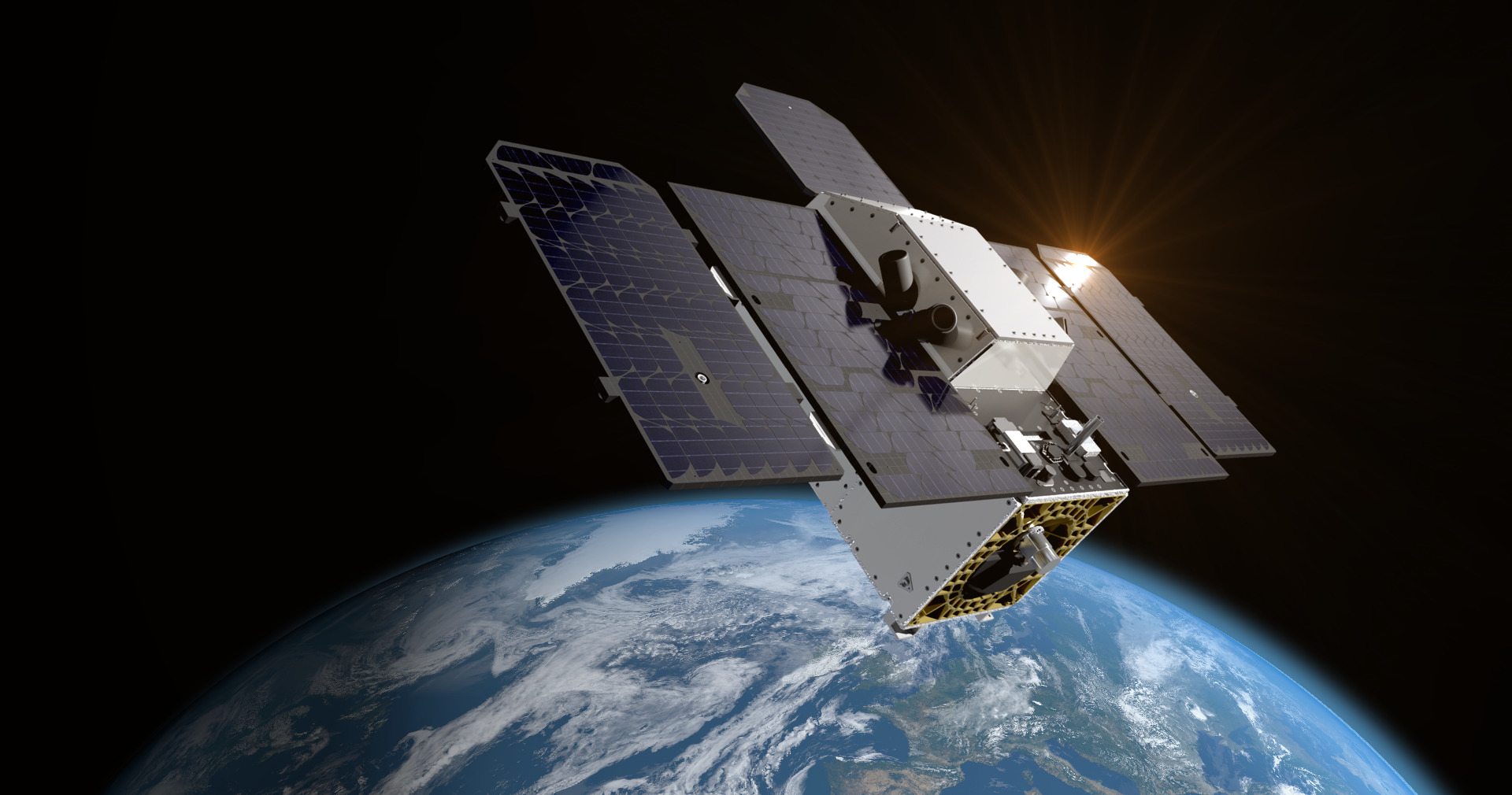
SpaceX, the private aerospace company founded by Elon Musk, has launched into space nonprofit Carbon Mapper’s groundbreaking satellite aimed at monitoring methane emissions on a global scale. Launched from the Vandenberg Space Force in California on Aug. 16, the Tanager 1 satellite will track methane emissions with unparalleled accuracy — “down to the level of individual facilities and equipment.”

The Importance of Methane Tracking

Methane is an extremely potent greenhouse gas. While it has a much shorter atmospheric lifetime than carbon dioxide — around 12 years compared to centuries — it absorbs significantly more energy in the atmosphere.

According to the International Energy Agency (IEA), methane is responsible for around 30% of the current rise in global temperatures, with the energy sector being one of the largest contributors.

Tanager 1 aims to address this oversight by providing precise data on methane emissions from specific sources. The satellite will be able to detect methane leaks as small as 100 kilograms per hour from orbit, a capability that could revolutionize the way industries and governments approach emission reductions.

The Tanager 1 Methane-Tracking Satellite

The satellite was developed by the Carbon Mapper and launched in partnership with NASA, Arizona State University, Planet Labs, and RMI. The project, financially backed by Bloomberg Philanthropies, the High Tide Foundation, the Grantham Foundation for the Protection of the Environment, the Zegar Family Foundation, and the Children’s Investment Fund Foundation, hopes to hold major polluters accountable by making the data collected publicly available and sharing the most accurate and up-to-date information possible.

Activists will be able to use this data to bring attention to specific incidents of high emissions, applying pressure on both industries and governments to take immediate action. Policymakers can leverage real-time insights to craft more informed regulations and policies, ensuring that environmental laws are based on the most accurate and up-to-date information available.

This level of transparency has the potential to drive a cultural shift within industries, encouraging companies to proactively manage and reduce their emissions rather than reactively responding to regulatory pressures. Hopefully, it will drive significant changes in the way industries manage their emissions, potentially leading to a reduction in global methane levels.


Related Articles: How Google Will Help Track and Measure Methane Emissions From Space | Space Junk: Has Earth’s Orbit Become Our Scrap Yard? | First-Ever Space Debris Fine Issued | The Sky’s Not the Limit for One Health on Earth

The launch of Tanager 1 is also a testament to the improvements in satellite monitoring. Unlike traditional satellites, which rely on passive detection methods, Tanager 1 uses active sensing technology that captures high-resolution images of methane plumes, crucial for tracking emissions in difficult areas, such as offshore oil rigs and pipelines. These areas have traditionally been under-monitored due to the difficulties associated with accessing and observing them. 

Tanager 1’s advanced technology overcomes these challenges, ensuring that emissions from even the most inaccessible areas are accounted for.

Methane-Tracking Satellites: A Step Towards a Sustainable Future

As the world contributes to grappling with the escalating implications of climate change, Tanager 1 marks a significant milestone in the global effort to reduce greenhouse gas emissions. The success of Tanager 1 could further expand our ability to combat climate change from space. As technology continues to improve,  the integration of space-based monitoring systems into global environmental strategies will likely become increasingly important.


Editor’s Note: The opinions expressed here by the authors are their own, not those of Impakter.com — In the Cover Photo: An artist’s concept depicts one of the Carbon Mapper Coalition’s Tanager satellites, which will use imaging spectrometer technology developed at NASA’s Jet Propulsion Laboratory in Southern California to measure methane and carbon dioxide point-source emissions, down to the level of individual facilities and equipment, on a global scale. The Tanager-1 satellite was launched from Vandenberg Space Force Based in California on Aug. 16, 2024. Cover Photo Credit: NASA.


Tags: IEAMethaneMethane TrackingMethane-Tracking SatelliteNASASpaceXTanager 1
Previous Post

The Danger Trump Poses to the Climate — and Our Future

Next Post

The Pursuit of Happiness: Can Historic American Governance Survive the 2024 Election’s Constitutional Crisis?

Related Posts

Solar panels in China
Climate Change

China’s Carbon Emissions Flat or Falling for 18 Months: What’s Driving the Shift?

A recent analysis has revealed that China’s carbon emissions have declined or remained flat since March 2024. Given that China...

byYuxi Lim
November 21, 2025
EU Leaders to Debate 2040 Climate Goals
ESG News

EU Leaders to Debate 2040 Climate Goals

Today’s ESG Updates EU Leaders Divided on 2040 Climate Goal: European leaders will debate a 90% emissions reduction target, as...

byLena McDonough
October 23, 2025
Energy transition
Energy

Decarbonising the Energy Sector

This deep dive summarizes the discussion that took place in the context of the event “Decarbonising the energy sector: From...

byInternational Institute for Sustainable Development (IISD)
August 26, 2025
Power Outages in Spain and Portugal
Editors' Picks

Rethinking Energy Security in a Net-Zero World

In April 2025, Spain experienced one of the most severe blackouts in recent memory. Triggered by a technical fault on...

byNicolaos Theodossiou - Professor at the Aristotle University of Thessaloniki & Chair of SDSN Black Seaand1 others
July 14, 2025
Ai and energy
AI & MACHINE LEARNING

AI: The Paradox of the Energy Transition

Revising the EU’s Energy Goals The annual EU Energy Week this month brought together experts to discuss Europe’s mobilisation towards...

byShah Ibrahim Ahmed
June 30, 2025
EPA Seeks to Completely Eliminate Pollution Limits on Power Plants
Energy

EPA Seeks to Completely Eliminate Pollution Limits on Power Plants

Today’s ESG Updates EPA Seeks to Completely Eliminate Pollution Limits on Power Plants: Internal documents reveal a draft stating that...

byLena McDonough
May 26, 2025
ESG news regarding first commercial e-methanol plant in Denmark, IFC one-hundred-million-dollar investment in electric vehicles in Mexico, EFC gas awarded five-million-dollar contract from NASA, and germany revising energy grid
Business

European Energy Opens First Large-Scale E-Methanol Plant

Today’s ESG Updates Denmark Opens E-Methanol Plant: European Energy and Mitsui launch the first commercial e-methanol plant to supply green...

bySarah Perras
May 13, 2025
space junk
Science

Earth’s Orbit Is Filling Up With Junk. Greenhouse Gases Are Making the Problem Worse.

At any given moment, more than 10,000 satellites are whizzing around the planet at roughly 17,000 miles per hour. This...

byGrist
March 13, 2025
Next Post
America Election 2024

The Pursuit of Happiness: Can Historic American Governance Survive the 2024 Election’s Constitutional Crisis?

Recent News

The Best Virtual Office Address In London For Your Startup

How To Choose The Best Virtual Office Address In London For Your Startup

December 5, 2025
Granddaddy Purple Strain

Where Granddaddy Purple Strain Gets Its Iconic Grape Flavor

December 5, 2025
ESG news regarding Deforestation Mandate Being Pushed; EUs Acceleration on Hydrogen and Net Zero Revolution; AT&T Will End All DEI; UK Watchdog Blocks Nike and Lacoste Ads Over Green Claims.

U-Turn in Europe: Deforestation Mandate Pushed Back Again

December 5, 2025
  • ESG News
  • Sustainable Finance
  • Business

© 2025 Impakter.com owned by Klimado GmbH

No Result
View All Result
  • Environment
    • Biodiversity
    • Climate Change
    • Circular Economy
    • Energy
  • FINANCE
    • ESG News
    • Sustainable Finance
    • Business
  • TECH
    • Start-up
    • AI & Machine Learning
    • Green Tech
  • Industry News
    • Entertainment
    • Food and Agriculture
    • Health
    • Politics & Foreign Affairs
    • Philanthropy
    • Science
    • Sport
  • Editorial Series
    • SDGs Series
    • Shape Your Future
    • Sustainable Cities
      • Copenhagen
      • San Francisco
      • Seattle
      • Sydney
  • About us
    • Company
    • Team
    • Global Leaders
    • Partners
    • Write for Impakter
    • Contact Us
    • Privacy Policy

© 2025 Impakter.com owned by Klimado GmbH