If we can ever get a handle on the risks we face in dealing with the interface of animal, human, plant health, and the environment – in short, the risks to One Health – it will be by gathering better information gained from objective sources. This means the involvement of communities, policymakers, and legislators; it means identifying and bringing to bear innovative research tools, including using earth-observing satellites.
Concerning the latter, in 2021 as the COVID pandemic was expanding, an article in Nature Medicine, “Can Spaced-based technologies help manage and prevent pandemics?” underscored linkages and opportunities.
As the number of satellites is exploding, satellite technology is fast becoming cheaper: Twenty-five years ago, payload-cost-per-kilo was 22,000 euros. Today, it costs only a thousand euros. And those prices are expected to keep falling to less than 100 euros. This has and will translate into increasing private sector investment and activity in satellite Earth monitoring efforts.Now we have what is often called “new space” opening up the possibility of collecting data on a scale unimaginable before that will fund innovation in all sectors, including global public health:
Much has recently been spoken about One Health at international fora; there have also been concrete actions by technical multilateral and bilateral entities and development financing institutions, civil society organizations, and others to support such efforts. And there will be upcoming events such as COP28 to continue to garner support for coordinated action.
However, there has not been the same level of public attention and visibility to what might be described as more esoteric and highly valuable contributors, namely space agencies.
NASA, the American space agency
It is worth considering the U.S. National Aeronautics and Space Administration (NASA) and what it does. Indeed, its contributions can make all the difference in what is known about the situation on Earth, changing environments that are significant in dealing with One Health concerns, and helping those on the ground in choosing courses of action.
In a past November 3rd One Health Day, NASA’s Earth Applied Sciences Program noted that
“communities around the world look to NASA research and resources to inform decisions that address health threats shared by humans, animals and the environment.
Using the One Health concept framework, NASA’s Earth Applied Sciences Program supports cutting-edge scientific research that integrates Earth observation data with on-the-ground data to examine real-time environmental health challenges that affect our communities…NASA-funded researchers…are actively collaborating with national and international health agencies. to integrate Earth observation data into public health surveillance programs.”
It is worth noting that NASA also collected and provided information on One Health by institutions and civil society groups. NASA’s Earth Information Center is a valuable resource for updating relevant news.
This year NASA’s One Health Day message focused on its research in understanding air quality and the ways NASA data helps promote healthier communities through tracking air pollution levels. Its STAQS campaign studied how air pollutants change and move through the atmosphere in U.S. megacities:
In the summer of 2023, a public health crisis in North America was the result of massive amounts of smoke coming from the wildfires in Canada. It had multiple negative direct and indirect, short and longer-term health consequences for affected populations, including death – 6 deaths were recorded in Canada, how many in the U.S. is unknown. What is known is that the most exposed and vulnerable people are the very young and old, those with asthma and heart conditions, and those who could not afford the luxury of living in the security of an air-conditioned home and thus close their windows on the air pollutants.
Yet many people weren’t aware of the danger and this is where NASA’s monitoring of air quality comes in, playing a key role in setting up timely health alerts. NASA’s Earth Information Center is another valuable resource for related new developments.
And there are other areas of NASA’s efforts dealing with related subjects such as NASA’s Health and Air Quality Applied Sciences Team (HAQAST) which in 2021 launched its Environmental Justice Tiger Team, with the goal to build capacity among the environmental justice community for using and interpreting satellite datasets. They have already published an “environmental justice analysis”, with the team currently led by Dr. Qian Xiao. The analysis focused on artificial Light at Night (ALAN), which is seen as an emerging health risk factor. It has been linked to a wide range of adverse health effects, and, according to one recent study, disadvantaged neighborhoods may be exposed to higher levels of ALAN. The analysis therefore was intended to respond to the need to better understand how social disadvantage correlates with high ALAN levels to better identify vulnerable populations and inform public lighting policy accordingly.
Most recently NASA has provided significant new information on the impact of global warming and glaciers.
“The study found that with 1.5 degrees Celsius of warming, 50% of the world’s glaciers disappear and contribute to sea level rise by 2100. If the world reaches 2.7 degrees of warming — the estimated temperature increase based on climate pledges made at the Conference of Parties (COP26) of the UN Framework Convention for Climate Change — nearly all glaciers in Central Europe, western Canada, and the U.S. (including Alaska) will have melted.
[…] Glaciers in remote regions — far from human activities — are particularly powerful indicators of climate change. Rapidly melting glaciers impact freshwater availability, landscapes, tourism, ecosystems, the frequency and severity of hazards, and sea level rise.”
This new NASA study results should be considered among the “Paul Revere” warnings that both the climate change and One Health communities need to recognize the need to move from research to concrete actions.
ESA, the European Space Agency
The European Space Agency’s (ESA) research has been directly relevant to One Health in monitoring environmental factors to detect changes in vegetation patterns, identifying land use changes, and monitoring air and water quality. These datasets are invaluable in assessing the impact of human activities on ecosystems and facilitating evidence-based decision-making in areas such as agriculture, urban planning, and environmental policy.
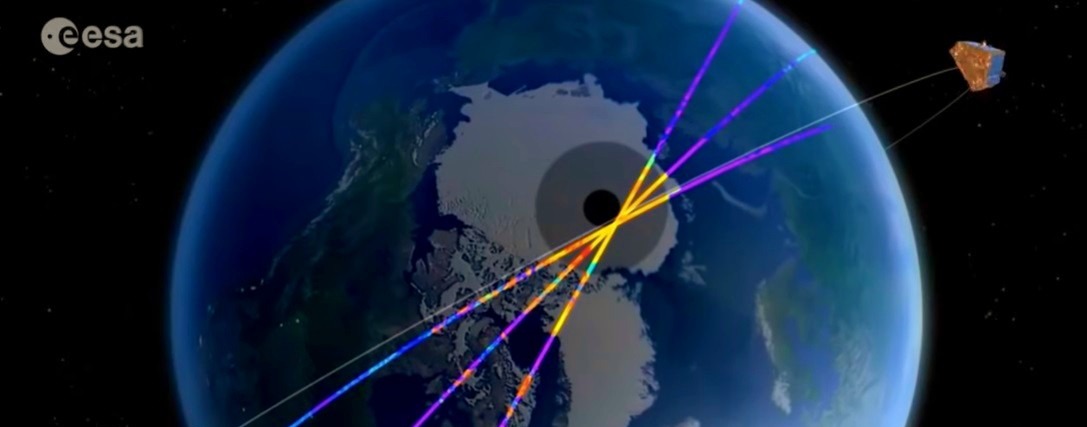
On November 6, ESA announced it was joining forces with the European Commission to accelerate the use of Earth-observing satellites (as shown in the above video) and the information they provide to address the pressing challenge of climate change.
The main objective of ESA’s Copernicus Sentinel-5P mission is to perform atmospheric measurements with high spatiotemporal resolution, to be used for air quality, ozone and UV radiation, and climate monitoring and forecasting. It provides accurate data on pollutants such as nitrogen dioxide (NO2) and particulate matter (PM2.5), enabling policymakers to implement targeted strategies to improve air quality and protect public health, potentially reducing respiratory diseases globally.
ESA researchers track wildlife migration patterns, monitor habitat changes, and predict disease outbreaks in different regions, allowing for the implementation of proactive strategies to mitigate the spread of zoonotic diseases. ESA’s initiative, the “Wildlife Protection Program,” utilizes satellite data to track the movements of endangered species and assess the health risks associated with specific ecosystems, crucial for conserving biodiversity and preventing the emergence of potentially devastating epidemics.
ESA’s Sentinel-2 mission provides detailed images of land cover changes, enabling early detection of pest infestations and the implementation of targeted mitigation measures. By integrating satellite observations into agricultural practices, farmers can reduce the use of pesticides and increase crop yields sustainably.
Furthermore, ESA data identifies regions at risk, monitors climatic conditions that favor the proliferation of pathogens, and facilitates early warning systems. When there was a Zika virus outbreak, satellite imagery was utilized to identify potential breeding sites for disease-carrying mosquitoes. This allowed authorities to target vector control efforts effectively and reduce the impact of the outbreak on public health.
And there are others
Cooperative arrangements such as the international space station, and country efforts by China, Russia, India and Israel are providing useful information relevant to events on earth and One Health data. Some of their activities are briefly described below:
China National Space Administration (CNSA): Their DQ-1 satellite collects data to help scientists monitor air pollution and climate change.
Russian Federal Space Agency (Roscosmos): The Meteor-M-2 provides global observations of the Earth’s surface and atmosphere, including information on the weather, global climate change and seawater as well as analyzing space weather, solar wind, ionospheric research, and Earth’s magnetic field.
Indian Space Research Organisation (ISRO): A new facility, the System for Safe & Sustainable Operation, has been set up to deal with emerging threats from space debris, and more generally, provide timely information about the space environment.
Israel Space Agency: The SHALOM satellite, a joint project between the Israel Space Agency and the Italian Space Agency, is tasked with environmental monitoring, collecting data about the atmosphere, land, and oceans, and precise agriculture.
These data collection and monitoring efforts are crucial in enhancing our collective understanding of the many aspects of planet health, contributing to monitoring risks to One Health, the scientific approach that connects the health of people to the health of animals and the environment.
Space monitoring of risks to One Health: What of the future?
The potential benefits of space technology as it bears on One Health in terms of what is being and could be done, is the promise for our common future.
Heightened public visibility, and deepening collaboration between space agencies, environmentalists, public health professionals, veterinary experts, policymakers, and financial institutions, is what is needed.
Spaceborne technologies offer unique perspectives that allow for more reliable monitoring of environmental factors, ways for tracking disease outbreaks and predicting health risks. Implementation of proactive strategies to safeguard public health, conserve biodiversity, and ensure the sustainability of our planet, is possible.
Benefits from Space for One Health in advancing global health and achieving a harmonious relationship between humans, animals, plants, and the environment, is possible “if”, but only “if”, there is the awareness, willingness, and commitment to embrace what space can offer to help.
Editor’s Note: The opinions expressed here by the authors are their own, not those of Impakter.com — In the Featured Photo: icon for ESA global monitoring system Source: European Space Agency.