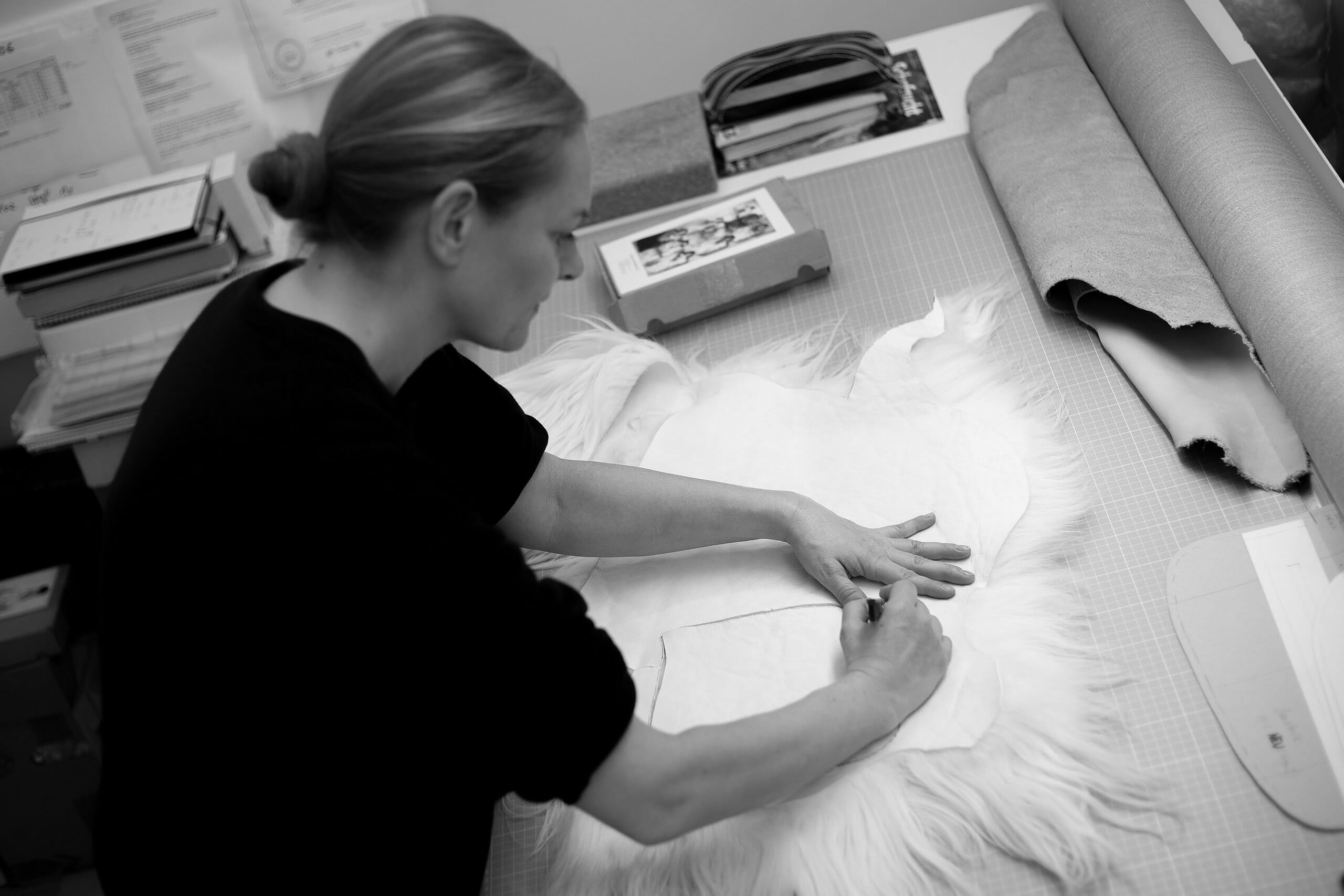
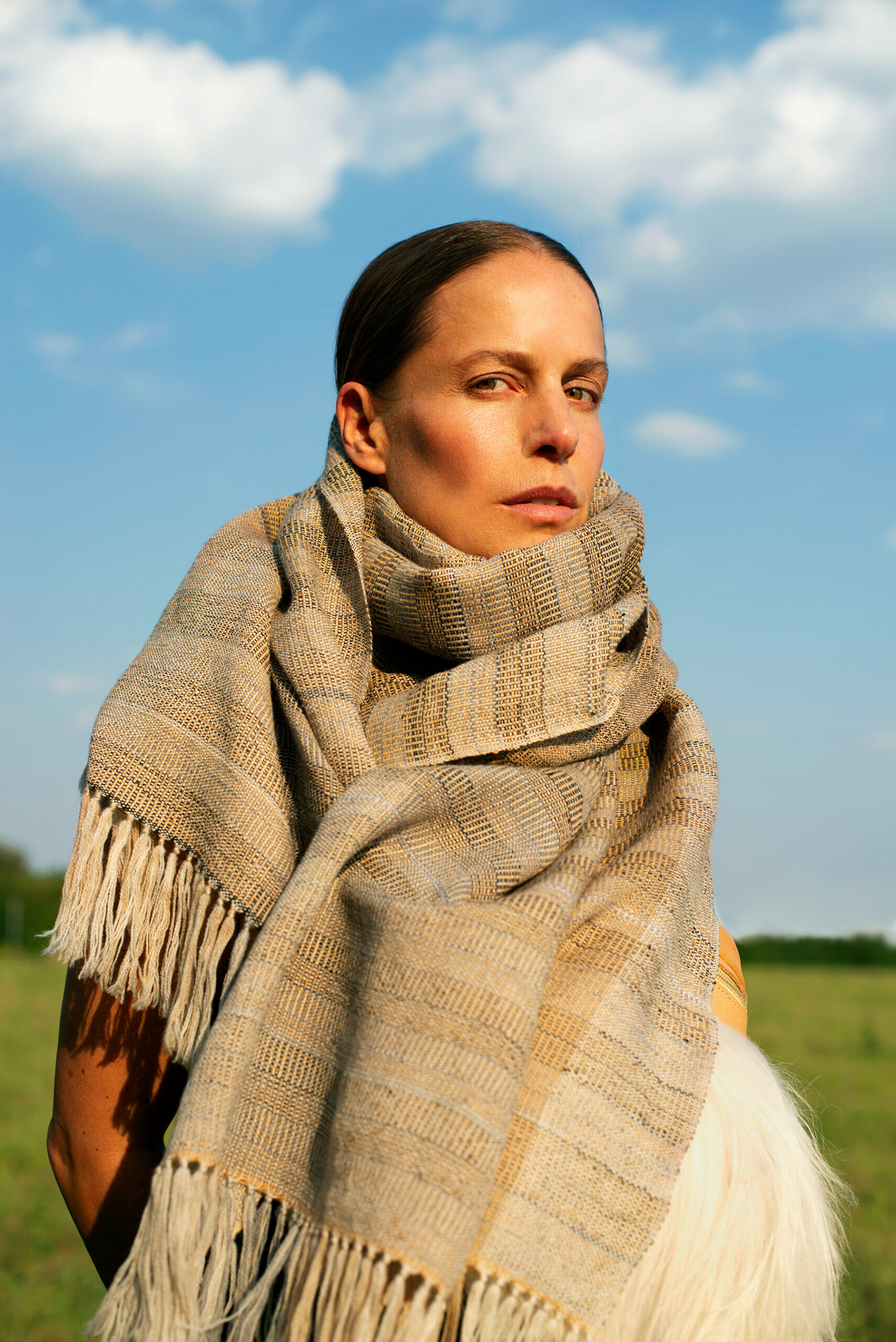
Agnes Schorer is the founder of Agnes Nordenholz, a slow luxury label from Berlin. She crafts beautiful leather bags and accessories, as well as a selection of handwoven shawls and shirts, working with natural materials such as wool, linen, and leather sourced from around Europe, including her native Germany. Agnes also has a clothing line and started a made-to-measure line of suits for women. We chatted to her to learn more about her design heritage and what the fashion industry today can learn about traditional craftsmanship.
What made you decide to start a brand focused on handbags and leather accessories? Was it totally new to you after designing garments for most of your career, or did it feel like a natural progression?
I think it was a natural progression. We also did bags back with my first label in Berlin. I’ve always had an interest in handbags because even if you’re dressed very normally, you can really stand out and express something with your handbag. It’s also a completely different approach to design – bags don’t necessarily change with every season, like apparel does. I also like the materials I get to work with as a bag maker, I like leather a lot.
When I started Agnes Nordenholz in 2015, I really wanted to do it right and learn the craft. I actually did a course in 2016 in Italy, learning from an Italian master in leather crafts. It was important to me that I learned the right way to be able to produce something lasting.
One of your great grandfathers was a merchant in the wool business and the other was a leather tanner and trader for leather goods. You work a lot with leather and wool, but how else are your designs a reflection of your heritage?
I learned a lot from my grandmother as well, the brand is actually named after her maiden name, “Nordenholz”. She worked a lot with hand crafts like knitting, stitching, sewing, doing bobbin lace by hand – she was always working on something and I learned so much from her. I chose her name to reflect my appreciation for craftsmanship.
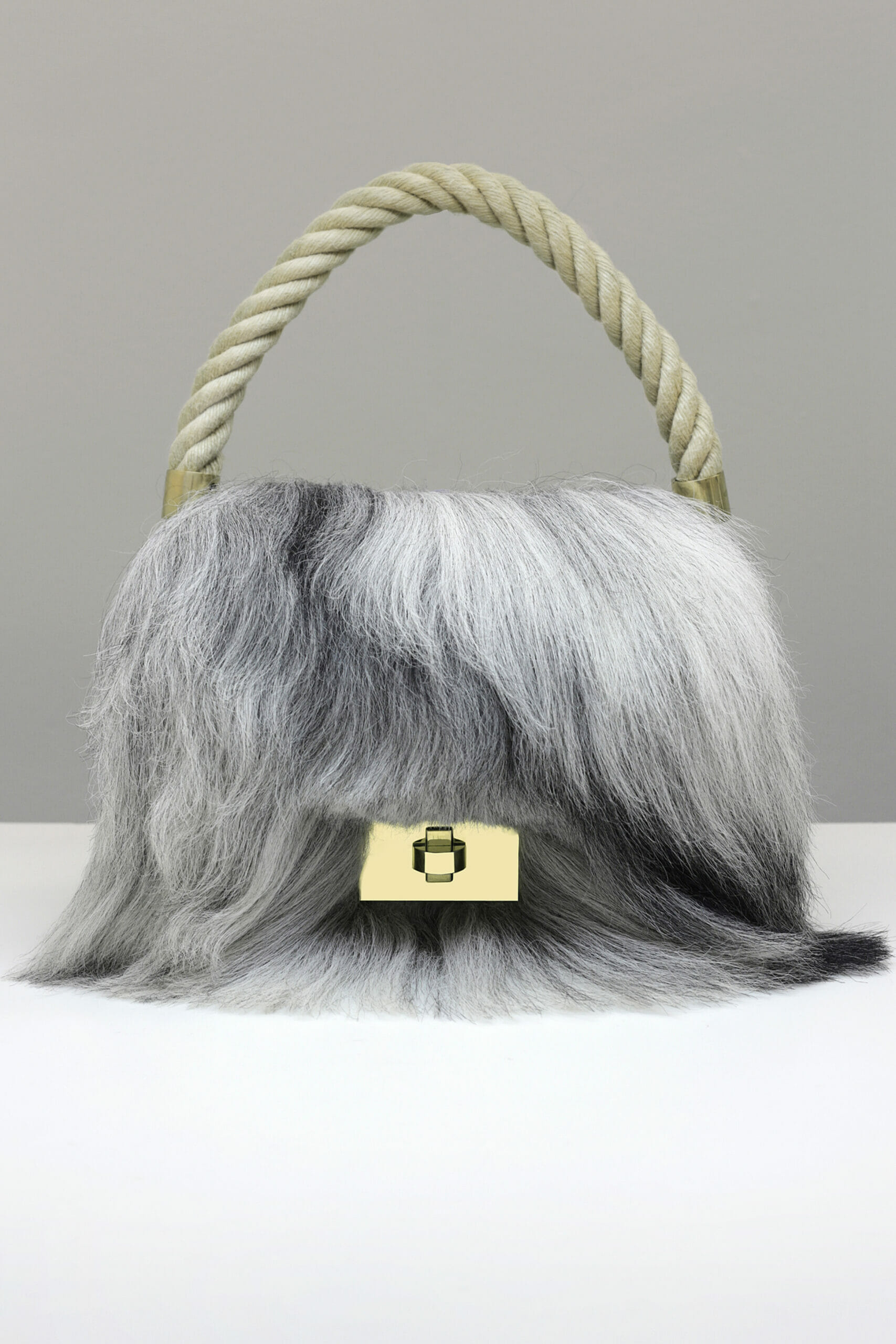
One of your designs features the wool of the Heidschnucke sheep from northern Germany which has a very distinct and beautiful grey gradient. How did you become familiar with this particular breed of sheep and the small-scale industry around it?
I did some research into the different kinds of sheep fur that were available. By chance I found a really rare sheep breed in Northern Germany with an amazing natural hair colour. I find the story of the Heidschnucke very interesting. They live in the Lüneburger, a natural reserve, and they keep the heath clear, so their existence is integral to the area’s preservation. The farmers raise the sheep but their wool is too thick for the wool industry, so by working with this material I also want to bring awareness to these small farmers and the value that slow and regenerative farming has for the preservation of biodiversity in the area.
Can you talk us through the design process and how you source materials?
I found this production company in Germany, near Dresden, a small family-run business that produces bags with vegetable tanned leather. I thought it would be great to work with local producers, instead of sourcing from companies in Italy or elsewhere.
We worked on this very traditional design, the saddle bag, and I decided I only wanted to use vegetable tanned leather because it’s the most sustainable. I added a rope handle with a raw brass closure and stayed away from any artificial gold coating to look more natural. It also has a different feeling to artificial leather, which has a lot of chemicals, artificial colours, and coatings. Part of the intention behind the design is to make something that lasts and is also repairable.
I did a lot of research about different tanning processes. Vegetable tanning uses only leaves and plants for the tanning process – there’s no chrome or chemicals. It’s the oldest way to tan leather and it takes a lot of time compared to chrome tanning which is faster and cheaper. But this is a more sustainable way to tan leather and I think it makes the material feel more natural and more alive.
You describe Agnes Nordenholz as a slow luxury label. What is your own understanding of that term, “slow luxury”?
What I mean by slow luxury is to produce something out of the best possible quality materials, and the most sustainable materials. It should last, in terms of durability, but also from a design aspect it should transcend fashion trends and be more about style. It also means producing locally and knowing the craftsman behind the product. Ethical and socially-responsible production is at the core of a slow luxury product.
With the adoption of the UN 2030 Agenda and the 17 Sustainable Development Goals in 2015, sustainability is an essential guiding principle for businesses everywhere. A lot of brands are hopping onto the sustainability bandwagon, but it’s definitely a learning process. What were some of the key learnings from your own path to sustainability and what are some of the future challenges you anticipate for your brand?
Sustainability is a very broad concept, it’s hard to know where to start as a designer. There was a lot of research involved in deciding where I was going to go. I knew that I only wanted to use natural materials like wool, linen and leather. I knew I wanted to produce locally and really know the people that I’m working with and do as much as I could in my own atelier, and to produce less, which is actually really difficult as a business. If you produce in Europe the product is going to be more expensive, so it’s also about educating customers, you have to explain the product and re educate the customer about quality. This is something that’s been lost in the 20 or 30 years, people really have no clue about quality.
There’s still a lot of black and white in discussions around sustainability. Some people say everything has to be vegan now and they think that wool is bad because it’s not vegan. These are difficult discussions. I’m just trying to get as much information as possible and give it to my customers, to educate and inform them about why I use the materials I use.
Editor’s Note: The opinions expressed here by Impakter.com columnists are their own, not those of Impakter.com. — In the Featured Photo: Agnes working in her atelier. Featured Photo Credit: Agnes Schorr