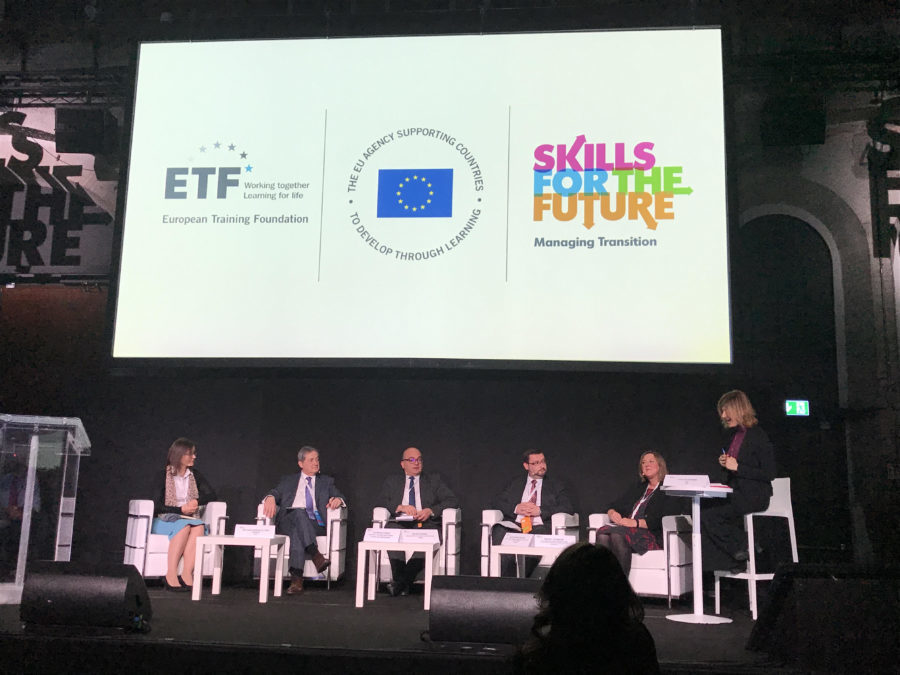
Looking at the future may be exciting yet terrifying for millennials, just like staring at a black mirror of their smartphone. Thrilling technological transformation, balanced with uncertain job demands, is inevitable. Policy makers, entrepreneurs, training providers and researchers from Europe and neighboring countries gathered in Turin on 21-22 November to talk it through and determine what skills would be needed to address future technological challenges.
Charlie Brooker, the creator of the award-winning television show once explained that black mirror embodied the zone “between delight and discomfort” generated by staring at “the (black) cold, shiny screen of a TV, a monitor (or) a smartphone” that are found everywhere at the present modern life. Astonishing latest apps or artificial intelligence (A.I.) may entertain and make life easier, yet its side effect of not getting “likes” or dehumanising human may be nasty.
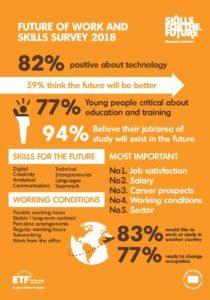
Digital was identified as the key skill for future employment. It set off the first dialogue of ‘Skills for the Future: Managing Transition’, a conference organised by European Training Foundation (ETF), a EU agency that works externally to support education and labour-market system reformation of EU neighbouring countries.
Credit: ETF
For EU, this global trend of digitalisation is a challenge that to be converted to opportunity. “In the short-term future, every job will require new digital skills, already now 90% of jobs require basic digital skills. We need to invest in people in order to build a successful digital Europe,” said Mariya Gabriel, European Commissioner in charge of Digital Economy and Society.
While according to Fabrizia Benini, the Head of Unit of DG Communication Networks, Content and Technology European Commission, “Digital is built to be mainstream. The digital transformation is not complete. We have only scratched the surface. 40% of Europeans lack digital skills and 40% of businesses struggle to recruit digitally skilled workers.”
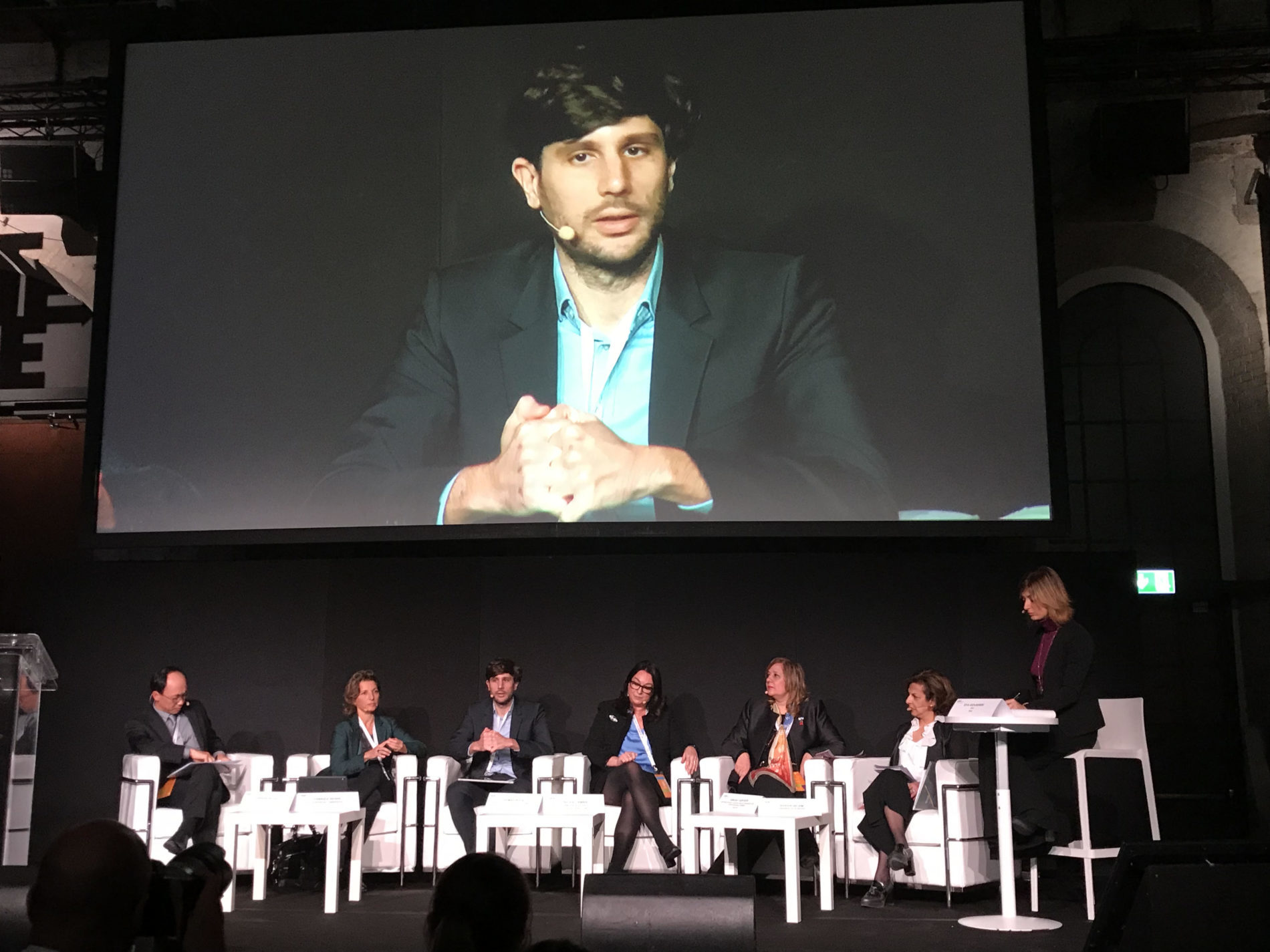
In the Photo: First Plenary Session ‘Impact of Global Trends on Skills in Economies and Societies’. Left to Right: Sangheon Lee, Director for Employment, ILO, Fabrizia Benini, Head of Unit, DG Communication Networks, Content and Technology, European Commission, Thomas Roca, Economist and Data Strategist, Microsoft European and Government Affairs, Silvia Cambie, Europe Leader for Watson Workspace Ecosystem, IBM, Amany Asfour, President, International Federation of Business and Professional Women, Shada Islam, Director of Europe and Geopolitics, Friends of Europe, and Eva Giovannini, RAI (moderator). Photo Credit: Florence Nathania
On the debate of machine replacing human, two panellists from technology sector reassured that human factor will stay important in future businesses. Thomas Roca, Economist and Data Strategist of Microsoft European and Government Affairs, reminded participants that A.I. is something that workers need to work with, especially for data attainment and analysis, while Silvia Cambie, Europe Leader for Watson Workspace Ecosystem of IBM underlined that human needs to train A.I. to train human. In short, stewardship of A.I. remains vital.
Soft skills were identified next as the competences for the future, according to Future of Work and Skills Survey 2018, asked to 564 participants from ETF’s Partner Countries. Creativity, analytical and communication aptitudes need to go hand in hand with technical skills. For example, an engineer has got to be as adept in building machine as in explaining how it works to the potential investors. Labour forces must be more versatile. In Albania, school directors are trained not only in teaching, but also in institution management, revealed the Deputy Minister of Education, Sport and Youth, Besa Shahini, who participated as speaker.
In the Photo: Besa Shahini, Deputy Minister of Education, Sport and Youth of Albania, shared about education and skills development of her country. Photo Credit: Florence Nathania
Shahini also highlighted four basic skills of the knowledge economy: literacy, numeracy, sciences and again, digital. As a result of the country’s education and employment system restructuring, Albania was admitted as the most progressed in Europe during 2012 – 2015 period.
TURNING ON THE BLACK MIRROR FOR THE FUTURE
Noted by ETF Director, Cesare Onestini, “challenges like globalisation and digitalisation are obvious to all by now, but solutions are not. Responses vary from country to country and region to region, according to their specific context. But in a globalised world, we must work together to create solutions that are equitable, effective, and sustainable.”
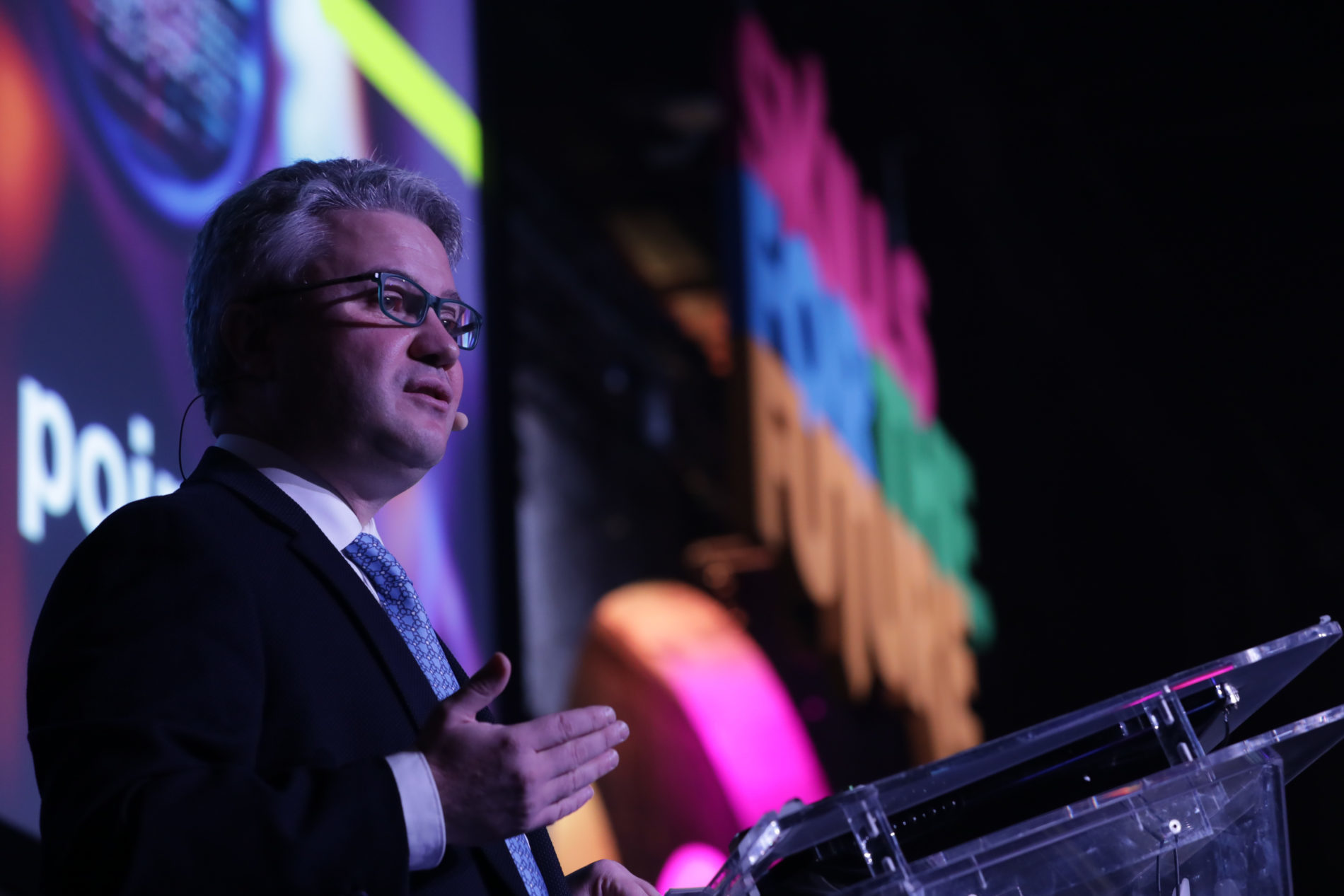 In the Photo: Cesare Onestini, Director of European Training Foundation. Photo Credit: ETF
Uncertainty is another facet of the black mirror of the future labour-market that may be reduced by turning on some ideas. Inside Turin’s former train factory, OGR – Officine Grandi Riparazioni, more than 300 participants from 50 countries, European and ETF’s partner countries, discussed some approaches to unlock the screen. They represented international organisations (EU, ILO, UNESCO), country governments, trade unions, academic institutions, vocational training providers, big companies, social and young entrepreneurs.
Sustainable partnership was voted as the most popular way out, and the key to a successful one is responsible and power sharing. ETF through The Torino Process that started in 2010 has been collaborating with industry and government of each partner country to conduct analysis and development of Vocational Education and Training (VET). To enhance its partnership efforts, European Commission will soon double the budget for external relations, especially in international student mobility.
The two-day conference results also in the participants finding answer in building an inclusive, guiding and people-oriented system. Speaking about inclusion, Founder and CEO of an Algerian Start-up, Business Wise, M’hammed Kouidmi, became the voice of the millennials by suggesting that policies or system for the young need to be built by the young too. If we let middle-age men decide for the youth, the juniors will always innovate and find ways to flank when the policies do not fit them. 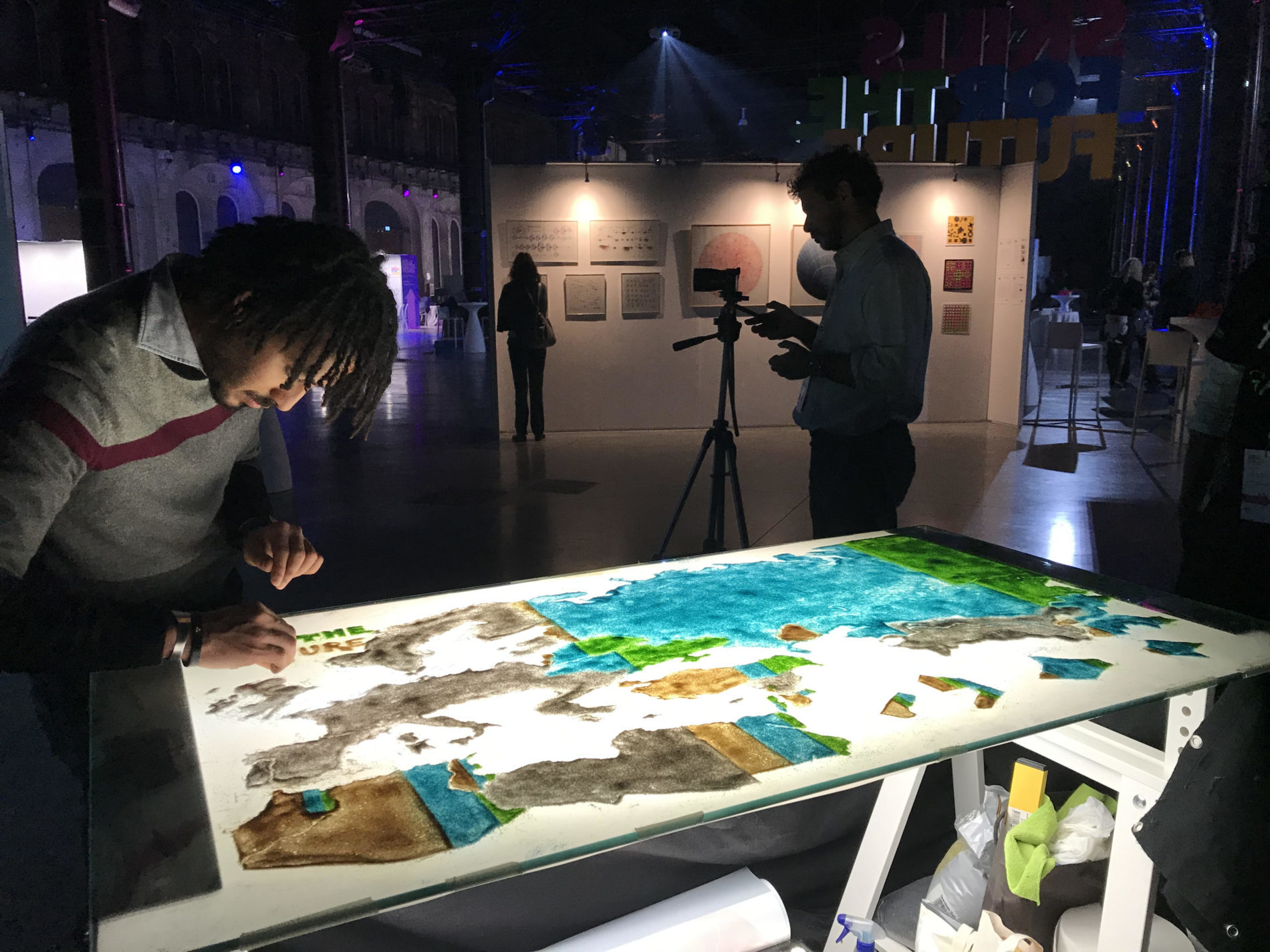
In the Photo: Sand artist, Andrew Magdy, portrayed the attainment of education in Europe and surrounding. Photo Credit: Florence Nathania
Besides the plenary sessions about impacts of global trends, the future of education, and supporting transition, also four parallel workshops about preparing young people, dealing with uncertainty, building partnerships and lifelong learning, the event was complemented by Experience Path. Stands were presented by the event’s partners to lead participants through different experiences, from virtual reality, ideas mapping to artistic approach.
Video Credit: ETF. Music Credit: Simpler Time byMan De Lorean. Edited by Florence Nathania,
Change always happens and now it goes faster than ever. No one knows what the future brings, it may be plain and dark like a death screen if nothing is all we do, or exciting if we know how to turn the smartphone on and play with it. With digital literacy, creativity, effective communications and other relevant soft skills, millennials are invited to upgrade and minimise glitches. Each person has unique path towards the future, so don’t worry if yours is different. It won’t work if everybody is entrepreneur.
EDITOR’S NOTE: The opinions expressed here by Impakter.com columnists are their own, not those of Impakter.com.