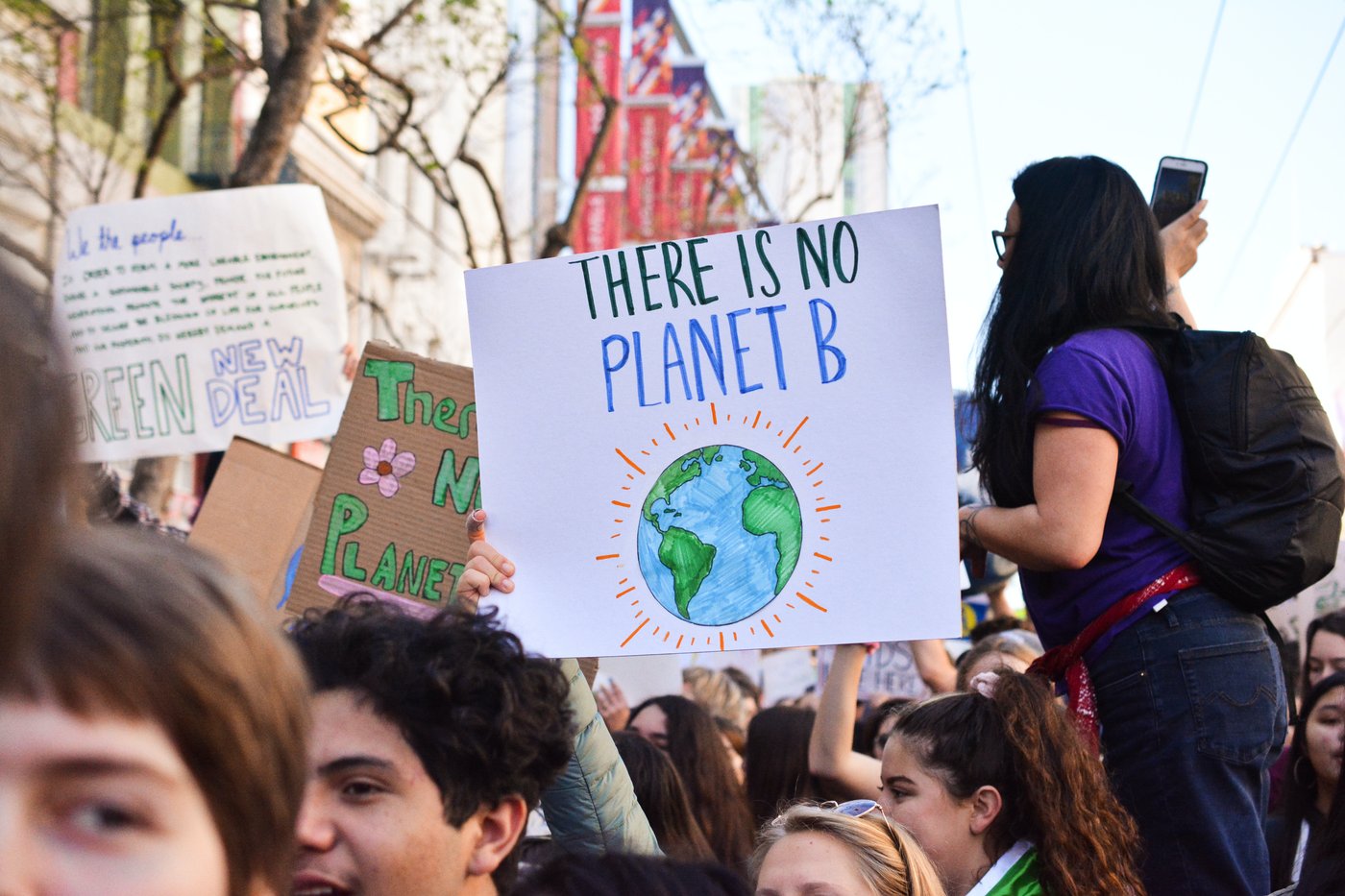
Free market fundamentalism is failing us ecologically, economically, socially, and politically.
Free markets do not clean up oil spills, address climate change, or create public goods like libraries, lighthouses, and weather satellites. Rather this is recognised as the remit of government.
But, countries around the world are experiencing dangerous levels of government failure in these areas due to the conflation of an economic system — capitalism — with a system of governance — democracy — that is unworkable.
Neoliberalism is the cause of this tragedy.
The academic discipline of economics that is used to promote neoliberalism, embraces a flawed world view loaded with false assumptions and is built on theories that fail to be corroborated by real world empirical evidence.
The guiding principle with respect to the economy should be one of creating a wellbeing economy in service to life rather than increasing GDP.
A wellbeing economy recognizes that the economy is embedded in society and the rest of nature, and that true freedom and success depend on creating a world where we all prosper and flourish.
Here are six examples where mainstream economic theory gets it wrong.
Increasing efficiency might lead to increasing consumption of resources
Known as the Jevons paradox after economist William Stanley Jevons, who observed in 1865 that increasing efficiency in coal use did not correspond to a diminished consumption of coal. Instead, the opposite was true. Today, this is also referred to as the rebound effect.
A more modern example is global carbon dioxide emissions. Despite the carbon dioxide emitted per unit of energy use decreasing from 1960 to 2013, total emissions of carbon dioxide and emissions per capita have increased over the same period.
Unlimited economic growth is not possible on a finite planet
By ignoring physical limits and planetary boundaries, mainstream economists have convinced politicians and the public that perpetual economic growth is a desirable goal, despite abundant evidence to the contrary.
The Club of Rome’s report The Limits to Growth found that continued growth in the global economy would lead to planetary boundaries being exceeded during the 21st century, which would result in a collapse of both the human population and the economic system. Other scientists using alternative perspectives have come to virtually identical conclusions with respect to the viability of perpetual economic growth.
Above a certain threshold, economic welfare is unrelated to wellbeing
Economist Richard Easterlin is the namesake of the Easterlin paradox which suggests that above a certain level of income basic needs are fulfilled, and wellbeing is not improved at the same rate with higher levels of income.
This relationship has been explored within and across multiple countries and different scenarios, and clearly shows that human wellbeing does not grow indefinitely as Gross Domestic Product per capita grows.
Capital flows within capital-rich countries or from low-income to high-income countries
Despite the assumption that globalisation should be favourable to poor countries, leading to world incomes converging over time, economist Robert Lucas observed that capital does not flow from rich to poor countries.
Rather, despite developing economies receiving trillions of dollars in investment and aid, there has been a net flow of $16.3 trillion from developing to developed economies since 1980.
A similar phenomenon is seen in the labour market with skilled workers moving from skill-scarce countries to skill-abundant countries.
Environmental quality does not depend on the level of income
In the early 1990s, a new argument emerged that environmental degradation first rises and then falls as per capita income grows, dubbed the environmental Kuznets curve. The theory was that with rising incomes, industrial sectors become cleaner, society values environmental quality as more important, and environmental regulatory institutions become stronger.
While scientific debate on the environmental Kuznets curve continues, in particular its generality has been disproved, the most straightforward critique of its existence is that environmental damage is often irreversible regardless of any supposed relationship with income.
Related Articles: How De-Dollarisation Could Change the Global Economy | Can an Economy Grow While Carbon Emissions Decrease? Europe Shows How
For example, if increasing air pollution increases the death toll it is questionable how this impact would be reversed once high levels of economic growth are reached.
There is also evidence that in some cases environmental degradation begins to grow again beyond certain levels of income.
Increasing inequality is a natural characteristic of growth economics
Early economic theories assumed that income distribution would naturally converge over time.
However, the empirical evidence shows that inequality is increasing within countries despite the fact that the difference between the developed and developing world is converging slowly. This has significant economic and social consequences.
Researchers have demonstrated strong relationships between increasing income inequality and worsening wellbeing in a long list of social indicators including social capital, happiness, stress and anxiety, life expectancy, mental illness and obesity, infant mortality, violent crime rates, social mobility and education scores.
A growing number of economists, including some Nobel Laureates, are lamenting the failed world view of economics and its negative consequences for civil society and the environment.
The impact that these long-held economic assumptions have on real world policy and practice are showing glaring problems.
We are facing a polycrisis of a failing economic system, a collapsing ecological system, and a rapidly evolving technological system that is outpacing social, cultural, and biological evolution.
Traditional economic thinking founded in a growth imperative is impeding our ability to govern ourselves in a way that allows for the co-creation of regenerative economic systems that are just, sustainable and desirable.
Addressing this polycrisis requires that governmental authority (preferably democratic governance) is re-established over a re-envisioned economic system or a more regulated capitalist system.
To thrive, all institutions (including businesses) and society must pivot toward a new purpose: shared wellbeing on a healthy planet. But to achieve a wellbeing economy, a major transformation of our world view, society and economy will be needed.
— —
This story was originally published by 360info™ on June 1, 2023.
Editor’s Note: The opinions expressed here by the authors are their own, not those of Impakter.com — In the Featured Photo: The current economic system fails to meaningfully address important issues like climate change. Featured Photo Credit: Li-An Lim/Unsplash.