Impakter
  • Environment
    • Biodiversity
    • Climate Change
    • Circular Economy
    • Energy
  • FINANCE
    • ESG News
    • Sustainable Finance
    • Business
  • TECH
    • Start-up
    • AI & Machine Learning
    • Green Tech
  • Industry News
    • Entertainment
    • Food and Agriculture
    • Health
    • Politics & Foreign Affairs
    • Philanthropy
    • Science
    • Sport
  • Editorial Series
    • SDGs Series
    • Shape Your Future
    • Sustainable Cities
      • Copenhagen
      • San Francisco
      • Seattle
      • Sydney
  • About us
    • Company
    • Team
    • Global Leaders
    • Partners
    • Write for Impakter
    • Contact Us
    • Privacy Policy
No Result
View All Result
Impakter logo
No Result
View All Result
Shifting G20 Fossil Fuel Spending Could Install Enough Renewables to Align With 1.5°C

Shifting G20 Fossil Fuel Spending Could Install Enough Renewables to Align With 1.5°C

The upcoming G20 Leaders’ Summit must introduce fossil fuel subsidies for discussion

International Institute for Sustainable Development (IISD)byInternational Institute for Sustainable Development (IISD)
August 29, 2023
in Energy
0

In 2022, G20 members spent USD 1.4 trillion to support fossil fuels and could raise an additional USD 1 trillion per year by establishing a carbon tax floor of USD 25–50/tCO2e. These funds could help solve some of the most pressing global issues, according to a new report released on August 23.

The G20 members provided a record USD 1.4 trillion in public money to support fossil fuels in 2022, according to the study Fanning the Flames: G20 Provides Record Financial Support for Fossil Fuels by the International Institute for Sustainable Development (IISD) and partners.

That amount — which includes fossil fuel subsidies (USD 1 trillion), investments by state-owned enterprises (USD 322 billion), and lending from public financial institutions (USD 50 billion) — is more than double the pre-COVID-19 and pre-energy crisis levels of 2019.

“These figures are a stark reminder of the massive amounts of public money the G20 governments continue to pour into fossil fuels despite the increasingly devastating impacts of climate change,” said Tara Laan, Senior Associate at IISD and the lead author of the study. “The G20 has the power and the responsibility to transform our fossil-based energy systems. It is crucial for the bloc to put fossil fuel subsidies on the Delhi Leaders’ Summit agenda and take meaningful actions to eliminate all public financial flows for coal, oil, and gas.”

The researchers found that G20 members could raise an additional USD 1 trillion every year by setting minimum carbon taxation levels of USD 25–75/tCO2e, depending on country income. They warn that taxes on fossil fuels in G20 member countries currently do not reflect their costs to society — averaging just USD 3.2/tCO2e across the G20 — with many members failing to impose windfall taxes on record profits that fossil fuel companies gained last year at the peak of the energy crisis.

Artificially lowering the price of fossil fuels is problematic because it increases the burning of fossil fuels, intensifying human-induced climate change and making extreme weather events — like heat waves, wildfires, torrential rains, and hailstones — more frequent and intense.

The authors recommend that G20 members set a clear deadline to eliminate fossil fuel subsidies — 2025 for developed countries and 2030 at the very latest for emerging economies — to deliver on their 2009 commitment to reform subsidies.

In addition, they should drop the qualifier “inefficient” from subsidies. Instead, they should name exceptional cases when subsidies could be considered justifiable — e.g., if essential for energy access — and improve the targeting of these subsidies to only include people who really need them.

IISD experts highlight that there are much better ways to support people during a crisis and that fuel subsidies are, in fact, a notoriously inefficient way to help the poor. Governments should instead provide social welfare through other mechanisms, like targeted welfare payments.

The report highlights the notable progress of some G20 members in this area. As the current G20 president, India can confidently demonstrate global leadership in this area, having reduced its fossil fuel subsidies by 76% from 2014 to 2022 while significantly increasing support for clean energy.

Shifting fossil fuel spending could help solve key global problems

Experts note that shifting less than a quarter of the USD 2.4 trillion generated from subsidy reform and carbon taxation could help close the wind and solar energy investment gap — USD 450 billion per year until 2030 — to limit global temperature rise to 1.5°C, with public support leveraging additional funds from private investors.

It could also be used to help end world hunger (USD 40 billion/year), provide universal access to electricity and clean cooking globally, in ways aligned with net-zero emissions (USD 36 billion/year), and close the climate finance gap that developed countries committed to mobilize for developing nations (USD 17 billion/year).

Removing subsidies could also save thousands of lives by reducing fossil fuel-related air pollution, which is responsible for over 5 million deaths per year in G20 members and one in five deaths globally.


Related Articles: Fossil Fuel Consumption Subsidies Hit All-Time High in 2022: Will We Ever Abolish Them? | Hurting People and Hurting the Planet: Fossil Fuel Subsidies | EU Calls World to Climate Action: Phase-Out Fossil Fuels Ahead of COP28 | G20 Energy Ministers Fail to Agree on Fossil Fuel Phaseout Plan

The study emphasizes the active role that needs to be played by state-owned enterprises, which dominate the energy landscape in many G20 member countries, and public financial institutions, which engage in considerable lending to fossil energy projects. Governments should, in particular, set a deadline for these state-owned institutions to create ambitious net-zero roadmaps that will allow them to diversify their businesses and lending portfolios and avoid the risks inherent in continued investments in fossil fuels, such as stranded assets.

“With fossil fuel companies gaining record profits amid the energy crisis last year, there is little incentive for them to change their business models in line with what’s needed to limit global warming. But governments have the power to push them in the right direction,” Laan said.

— —

This article was originally published by the International Institute for Sustainable Development (IISD) and is republished here as part of an editorial collaboration with IISD.


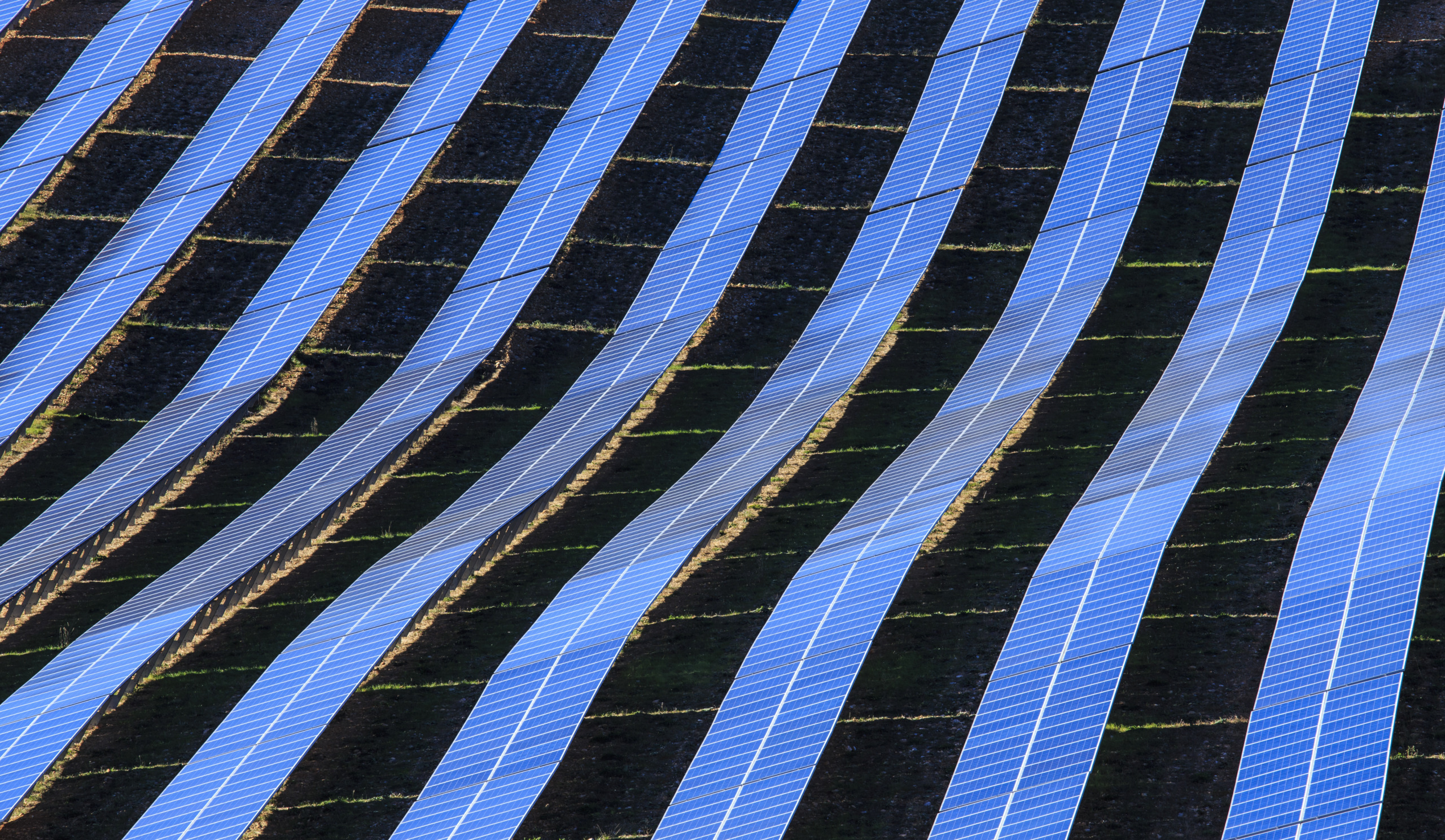
Editor’s Note: The opinions expressed here by the authors are their own, not those of Impakter.com — In the Featured Photo: Solar panels. Featured Photo Credit: Rawpixel.
Tags: Fossil Fuel SubsidiesFossil fulesG20IISDInternational Institute for Sustainable Development
Previous Post

London Embraces ULEZ Expansion for Cleaner Air

Next Post

The Big Oil and Gas Sustainability Battle: Shell vs. BP

Related Posts

5 Trends That Have Shaped Global Subsidies Over Decades
Business

5 Trends That Have Shaped Global Subsidies Over Decades

Subsidies have long been debated: criticized for distorting markets and harming the environment, yet embraced to build green industries, protect...

byInternational Institute for Sustainable Development (IISD)
December 29, 2025
What’s Next for Sustainable Development in 2026
Climate Change

What’s Next for Sustainable Development in 2026

As governments confront rising misinformation, constrained budgets, and intensifying climate risks, the need for evidence-based policy has never been greater....

byInternational Institute for Sustainable Development (IISD)
December 23, 2025
fossil fuel subsidies
Business

How G20 Nations Can Make Progress After the Group Stalls on Fossil Fuel Subsidy Reform

The 2025 G20 Leaders’ Summit in South Africa sent mixed signals on climate action. In this year’s Leaders’ Declaration, climate change...

byInternational Institute for Sustainable Development (IISD)
November 28, 2025
ESG News regarding Cop30’s disappointing end, the G20 summit without the US, China’s Unipec fuel deal with Lufthansa, and Singapore’s Sembcorp IPO in India
Business

‘COP of Truth’ Highlights Glaring Differences in Global Climate Perspective

Today’s ESG Updates COP30 Delivers Weak Climate Deal: Global talks in Brazil ended without a plan to phase out fossil...

bySarah Perras
November 24, 2025
The Amazon rainforest is often called “the lungs of the world.” It produces oxygen and stores billions of tons of carbon every year. The Amazon rainforest covers more than 60% of the landmass of Peru. Photo Credit: USDA Forest Service / Diego Perez.
Biodiversity

Inside COP30

The 30th United Nations Climate Change Conference (COP30) is taking place in Belém, Brazil, from November 10 to 21, 2025....

byInternational Institute for Sustainable Development (IISD)
November 10, 2025
World Trade Organization Reform
Business

What We Should Be Talking About When We Talk About World Trade Organization Reform

Institutional reform is the headline item at the WTO’s 14th Ministerial Conference (MC14) in March 2026. Most people outside Geneva do not...

byInternational Institute for Sustainable Development (IISD)
October 31, 2025
COP30
Climate Change

What to Expect at COP30

Climate change negotiators will soon head to the 30th UN Climate Change Conference (COP30) in Belém, Brazil, after a year...

byInternational Institute for Sustainable Development (IISD)
October 22, 2025
harmful subsidies
Politics & Foreign Affairs

Harmful Subsidies Explained

This year marks 20 years since the International Institute for Sustainable Development (IISD) launched the Global Subsidies Initiative (GSI), which...

byInternational Institute for Sustainable Development (IISD)
October 14, 2025
Next Post
Shell BP

The Big Oil and Gas Sustainability Battle: Shell vs. BP

Recent News

ESG News regarding China restricting industrial renewable exports, UN warning that US climate treaty exit harms economy, UK firms lowering wage forecasts despite inflation, Meta partnering with TerraPower for new nuclear reactors.

To Save the Grid, China Forces Industries to Go Off-Network

January 9, 2026
Cleaner Air in Hospitals

How Cleaner Air in Hospitals Can Cut Infections and Climate Impact at the Same Time

January 9, 2026
Search cleanup, key activity to protect your data and tech devices.

A Simple “Search Cleanup” Plan for Busy People

January 9, 2026
  • ESG News
  • Sustainable Finance
  • Business

© 2025 Impakter.com owned by Klimado GmbH

No Result
View All Result
  • Environment
    • Biodiversity
    • Climate Change
    • Circular Economy
    • Energy
  • FINANCE
    • ESG News
    • Sustainable Finance
    • Business
  • TECH
    • Start-up
    • AI & Machine Learning
    • Green Tech
  • Industry News
    • Entertainment
    • Food and Agriculture
    • Health
    • Politics & Foreign Affairs
    • Philanthropy
    • Science
    • Sport
  • Editorial Series
    • SDGs Series
    • Shape Your Future
    • Sustainable Cities
      • Copenhagen
      • San Francisco
      • Seattle
      • Sydney
  • About us
    • Company
    • Team
    • Global Leaders
    • Partners
    • Write for Impakter
    • Contact Us
    • Privacy Policy

© 2025 Impakter.com owned by Klimado GmbH