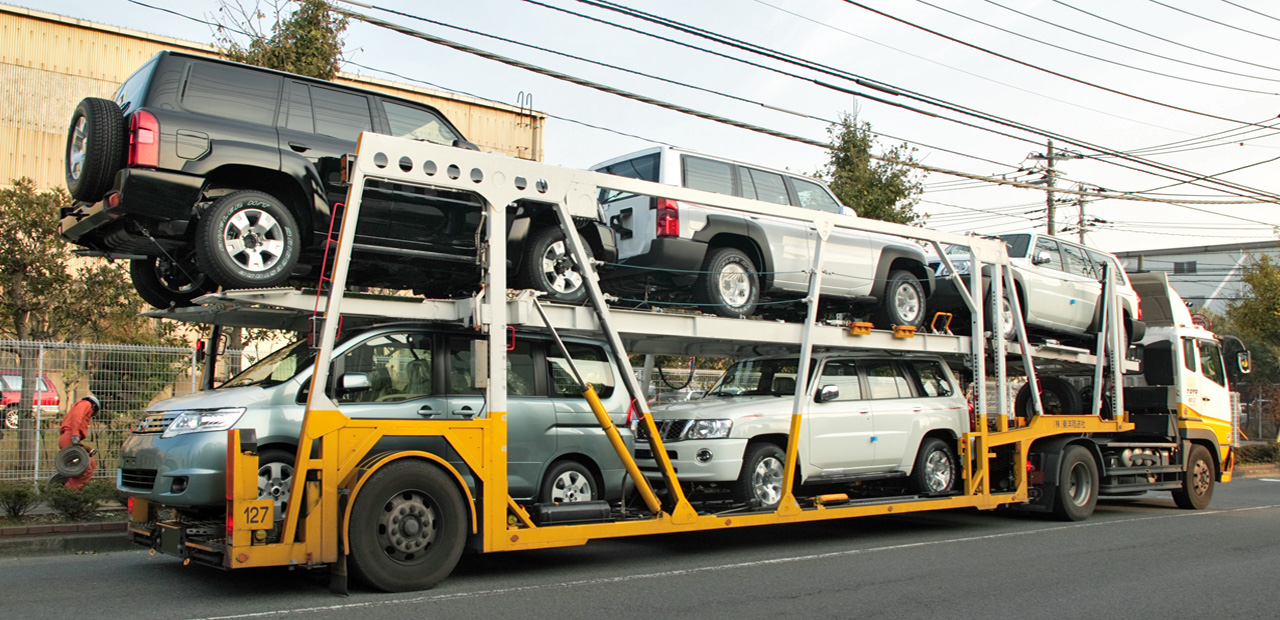
Every month, ships loaded with second-hand, low-quality, polluting vehicles leave ports in Europe, Japan and the United States bound for sale in poorer nations. A 2020 United Nations Environment Programme (UNEP) report states that 14 million vehicles were exported to low and middle income countries between 2015 and 2018, with more than half ending up in Africa.
The European Union, ranked as the largest exporter, sent approximately 7.5 million vehicles abroad. A large number of these outdated vehicles do not meet European standards on exhaust emissions due to poor fuel economy and higher emissions. The majority contain inefficient diesel engines, a major source of particulate matter (PM) and nitrogen oxides (NOx). Both have been linked to global warming, air pollution and increased risk of heart attack, lung cancer and asthma. The transport sector currently contributes nearly a quarter of global CO2 emissions.
The transport sector currently contributes nearly a quarter of global CO2 emissions.
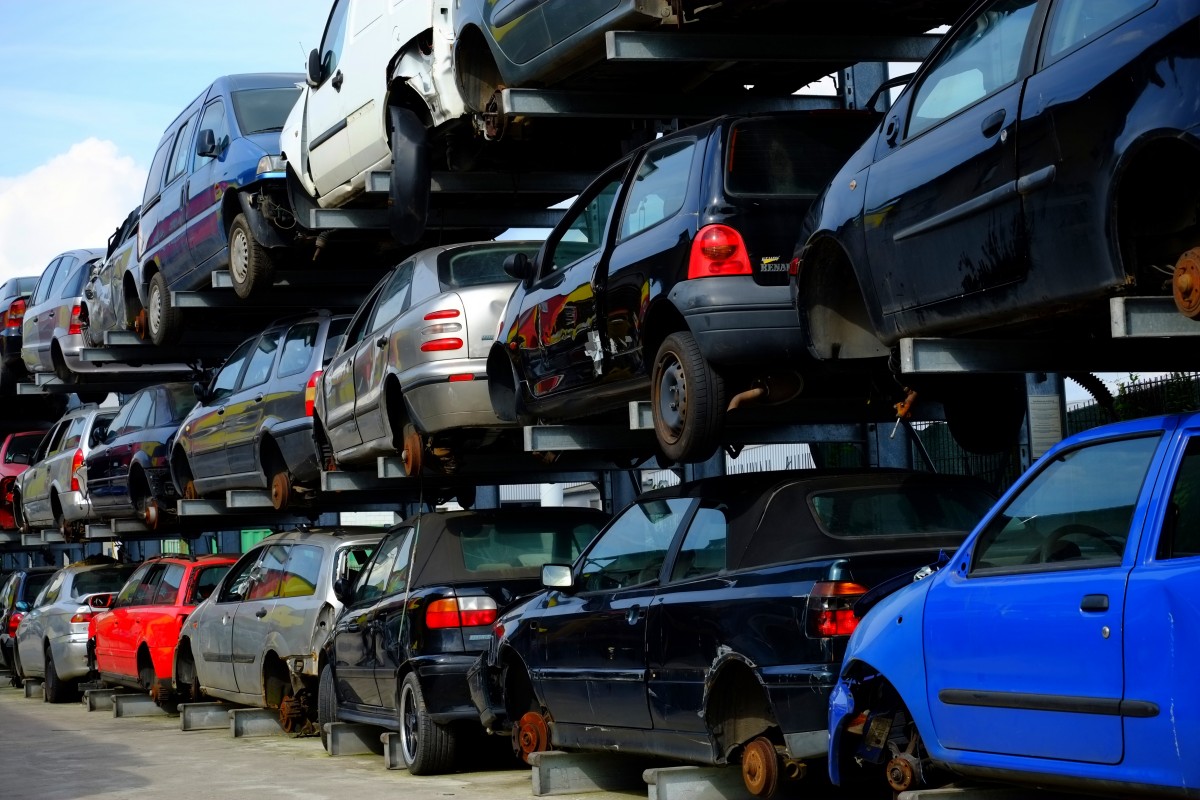
Developed nations appear to be conforming to environmental standards and signing relevant agreements but this largely unregulated trade continues to prosper. In the European Union, legislation known as the ‘Euro’ emission standards has helped establish increasingly stringent emission limits on vehicles. These measures correlate to an ongoing aim of improving air quality across Europe, and apply to vehicles ranging from Euro 1, developed in 1992, to Euro 6, developed in 2016. Non-compliant vehicles cannot be sold in the EU while older vehicles may be banned entirely from entering some towns and cities at certain times.
Norway announced its proposed ban on fossil fuel cars in 2016, planning to prohibit the sale of all petrol and diesel vehicles by 2025. Similarly, the UK government plans to ban sales of petrol and diesel cars by 2030 in a zero-emissions bid. Germany, France, Scotland, the Netherlands and Ireland are all following similar schemes, prioritising the sale of zero emission cars and electric vehicles.
Paradoxically, few rules are in place to administer the age and condition of exported vehicles. Experts claim that up to 80% do not comply with European standards. “In 2017, the average age of a diesel vehicle imported into Uganda was over 20 years old,” Jane Akumu, co-author of the UN report, told the BBC. “Around 30 countries in Africa do not have any age limit on cars,” she added.
On top of this, UNEP concluded that of the 146 countries importing cars, two-thirds had ”weak” or “very weak” policies to regulate vehicles. Nigeria, categorised by the report as “very weak,” is home to four of the worst cities in the world in terms of/with regard to air pollution.

The transport sector currently contributes nearly a quarter of global CO2 emissions. The global trade in second-hand vehicles could therefore have stark consequences for climate change and public health. The UNEP report’s authors propose that exporting and importing countries coordinate on a standard for these vehicles. “On one hand, I think it’s unethical that these developed countries export vehicles that are not roadworthy on their own roads,” Rob de Jong, co-author of the report, explained to Global Citizen. “On the other hand, why have the importing countries been waiting so long to put in place some minimum standards?”
A number of African states are making moves to counter the issue. In Feb. 2020, 15 energy and environment ministers from the Economic Community of West African States (ECOWAS) agreed to adopt a new set of regulations aiming to introduce cleaner vehicles into the West African region. Starting Jan. 2021, all new and used vehicles imported into ECOWAS nations must comply with Euro 4 vehicle emission standards. An age limit of 10 years for second-hand vehicles has also been set, with a proposed age limit of five years for commercial vehicles.
To date, the Netherlands is the only country to have completed an in-depth investigation of the vehicles it exports. “The Netherlands cannot address this issue alone,” said Stientje van Veldhoven, the Netherlands environment minister. “Therefore, I will call for a coordinated European approach, and a close cooperation between European and African governments, to ensure that the EU only exports vehicles that are fit for purpose, and compliant with standards set by importing countries”.
Related Articles: Britain Announced Ban on Petrol and Diesel Cars Sales From 2035 | Challenging the “License to Pollute”: The Fight Over Emissions Standards in the EU
With an estimated 1.4 billion vehicles currently on our roads and with exponential growth taking place in Asia, Africa and Latin America, car ownership is expected to double by 2050. The phasing out of combustion engine-powered vehicles relies on global action, as the results will impact us all. Positive steps have been taken in both richer and poorer countries, with Norway planning to ban fossil fuel cars and ECOWAS nations introducing a new set of standards. If you are going to purchase a car weather is an old car or a new one, you will want to get it inspected as noted here
In addition, action in Sri Lanka has led to the country having the highest number of hybrid vehicles in the world, proving that progress can be made in lower income countries. The challenge here is to weigh up the environmental long-term gain against the short-term profit gain for rich and poor countries. The exportation of used cars for sale poses a cheap, desirable option for poorer countries and an easy disposal option for richer countries. However, a group effort of combining and introducing stringent regulation on both sides is needed to resolve this issue.
Editor’s Note: The opinions expressed here by Impakter.com columnists are their own, not those of Impakter.com. — In the Featured Photo: Second-hand cars in transport Featured Photo Credit: Wikimedia Commons.