
In 2015, the world worked in partnership on a new universal sustainable development agenda: the Sustainable Development Goals (SDGs). They were conceived to transform life for people and the planet, and bring about a new age of peace and prosperity. The key trend highlighted by the post-2015 Agenda was recognising that sustainable development requires both domestic policy and international cooperation – not only because populations, trade and environmental degradation cross national boundaries, but also because countries in the Global North are not immune to many of the same challenges faced by the Global South. No country can claim to be free from scourges of poverty, inequality, unemployment, injustice, unrest or pollution.
In this age of globalisation, the SDGs are recognised as something more than just a new version of the Millennium Development Goals with a few extra (‘MDGs plus’); instead they are interlinked and in many respects indivisible Goals. This shifts the international development framework further away from paternalist or philanthropic framing, towards one of more equal partnership between North and South. It creates the opportunity for a transformative approach.
 In the Photo: Community health worker gives a vaccination in Odisha state, India. Photo Credit: UK Department for International Development (DFID)
The 17th SDG – strengthen the means of implementation and revitalise the global partnership for sustainable development – can be described as the ‘linkage’ SDG, setting out the vision for translating the Goals into reality. This Goal sets out the means for implementation of the whole package, rather than policies on specific issues; and is thus the only SDG to be reviewed each year at the UN High Level Political Forum, which acts as the main global accountability mechanism for the SDGs.
The targets in this engine for implementation are divided into four means for enabling the achievement of the SDGs – finance, technology, capacity building and addressing systemic issues. These four means also fall roughly into three policy spheres – domestic, North to South cooperation and partnership across North and South including South-South (although these are not entirely clearly delineated).
Targets that require more of a domestic impetus call for improved tax and revenue collection (17.1), an increase in exports (17.11), public/private/civil society partnerships (17.17) and greater access to technology for populations (17.8).
Targets that are based on the more traditional North to South relationship paradigm include the 0.7 percent GNI commitment of developed countries to spend on Overseas Development Assistance (17.2), other direct financing and investment (17.3 and 17.5), assistance in debt management (17.4), promoting the development of environmentally friendly technologies to developing countries and duty free and quota free market access for the least developed countries (17.12).
The targets which are based on more of a partnership between countries, albeit with a burden of expectation on more developed countries, include the call for cooperation on accessing science and technology and innovation (17.6), an open multilateral trading system (17.10) and greater macro-economic stability (17.13).
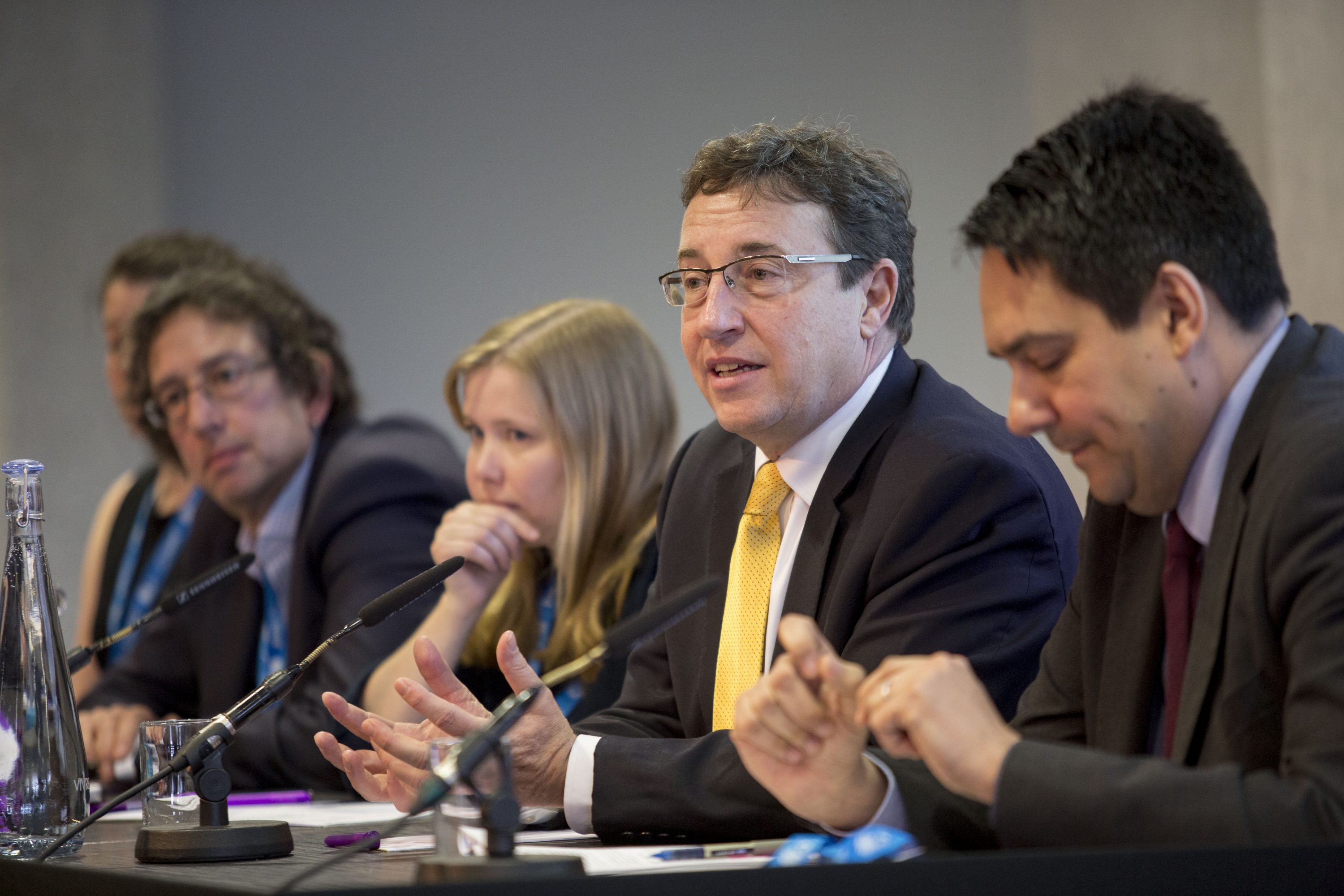
In the Photo: Bond Conference at the QE2 conference centre Westminster London March 2017 Photo Credit: Bond
At this point, we should pause to consider how transformative these approaches are. Achieving financial sustainability through national income generation is a key indicator of greater development. An end to the need for international aid and development assistance would be one of the most significant indicators of success for the SDGs, as well as an equitable international political, economic and social system. Yet these broad approaches do not radically challenge the current globalised system that has resulted in the need to create SDGs.
Recommended Reading: A Short History of the SDGs
It is hard to get the data to track change in global income inequality, but the overall picture is stark enough. Nearly three-quarters of the world’s adults own under $10,000 in wealth. This 71 percent of the world holds only 3 percent of global wealth. The world’s wealthiest individuals, those owning over $100,000 in assets, total only 8.1 percent of the global population, but own 84.6 percent of global wealth Nobel Laureates in Economics such as Stiglitz, Solow and Krugman have examined global income inequality from a variety of perspectives and assumptions, and they note that while globalisation has reduced poverty in developing countries, in particular India and China, that high levels of inequality persist even though they can be tackled. It was to address this injustice, that Civil Society Organisations pressed hard for the inclusion of a Goal on Inequality – SDG 10 – “Leave no one behind”, reflected in SDGs 10.2 and 10.3. Of course this is much broader than income inequality. There are so many bases of deep-rooted inequalities, starting with gender, which have to be tackled.
UK performance on SDG 17
The commitment to the 0.7 percent GNI target spent on ODA resulted from the effective campaigning of CSOs in the UK over many years. The UK is one of the few countries to have achieved this target, alongside Germany, Denmark, Sweden, Luxembourg, Norway and the United Arab Emirates. Enshrined in British law in 2015, the ODA budget that year was an estimated £12.24 billion. This concrete figure translates the humanitarian impulse and sense of global citizenship into action.
However, UK public support for this target currently hovers around half of the population, with 27.9 percent agreeing the aid budget should remain the same and 17.9 percent agreeing it should increase. Parts of the British press have made concerted and sustained efforts recently to ‘reignite the debate’ over UK ODA spending. Most recently, in the run-up to the June 2017 General Election, several newspapers ran stories, day after day, railing against the size of budget, where it was being spent and what it was being spent on; and this has continued.
During the election period, CSOs such as Bond found themselves facing dilemmas placed by the 2015 Lobbying Act: in which contexts calling on parties to maintain the 0.7 percent GNI to ODA, or welcoming such a pledge in party manifestos, could constitute a ‘regulated campaign activity’ and thus need to be registered as such with the UK’s Charity Commission. A chilling effect fell across the sector with only a few willing to register as undertaking regulated activity, concerned that even a Tweet could result in a fine and potential damage to reputation. Two CSOs (Friends of the Earth and Greenpeace) found themselves being fined in 2017 for not registering in 2015.
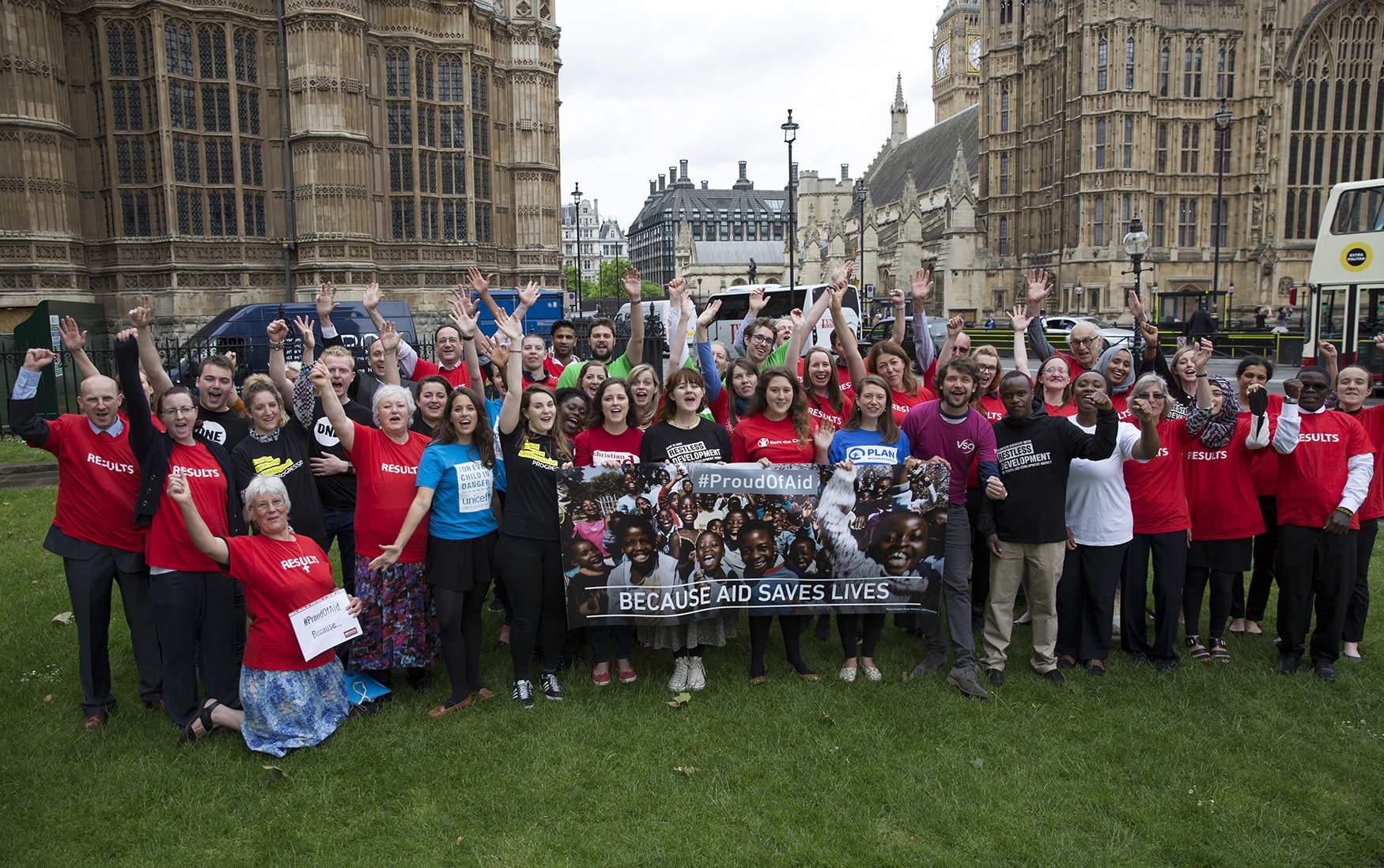
Photo Credit: Christian Aid
The new Government pledged its commitment to the 0.7 percent GNI target, which Bond members had campaigned hard to secure. However, in the Manifesto it made reference to “working with like-minded countries to change the rules so that they are updated and better reflect the breadth of our assistance around the world.” This sounds like an effort to undermine the internationally agreed rules ensuring that ODA is used for poverty eradication. Even more concerning was the promise that if working with others were to be unsuccessful, the UK Government would change the law to use “a better definition of development spending”. How this will be pursued in government is not yet clear, but it is encouraging to see that civil society is being consulted, and Bond and its members will continue to push to keep a clear pro-poor focus.
SDG 17 reminds us that the Goals are part of a consensus-driven agenda that will have power in law only if a nation state chooses so. Target 17.15, respect each country’s policy space and leadership to establish and implement policies for poverty eradication and sustainable development, was aimed at ensuring that developing countries could determine their own path (as is clear from the Indicator.) However, in the proposal to revise the ODA rules it could be that we see a developed country – the UK – looking for room to manoeuvre rather than accepting the international definition of ODA.
Despite this, SDG 17 should give us cause for hope. The process of agreeing the post-2015 development agenda demonstrated the ability of governments to reach consensus despite significant disagreements and the need for skilful negotiation. The account given by Paula Caballero, who created the first drafts of the SDGs while Director for Economic, Social and Environmental Affairs in the Ministry of Foreign Affairs of Colombia, provides a personal account which gives a sense of the breadth of participation and the challenge of reaching agreement. Goal 17 recognises that we will never achieve the SDG agenda just through governments working together, but it will need civil society, business and other stakeholders to play their part.
CONTRIBUTING AUTHOR
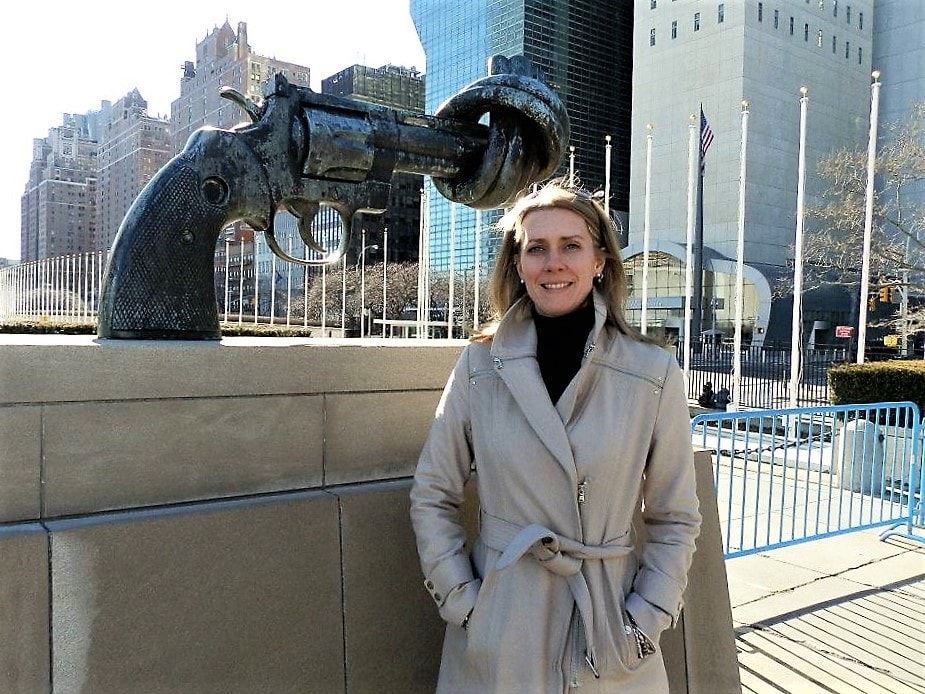
Rachel Aston was Policy Adviser on the SDGs at Bond. Previously she worked as policy manager for ten years for a global grassroots organisation, advocating on a range of issues affecting women and families, as well as on the SDGs; and facilitating advocacy training and workshops across a number of countries, including Burundi, South Sudan, Uganda and Zambia. Rachel has also worked in frontline roles in the housing and youth sectors. She has an MA International Studies from the University of Leeds and BA Politics from the University of Essex.
 Bond unites and supports a diverse network of over 450 civil society organisations and allies to help eradicate global poverty, inequality and injustice.