EDITOR’S NOTE: THIS PIECE IS PART OF A SERIES EXPLORING THE SUSTAINABLE DEVELOPMENT GOALS. SEE THE INTRODUCTION TO THE SERIES HERE. THIS PIECE WAS CO-AUTHORED BY JOHAN BERGENAS AND GRACE MAHONEY.
The international community labored for years to conceptualize a new global development agenda to succeed the famed Millennium Development Goals. Last September, that work came to fruition as the 193 Member States of the United Nations adopted the Sustainable Development Goals, also referred to as the Global Goals. The debate has now shifted from definition to execution and implementing Goal 16.
Covering a span of peace, security, and good governance issues , SDG 16 is a hotly debated topic because it essentially calls on the global community to set aside old paradigms of what is security and development and act pragmatically to solve a wide range of transnational challenges — terrorism, crime, and societal resiliency — that poison the well for economic development.
As such, SDG 16 offers an unprecedented opportunity to bring together the global security and development communities, as well as the private sector to work together on making poverty history, while mitigating threats to peace and security. SDG 16 includes such targets as “significantly reduce illicit financial and arms flows, strengthen the recovery and return of stolen assets and combat all forms of organized crime” and to “strengthen relevant national institutions, including through international cooperation, for building capacity at all levels, in particular in developing countries, to prevent violence, and combat terrorism and crime.” Combating trafficking, transnational organized crime and terrorism is part of the business for military and security actors, while development organizations are of course acutely aware of the negative consequences of insecurity on poverty reduction efforts.
How to work across the security-development divide has, however, remained one of the holy grails of national and international politics. SDG 16 urges us to try harder, but how? Some actors are showing the world the way.
The United Kingdom, for example, adjusted its global development strategy in November 2015, highlighting the need to reduce poverty in order to combat the root causes of global insecurity and conflict. Half of its new development aid budget is allocated to fragile and failing states for precisely this reason. The inextricable link between global poverty reduction and national security is a core component of this strategy.
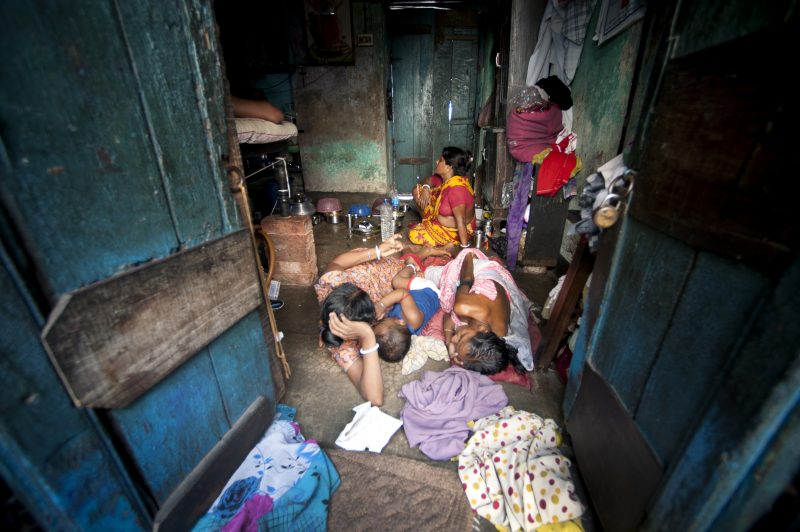
In photo: 20 June 2010-Kolkata, Bangladesh-A family living in an urban slum in Sonagachi, India. Photo Credit:Kibae Park/Sipa Press, UN Media
The UK’s push is no surprise as conflict is expected to be a magnet for poverty in the future. According to the World Bank, countries that experience major violence will, on average, have a higher rate of poverty than countries that experience no violence. Simply consider the rate of children not attending school in conflict-ridden countries, which increased by 6 percent from 1996 to 2012.
Kofi Annan was correct when he explained that security and development are inextricably linked and that one simply cannot exist without the other. This idea has since been echoed by numerous global actors and will likely remain at the forefront of foreign policy in the near future. Transitioning the former UN Secretary General’s wisdom into broad-based pragmatic action will be paramount to achieve implementation of SDG 16.
An important step in that direction was taken by the Organization for Economic Cooperation and Development (OECD) redefining Official Development Assistance (ODA) earlier this year, albeit with considerable skepticism from the development community. The new definition includes certain security and defense costs, such as measures to prevent violent extremism and provide limited military training.
The operational and tactical requirements of such measures are often outside the scope of many development agencies, encouraging partnerships with military or law enforcement agencies. Some skeptics fear that the new definition will distract donors from more traditional development goals, like gender quality or education. However, active support from security and defense players may actually improve the sustainability of development operations in fragile and failing states, which saw a 9.3 percent drop in allocated ODA since 2013.
Related article: “SDG 16: PEACE, JUSTICE, AND STRONG CONSTITUTIONS“
The threat of terrorism and transnational organized crime directly hinder development projects and threaten the safety and well being of those on both the giving and receiving ends. In fact, 90 percent of terrorist attacks occur in the least developed and conflict-ridden countries, like Afghanistan, Mali, and Somalia. Strengthening the peace and security frameworks in these countries is absolutely crucial to creating greater incentive for donor engagement and creating the best environment in which development projects can succeed in the long term.
Consider the devastating effects of militant group Boko Haram on Nigerian national development. Some estimates indicate that Boko Haram has abducted at least 2,000 women and children since 2012, many of whom are forced into marriage or raped. Several organizations have called attention to the serious maternal health risks, implications for education and economic development, as well as challenges to social reintegration.
Programs addressing these challenges are crucial to development efforts in Nigeria and undoubtedly overlap with several different SDG goals and targets. However, many development programs do not typically have the capacity to protect against the short-term threat of violence and societal disruption that Boko Haram — and other terrorist and armed groups around the world — presents.
Effective law enforcement, with adequate anti-corruption training and the necessary technological resources, can facilitate the success of other development programs by supporting an environment suitable for schools, hospitals, or refugee camps. Some military and the global security communities have much to add to this fight, and SDG 16 may just be the platform to innovate in this area.
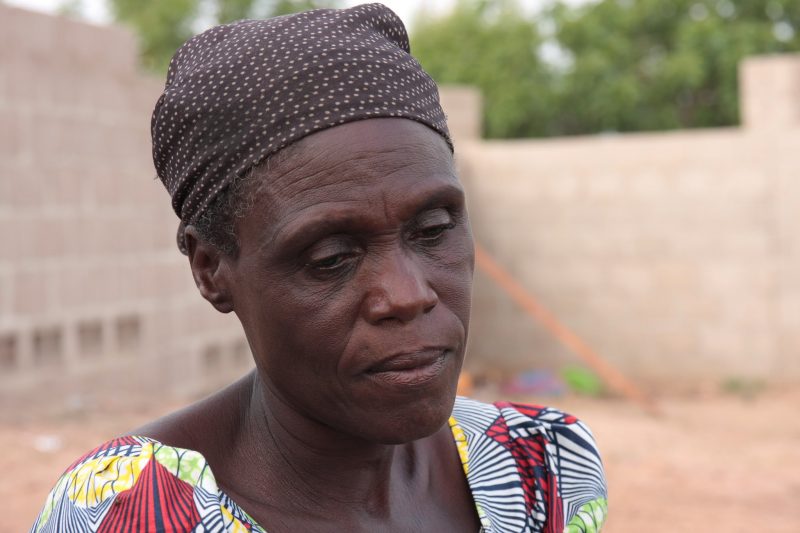
In the photo: Hajartu Jecob escaped her village when it was attacked by Boko Haram. Her story is one of many that highlights the importance of established organizational infrastructure to address the resultant challenges in terms of health, occupation, and reintegration. Photo Credit: EU/ECHO/Isabel Coello, Flickr
Already, there are countless examples of peace, security, and military organizations working together to achieve the mutually beneficial goals highlighted in SDG 16 as well as other SDGs. U.S. SOUTHCOM is a prime example of an organization that has prioritized inter-agency collaboration and partnerships to combat illicit trafficking, transnational organized crime, maritime security, disaster preparedness, and humanitarian relief. In 2014, for example, SOUTHCOM worked closely with USAID’s Office of Foreign Disaster Assistance to construct disaster relief facilities in Paraguay with $1.7 million civil-military funds, providing infrastructure, equipment, and training to ensure full operability.
In a similar vein, Brazil launched Operation Agata 5 in 2012, where the military collaborates with environmental protection and customs agencies, intelligence officials, and state and national police to tackle transnational border crime, including illegal logging and mining. In addition to reducing criminal activity along Brazil’s borders, Operation Agata 5 presents a unique opportunity for the military to conduct tactical training in a lower risk environment, concurrently meeting conservation and defense needs.
Alternatively, and similar to the UK’s new development strategy, strategic aid presents an opportunity for security and defense communities to collaborate without actively engaging the military in the field. Japan for example, executes a hybrid capacity-building policy that enables Japan to invest in security enhancement projects for non-combat purposes in developing countries. In 2012, as one of the early executions of “strategic aid,” Japan agreed to $6.7 million dollar grant to improve Jordan’s security equipment at border checkpoints in an effort to bolster counter-terrorism efforts. That type of policy continues around the world today, especially in conflict-ridden regions as the Middle East.
For a full mindmap containing additional related articles and photos, visit #SDGStories
Undoubtedly the UN seeks a holistic approach to peace, security, and development. Initiatives like the UNDP Joint Rule of Law Programme strengthens civilian police, while the UNODC utilizes supply chain security projects to counter transnational crime, corruption, and terrorism. Hallmark targets of SDG 16, these global security challenges are critical components to any global sustainable development strategy.
As such, it is crucial to collaborate with the military and the global security establishments around the world to achieve SDG 16.
Yet it is not only the security and development communities that have a stake in global peace. There is also incredible incentive and opportunity for private sector involvement — especially security technology and infrastructure companies.
In 2013, the UN Global Compact Report noted, “Business does better when the world does better,” and that the private sector significantly suffers in environments ridden with poor governance, public health, education, and abuse of human rights. Both Secretary-General Ban Ki-moon and UNDP Administrator Helen Clark note the need for private sector engagement in order to achieve the SDGs. The former USAID Administrator even said that aid organizations should move away from providing photo opportunities for companies’ corporate social responsibility arms and instead focus on business opportunities for industry in order to achieve sustainable interest from the private sector.
The United Kingdom, for example, adjusted its global development strategy in November 2015, highlighting the need to reduce poverty in order to combat the root causes of global insecurity and conflict.
Undoubtedly, peace and stability would improve productivity and success of private sector players in developing communities. The private sector already holds potential to contribute to the SDGs, and SDG 16 is no exception. In regions suffering rampant transnational crime, private business can be a valuable ally to development and security partners alike.
Look to Costa Rica, where Cambridge International Systems Inc. partnered with NGOs Forever Costa Rica Association and Conservation International to install a radar system on Cocos Island, to be managed by the Costa Rican Coast Guard. Cocos Island, a thirty-six hour boat ride from the mainland, is home to popular drug trafficking routes and illegal fishing despite also housing an established national park and marine protected area. An exceptionally difficult area for the Costa Rican Coast Guard to enforce due to the island’s relative isolation and limited coast guard resources, the new radar system drastically improves maritime surveillance, bolstering both national and regional security. With an emphasis on illegal fishing, the new radar station will also improve marine conservation efforts and protecting the world’s oceans.
The market for technology and infrastructure for projects that bridge the divide between security and development is a multi-trillion dollar business in the decades to come.
Security and development often intersect at the nexus of technology, and SDG 16 is no exception. Working with industry to figure out new business models and market entry points in developing nations will be critical to achieve SDG 16.
For over a decade, the international community has talked about bridging the divide between security and development actors. For years, there was no clear platform from which to launch a new era of pragmatic action to that end. SDG 16 represents an unprecedented opportunity to launch a new era of pragmatic action that simultaneously works toward making poverty history, while mitigating the negative consequences from conflict and insecurity.
Recommended reading: “GLOBAL GOAL 16: WAGING WAR ON WAR”