Celebrated in her native Somalia as the Queen of Tie Dye, Nimco Adam has designed for a myriad of fast-fashion companies in the past and has recently become a pioneer of global sustainable fashion efforts. In 2020, the business woman and textile expert was asked by The United Nations Environment Programme to offer an insight into her understanding of ethical and sustainable trends. Adam was also invited as a guest speaker for a Fashionomics in Africa Webinar series, speaking on “Building back better – after COVID-19 – Moving towards a more sustainable and inclusive fashion industry on the Continent.” This article uncovers the environmental issues related to the fashion industry through an interview with Nimco Adam. It explores fast fashion, sustainable materials and potential action.
According to a 2018 UN report, the fashion industry contributes 10% of global greenhouse gas emissions and 20% of the world’s water waste. Consuming more energy than aviation and shipping combined, the industry is one of the most polluting in the world. In 2019, McKinsey identified sustainability as a “burning priority” for the fashion world. Improving the sourcing of raw materials, limiting packaging and plastic, recycling, reducing water consumption, and substituting hazardous chemicals with safer alternatives are among the steps that must be taken to improve the industry’s environmental footprint. A 2019 G7 summit saw 32 major fashion companies, including Chanel and Burberry, commit to a host of these environmental initiatives.

Whilst Adam observes these critical changes taking place in the Western world, she believes that a sustainable approach to fashion is already embedded in African culture. “Sustainable is not something I got into, it’s something that has always been in me. In Africa it’s the way we live,” she told me.
Growing up, sustainability was ingrained in Adam’s daily life, “In Somalia, we don’t throw away clothes. I grew up wearing my sisters’ clothes, then they became my cousin’s, then they became the house girl’s.” Once the dress was in tatters, “it was used to clean our homes, it became the mop.” The repurposing of materials extended to how local cobblers and tailors made shoes and clothes for Adam, her friends and family. “We wore shoes made of car tires that were worn out completely,” she said. This tradition of using disused tires to make shoes is very popular in Africa and the trend has now spread globally with shoes being couriered from Ethiopia to customers in Australia and Canada.
It was while watching her local cobbler and tailor that Adam developed a deep understanding of and fascination with material, which she took with her to college in the U.S. “In undergrad school in California, I was making collections with natural super fibres like biodegradable linen and 100% cotton. I even began using bark.” The innovative idea Adam came up with involved using tree bark from the Ugandan rainforest in her designs. This ancient craft has been used by people across Asia, Africa and the Pacific for generations to make clothing and other household materials. The tradition is particularly prominent in Uganda, and has been recognised by UNESCO as ideal for the promotion of “eco-fashion” with “benefits for the community involved in production.”
Related Articles: Could the Pandemic Accelerate The Path To Sustainable Fashion? | Kasi Martin: Self-Educated Fashion Activist
Adam embarked on this project in an effort “to showcase how a simple tree bark could revolutionize the concept of circular design in the modern fashion industry.” But Adam’s supervisor gave her a failing grade as the textile was not officially recognized by the California Textile Association, marking the beginning of her frustration with the U.S. fashion industry. Still Adam pushed on with the project and was awarded the “Best Marketability Collection of the Year.”
Having designed for major retailers such as Forever 21, Walmart and Kaymart, Adam has had direct exposure to America’s fast fashion. When asked about these brands, her response was gloomy, “They’ll ask for one style, but millions of pieces, for under seven dollars.” The retailer Forever 21, which filed for bankruptcy in 2019, is renowned for its improbably low prices and the alleged mistreatment of employees working for firms contracted by the company.
In 2016, an investigation by the US Department of Labour found that workers in 77 Los Angeles factories, “were paid as little as $4… an hour for 10-hour days spent sewing clothes for Forever 21, Ross Dress for Less and TJ Maxx.” The investigation also found 85% of the factories they visited breached labour rights but were only able to penalise the contractors employing the workers — leaving the brand free of charges.
Frustrated with the industry, in 2013 Adam went back to the Somali capital Mogadishu in search of inspiration. “I began to think about the materials that were being used and the environments they reflected,” she told me. “In Somalia, I thought about how our ancestors lived and did things, the techniques they used…the plants and flowers they used to dye the yarn.”
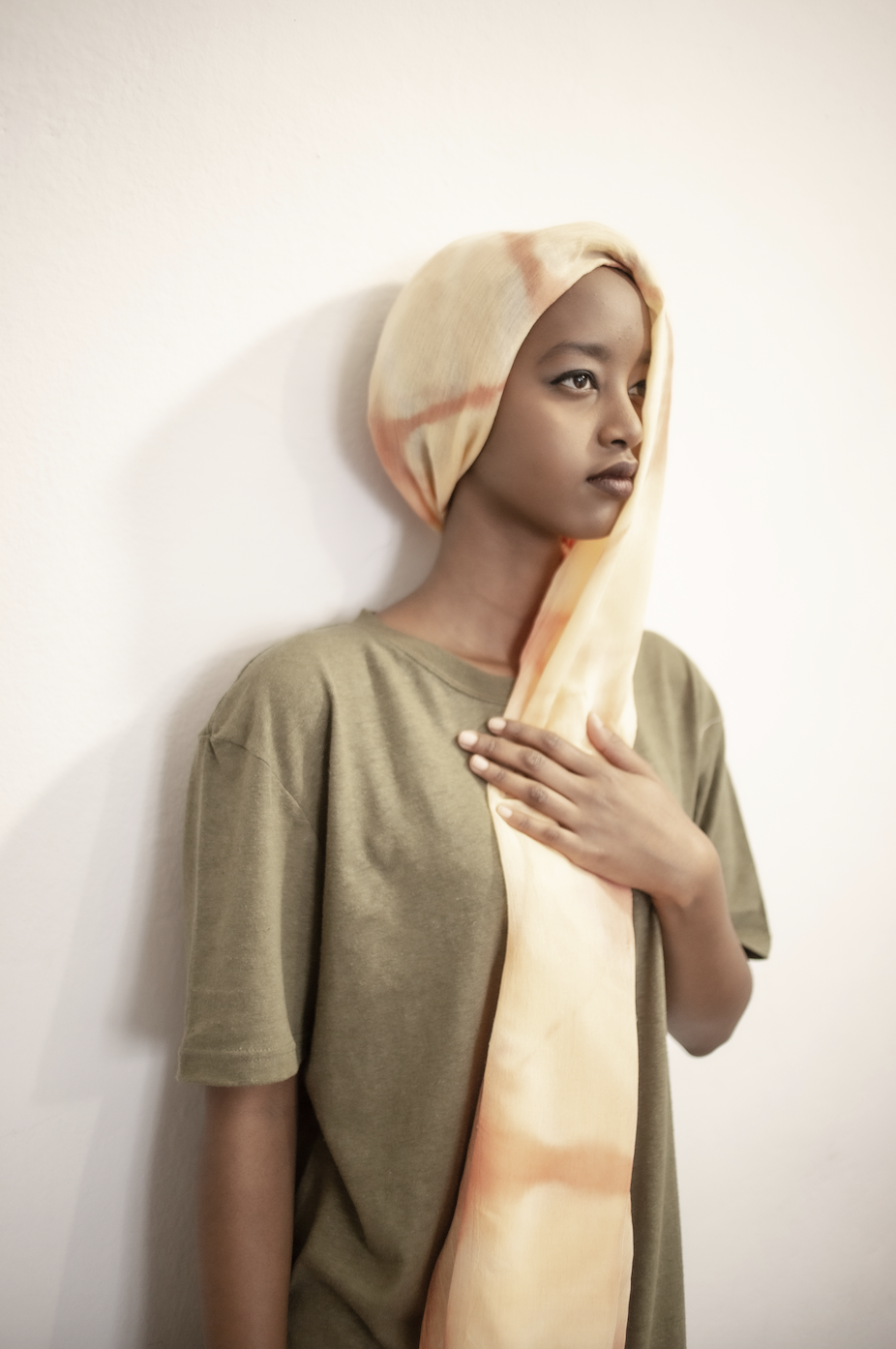
In her search for more ethical alternatives, Adams came across hemp, a biodegradable plant that grows in abundance with little water and no pesticides. With origins in central Asia, the plant also acts as a carbon store, sequestering atmospheric CO2 during its lifespan. According to Adam, this plant, which can be used for many purposes, is “the future.”
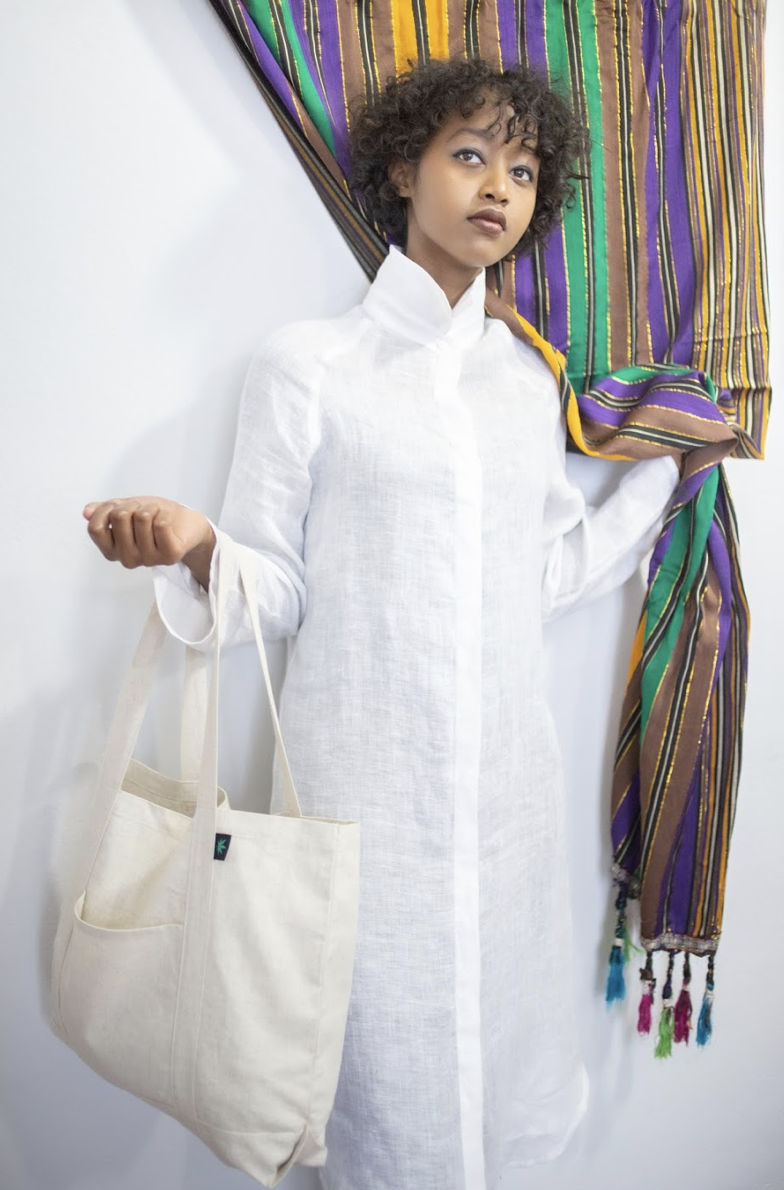
“The possibilities of hemp fabrics are immense,” Adam remarked. “It is likely that they will supersede cotton, linen, and polyester in numerous areas. With so many uses and the potential to be produced cheaply, hemp textiles are the wave of the future.” Accordingly, many of Adams’ Qaal Designs pieces use hemp.
When I asked Adam what else was important to her brand, she told me confidently, “Transparency. I know where my hemp is from and I know who is making my clothes. I have a team in downtown Los Angeles and I have my women in China, too. I already know what’s in my pieces but I need to know who touches every piece.”
…who made your clothes? What is in your clothes? How are you sourcing material?
If you buy something for five bucks and sell it for 30 bucks, you need to explain how it’s so cheap to produce.
“The industry needs to clean up its act as consumers demand more transparency. They are asking who made your clothes? What is in your clothes? How are you sourcing material? If you buy something for five bucks and sell it for 30 bucks, you need to explain how it’s so cheap to produce.”
According to Adam, the industry is changing, albeit gradually, predominantly due to the increasing awareness of the younger generations. But stakeholders, governments, NGOs and consumers must demand protocols, guidelines, education and action. Adam believes that “Everyone has to get involved, and ask themselves — why are we over-manufacturing? Why is our consumption crazy?”
She also maintains that it’s up to designers, “to rethink, recreate and to redesign” a more ethical future. Adams has taken it upon herself to ask her buyers, “Do you really need my clothes? Is this purchase an emotional purchase? What are you going to do with it?”
“When people are done with them, I ask them to give the clothes back,” she continued. “If it’s a long dress, I will make a skirt.” Adams overarching message seemed to be that none of her ideas are new. Many of her influences come from ancient traditions or local solutions to sustainability. Perhaps Western fashion should look to the sustainable solutions of less economically developed countries, solutions which to them are second nature.
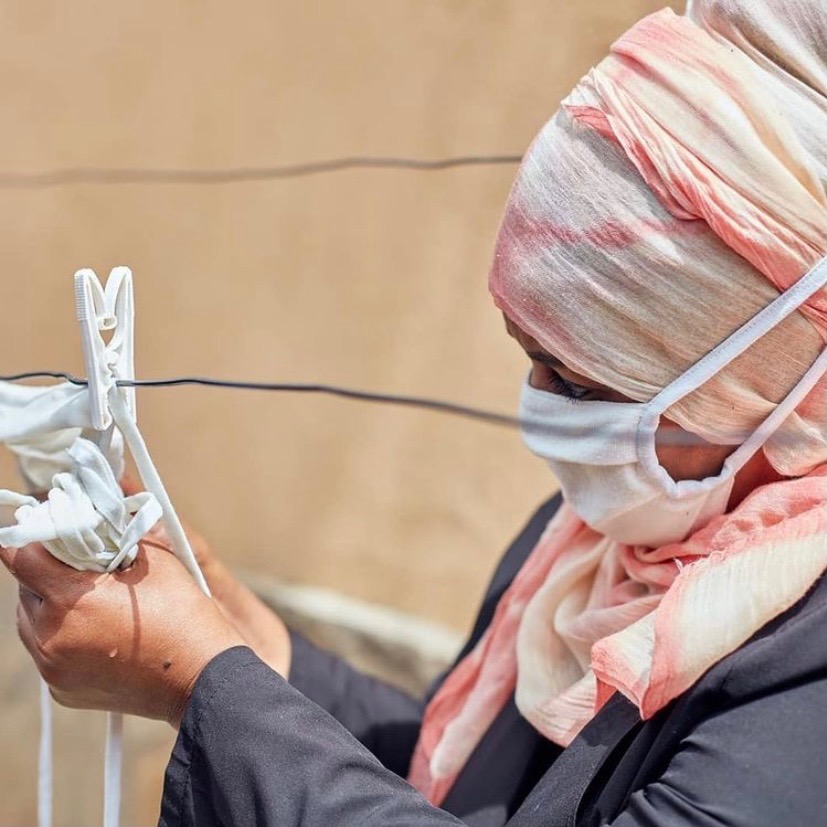
Editor’s Note: The opinions expressed here by Impakter.com columnists are their own, not those of Impakter.com. — In the Featured Photo: Nimco Adam creating her designs. Featured Photo Credit: Qaal Designs.