Today’s ESG Updates
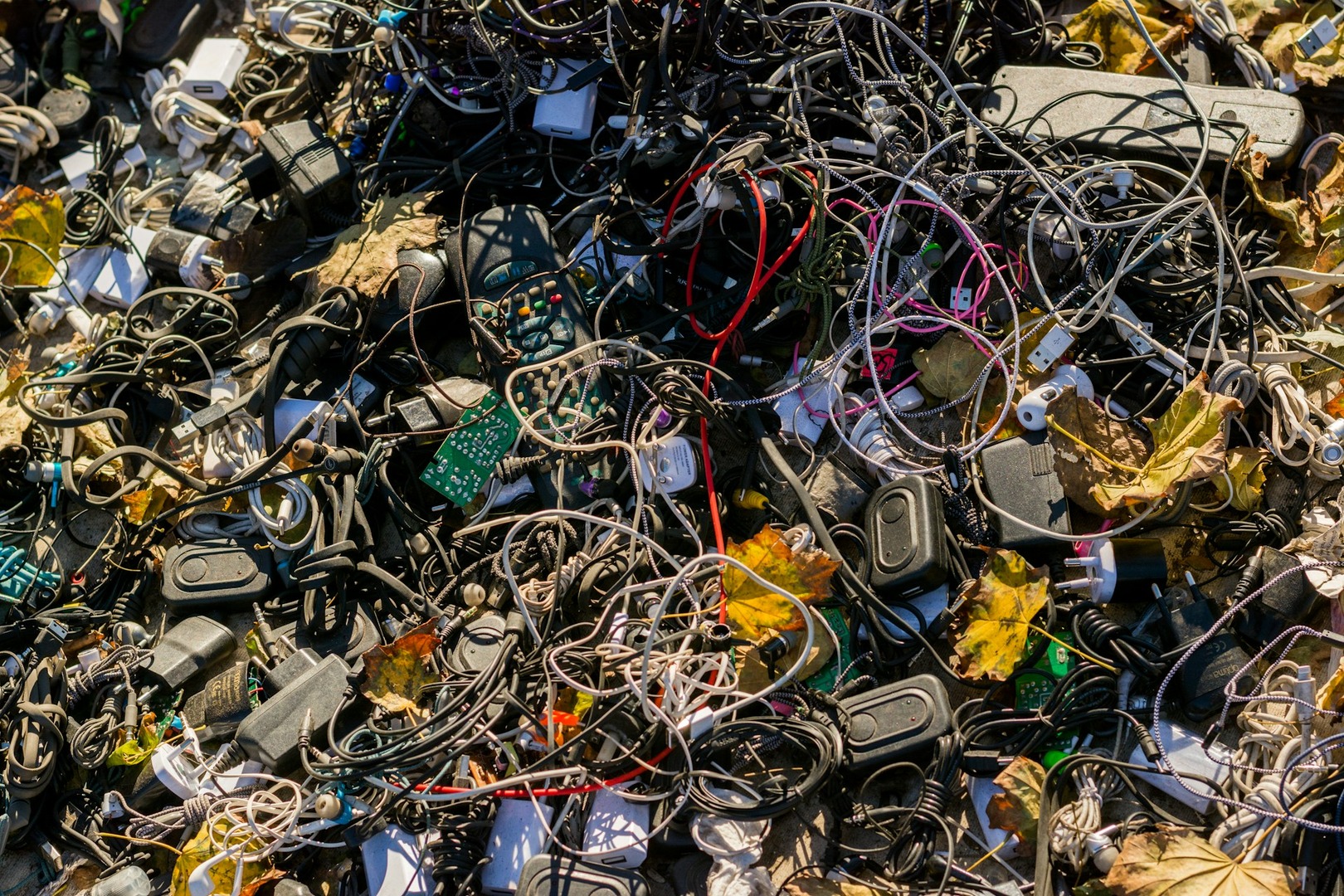
- AI Data Center Boom Could Triple World’s Toxic E-Waste, Report Warns: A new Basel Action Network report warns that AI data center construction could triple the world’s annual output of toxic electronic waste over the next 25 years, with no real plan in place to handle it.
- Study Finds Microplastics Act as Toxin Carriers in European Farmland: A five-year, EU-funded research project found microplastics in every one of 227 agricultural fields tested across 11 European countries, acting as a “Trojan horse” for pollutants, pesticides and bacteria.
- SEC Moves to Scrap Rule Requiring Shareholder Proposals on Proxy Ballots: The SEC wants to rescind the federal rule requiring companies to include shareholder proposals on annual ballots, shifting that authority to individual states instead.
- Google Strikes Its Biggest Carbon Removal Deal Yet, Pairing Methane Cuts With Rock Weathering: Google’s deal with climate developer Terradot targets 2 million metric tons of combined climate impact across Brazilian rice farms, marking the first project at this scale to pair methane abatement with carbon removal.
AI data center boom could triple the world’s toxic e-waste, report warns
The rush to build AI data centers is on track to triple the world’s annual output of toxic electronic waste over the next 25 years, according to a new report from the environmental group Basel Action Network. The electronic trash generated could fill enough shipping containers to circle the globe six times over.
Data center equipment isn’t built to be repaired or reused, the report says, and needs to be replaced entirely every two to five years. That equipment typically contains toxic materials like lead, mercury, and cadmium, along with forever chemicals, plus valuable metals that are hard to reclaim. Right now, there’s no real plan for handling any of it.
The report comes as concern shifts from the immediate footprint of data centers, the land and energy they consume, toward their longer-term pollution. Last week, a group of environmental and health experts called on the federal government to commit to protecting public health from AI’s buildout, citing estimates that pollution from the electricity generation these facilities require could cause hundreds of thousands of new asthma cases and up to 1,300 premature deaths a year in the U.S. alone.
The Trump administration, meanwhile, has moved to weaken environmental safeguards that would otherwise apply to this kind of large-scale construction.
Klimado – Navigating climate complexity just got easier. Klimado offers a user-friendly platform for tracking local and global environmental shifts, making it an essential tool for climate-aware individuals and organizations.
Study finds microplastics act as toxin carriers in European farmland
Microplastics in agricultural soil aren’t just sitting there. According to a five-year, EU-funded research project, they act as a “Trojan horse” that carries pollutants, pesticides and bacteria deep into farmland. The project, which produced 22 peer-reviewed studies, found microplastics in every single one of the 227 agricultural fields it tested across 11 European countries.
The smaller the microplastic, the more dangerous it seems to be. Edoardo Puglisi, a microbiology professor at the Catholic University of the Sacred Heart in Italy, said smaller particles absorb pollutants, microbes and DNA more effectively, which can speed up the spread of pathogens and antibiotic-resistant genes. In Switzerland, researchers found that fields with the most tyre-wear particles also had the highest levels of other toxic chemicals and metals.
The contamination isn’t just a chemistry problem, either. It disrupts earthworms and other soil organisms that drive nutrient cycles essential to healthy farmland. One study found that lettuce grown in higher concentrations of microplastics had reduced leaf area and lower chlorophyll content.
“We urgently need standardised plastic monitoring, full manufacturer transparency, and risk assessments that evaluate through different species how microplastics interact with co-pollutants,” said Esperanza Huerta Lwanga, a soil physics researcher at Wageningen University in the Netherlands.
Related Articles
Here is a list of articles selected by our Editorial Board that have gained significant interest from the public:
SEC moves to scrap rule requiring shareholder proposals on proxy ballots

The SEC is moving to rescind Rule 14a-8, the federal rule that requires public companies to include qualifying shareholder proposals on their annual proxy ballots. Instead, the agency wants to hand that authority over to individual states.
SEC Chairman Paul Atkins argues the rule oversteps the commission’s authority and infringes on state law. Critics say shifting it to the states would create a confusing patchwork of requirements. In Texas, for example, a new law could require investors to hold as much as $1 million in shares just to file a resolution, compared with $2,000 under the current SEC rule.
Shareholder proposals on topics like carbon emissions and executive pay have been a regular feature of corporate annual meetings for years, though support for them has declined recently. The SEC has already taken steps in this direction: in August, its Division of Corporation Finance said it would permanently stop weighing in on whether companies can exclude shareholder proposals from their ballots, ending a review process it had run for decades.
The Interfaith Center on Corporate Responsibility, an investor coalition that opposes the change, says the shift would leave investors with far less clarity than they had before. A formal rulemaking notice is expected in October.

Google strikes its biggest carbon removal deal yet, pairing methane cuts with rock weathering

Google has agreed to its largest carbon-removal deal to date, backing a project in Brazil that aims to both cut methane emissions from rice farming and pull carbon dioxide out of the atmosphere. The deal, with climate developer Terradot, spans more than 200,000 hectares of rice fields in the southern state of Rio Grande do Sul.
The agreement has two parts. Under the first, Google will buy 1 million metric tons of methane-elimination credits by 2030, generated through a technique that periodically drains and re-floods rice paddies to cut methane output. Under the second, Terradot will spread crushed volcanic rock across the same fields, a process called enhanced rock weathering, aiming to permanently remove 1 million metric tons of CO2 by 2040. It’s the largest project of its kind to date, and the first at this scale to pair methane abatement with carbon removal.
Google and Terradot didn’t disclose pricing, but a 2024 deal for a much smaller volume implied a cost of roughly $300 a ton, well above the $100-a-ton threshold many developers are chasing to drive broader demand. Terradot’s CEO said this project will be cheaper than past deals, calling it “a big step toward” that goal.
The companies say the model could scale across Brazil’s 1.5 million hectares of rice fields and eventually spread to other rice-growing regions. Terradot plans to launch pilots in several countries this year, with commercial-scale operations targeted for 2028.
Editor’s Note: The opinions expressed here by the authors are their own, not those of impakter.com — Cover Photo Credit: Eugenia Pan’kiv