Impakter
  • Environment
    • Biodiversity
    • Climate Change
    • Circular Economy
    • Energy
  • FINANCE
    • ESG News
    • Sustainable Finance
    • Business
  • TECH
    • Start-up
    • AI & Machine Learning
    • Green Tech
  • Industry News
    • Entertainment
    • Food and Agriculture
    • Health
    • Politics & Foreign Affairs
    • Philanthropy
    • Science
    • Sport
  • Editorial Series
    • SDGs Series
    • Shape Your Future
    • Sustainable Cities
      • Copenhagen
      • San Francisco
      • Seattle
      • Sydney
  • About us
    • Company
    • Team
    • Partners
    • Write for Impakter
    • Contact Us
    • Privacy Policy
No Result
View All Result
Impakter logo
No Result
View All Result
Rain To Replace Snow In Arctic

Rain To Replace Snow In Arctic

New study projects that there will be more rain than snow in the Arctic between 2060 and 2070 - thirty years earlier than previously projected

Henrietta McFarlanebyHenrietta McFarlane
December 4, 2021
in Climate Change, Environment
0

In August this year, rain fell instead of snow on the summit of Greenland for the first time on record. A new study, published in the journal of “Nature Communications” suggests that this is likely to become the norm in just four or five decades. This of course has a direct link to climate change and global warming. The implications of the situation in the Arctic are not only catastrophic locally but for the whole world.

The study, led by Michele McCrystall of the University of Manitoba uses new climate modelling which suggests the transition from snow to rain could happen much earlier than scientists had previously projected. Scientists had predicted that the transition wouldn’t occur until 2090/2100 but McCrystall says that “with the new set of models, this has been pushed forward to about between 2060 and 2070”.

The new models suggest that the Arctic may warm faster and that the region’s precipitation patterns are more sensitive to small amounts of warming than previously suspected.   

Rainy #Arctic predicted…important new paper published in Nature Communications with substantial #CHARTERArctic input #RainonSnowhttps://t.co/hxw3g8Nxpa pic.twitter.com/d7cFIZCP6c

— CHARTER Project (@CharterArctic) December 2, 2021

Even if global temperatures can be kept to 1.5C or 2C as in the Paris Agreement, the transition from snow to rain will still take place in some areas. But based on the short-term goals that countries have set out at COP26, temperatures will rise by more than 2.4C by the end of the century, exceeding the upper 2C limit of the Paris Agreement. 

The modelling could not be clearer

The study’s co-author and climate scientist at the University of Exeter says “the new models couldn’t be clearer that unless global warming is stopped, the future Arctic will be wetter, once-frozen seas will be open water, rain will replace snow”.

We have a new paper out today @NatureComms on Arctic precipitation 🌧️🌨️ projections, led by @Michelle_McCrys, with @JulienneStroeve @MarkSerreze @BruceForbes4. A summary thread 🧵 ⬇️

cc @umanitoba @NSIDC @CPOM_news @GSI_Exeter @ExeterUniMaths @ulaplandhttps://t.co/nZr933ZPEZ

— Prof James Screen (@polar_james) November 30, 2021

With a 1.5C increase, it is projected that the Greenland and Norwegian seas will be dominated by rainfall. With a 2C increase, western Russia and parts of the European Arctic will also transition from an average of more snow to more rain, and looking towards a 3C increase, modelling suggests that most regions on the Pacific side of the Arctic would shift to a rainy climate.


Related Articles: Arctic Summer Sea Ice Could Disappear As Soon As 2035  | Climate Change in the Arctic for Dummies – the Basic Facts We Need to Know to Care  

Melting snow and increased rainfall may actually increase global warming itself. Snow’s reflectivity helps to maintain the Earth’s energy balance by reflecting 80% to 90% of incoming sunlight back into space, which helps to cool the planet. The melting snow is a reason behind the Arctic warming much faster compared to other regions around the world.

Melting snow might also disrupt the Arctic’s delicate ecosystems. Species of wildlife that are adapted to the cold and snow may suffer and new species may migrate. But the implications of this study reach far further than the Arctic region itself.  

“What happens in the arctic doesn’t stay there”

McCrystall says “you might think the Arctic is far removed from your day-to-day life, but in fact temperatures there have warmed up so much that [it] will have an impact further south.”

Increased global warming and more melting on Arctic glaciers and the Greenland ice sheet may speed up the rate of global sea-level rise. Some research suggests that warming in the Arctic may drive changes in atmospheric circulation, changing the flow of major air currents such as the polar vortex or jet stream. These changes may significantly affect weather patterns across the Northern Hemisphere.  

Most of the land in the Arctic is tundra, where the subsoil is permanently frozen. McCrystall adds that rainfall would put “warm water into the ground that might melt the permafrost and that will have global implications, because…permafrost is a really great sink of carbon and methane”, two greenhouse gasses which contribute to global warming. With the permafrost gone, the sink of carbon and methane is gone. Therefore, the implications of this study should quickly become a global concern.

The study implies that “more stringent mitigation policies are required as precipitation changes that were expected within 2 °C of global warming above pre-industrial, now appear possible under 1.5 °C of global warming.”

It is imperative that world leaders continually respond to new scientific findings in the fight against climate change and adjust plans for the future accordingly.


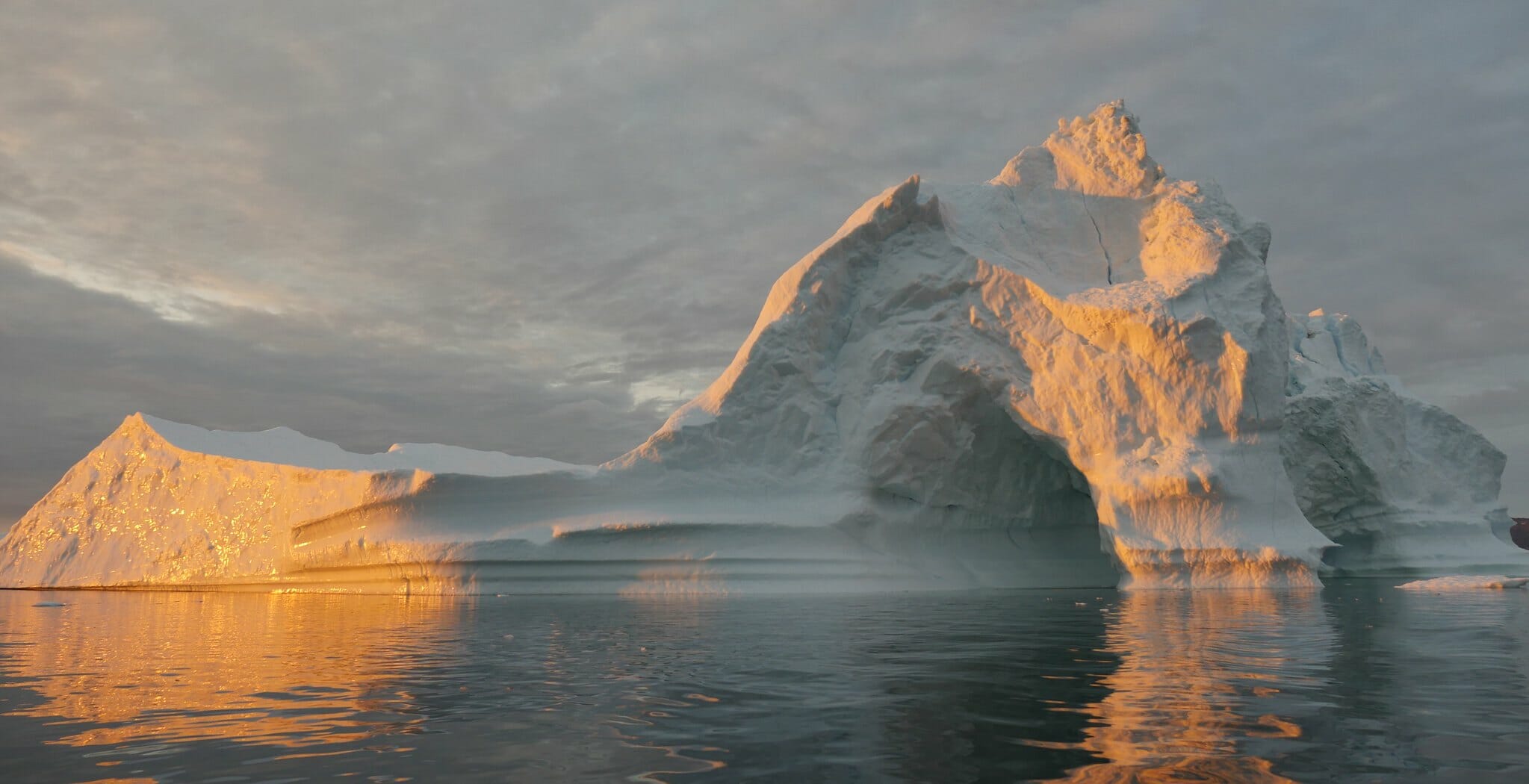
Editor’s Note: The opinions expressed here by Impakter.com columnists are their own, not those of Impakter.com. — In the Featured Photo: Iceberg in Greenland, 2015. Featured Photo Credit: NASA on The Commons 
Tags: ArcticClimate ChangeExtreme WeatherGlobal warmingRising Sea LevelsSnow
Previous Post

Health Threats: Can We Do Better in the Future? 

Next Post

The Good Council: Indigenous Past, Present and Future

Related Posts

biodiversity loss
Biodiversity

The Economics of Biodiversity Loss

In the 1990s, India’s vulture population collapsed due to the unintended knock-on effect of a veterinary drug for cattle, with...

byStefano Giglio - Professor at Yale Universityand2 others
February 4, 2026
The Era of ‘Global Water Bankruptcy’ Has Begun
Climate Change

The Era of ‘Global Water Bankruptcy’ Has Begun

Humanity’s long-term water usage and damage have exceeded nature's renewal and safe limits, a situation scientists and the media have...

byNmesoma Ezetu
February 4, 2026
A picture with a wind power generator
Society

Emissions and Economic Growth: Is There Still a Link?

In prior decades, economic growth and emissions co-existed. As countries grew richer, they produced more and emitted more. This relationship...

byFedor Sukhoi
February 3, 2026
How Climate Change Is Forcing Evolution
Climate Change

How Climate Change Is Forcing Evolution

As global temperatures continue to rise at alarming rates, climate change threatens to wipe out entire groups of animal species....

byYuxi Lim
February 2, 2026
Three sponsors for the 2026 Winter Olympics in Italy could generate 1.3 million tons of CO2
Climate Change

Winter Olympics Sponsorship Emissions: Who Are the Main Offenders?

The 2026 Winter Olympic Games are set to begin in Italy next month. Scattered across towns in northern Italy, from...

bySarah Perras
February 2, 2026
WEF Report Ranks Environmental Challenges as Greatest Long-Term Threat to Global Stability
Business

WEF Report Ranks Environmental Challenges as Greatest Long-Term Threat to Global Stability

The World Economic Forum’s Global Risks Report 2025 found that environmental risks are deteriorating faster than other threats and challenges.  ...

byBenjamin Clabault
February 2, 2026
Thames Water closes in on rescue deal;
Environment

Thames Water Closes in on £16bn Rescue Deal

Today’s ESG Updates: Thames Water Closes in on £16bn Rescue Deal: Thames Water is edging closer to a multibillion-pound rescue...

byAriq Haidar
February 2, 2026
Food Waste in India
Climate Change

India’s Food Waste Is Turning Into an Environmental Time Bomb

India, a key player in this fight, is currently battling a confluence of climate-driven disasters. Last year’s punishing extreme heatwave,...

byPranjali Chowdhary - Research and Policy Associate at the Institute for Governance and Sustainable Development, Indiaand1 others
January 30, 2026
Next Post
The Good Council: Indigenous Past, Present and Future

The Good Council: Indigenous Past, Present and Future

Recent News

ESG news regarding Merz targeting Middle East deals to reduce Germany’s U.S. energy dependence, oil rising after U.S.-Iran drone incident, Amazon committing to 110 MW of German offshore wind power, and Chinese solar stocks surging after Elon Musk team visits local firms.

Merz Visits Middle East to Curb Germany’s Energy Dependence on the U.S.

February 4, 2026
biodiversity loss

The Economics of Biodiversity Loss

February 4, 2026
The Era of ‘Global Water Bankruptcy’ Has Begun

The Era of ‘Global Water Bankruptcy’ Has Begun

February 4, 2026
  • ESG News
  • Sustainable Finance
  • Business

© 2025 Impakter.com owned by Klimado GmbH

No Result
View All Result
  • Environment
    • Biodiversity
    • Climate Change
    • Circular Economy
    • Energy
  • FINANCE
    • ESG News
    • Sustainable Finance
    • Business
  • TECH
    • Start-up
    • AI & Machine Learning
    • Green Tech
  • Industry News
    • Entertainment
    • Food and Agriculture
    • Health
    • Politics & Foreign Affairs
    • Philanthropy
    • Science
    • Sport
  • Editorial Series
    • SDGs Series
    • Shape Your Future
    • Sustainable Cities
      • Copenhagen
      • San Francisco
      • Seattle
      • Sydney
  • About us
    • Company
    • Team
    • Partners
    • Write for Impakter
    • Contact Us
    • Privacy Policy

© 2025 Impakter.com owned by Klimado GmbH