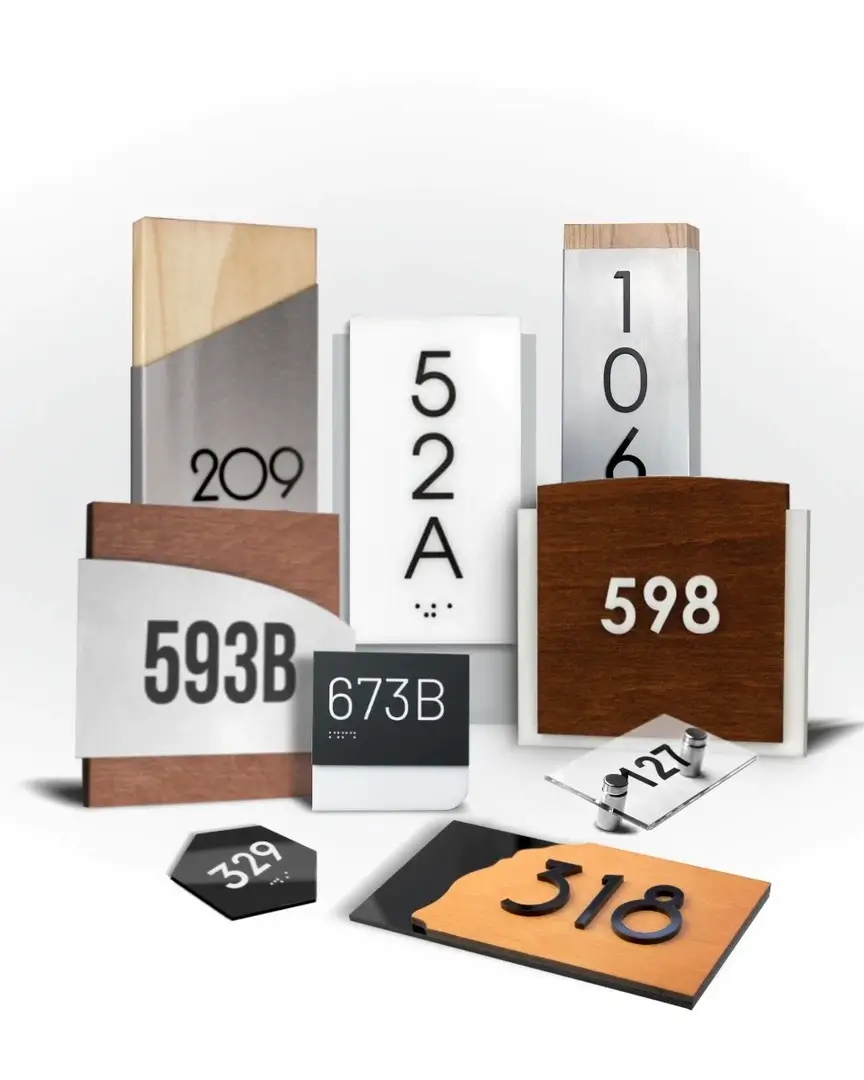
Personalized door signs are custom-designed signage elements used in commercial interiors to identify rooms, support wayfinding, and enhance the overall perception of space through material, typography, and finish.
Picture two hotel corridors. Same layout, same lighting, same carpet. In the first, every door has a generic number plate screwed into the frame. In the second, each room number is laser-cut from stainless steel, mounted on a slim walnut backer that echoes the lobby’s millwork. The rooms behind those doors might be identical — but guests will rate the second corridor higher on every metric from comfort to cleanliness. That’s not speculation; it’s a well-documented effect in hospitality design research known as the “halo of detail.”
Custom door signs are one of the most repeated visual elements in any commercial interior. A visitor encounters them dozens of times in a single building visit. When those signs feel generic, the repetition reinforces an impression of indifference. When they feel intentional — matched to the space in material, typography, and finish — the same repetition builds a quiet sense of quality.
Materials for Custom Door Signs: How to Choose the Right Option
The shift from generic to personalized signage starts with treating office door signs as part of the interior material specification. That means selecting them the same way a designer selects hardware or light fixtures: by evaluating how the material, color, and texture interact with everything around them.
Different materials communicate different design signals:
- acrylic — clean, modern, versatile. Works well in contemporary and minimalist spaces, available in nearly any color.
- wood — warm, natural, hospitality-friendly. A natural fit for residential buildings, creative workspaces, and boutique hotels.
- metal (stainless steel) — durable, corporate, high-contrast. Reads as professional and long-lasting, suited for offices and medical facilities.
- mixed materials — layered, premium, design-driven. Combinations like an acrylic face on a wood backer add visual depth that single-material signs can’t achieve.
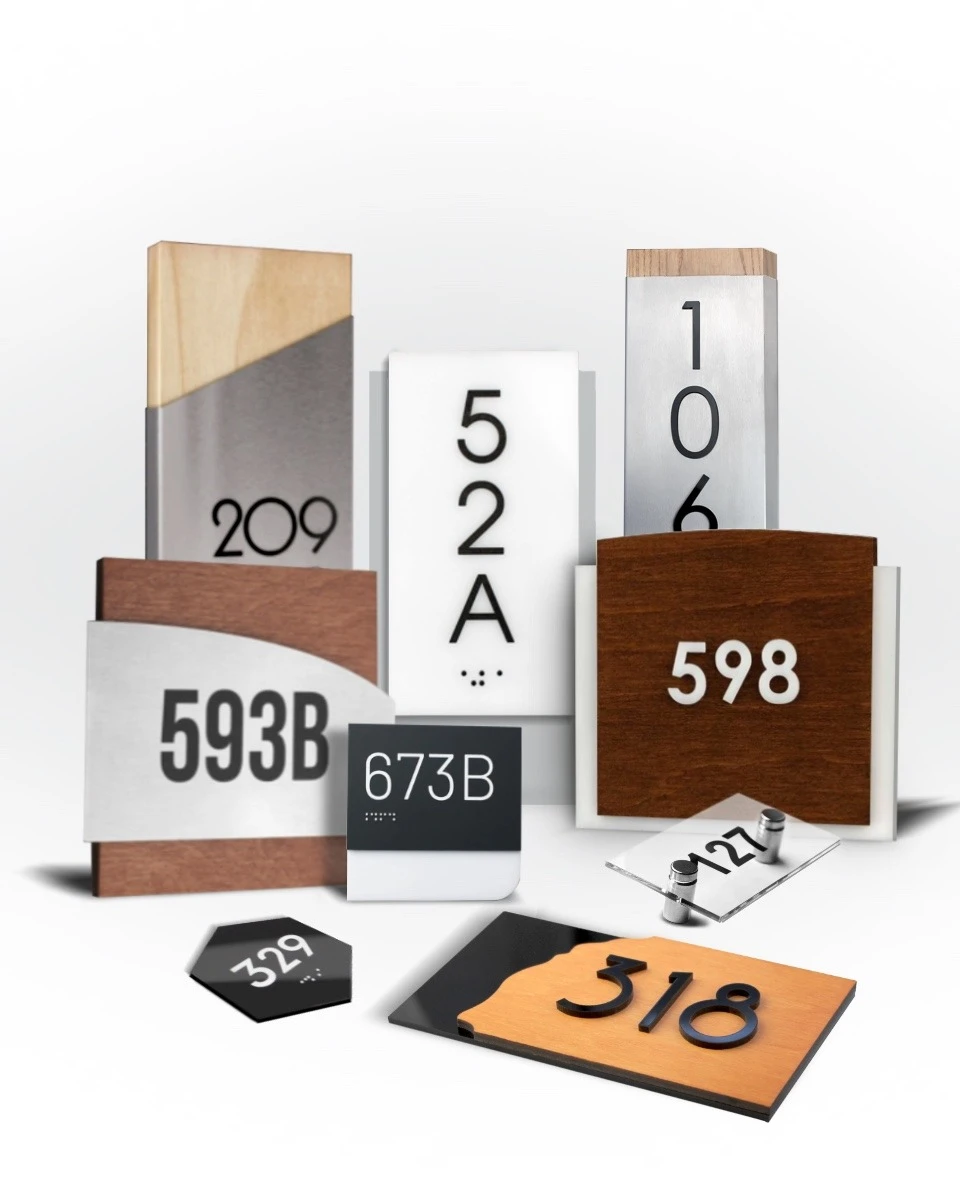
But material choice isn’t only about aesthetics. A personalized door sign that yellows under UV exposure within a year or that can’t survive daily chemical wiping in a healthcare setting, isn’t personalized at all — it’s just decorative. Durability needs to be matched to the specific environment: scratch resistance for high-traffic corridors, UV stability for sun-exposed facades, chemical tolerance for clinical spaces.
BSign Store specializes in personalized door signs for commercial and residential interiors, with a range of substrates and finishes broad enough to align with most design palettes while meeting the practical demands of different building types.
Accessibility in Door Signs: ADA Compliance and Information Design
Personalization also means accommodating every visitor, not just those with full vision. ADA door signs integrate tactile raised lettering and Grade 2 Braille into the design rather than tacking them on as afterthoughts. When accessibility is part of the original specification, it disappears into the design — which is exactly what good inclusive design should do.
There’s an information design layer too. The best personalized signs use clear hierarchy: room number dominant and readable from corridor distance, and occupant name or room function secondary and legible at arm’s length. This dual-distance approach serves wayfinding and identification simultaneously, reducing the number of signs a building needs overall.
Key Benefits of Personalized Door Signs
- Improve perceived quality of interiors
- Strengthen brand identity through material consistency
- Enhance wayfinding and navigation
- Increase durability when matched to the environment
- Support accessibility (ADA compliance)
Why Door Signage Has High ROI in Commercial Interiors
Signage typically represents less than 1% of a commercial interior fit-out budget. But it accounts for a disproportionate share of what visitors remember — because they interact with door signs more frequently than with any other design element in the building. For architects and interior designers, personalized signage is one of the highest-ROI specification decisions available: modest cost, visible on every door, and encountered at the exact moment when a visitor forms their closest-range impression of the space.
Editor’s Note: The opinions expressed here by the authors are their own, not those of impakter.com