Over 50 years ago, Park Chung Hee, then President of the Republic of South Korea (ROK), secretly began a program to obtain nuclear enrichment capability by acquiring a reprocessing plant to manufacture the raw material of atomic weapons. When the existence of that program was confirmed, American policy at the highest levels was to “discourage ROK effort in this area and to inhibit to the fullest possible extent any ROK development of a nuclear explosive capability or a delivery system.” In May 1976, U.S. Secretary of Defense Donald Rumsfeld told his ROK counterpart the U.S. would review all relations with South Korea, including security and economic arrangements, if they insisted on developing nuclear weapons.
On the other side of the 38th parallel divide, North Korea had been developing its nuclear technology since the 1960s, with supplies from the Soviet Union, confirmed nuclear weapons testing, and has an estimated 60 warheads.
Recently, President Trump has stated that the U.S. is scaling back U.S.-South Korea defense drills. Whatever the reasons, and whether this indicates a fundamental change, the Trump administration’s signalling of a possible reduction of military presence in South Korea has wider implications.
Then there is Ukraine’s history and the current war with Russia, which has led countries to have less confidence in U.S. security promises. Under the 1994 Budapest Memorandum, Ukraine voluntarily surrendered the world’s third-largest nuclear arsenal in exchange for U.S., U.K., and Russian security assurances to respect its sovereignty. The failure to prevent the Russian 2022 invasion was cause for skepticism by other U.S. allies about its political assurances, security guarantees, and the inherent risks in giving up or forgoing nuclear capabilities.
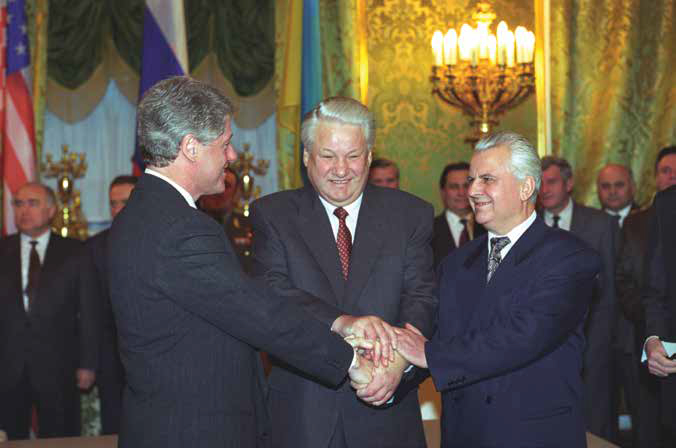
Now, U.S. attempts to broker an end to the war have fueled fears that Washington will compromise an ally’s territorial integrity to avoid a wider conflict. Vulnerable frontline states worry that U.S. security guarantees may not be absolute, but rather negotiable variables.
Reflecting a different aspect of such unease is that U.S. defensive and offensive military efforts in the Iran War have resulted in significant drawdowns of key U.S. missile supplies, to the extent that manufacturing capacity cannot rapidly provide enough replacements, which has translated into supply delays for U. S. allies, perhaps as long as five years.
Taken together, these have produced nervousness and uncertainty among U.S. allies worldwide. Whether in Asia or the Middle East, countries are publicly or not so publicly beginning to think about, or look into, becoming nuclear, and in some cases asking the U.S. directly to provide them with the wherewithal to go down the nuclear road.
In addition to South Korea, Japan and Taiwan are two such countries, both with advanced civil nuclear programs; and, although neither has an active weapons program, changing security dynamics involving China and North Korea have generated debate about whether they should rely indefinitely on U.S. protection or eventually hedge (Taiwan has recent reason for further concern because it was on the agenda at the three-day September 2026 Trump-Xi Summit at the White House, with China describing Taiwan as among their highest priority).
In the Middle East, Saudi Arabia has long held the view that, if Iran crosses the threshold to a nuclear weapon, Saudi Arabia must follow suit. There has been U.S. provision of sensitive nuclear technology — solely for civilian purposes — but now U.S. intelligence assessments indicate the Saudis have not ruled out development of nuclear weapons.
Related Articles
Here is a list of articles selected by our Editorial Board that have gained significant interest from the public:
Even countries in Western Europe, such as Poland, as well as Sweden, while not seeking independent indigenous nuclear weapons, recognize that both France and the United Kingdom have nuclear weapons, and have been discussing NATO’s nuclear-sharing arrangements, even hosting dual-capable assets to counter heightened threats from Russia.
Then there are widespread fears of Iran becoming nuclear-armed. At the UN General Assembly on September 23, 2026, Iranian President Pezeshkian reiterated past statements that Iran does not seek nuclear weapons but will maintain its right to peaceful nuclear technology for medical and agricultural purposes. But what is not known, especially in the case of Iran, is how quickly they could convert such peaceful civilian programs for military nuclear purposes, nor how surveillance by organizations such as the International Atomic Energy Agency (IAEA) could effectively check up on civilian programs.
Is there anything left of nuclear test treaties or ways to contain proliferation?
Not much. The New START treaty between the U.S. and Russia expired on Feb. 5, 2026, leaving the world without legally binding bilateral limits on strategic nuclear arsenals for the first time since 1972.
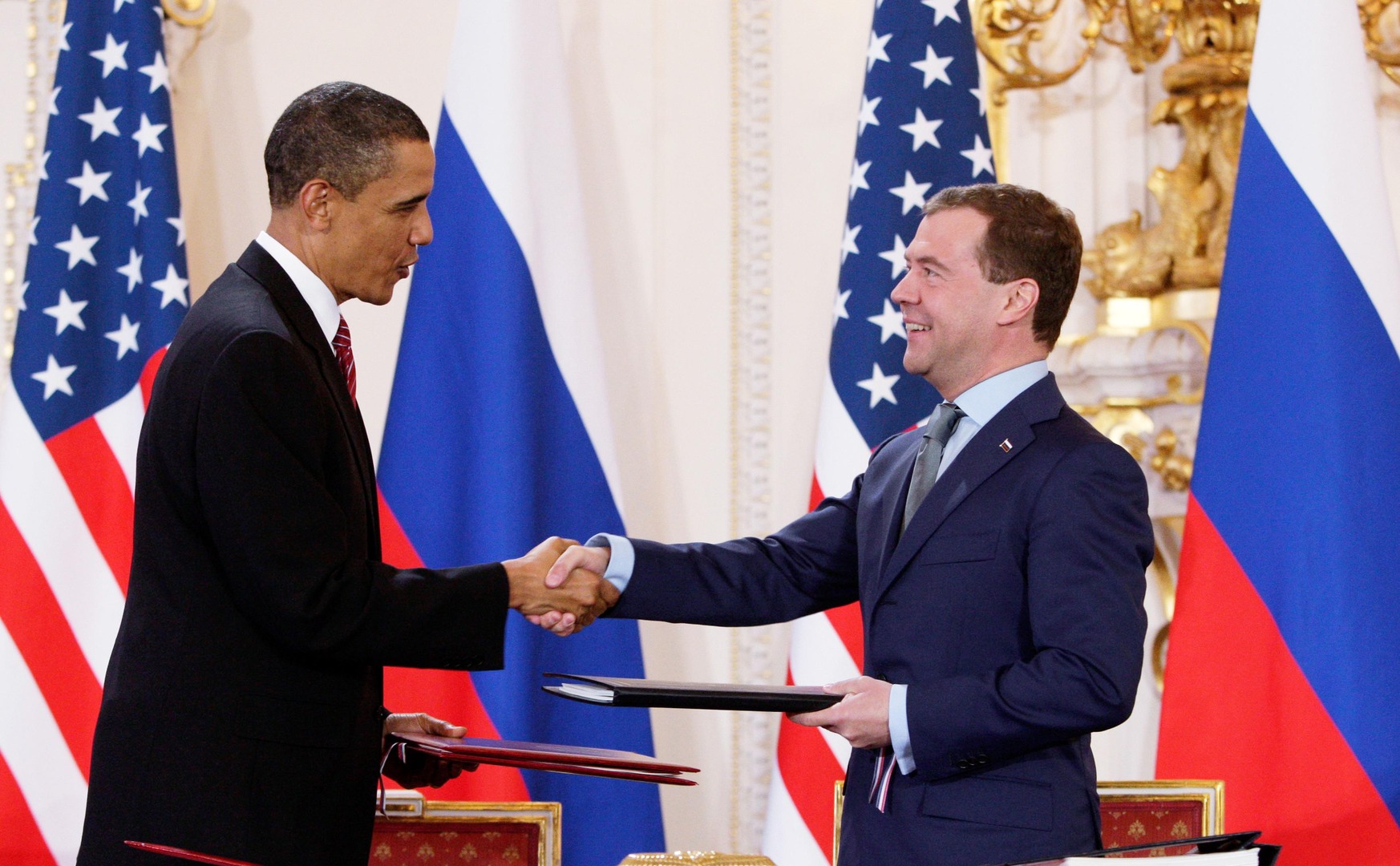
Negotiating a new treaty would be a major undertaking, requiring technical work on definitions, counting rules, and verification, sustained diplomatic engagement, and a degree of trust. None of these conditions is currently in place. Nor has this been at the center of public consciousness. But with Putin and Trump both speaking of their possible use of their nuclear arsenals, in Ukraine and Iran, with both countries dramatically increasing investments in nuclear modernization, and with China building up its nuclear arsenal, having doubled its number of warheads in recent years, it is more urgent and imperative than ever that there be a commitment to pursue international disarmament.
On Sept. 29, 2026, a special one-day meeting will be held during the United Nations General Assembly to promote the total elimination of nuclear weapons. While surprises happen, it would be much to expect any major agreement on an approach to nuclear containment resulting from this session of the United Nations General Assembly.
Finally, another new real and imminent threat now looms, described by many as runaway Artificial Intelligence. At the recent UN Security Council briefing, there were calls for global unified efforts to provide guardrails. If the track record of nuclear containment is any guide, it is not promising.
But hope springs eternal, and, alas, that is what we are left with.
Editor’s Note: The opinions expressed here by the authors are their own, not those of impakter.com