The Russian-Ukrainian war has reshaped the European Union’s (EU’s) energy landscape, notably increasing the transition to renewable energy, as the latest European Electricity Review found that a record 22% of EU electricity was generated by wind and solar power in 2022.
As solar adoption accelerates, household economics are becoming an increasingly important part of the conversation. Installation costs, government incentives, and long-term savings now play a decisive role in how quickly solar can scale at the residential level. In markets where rooftop adoption is growing fastest, questions around affordability and return on investment are shaping public engagement. For example, understanding the cost of solar panels in Ireland helps illustrate how pricing structures, subsidies, and energy savings influence consumer decisions across the EU.
Wind and solar production were shown to match nuclear production, overtaking fossil gas (20%) for the first time. In 2023, it’s estimated that solar and wind will rise by another 20%, whereas fossil fuel generation could fall by a record 20%, doubling the 2020 record.
How does solar and wind energy help the environment?
Gas shortages prompted fears that the EU could backslide into reliance on coal. This would be especially alarming given that coal, generally agreed to be the most polluting fossil fuel, is the only fossil fuel explicitly targeted in the COP27 agreement. However, this was mostly avoided.
Although the EU made progress in accelerating the transition to renewables, two major unforeseen challenges arose: French nuclear outages as German nuclear outlets closed, and the worst European drought in 500 years. The latter meant a serious decrease in hydro-generated power.
Combined, these crises left an energy deficiency of 185TWh.
The difference was largely made up by increased solar and wind energy projects. However, one sixth of the 185TWh was made up by fossil generation, mostly coal, due to it being cheaper than gas.
Coal generation rose by 7% in the EU
This added 0.3% to global coal generation, compared to 2021, while gas generation rose 0.8% within the EU.
Ember, the think tank conducting the review, argues that this is not a substantial rise in context. Overall, coal rose 1.5 percentage points generating 16% of EU electricity last year, which is still below 2018 levels.
Every EU country had a smaller share of coal in 2022 than in 2015.
Biggest falls – 🇬🇷Greece, 🇵🇹Portugal, 🇳🇱Netherlands, 🇪🇸Spain
Still over 30% coal power – 🇵🇱Poland, 🇨🇿Czechia, 🇧🇬Bulgaria, 🇩🇪Germany
Explore more in our #EER2023 chapter on #coalpowerhttps://t.co/3Hlb3D8Per pic.twitter.com/94Eeos01W6
— Ember (@ember_energy) February 2, 2023
Indeed, this is far below anticipated levels. Across the whole of 2022, the EU imported 22 million tonnes of coal. Of this, they have only used a third, and the final two-thirds remain unburned in stockpile.
As gas prices already shot up in 2021 due to increased demand following the pandemic, and exceptionally low supply, there were no further changes from gas generation to coal generation.
Coal generation actually fell by 6% from September to December in 2022, and, despite moves like Germany’s controversial expansion of a coal mine in early 2023, this trend is expected to continue.
Is Europe consuming less energy?
Europe makes up 10% of global energy demand, with Germany as the lead consumer within that at 20% of EU energy demand. Despite having the largest demand reduction in 2022, France comes in second, at 17%. After that come Italy (11%) and Spain (9%), with the highest consumers per capita being Finland and Sweden.
Falling coal demand at the end of 2022 has mostly been chalked up to falling electricity demand: The EU used 8.5% less electricity in the final quarter of 2022 compared to the final quarter of 2021 due to a combination of mild weather and high energy prices.
EU electricity demand was unusually low in the last four months of 2022.
Mild weather was a deciding factor, but affordability pressures and energy efficiency measures likely played a role.#EER2023 https://t.co/j5ijp266xC pic.twitter.com/Tug2s2ozLG
— Ember (@ember_energy) February 2, 2023
Over the whole of 2022, EU electricity demand fell by 2.7% from 2021, following a substantial post-pandemic increase in 2021.
Contrastingly, Ember anticipates that the transition to renewables will mean a major and rapid rise in demand through electrification, citing the step up in heat pumps, electric vehicles and electrolysers in 2022.
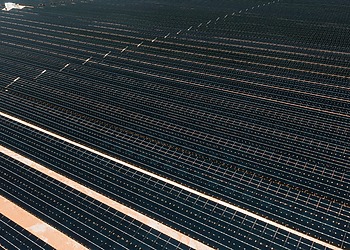
Solar power rose a record 24% in 2022
Rising by 39TWh, solar energy helped avoid €10 billion in gas costs, acting as Europe’s champion in the energy crisis.
In the Netherlands, solar generation overtook coal for the first time, producing 14% of its power. Greece, meanwhile, ran solely on renewable energy for five hours in October, and is anticipated to hit its 2030 solar capacity target of 8GW by the end of this year – a whole seven years early.
This was due to record installations of solar panels in Europe: 47% (41 GW) more were installed in 2022 than in 2021, and 20 EU countries achieved their highest-ever share of solar electricity.
In fact, European households invested massively in rooftop solar panels last year, supported by government initiatives, with rooftop solar now representing 66% of the EU’s total installed solar capacity.
For example, Belgium provided free solar panels to households that could not afford them, while several states in Germany now oblige rooftop solar on new buildings. Meanwhile, several governments, including Estonia, France, Denmark, Greece, Ireland, the Netherlands and Portugal have raised their 2030 renewable energy targets.
Related articles: Electrifying the Roads: Overview of the Electric Vehicle Industry | The Voluntary Carbon Market: Unregulated and Useless? | For the First Time Ever, Investments in Low-Carbon Energy Are on Par With Fossil Fuel Spending | The Fossil Fuel Industry’s Anti-Climate Formula: ‘Deny, Deceive, Delay’ | 3 Positive ‘Tipping Points’ That Could Help us Out of Climate Crisis
Is solar and wind energy reliable?
Solar energy production still only accounts for 7% of European power generation, with wind making up a further 15%. At the national level, wind makes up 55% of Denmark’s electricity mix, 38% of Lithuania’s, and 34% of Ireland’s, while the biggest generators are Germany and Spain.
But, given that wind and solar energy projects are expected to be the backbone of Europe’s renewable energy transition, these two sources will need to be massively scaled up in the coming years.
What’s the prediction for 2023?
Ember is optimistic for 2023. They predict that hydropower generation will rebound, French nuclear units will return, and wind and solar deployment will accelerate, while electricity demand is expected to continue falling over the coming months – although it will pick up again.
Ember predicts that fossil fuel electricity generation will decrease in the EU, with gas falling fastest as its prices are projected to remain high until 2025 at least.
Ember estimates that EU fossil generation could plummet by 20% in 2023, double the previous record from 2020.
Expensive gas will fall fastest as Europe’s transition to wind and solar accelerates, and hydro and French nuclear recover.#EER2023 https://t.co/j5ijp266xC pic.twitter.com/cvqDozEgN3
— Ember (@ember_energy) February 2, 2023
The only “brakes” on Europe’s transition to clean power and more solar and wind energy projects, they argue, will be Germany’s nuclear phase-out. Germany’s nuclear power generation nearly halved in 2021, and the final units are expected to close in April 2023, following an expansion of their lifespan in the face of the energy crisis.
However, it is worth remembering that extreme weather events had substantial impacts on electricity demand and generation in 2022: exceptionally mild weather gave way to a January heatwave in early 2023 and decreased electricity demand, but extreme drought last year undermined hydroelectric power supply. As such extreme weather events become more common, they will continue to impact energy production and consumption.
This is all good news for the EU’s 1.5C Paris Accord obligations. Ember predicts that Europe can achieve a clean power system by 2035, at no extra cost above stated plans or risk of compromising security of supply.
However, although national governments like those of the UK and Germany have stated targets to completely decarbonise power by 2035, Ember is calling for clearer unification from the rest of Europe and the EU to the same end.
This would require investment on solar and wind energy projects above and beyond current plans.
Overall, this is extremely positive, and a good sign for the transition to green energy within the EU. These long-term trends should be encouraged and accelerated, dropping fuel dependence.
Furthermore, although fossil fuel lobbyists have been shown to be increasing presence at COP (the annual UN climate summit), which might slow the global transition to clean energy, Europe approaching and tackling the difficulties of the energy transition head on, will help to facilitate the phase-out of fossil fuels worldwide.
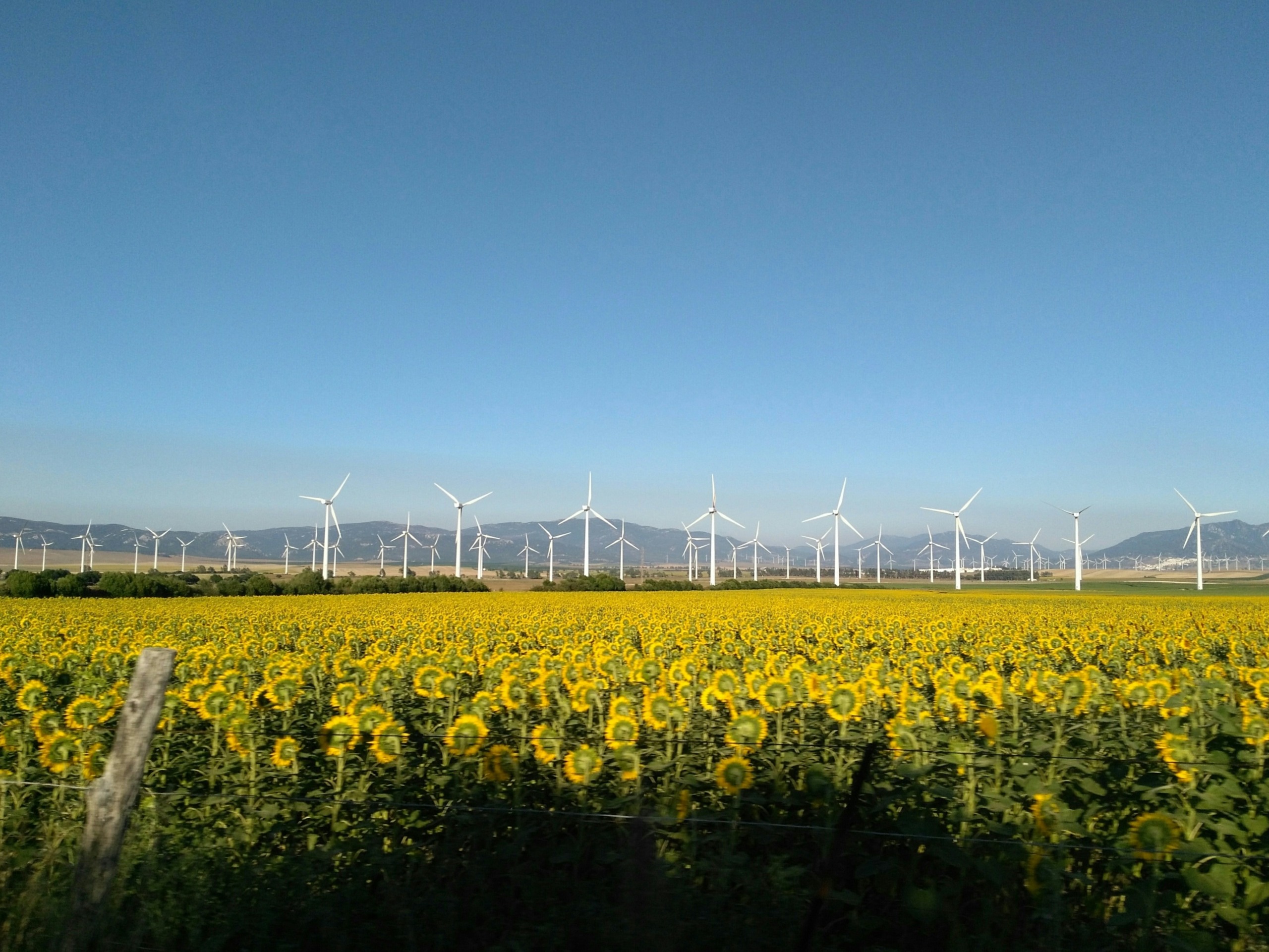
Editor’s Note: The opinions expressed here by the authors are their own, not those of Impakter.com — In the Featured Photo: Wind farm above sunflowers in Spain, Europe’s second-largest generator of wind power. Featured Photo Credit: Johanna Montoya