Impakter
  • Environment
    • Biodiversity
    • Climate Change
    • Circular Economy
    • Energy
  • FINANCE
    • ESG News
    • Sustainable Finance
    • Business
  • TECH
    • Start-up
    • AI & Machine Learning
    • Green Tech
  • Industry News
    • Entertainment
    • Food and Agriculture
    • Health
    • Politics & Foreign Affairs
    • Philanthropy
    • Science
    • Sport
  • Editorial Series
    • SDGs Series
    • Shape Your Future
    • Sustainable Cities
      • Copenhagen
      • San Francisco
      • Seattle
      • Sydney
  • About us
    • Company
    • Team
    • Global Leaders
    • Partners
    • Write for Impakter
    • Contact Us
    • Privacy Policy
No Result
View All Result
Impakter logo
No Result
View All Result
microchip

Netherlands Joins the Microchip War: Is Cutting China Off a Smart Move?

By placing restrictions on microchip manufacturing equipment exports to China, the Dutch have taken the US’ side in the “chip war,” but in curbing one of the world’s biggest importers of chip technology, will they inadvertently destabilize the entire microchip supply chain in turn?

Alice ChapmanbyAlice Chapman
March 16, 2023
in Politics & Foreign Affairs
0

After consistent pressure from the US, the Dutch government has recently put restrictions on their exports of microchip technology to China. 

The Netherlands, home to ASML, is one of the world’s leading suppliers of semiconductors and is a major player in the global microchip supply chain alongside the US, Taiwan, South Korea, Japan and various European countries. 

A semiconductor is a substance that controls the flow of electricity in electronic devices and one of its most popular uses is within the microchips used in computing components. 

Given the ongoing “chip war” between the US and China, the Netherlands has found itself caught in the middle of mounting political tensions between the two countries. 

And the Dutch government’s decision to ramp up restrictions on the exportation of its industry-leading chip technology to China, is a sure sign the country has chosen to side with the US in cutting Beijing off from the microchip supply chain. 

According to Reuters, China has expressed disappointment that the Netherlands are allowing political relationships to affect basic economic trade. 

The US’ main concern is that if China has access to ASML’s state-of-the-art chip technology, they would be able to start manufacturing the highest quality semiconductors in the world. Semiconductors of this standard would enable the development of highly powerful military and artificial intelligence technology. 

The Netherlands’ Foreign Trade Minister, Liesje Schreinemacher, wrote a letter to Dutch lawmakers on Wednesday last week, explaining what the new export regulations would involve. 

“Given the technological developments and geopolitical context, the government has concluded that it is necessary for the (inter)national security to expand the existing export controls on specific manufacturing equipment for semiconductors,” wrote Schreinemacher.

Schreinemacher also stated that the Dutch government’s new regulations are aimed at “preventing Dutch goods from contributing to undesirable end use, such as military deployment or in weapons of mass destruction; preventing undesirable long-term strategic dependencies; and maintaining Dutch technological leadership.”

This is similar to the reasoning the US gave when it created its own regulations on exporting semiconductors to China in October 2022. 

The new restrictions will affect “very specific technologies in the semiconductor production cycle,” stated Schreinemacher.

One of the main technologies that will be restricted are deep ultraviolet (DUV) machines, which are included in ASML’s advanced chip printing portfolios. 


Related Articles: Taiwan: Could China’s War Games Turn Real? | Can China’s Rise To Power Be Peaceful? Here Is What Political Theories Tell Us | China’s Secret Police Are Illegally Operating in 25 Cities Across the World

ASML has confirmed that from now on it will “need to apply for export licenses for shipment of the most advanced immersion DUV systems,” however it has not yet received disclosure as to what “most advanced” specifically means. 

ASML is not expected to be financially affected by these measures. Their Chief Financial Officer, Roger Dassen, reported to Politico early in 2023 that China makes up 18% of the company’s orders. 

These regulations are not something ASML is inexperienced in handling, however, as the company hasn’t had a license to sell another of its technologies, known as extreme ultraviolet light (EUV) technology, to China since 2019.

ASML added, “based on today’s announcement, our expectation of the Dutch government’s licensing policy, and the current market situation, we do not expect these measures to have a material effect on our financial outlook.”

The Netherlands are currently in coalition with 42 countries as part of the Wassenaar Arrangement. 

This agreement covers export controls for technologies and conventional weapons which can be involved with civil and military activities. 

But there’s a problem. Since Russia is also part of this agreement and could easily block the Netherlands’ new proposal, the Dutch government plans to establish its own export regulations which it will allow other European countries to follow suit.

Destabilization of the global microchip supply chain

China is one of the world’s biggest importers of microchip technologies, with experts suggesting that one of the reasons China is currently behind other countries in terms of domestic semiconductor production is that the country lacks “access to critical intangible expertise.”

However, according to the Wall St Journal, China plans to have 31 new chip factories in place by 2024. 

This could be seen as China seeking more manufacturing independence, eliminating reliance on overseas sources which may become problematic if international political tensions continue to rise. 

Although topics such as microchip manufacturing in China may not seem overly relevant to anyone outside of the competing countries in question, experts warn that the losses associated with curbing exports to China could lead to the destabilization of the entire microchip supply chain.

What’s more, the US and the Netherlands’ moves to cut China off from advanced chip technology may inadvertently encourage the country to produce more microchips domestically or possibly even take control of Taiwan’s world-leading semiconductor industry, which could, in turn, result in China taking over the microchip supply chain in the long run, possibly even causing a global recession. 

_____________________________________________________________________________________________

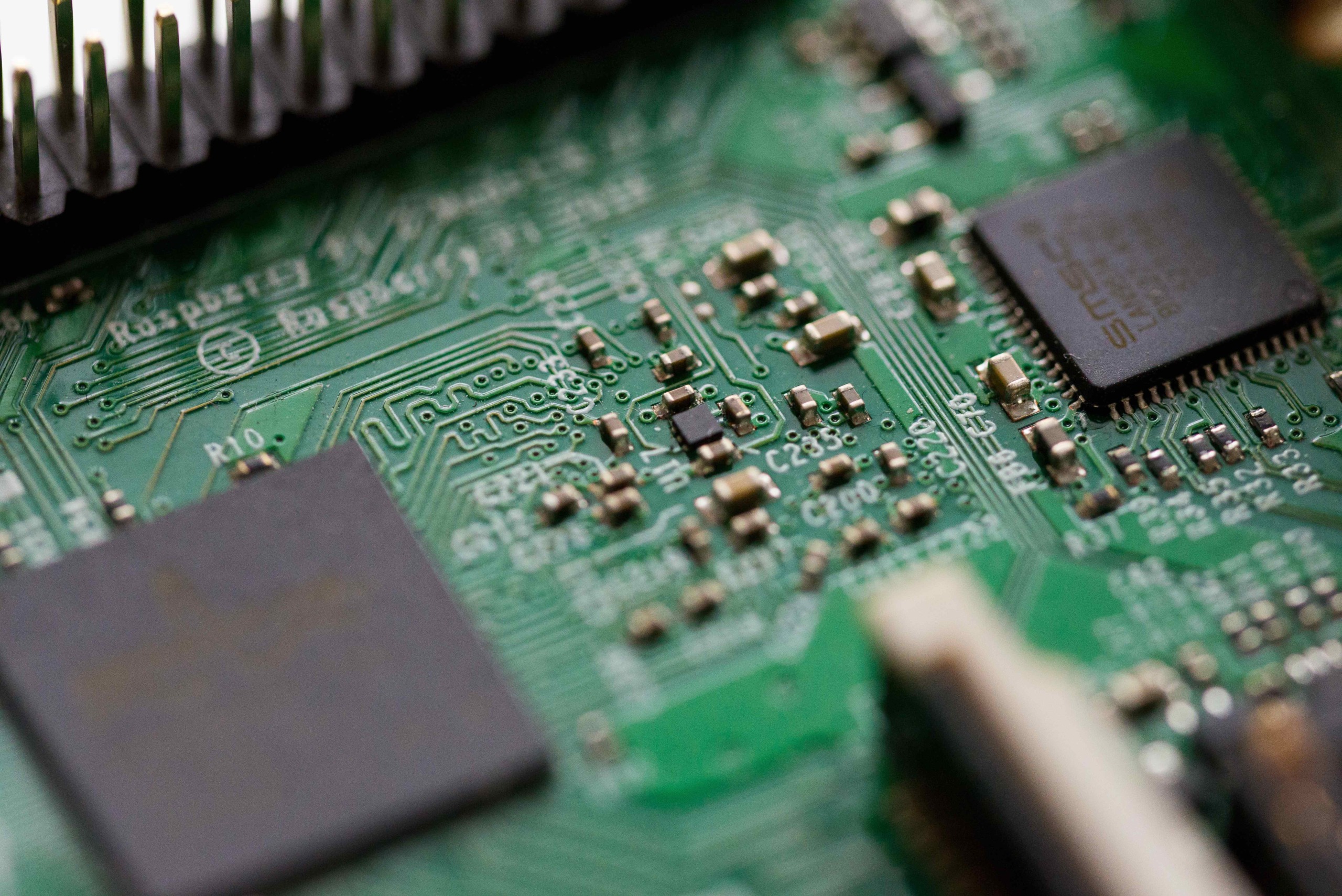
Editor’s Note: The opinions expressed here by the authors are their own, not those of Impakter.com — In the Featured Photo: Computer circuit board. Featured Photo Credit: Chris Ried
Tags: chinachip warexport regulationsexportsInternational Relationsmicrochipssemiconductors
Previous Post

COVID Harms Attitudes to Health by the Public and Lawmakers 

Next Post

How Russia Aims to Stop Moldova’s Pro-Western Path

Related Posts

ESG News regarding U.S. lifting more sanctions on Venezuela, Egypt securing $1.8 billion renewable energy deals, U.S. pushing G7 allies to reduce reliance on China for critical minerals, richest 1% exceeding annual carbon share in just 10 days.
Business

U.S. Considers Lifting More Venezuela Sanctions

Today’s ESG Updates US May Lift Venezuela Sanctions to Boost Oil & IMF Aid: US could ease sanctions to support...

byAnastasiia Barmotina
January 12, 2026
ESG News regarding Trump backing sanctions on Russian oil buyers, Norway’s oil and gas output declining, dog food linked to UK emissions, Trump climate treaty exit facing legal scrutiny
Business

U.S. Targets Russian Oil Buyers with New Sanctions Bill

Today’s ESG Updates Trump Backs Sanctions on Russian Oil Buyers: A bipartisan U.S. bill would impose tariffs of up to...

byAnastasiia Barmotina
January 9, 2026
ESG News regarding Trump’s push for Venezuelan oil, the impact of Venezuelan oil on the environment, Kawasaki’s new liquid hydrogen ship, and China’s new reporting requirements
Business

Trump’s Push For Venezuelan Oil

Today’s ESG Updates Trump Pushes U.S. Firms Toward Venezuelan Oil: Trump is urging hesitant oil executives to invest in Venezuela’s...

bySarah Perras
January 6, 2026
Trump’s ‘Blockade’ of Venezuela: A Dangerous Global Precedent?
Energy

Trump’s ‘Blockade’ of Venezuela: A Dangerous Global Precedent?

U.S. President Donald Trump ordered what he called the "total and complete blockade" of all sanctioned oil ​tankers entering and...

byRichard Seifman - Former World Bank Senior Health Advisor and U.S. Senior Foreign Service Officer
December 25, 2025
US President Donald Trump greets Chinese President Xi Jinping
Politics & Foreign Affairs

A Rivalry Too Entangled to Decouple

The latest US National Security Strategy document released by the Donald Trump administration has attracted the attention of commentators for how...

byDr Manoj Pant - Former Vice-Chancellor of the Indian Institute of Foreign Trade & Visiting Professor at the Shiv Nadar Institution of Eminenceand1 others
December 25, 2025
ESG news regarding UK households navigating lower savings amid tax pressures, EU dairy products facing Chinese provisional duties, new trade deal to boost India-New Zealand commerce, Glencore acquiring majority stake in FincoEnergies
Business

Disposable Income Falls as UK Interest Rates Drop

Today’s ESG Updates UK Disposable Income Falls: Higher taxes reduce incomes as the saving ratio falls to 9.5% and real...

byAnastasiia Barmotina
December 23, 2025
ESG News regarding increased grid stress slowing growth, US demanding exemption from EU emissions law, Google invests in solar in Malaysia, China reduces fossil fuel output
Business

Increased Grid Stress Threatens Economic Growth

Today’s ESG Updates Grid Bottlenecks Threaten Growth: Increased electricity demand from AI, EVs, and electrification is straining power grids and...

bySarah Perras
December 15, 2025
ESG News regarding Germany’s fast-tracking of infrastructure, rollback of the heating law, digital-only approval reforms, and revised building emissions policy ahead of 2026 elections
Business

Germany Moves to Fast-Track Infrastructure, Retreats From Heating Law

Today’s ESG Updates Germany Overhauls Climate Rules: Germany moves to fast-track major infrastructure projects while replacing its contested heating law...

byJana Deghidy
December 11, 2025
Next Post
How Russia Aims to Stop Moldova’s Pro-Western Path

How Russia Aims to Stop Moldova’s Pro-Western Path

Recent News

ESG News regarding U.S. lifting more sanctions on Venezuela, Egypt securing $1.8 billion renewable energy deals, U.S. pushing G7 allies to reduce reliance on China for critical minerals, richest 1% exceeding annual carbon share in just 10 days.

U.S. Considers Lifting More Venezuela Sanctions

January 12, 2026
Full-Cycle Engineer at work

Why Full-Cycle Engineering Is Becoming Critical for Sustainable Innovation

January 11, 2026
Trump’s Foreign Policy - Credit: Gemini prompt

Trump’s Foreign Policy: The Art Of The Coup

January 11, 2026
  • ESG News
  • Sustainable Finance
  • Business

© 2025 Impakter.com owned by Klimado GmbH

No Result
View All Result
  • Environment
    • Biodiversity
    • Climate Change
    • Circular Economy
    • Energy
  • FINANCE
    • ESG News
    • Sustainable Finance
    • Business
  • TECH
    • Start-up
    • AI & Machine Learning
    • Green Tech
  • Industry News
    • Entertainment
    • Food and Agriculture
    • Health
    • Politics & Foreign Affairs
    • Philanthropy
    • Science
    • Sport
  • Editorial Series
    • SDGs Series
    • Shape Your Future
    • Sustainable Cities
      • Copenhagen
      • San Francisco
      • Seattle
      • Sydney
  • About us
    • Company
    • Team
    • Global Leaders
    • Partners
    • Write for Impakter
    • Contact Us
    • Privacy Policy

© 2025 Impakter.com owned by Klimado GmbH