Impakter
  • Environment
    • Biodiversity
    • Climate Change
    • Circular Economy
    • Energy
  • FINANCE
    • ESG News
    • Sustainable Finance
    • Business
  • TECH
    • Start-up
    • AI & Machine Learning
    • Green Tech
  • Industry News
    • Entertainment
    • Food and Agriculture
    • Health
    • Politics & Foreign Affairs
    • Philanthropy
    • Science
    • Sport
  • Editorial Series
    • SDGs Series
    • Shape Your Future
    • Sustainable Cities
      • Copenhagen
      • San Francisco
      • Seattle
      • Sydney
  • About us
    • Company
    • Team
    • Global Leaders
    • Partners
    • Write for Impakter
    • Contact Us
    • Privacy Policy
No Result
View All Result
Impakter logo
No Result
View All Result
Nature Risks are Financial Risks

Nature Risks are Financial Risks

Giulietta Duyck - Senior Manager International Policy at WWF SwitzerlandbyGiulietta Duyck - Senior Manager International Policy at WWF Switzerland
November 25, 2019
in Business, Corporations, Environment, Health, Science, Tech
0

Despite the growing understanding that the urgency of biodiversity loss demands urgent global action, not enough has been done to reverse this trend. Global wildlife populations have declined on average by 60 percent in the past 40 years, largely due to threats and pressures induced by human activities.

About the Author: The charitable WWF Switzerland Foundation is the largest environmental organization in Switzerland. As part of WWF’s global network, WWF Switzerland is committed to national and international projects. For more info please visit their: site


The direct effects of biodiversity loss on the real economy are rising into the billions, roughly US$ 400 billion of global crop output are at risk due to bees and other pollinators loss (IPBES, 2019), or the overexploitation of fishing resources leads to US$ 50 billion shortfall each year. Generally, land-based ecosystem services worth around US$ 50 billion each year. If this trend continues, the associated cost of inaction could rise up to the equivalent of 7% of GDP by 2050.

Looking from the opportunity-side: the global economy profits from USD 125 trillion worth of ecosystem services through drinkable water, food and pollination, fresh air, heat absorption, and forests & oceans that soak up carbon dioxide – the equivalent of 1.5 times the global GDP. While impacts and dependencies of many economic sectors on biodiversity are mostly understood, the financial sector has not been responsive yet to the risks arising from biodiversity loss.  


Visit the WWF & University of Hamburg Sustainable Finance report: Nature Risks Equal Financial Risks: A Systematic Literature Review

Fortunately, some actors have understood, that there are more risks beyond climate change which might negatively impact the financial system. The powerful Network of Central Banks for Greening the Financial System (NGFS) has recognized climate risks as financial risks and further states that beyond climate change, environmental degradation such as biodiversity decline, deforestation, water and air pollution pose equal challenges to the financial system as a whole. 
biodiversity loss
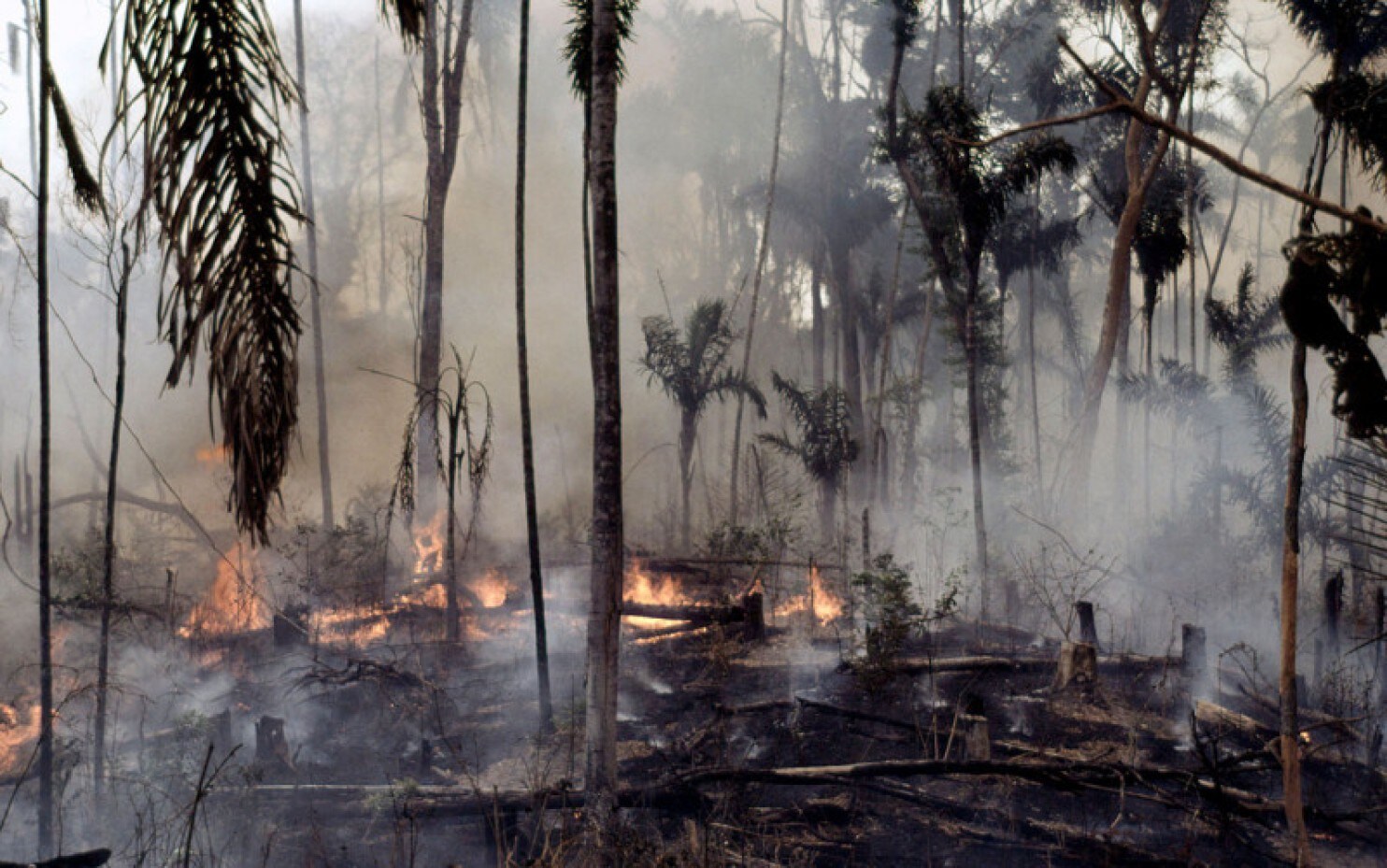
In the photo:Although recent government figures in Brazil show a reduction in the rate of deforestation this year in the Amazon, burning rainforest to create pastureland for ranching and other agricultural activities continues. Amazon, Brazil. Photo credit: © WWF / Mauri Rautkari

Overall, the financial industry is still in its infancy regarding biodiversity loss. Environmental risks are too often confined to climate risks, as the joint report from WWF and AXA “Into the Wild: integrating nature into investment strategies” highlighted in May, 2019. It is in this context that WWF Switzerland mandated the University of Hamburg to provide an overview to what extent biodiversity loss and ecosystem degradation impact financial institutions.   

Upon reviewing more than 150 scientific articles, the researchers similarly identify other nature risks such as droughts, erosion, invasive species, air pollution, contamination of water bodies and soil as events with negative effects generally on real estate, stock market as well as banking. The articles indicate that, on the whole, nature risks indeed translate to financial risks and result in a decline in property prices and stock prices (market valuation) as well as bank defaults, among other effects.  

The OECD estimates that the costs of nature loss to the global economy, including the financial sector, are bound to increase. While current academic research on nature risks and financial risks are still at an early stage, there is growing recognition that there is a high price tag coming with the unsustainable practices our economy is operating in and the risks of loss and default that emerge for financial institutions.

WWF, therefore, concludes that it is crucial that a Task Force on Nature Impact Disclosures is established, in which investors, policymakers and other stakeholders collaborate to define how financial risks arising from nature loss can be reported on and minimized. This would require initial work on defining key impacts indicators on biodiversity.

Governments have a unique opportunity next year at the Biodiversity Conference in Kunming, 2020 to bring in line all financial flows with the sustainable use of ecosystems and conserving biodiversity (introducing an equivalent of the Paris Agreement article 2.1c) for biodiversity). Additional research is needed to amplify how financial institutions are exposed to nature risks but also what investment opportunities could arise. Finally, better tools and methodologies in the industry are needed to better price nature risks into asset pricing models.
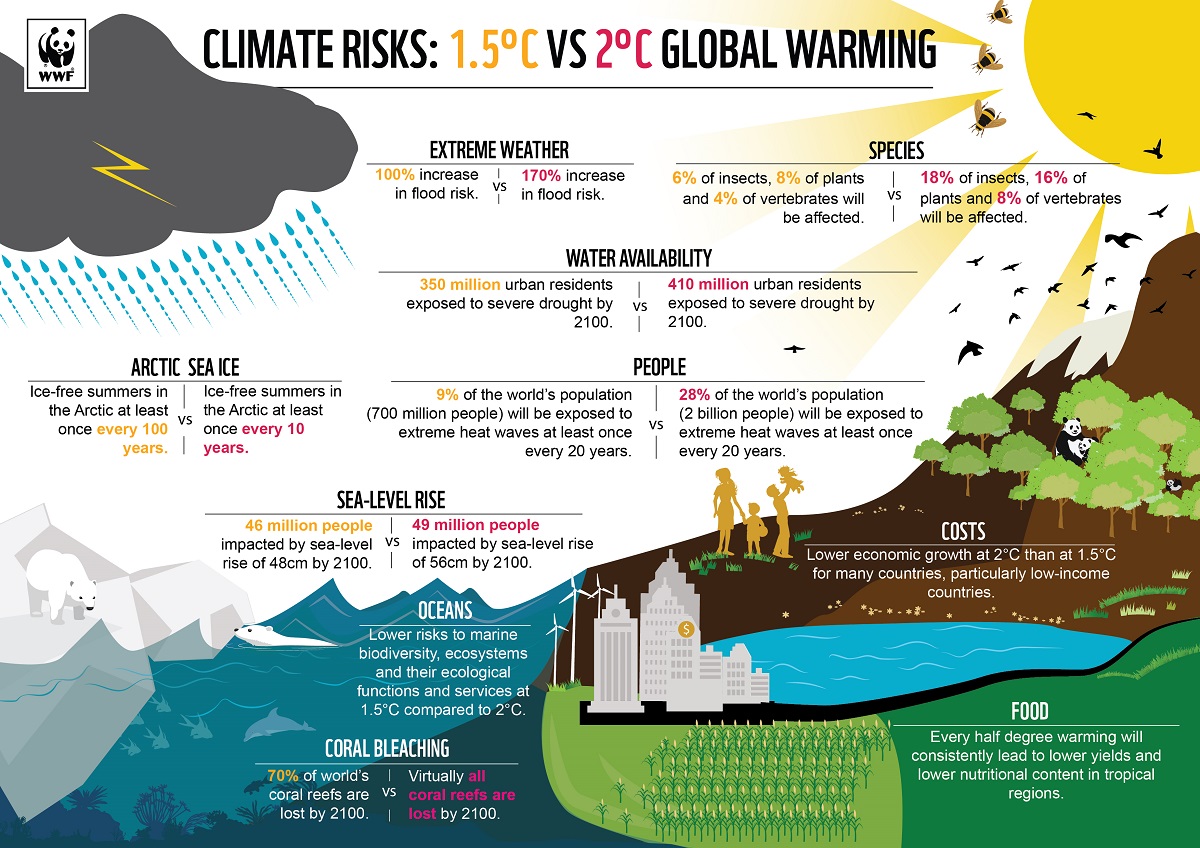
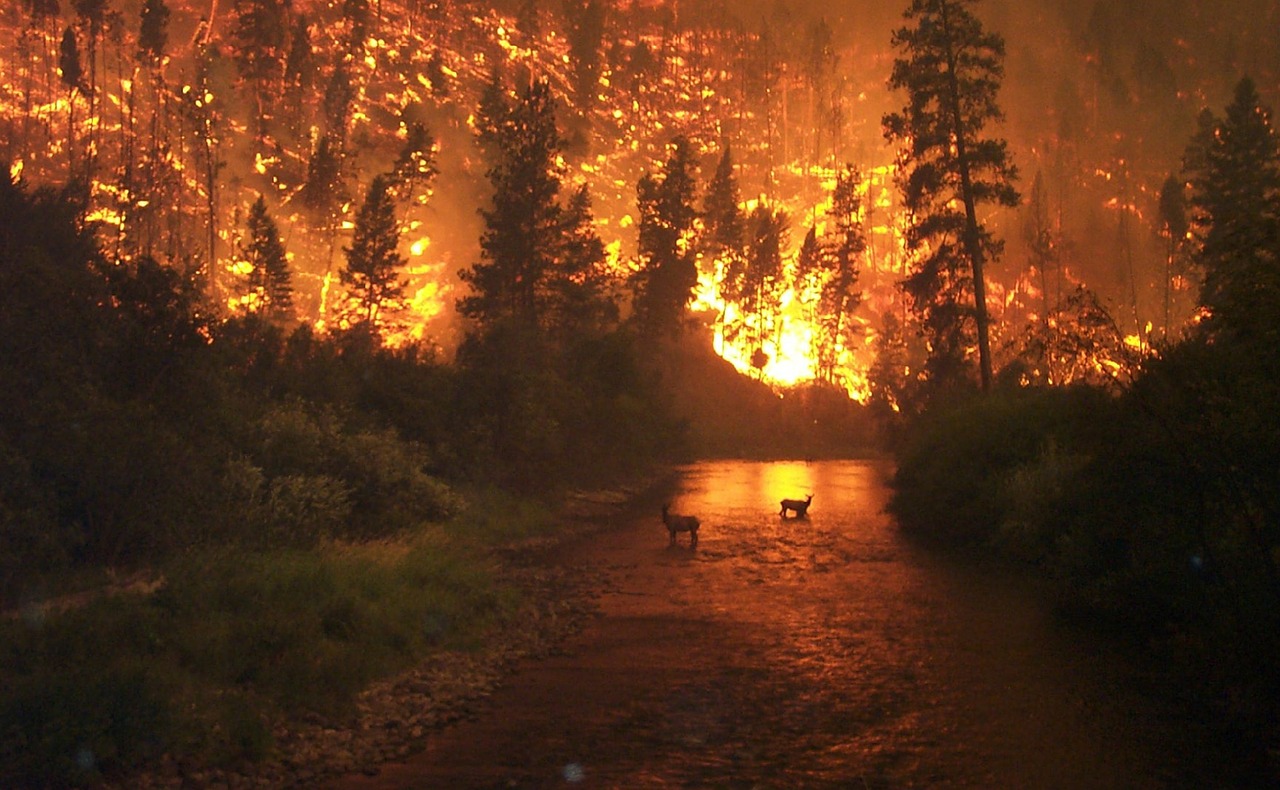
Climate risks and global warming
Difference between climate risk and global warming

EDITOR’S NOTE: The opinions expressed here by Impakter.com columnists are their own, not those of Impakter.com – Cover photo: WWF 
Tags: Climate Changefinancial risksnature risks
Previous Post

Human Rights, Technology and Partnerships 

Next Post

Anticipation of futures helps Central America prioritize climate investments

Related Posts

ESG News regarding Flooding in Indonesia; Glencore promises copper production boost; Trump proposes slashing fuel efficiency standards, and Vulcan Energy receives $2.57bn of funding for lithium project
Business

Indonesians Blame Deforestation for Recent Floodings

Today’s ESG Updates: More than 700 Lives Lost in Recent Indonesian Floods: A combination of mass deforestation and heavy rainfall...

byAriq Haidar
December 4, 2025
How a Framework Convention Could Address Climate and Socio-Economic Displacement
Politics & Foreign Affairs

How a Framework Convention Could Address Climate and Socio-Economic Displacement

The unprecedented shift in human (im)mobility has seen over 120 million forced to flee their homes due to war, violence,...

byDr. Shepherd Mutsvara - Research Fellow at the University of Münster, Germany
December 3, 2025
fossil fuel subsidies
Business

How G20 Nations Can Make Progress After the Group Stalls on Fossil Fuel Subsidy Reform

The 2025 G20 Leaders’ Summit in South Africa sent mixed signals on climate action. In this year’s Leaders’ Declaration, climate change...

byInternational Institute for Sustainable Development (IISD)
November 28, 2025
Animal Health
Biodiversity

Better Animal Health Is the Low-Risk, High-Reward Climate Investment We Need

Imagine if there was a way to reduce emissions from the meat, egg and dairy sector by nearly a quarter,...

byCarel du Marchie Sarvaas
November 26, 2025
ESG news covering the EU’s delay of deforestation rules, rising U.S. housing risks from climate impacts, IFC’s $100M clean-energy investment in emerging markets, and ABN AMRO’s appointment of a new Chief Sustainability Officer.
Business

EU Delays Deforestation Regulation Again

Today’s ESG Updates EU Delays Deforestation Law: Europe postpones the EUDR by one year and loosens compliance rules, raising concerns...

byEge Can Alparslan
November 21, 2025
COP30: Countries’ Climate Agrifood Ambitions Undermined by Funding Gaps, Report Finds
Biodiversity

COP30: Countries’ Climate Agrifood Ambitions Undermined by Funding Gaps, Report Finds

Developing countries recognize the urgent need to adapt agrifood systems to climate change, but most National Adaptation Plans (NAPs) are...

byThe Food and Agriculture Organization of the United Nations (FAO)
November 19, 2025
Encouraging Evidence of Momentum in Negotiations at COP30
Biodiversity

Encouraging Evidence of Momentum in Negotiations at COP30

With the second week of negotiations now underway at COP30, WWF is encouraged by an announcement by the Brazilian Presidency...

byWWF
November 18, 2025
Bill Gates memo
Climate Change

Climate, Gates and COP30

Bill Gates’ recent article on the “three tough truths” of the ongoing environmental changes makes an essential point: we must...

byJosé Graziano da Silva - Former Director-General at FAO, Founder and Director of the Instituto Fome Zero, and Professor Emeritus at the University of Campinas
November 12, 2025
Next Post
Anticipation of futures helps Central America prioritize climate investments

Anticipation of futures helps Central America prioritize climate investments

Recent News

ESG MIcrosoft funds Pantheon for projects aimed at providing climate solutions; Number of Nurses and Health Care workers in a decline in U.K. amid rising racism and regulation changes; Scientists capture human cells being invaded by Influenza; Red Squirrels thriving after re-introduction.

Microsoft Makes an Investment in Startup Pantheon

December 5, 2025
ESG News covering Great British Energy’s 2030 clean-power strategy, UK government investment, nationwide renewable expansion, community energy projects, offshore wind development, and job creation in the energy transition.

Great British Energy Unveils 2030 Clean Power Strategy

December 4, 2025
Crypto Portfolio Margin Access defined

What Is Crypto Portfolio Margin Access?

December 4, 2025
  • ESG News
  • Sustainable Finance
  • Business

© 2025 Impakter.com owned by Klimado GmbH

No Result
View All Result
  • Environment
    • Biodiversity
    • Climate Change
    • Circular Economy
    • Energy
  • FINANCE
    • ESG News
    • Sustainable Finance
    • Business
  • TECH
    • Start-up
    • AI & Machine Learning
    • Green Tech
  • Industry News
    • Entertainment
    • Food and Agriculture
    • Health
    • Politics & Foreign Affairs
    • Philanthropy
    • Science
    • Sport
  • Editorial Series
    • SDGs Series
    • Shape Your Future
    • Sustainable Cities
      • Copenhagen
      • San Francisco
      • Seattle
      • Sydney
  • About us
    • Company
    • Team
    • Global Leaders
    • Partners
    • Write for Impakter
    • Contact Us
    • Privacy Policy

© 2025 Impakter.com owned by Klimado GmbH