Recent days have seen a dramatic escalation of tensions on NATO’s eastern flank, with two member states invoking Article 4 of the North Atlantic Treaty in response to separate incursions by Russian military aircraft.
In the night between September 9 and 10, Russia sent 19 drones over the sky in Poland, in a brazen act of defiance towards Eastern Sentry, NATO’s new defence mechanism deployed on Europe’s eastern flank.
Right after the drones flew into the Polish airspace, NATO air defences were immediately activated: Polish F-16s, Dutch F-35s, Italian AWACS, NATO tanker aircraft, and German Patriot systems all engaged. The drones were intercepted without casualties, but the act was seen as reckless and dangerous. NATO members denounced it as a provocation as well as a clear test of NATO defense readiness.
Then, a few days later, on September 19, there was a new incursion over another NATO country’s airspace, Estonia, reinforcing this sense of threat.
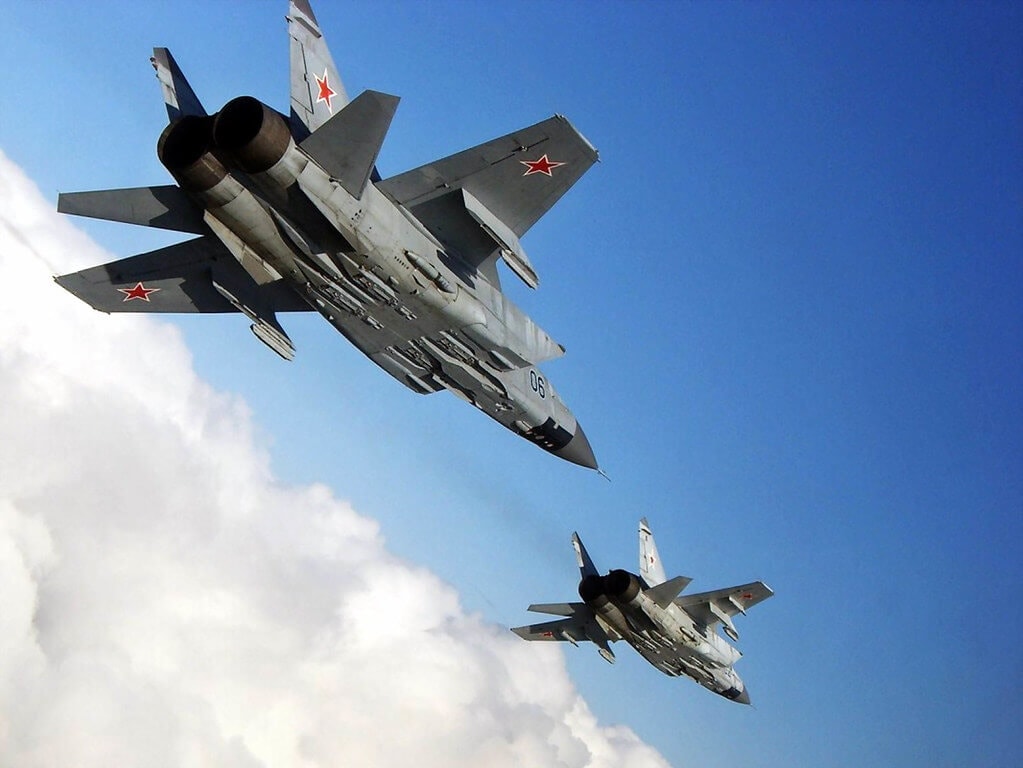
This time, it wasn’t drones but three Russian MiG-31 fighter jets that violated its airspace for nearly 12 minutes. Italian F-35 rose to meet them and eventually the Russian planes desisted and turned around.
This event caused Estonia to trigger Article 4, which allows a NATO member to request consultations among the alliance if it believes its territorial integrity, political independence, or security is threatened. Estonia, however, did not trigger Article 5, NATO’s collective defense clause, despite repeated violations by Russian jets and drones, not only in Poland and Estonia, but also in Romania, on September 13, when a Russian drone violated its airspace for 50 minutes in the course of an attack on Ukraine.
Spotlight: NATO Article 4 – Poland and Estonia
Poland’s relationship with Article 4
- March 3, 2014: Poland requested Article 4 consultations following Russia’s aggressive actions against Ukraine, specifically the annexation of Crimea.
- February 24, 2022: Poland, along with seven other NATO allies (Bulgaria, Czechia, Estonia, Latvia, Lithuania, Romania, and Slovakia), triggered Article 4 in response to Russia’s full-scale invasion of Ukraine.
- September 10, 2025: Poland invoked Article 4 after multiple Russian drones violated its airspace during a large-scale aerial attack on Ukraine. Polish and Dutch fighter jets shot down some of the drones.
Estonia’s relationship with Article 4
- February 24, 2022: On the day of Russia’s full-scale invasion of Ukraine, Estonia, along with Poland and six other NATO allies on the eastern flank, jointly triggered Article 4. This move was a sign of immediate and unified concern about the security threat posed by Russia’s actions.
- September 19, 2025: Estonia invoked Article 4 after three Russian MiG-31 fighter jets violated its airspace for nearly 12 minutes.
The NATO meeting is scheduled for tomorrow, Tuesday, September 23, in Brussels.
The reactions so far
Moscow has not explicitly denied that its drones were sent into Poland, but said that it had no targets in the country.
Estonia’s Prime Minister, Kristen Michal, said on X:
This morning, 3 Russian Mig-31 fighter jets entered Estonian airspace.
NATO fighters responded and the Russian planes were forced to flee.
Such violation is totally unacceptable. The Government of Estonia has decided to request NATO Article 4 consultations.
— Kristen Michal (@KristenMichalPM) September 19, 2025
Russia’s Ministry of Defense immediately issued a flat-out denial, claiming the fighter jets were on a “scheduled flight” from Karelia to the Kaliningrad region and that the flight was conducted “in strict compliance with international airspace regulations.”
The Kremlin’s spokesman, Dmitry Peskov, later reiterated this position, calling Estonia’s accusations:
“Empty, unfounded, and a continuation of the country’s utterly unstoppable policy of escalating tensions.”
In contrast to Russia’s denial, Estonia stated that it had “irrefutable evidence” of the incursion, including radar and visual confirmations, and that the Russian planes flew without transponders or flight plans.
Following the incursion over Poland, Donald Tusk warned that Poland was the closest it has ever been to an “open conflict” in over 70 years.
NATO comments promptly followed with General Alexus G. Grynkewich, Supreme Allied Commander Europe, declaring:
“The violation of Poland’s airspace earlier this week is not an isolated incident and impacts more than just Poland,”.
On September 12, 2025, NATO’s reaction to Moscow’s provocation was laid out by NATO Secretary General Mark Rutte and Supreme Allied Commander Europe (SACEUR) General Alexus G. Grynkewich on September 12th in a joint press conference in Mons, Belgium.
The UK Royal Air Force announced it would provide Warsaw with extra air cover with the use of two Typhoons.
The UK Defence Secretary, John Healey, commented on the operation by stating that:
“a clear signal: Nato airspace will be defended”.
President Trump’s initial reaction was more cautious than his European counterparts, as he stated he was awaiting a briefing and warned that the situation:
“Could be big trouble.”
He later affirmed that the United States “would” defend the Baltic states. These two events have underscored the escalating threat and raised questions about a unified response among NATO members.
Klimado – Navigating climate complexity just got easier. Klimado provides a user-friendly platform for tracking local and global environmental shifts, making it a vital tool for climate-aware individuals and organizations.
Launch of operation Eastern Sentry
NATO’s reaction was fast and clear: Operation Eastern Sentry was launched on September 12, 2025.
The official announcement was made during a joint press conference with NATO Secretary-General Mark Rutte and Supreme Allied Commander Europe (SACEUR) General Alexus G. Grynkewich.
Focus is on strengthening NATO’s air defense along its eastern flank, making it more agile and responsive to threats like those posed by drones and fighter jets.
The Allied Command Operations (ACO) is in charge of executing Eastern Sentry along NATO’s Eastern flank.
Denmark will contribute two F-16s and an anti-air warfare frigate, France will contribute three Rafales, and Germany will contribute four Eurofighters. Other contributing countries include Italy, the U.K, Spain, Sweden, the Netherlands and Czech Republic.
Operations are carried out in coordination with the Allied Command Transformation (ACT) as well as the Baltic Sentry.

NATO’s upcoming meeting
On September 23, 2025, the NATO members will gather in Brussels to receive an overview from Poland and Estonia on the airspace violation or alleged violation by Russia.
It is expected that NATO will put forward a resolution that focuses on the nature of Moscow’s activities around the NATO Eastern border, how the newly introduced Eastern Sentry is being tested, or not, whether it was a provocation, and how to respond. We have to take note that Article 4 has been triggered 9 times, while Article 5 only once, in the aftermath of 9/11.
Taking those facts into consideration, we can assume, with a fair degree of certainty, that no escalation will occur. The outcome of the NATO resolution will possibly be a financial package aimed at bolstering the Eastern Sentry with more armaments and drills on the ground. Meanwhile, we can expect a direct retaliation on Russia, which could involve further sanctions aimed at weakening its economy, disrupting its supply chain, and hindering the distribution of its oil and gas to key allies, such as India.
Editor’s Note: The opinions expressed here by the authors are their own, not those of impakter.com — In the Cover Photo: Mikoyan MiG-31 (Russian: Микоян МиГ-31; Cover Photo Credit: NATO reporting name: Foxhound)