Maui is losing the people who have been there longest and gaining people who have not.
Two crowds crossed Maui last year. One outnumbered the other, and what reached the census was the difference: just over 160,500 residents, roughly 1% fewer than before.
Nobody is really disappearing here. The island is being handed over. Out go families with generations behind them, Native Hawaiians included. In come the replacements.
Statewide, no county lost more residents.
The islands account for something like 310,000 Native Hawaiians. Beyond them, spread across the continent, sit another 370,000 or thereabouts. Whichever side was larger reversed somewhere around 2021. The squeeze that caused it had been tightening for years. This was not anyone’s preference. Households did the sums. The answer was leave.
The Housing Crisis Driving Displacement
2025 brought some relief. Prices stopped climbing. Incomes rose. Mortgage rates fell. None of it moved the needle much.
A million dollars is not unusual on parts of Maui and Oahu, though what it buys swings hard by street and by structure. Across the state, more than $850,000 is what half of sold homes fetch. Maui prices out above that state number. Set any of it against what a median household earns and the gap does not close. A longer mortgage will not bridge it. Nor will more money down. The sums fail before they start.
Then came August 2023. The Lahaina fire killed 102 people and destroyed housing for 6,200 families. The fire exposed something that was already true. A large share of Lahaina had stopped being housing and become short-term rental stock.
The Council for Native Hawaiian Advancement estimates that at least 1,500 households have left since. That is a quarter of everyone who lost a home.
After the fires the rental market moved fast. Asking rents ran more than 50% above what they had been. Jobs went the other way, because the businesses that burned were also the ones doing the hiring.
Leaving is not free either. A household has to get its contents across an ocean, and the quote for that lands while the family is already short. Some sell nearly everything and fly out with suitcases. Most do it in stages. A family sells up, moves to Oahu or the Big Island, tries for a year or two, then goes to the mainland when that does not work either. Wailea Movers runs both legs of that route, island to island and island to mainland, which is what the two-stage departure looks like in practice.
Las Vegas and Seattle come up again and again. So does Sacramento.
Maui’s housing problem is also a question of community resilience. The 2023 wildfires destroyed more than 5,500 housing units in Lahaina, and by early 2026, 57% of fire-damaged lots still showed no rebuilding permit activity. At the same time, Maui had approximately 11,000 active vacation rentals in 2025, equivalent to 15% of the county’s housing stock. The county’s Bill 9 seeks to return roughly 7,000 apartment-zoned vacation rentals to residential use, potentially expanding the long-term housing stock substantially if the policy survives legal challenges.
Who Replaces the Displaced
The total barely moves. That is the part people misread. A population holding flat while thousands leave means thousands are also arriving, and the arrivals tend to have money. Second homes. Retirement properties. Their money comes from somewhere else, so local prices were never a constraint.
Census figures put Lahaina’s owner-occupancy at 50%. The other half is rentals, second homes and vacation stock.
None of this started with the fire. Hawaii already had the highest cost of living in the country, and it was pushing Native Hawaiian and long-settled families out well before the fire. The fire accelerated something structural.
Researchers call this climate gentrification. A disaster clears people out. People with more money move in and buy what is left.
Maui was set up for it. The fire arrived in a market that had been squeezing people out for a decade. Afterwards, the safer ground got more expensive still.
The offers started arriving quickly. Owners of burned lots reported unsolicited approaches from off-island investors.
The Future of Community Identity
Native Hawaiians and Pacific Islanders are about 10% of Hawaii’s population and 35% of its homeless population.
The gap speaks for itself. The families with the longest claim to the land are the ones most likely to end up with nowhere on it.
The arithmetic behind that is not subtle. Housing takes 40% to 55% of household income for most Hawaii residents, a higher share than any other state. Food costs roughly a third more than it does on the continent. No state pays more for electricity. Run a median household budget through those numbers and it comes up short every month.
The headline number holds steady. Underneath it, the island is changing hands.
Locals go. Mainlanders arrive. One roughly cancels the other, so the count barely moves and the transformation stays invisible in the data. What is being lost is not population. It is the families who have been there longest.
Whose Maui gets built next is the actual question.
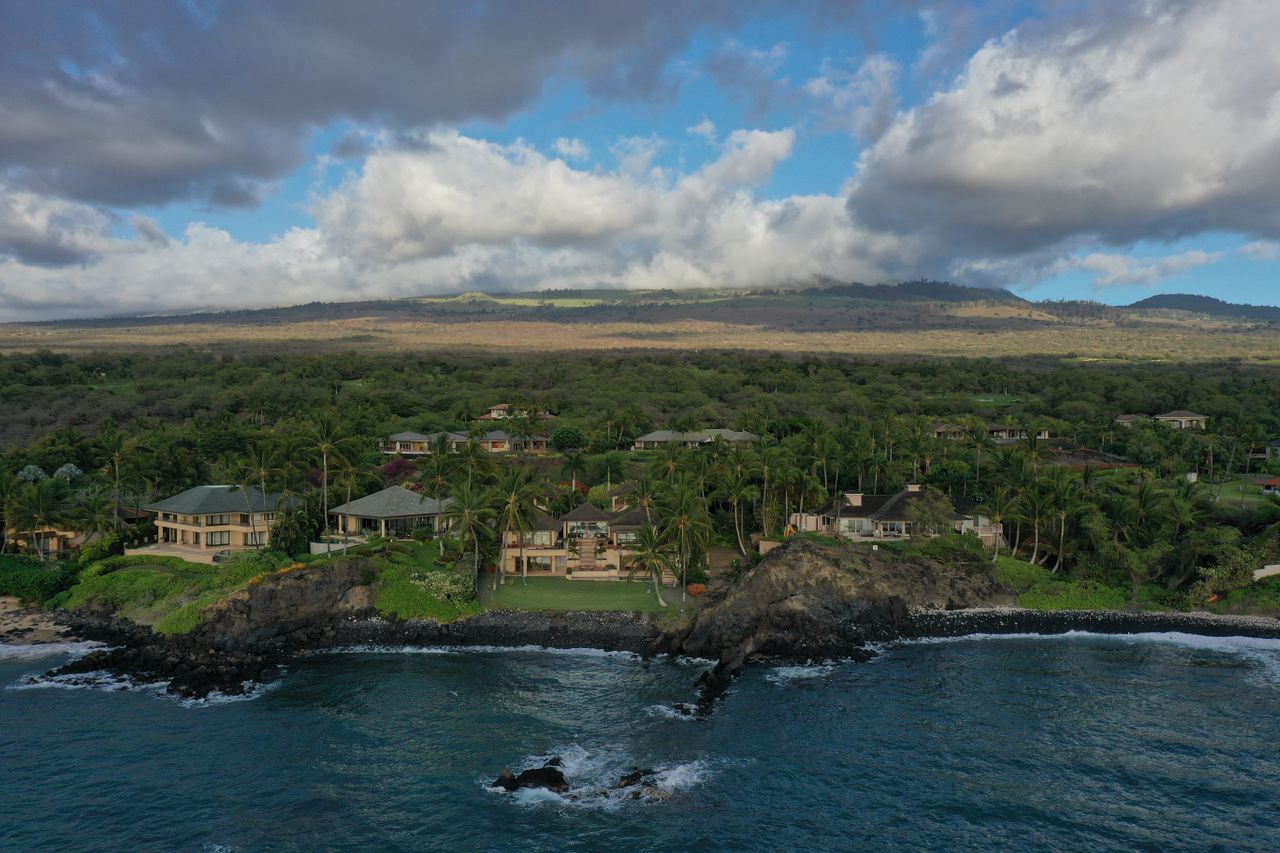
Editor’s Note: The opinions expressed here by the authors are their own, not those of impakter.com — In the Cover: Maui’s population decline comes amid high housing costs, post-wildfire displacement and growing concern over the long-term affordability of island communities.Cover Photo Credit: Katie Cerami