
With colder temperatures approaching, many are already planning their next trip. For holidaymakers, for operators, and increasingly for investors, travel is consistently top of mind. Every destination is competing for attention, and the currency of that competition is spectacle: the untouched shoreline, the impossible view, the site so striking it is simply impossible to scroll past.
But behind the picture-perfect shot sits a harder question, and one the industry now faces with justified scrutiny.
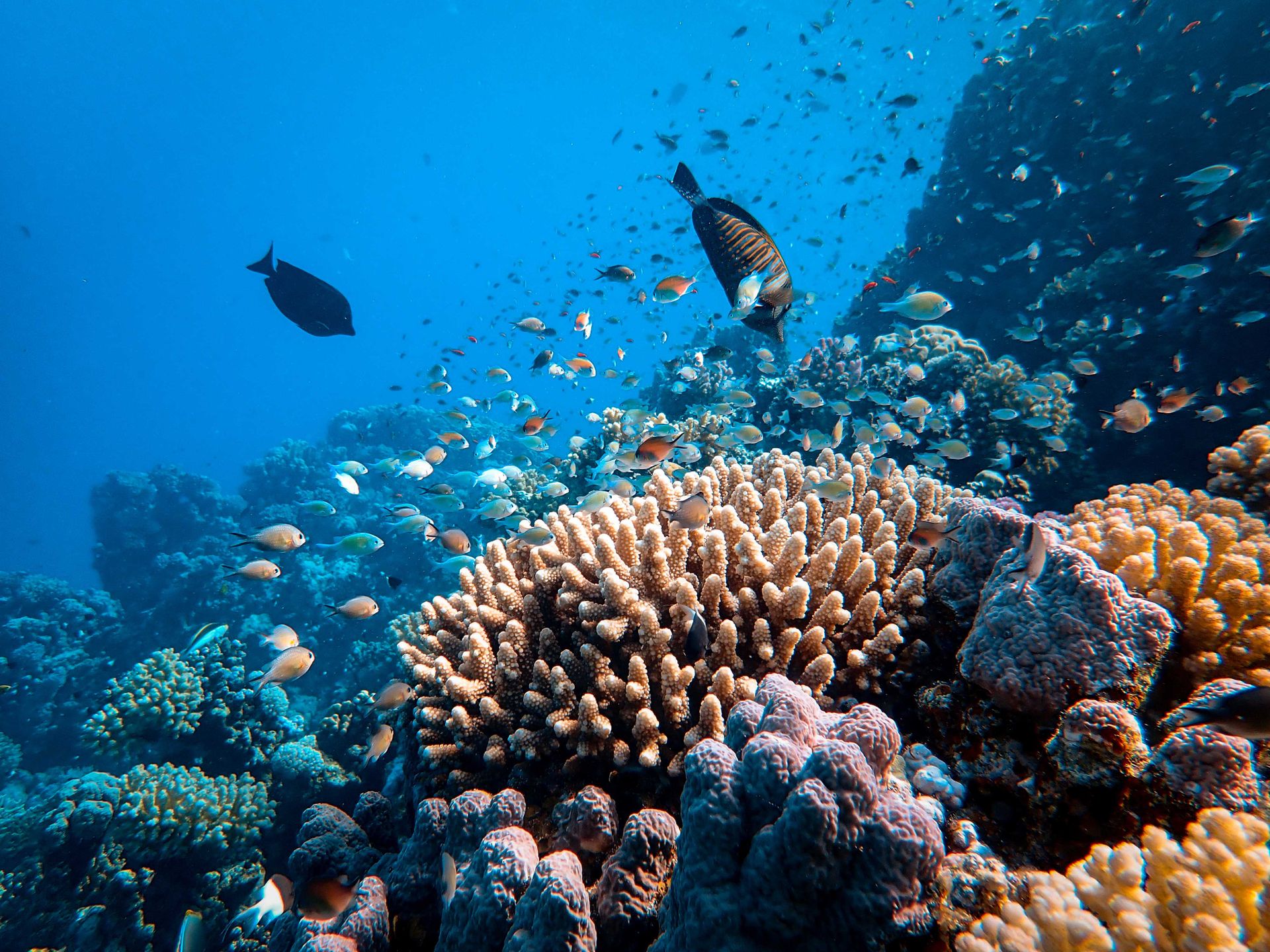
What did it cost to get there? Peak season places real strain on the places we market as pristine: energy and water systems stretched beyond design capacity, fragile habitats encroached upon, coastal and marine ecosystems degraded by the very volume of people who came to admire them. Tourism, done carelessly, consumes the asset it depends on.
The industry’s answer for the past two decades has been sustainability — reduce, offset, minimize, mitigate.
That work matters, and it is not finished. But at Red Sea Global (RSG), we argue that it is no longer sufficient, and that the destinations being built today have an obligation to aim considerably higher.
What is the definition of regenerative tourism?
Sustainable tourism asks how we can visit a place without making it worse. Regenerative tourism asks how we can visit a place and leave it measurably better than we found it.
That distinction is not semantic. Sustainability sets its ambition at neutrality — a net-zero footprint, a do-no-harm standard. Regeneration sets its ambition at net positive: more coral cover than before development, healthier mangrove systems, larger fish biomass, restored seagrass meadows, greater biodiversity and stronger local livelihoods as a direct consequence of tourism activity rather than in spite of it.
Why is luxury the right place to start?
There is an assumption that luxury and environmental responsibility sit in tension — that the premium end of the market is inherently the most extractive. I would argue close to the opposite.
Luxury travel operates at low volume and high margin. That combination is precisely what regeneration requires. Mass tourism’s economics depend on throughput, which makes ecological limits commercially painful.
Luxury’s economics do not.
A destination serving fewer guests at higher value can afford the renewable infrastructure, the marine research programs, the long-horizon restoration work and the deliberately capped occupancy that regeneration demands — and can absorb those costs without compromising its proposition. More than that: scarcity, seclusion and genuine wilderness are what the luxury traveller is actually buying. The environmental case and the commercial case converge. Protecting the ecosystem is protecting the product.
Which is why we believe the premium segment carries a particular responsibility. It has the margin, the control and the incentive to prove that regeneration works at scale — and if it cannot be demonstrated here, it is unlikely to be demonstrated anywhere.
The redefinition of luxury in 2026
As Group Chief Environment and Sustainability Officer, these are the very expectations that shape our everyday decisions at RSG. With nearly two decades spent in environmental leadership, I’ve always believed that protecting and restoring our environment isn’t just a professional obligation, but a personal one. Meeting this growing demand requires an entirely different approach to development, one guided by a core value we operate by: that true luxury cannot exist without a healthy environment to support it.
Take our newly opened resort, Six Senses AMAALA, as an example. Woven into a diverse ecosystem of beaches, mangroves, and desert mountains, the resort’s Longevity Center and Biohacking Recovery Lounge directly answer this global appetite for tech-driven wellness. But the main example is how the resort is physically built around a mangrove lagoon designed to put guests at ease and reconnect them with the natural world.
This is what luxury design can look like when it works with nature instead of against it, and it’s an approach that runs across our wider portfolio. The Red Sea was the first destination in Saudi Arabia to achieve EarthCheck’s Sustainable Destinations certification, while our masterplan holds a LEED Platinum certification with a record-breaking score of 96 out of 110 points. Every operational resort across our portfolio is also LEED Platinum certified. For us, these aren’t just plaques on a wall. They are proof that architecture and ambition don’t need to come at nature’s expense, that the most luxurious design decision is often the one that lets the landscape lead.
Why does regeneration attract capital?
Earning the trust of investors starts with proving the model works.
Smart investors are backing regenerative models from the outset, having realized that investing early saves them the massive time and capital required to retrofit failing assets or face regulatory scrutiny later. At RSG, we have successfully unlocked premium global capital through multi-billion-dollar green loans, including a Saudi Riyal (SAR) 14.12 billion ($3.76 billion) loan and the first-ever riyal-denominated green finance credit facility for the development of The Red Sea, alongside a further SAR 6.5 billion ($1.73 billion) credit facility for AMAALA.
RSG is advancing a regenerative approach to development, using sustainability as the backbone to deliver destinations that enhance the natural environment. By owning our entire end-to-end infrastructure, including a 1,900+ MWh off-grid battery storage system that runs on 100% renewable energy, we insulate our assets from external market and energy volatility. That is a resilience story just as much as it is an environmental one, and it’s exactly why regenerative tourism is becoming a genuine magnet for international capital.
The Saudi advantage
Operating along the northwestern coast of Saudi Arabia means developing in the exact type of untouched, sea-facing locations that both luxury markets and modern tourists are increasingly seeking. When we look at our development of The Red Sea and AMAALA, which covers 268 kilometers of pristine coastline, the goal isn’t just to build luxury resorts, but to prove how destinations of this scale can coexist with a highly sensitive ecosystem.
But that demand comes with a challenge. This summer, we’ve all seen the headlines: record heatwaves scorching some of Europe’s best loved holiday destinations. It’s a reminder that extreme heat is no longer a rare event. It has to be designed for, not just endured.
Related Articles
Here is a list of articles selected by our Editorial Board that have gained significant interest from the public:
This is exactly the challenge we have been preparing for since day one. Our destinations run on sunlight 24/7, powered by over 1.1 million solar panels and one of the world’s largest off-grid battery storage systems. This infrastructure allows us to run district cooling at scale, keeping our guests and communities comfortable without leaning on a fragile, carbon-heavy grid, the same grid currently buckling under pressure elsewhere in the world.
What does this all mean for the sector?
The green economy is now worth roughly $10 trillion, according to the London Stock Exchange Group, and the companies inside it are simply more profitable than their conventional peers. That isn’t a reward for good intentions. It reflects lower energy exposure, fewer stranded assets, and cheaper capital.
The destinations designed now will set the standard for a generation, and retrofitting is always dearer than building correctly. The assets that look overpriced in 2040 will be the ones built to yesterday’s specification today.
Luxury has always been a proving ground. If regeneration becomes the baseline at the top, it won’t stay there.
The most valuable thing a destination can offer isn’t the view. It’s a credible promise that the view will still be there — richer, not diminished — for whoever comes next.
That’s what luxury should mean now.
Editor’s Note: The opinions expressed here by Impakter.com columnists are their own, not those of Impakter.com — Cover Photo Credit: Francesco Ungaro.