Romanian President Klaus Iohannis’s withdrawal paved the way for former Dutch Prime Minister Mark Rutte to be named the next NATO Secretary General. Rutte, a centre-right leader who governed the Netherlands for 14 years, will succeed Jens Stoltenberg, the Norwegian Labour Party leader who has held the position since 2014.
Rutte’s tenure will begin on October 2, amid the ongoing Ukraine conflict and an uncertain United States presidential election on November 5, posing significant challenges and overseeing a critical phase in NATO’s 75-year history.
Rutte’s path to NATO’s top political position has been fraught with challenges.
While his name as a candidate had been circulating for some time, his success largely stems from a compromise he reached in mid-June with one of his staunchest opponents — Hungarian President Viktor Orbán — not to use Hungary’s funds, troops and assets in support of Ukraine.
In the weeks prior, Orbán had threatened to veto any increase in the Alliance’s support for Kyiv unless Hungary received an opt-out option, which Secretary General Stoltenberg granted just days before Rutte secured Budapest’s green light.
While confirming Rutte’s reputation as a consensus-builder, this deal underscores the challenges the new Secretary General will encounter in office.
Deep divisions
Despite the return of the “common enemy,” NATO is grappling with deep divisions, some of which revolve around the new Secretary General. Rutte, backed more or less openly by the US, the UK, France, and Germany, had to overcome not only Orbán’s opposition but also secure support from other key players, such as Turkey, a cornerstone of the southern front, which plays a crucial role in the sensitive Black Sea area.
The Ukraine war remains the most sensitive issue.
As Prime Minister, Rutte maintained a strong pro-Ukraine stance, with the Netherlands actively providing military and humanitarian assistance. As NATO Secretary General, Rutte is expected to continue Stoltenberg’s policies, reaffirming the Alliance’s political, diplomatic and military support for Kyiv.
However, after two-and-a-half years of war, increasing Western involvement, and the economic deterioration due to anti-Russia sanctions, public support for Ukraine is waning.
Polls indicate a steady decline in support, and there is a tangible risk of US disengagement if Donald Trump wins the US election.
Poland, another staunch supporter of Ukraine, warmly greeted Rutte’s appointment. The former Dutch Prime Minister is also viewed favourably by the Baltic republics. Previously, Estonia, Latvia and Lithuania advocated for greater involvement in NATO’s strategic discussions by having a Secretary General from Central or Eastern Europe, but this suggestion was dismissed by other members fearing heightened tensions with Russia.
Compromise candidate
In light of this resistance, Rutte has emerged as a valuable compromise candidate, particularly given the strong ties the Baltic states maintain with the Netherlands.
The divide between Central and Eastern European countries and the other NATO members is another topic the new Secretary General must address.
Since the Russian invasion of Crimea, the eastern front has gained increasing importance, prompting southern allies to call for a rebalancing of NATO’s focus. Additionally, Russia’s activities in the Middle East and North Africa have heightened awareness of the strategic link connecting the European and the Mediterranean regions.
The challenge will be preserving dialogue among NATO members’ different interests and sometimes competing priorities. Until 2022, the Stoltenberg years highlighted diverging national priorities and growing tensions over contrasting visions of the Alliance’s role.
The defence of Ukraine’s sovereignty provided a new rallying point. This unity has waned, particularly with the rise of populist and nationalist political parties in several Western European countries and the US.
Stoltenberg’s widely praised diplomatic efforts defused many potential crises, but whether his successor can do the same remains uncertain.
Related Articles: NATO’s Human Security Mandate: Why It Should Include Pandemic Prevention, Preparedness, and Response | NATO and Putin’s Nuclear Threats | NATO Summit Ends With Renewed Sense of Purpose
The reasons for contrast are numerous. Despite recurrent pledges including the most recent at the 2023 Vilnius summit, defence expenditure remains heavily unbalanced between the US and Europe and within Europe itself.
Since 2022, increased defence budgets in several European countries have led nearly half of NATO members to reach the target set with the 2014 Defence Investment Pledge, devolving at least 2% of their GDP to the military budget.
However, doubts persist about their long-term commitment and its sustainability. It is also unclear whether a possible new Trump administration will consider these efforts sufficient or reignite the burden-sharing debate, possibly reviving the ex-President’s 2018 call to raise the target to 4%.
The proliferation of NATO tasks makes the issue more critical. With the adoption of the 2022 Strategic Concept, the Atlantic Alliance has expanded its scope into new domains — space and cyber — together with the |traditional” land, sea and air operations.
China influence
Additionally, it has emphasised its global dimension, highlighting the role of partnerships in addressing the challenge posed by China’s growing influence.
While the new agenda has been generally well-received, it has also raised concerns among those who view it as too aligned with the current US interests. Although European institutions have gradually hardened their stance on China, several countries, especially in Central and Eastern Europe, still look at Beijing with favour.
For these countries, NATO’s new global posture is a double-edged concern. It diverts the Alliance’s attention from what they perceive as the most immediate threat posed by Russia and its military power, and strains relations with China, a country they see as a potentially beneficial partner.
Beijing’s tacit support for Moscow’s “special military operation” has somewhat tarnished this view, but only marginally.
Breaking this stalemate will be another challenge for Rutte, who, as Prime Minister, has worked to contain China’s technological advance, siding with the US in restricting Chinese companies’ access to the Dutch TLC market and imposing export licensing requirements to transfer Dutch microchip manufacturing technology to Beijing.
Rutte would become the fourth Dutch politician to hold the NATO Secretary General position, following Dirk Stikker in the early 1960s, Joseph Luns who served the longest from 1971 to 1984, and Jaap de Hoop Scheffer in the second half of the 2000s.
It has been remarked that the member states’ alignment on these figures may hinge on the Netherlands’ ability to represent the many positions existing within the Alliance and craft a balanced posture.
Mark Rutte’s tenure will test this assertion, which began with the Washington Summit, a pivotal moment to assess consensus around his leadership and try to guess where the Atlantic Alliance is heading in the coming years.
**
This article was originally published by 360info™.
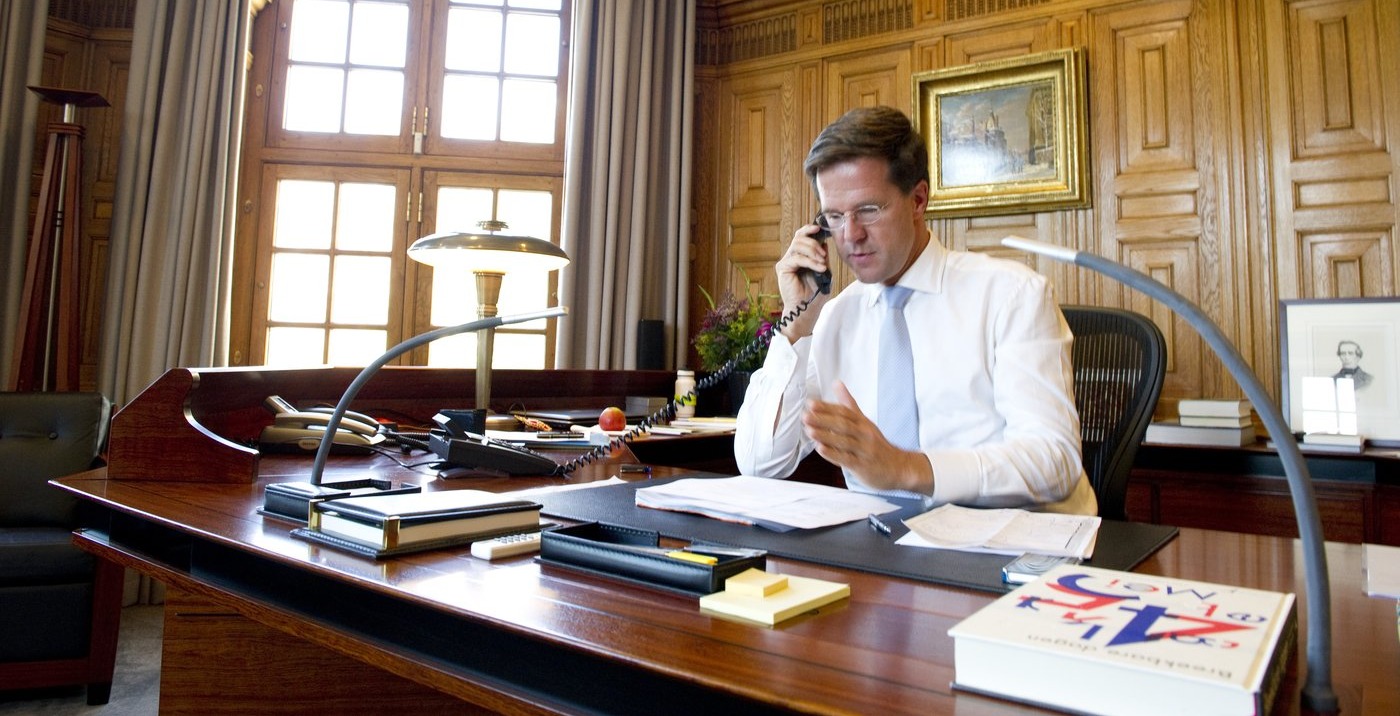
Editor’s Note: The opinions expressed here by the authors are their own, not those of Impakter.com — In the Cover Photo: Dutch Prime Minister Mark Rutte, June 26, 2012. Cover Photo Credit: Minister-president Rutte.