Kyrgyz culture goes back to ancient times. Being part of the Silk Road, it has been influenced by China, Iran, Middle East, Western world and later Russia, thus becoming home to many different ethnic groups and a rich and differentiated culture. Currently there are around 80 ethnic groups, although with the collapse of the Soviet Union the ethnic composition has changed, with many Russians, Ukrainians and Germans returning to their native lands. Ethnic groups from the western part of the Soviet Union relocated to Central Asia, either spontaneously or not. This was part of the effort to develop less populated and underdeveloped areas.
From the religious point of view, Kyrgyzstan is a predominantly Muslim country, with the majority of people being non-denominational. Orthodox Christianity follows Islam as the second biggest religious group. Other Christian denominations are present, but in very small numbers. Overall, the country is very secularized with very low levels of fanaticism, although in recent years religious feelings have been growing, just like everywhere else in the world.
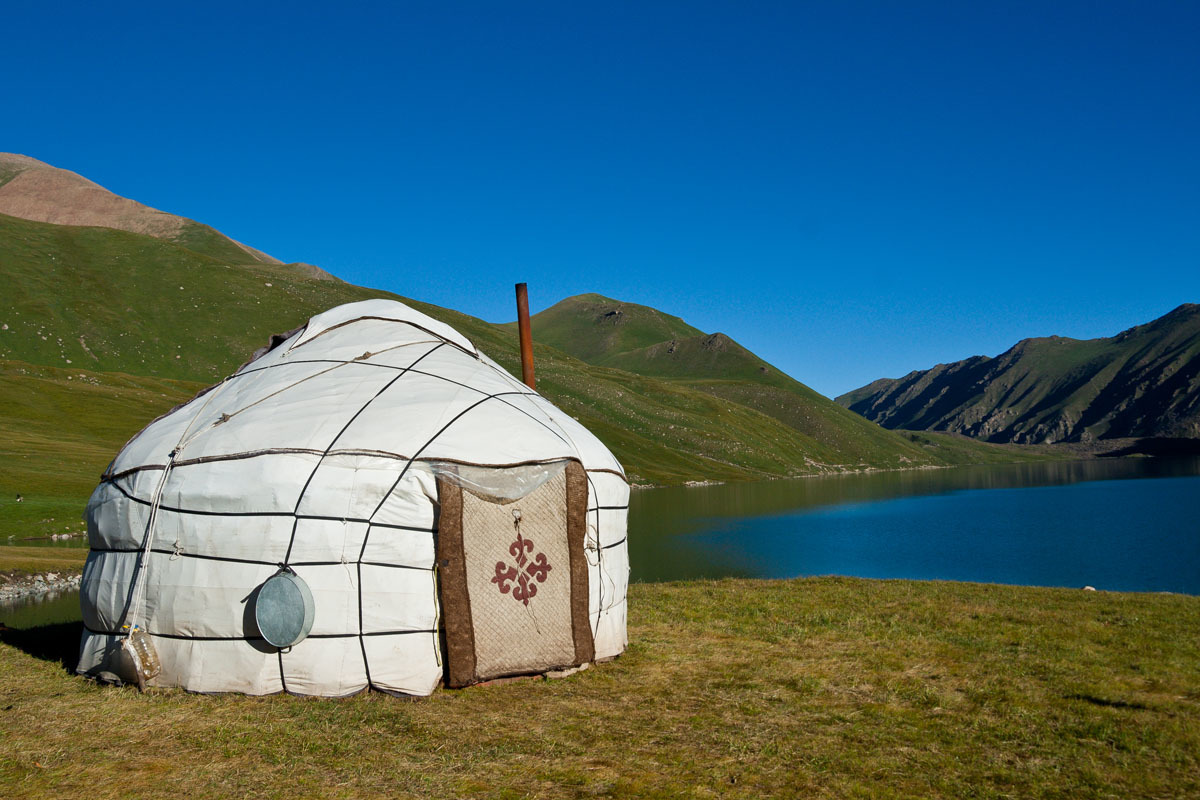
Until 20th century tribal (clans) division existed among Kyrgyz people, and even nowadays some people still hold to this tradition, which shows some differences between people of various regions. For instance, traditions and customs of the southern Kyrgyzstan in Fergana Valley and East Pamir can be different than those in the northern part of the country in Tien Shan area. There are 40 Kyrgyz clans that are symbolized as 40 sunrays on the sun of the Kyrgyz flag. The middle part is called “tunduk”, which symbolizes the crown of the Kyrgyz yurt that is a traditional Kyrgyz portable house made of wooden frames and covered with felt. Up until the time when Kyrgyz people joined Russian Empire they lived in villages that would move to different places from time to time, but during the Soviet Union Kyrgyz people would gradually become sedentary. Now, people of Kyrgyzstan lead a sedentary lifestyle, although some villages still have traditional nomadic habits.
IN THE PHOTO: JETY OGUZ VALLEY. PHOTO CREDIT: FLICKR/XAVI
In Kyrgyz culture, family and marriage have the utmost importance, although nowadays, divorces are very common, especially in the bigger cities. Unfortunately, the tradition of kidnapping a bride in the villages and little towns (less in bigger cities) has also developed, while during Soviet times it was more or less banned. Some historians argue that Kyrgyz people never had such a tradition and it has developed as a way to escape an arranged marriage by creating a “kidnapping” by someone whom a girl might be in love with. Now, such practice became a way for a man to marry someone who has either rejected him, or even someone who is a complete stranger.
Related article: “COUNTRY WEEK: KYRGYZSTAN“
In some cases the kidnapping is consensual and is seen by the couple as a way to save money from the wedding. In Kyrgyzstan wedding ceremonies are an affair of hundreds of people, again showing the importance of family and hospitality. Nevertheless, the statistics of bride kidnapping in Kyrgyzstan is quite high. This problem arises due to the weak legal system and Kyrgyz village traditions, where customary law prevails. However, families in Kyrgyzstan are very much united, always ready to help and support. This unity comes from the tribal system where each clan considered itself as one big family.
Like other nations, Kyrgyz people keep their spiritual culture in traditions and customs as well as in oral and written records. Due to the past nomadic lifestyle not many written records exist, but from one generation to another Kyrgyz people managed to orally pass ethnos and stories. The epic of “Manas” is a trilogy that has a thousand-year history; with a volume that exceeds all known epics in the world, it tells a life-story about Manas, his son Semetei and grandson Seitek, and their heroic deeds. Across the centuries, the epic of “Manas” is sung orally by traditionally male singers know as “manaschi”, who can recite the poem for a very long time without any music accompanying them. The epic of “Manas is a unique product of the spiritual activity of Kyrgyz people.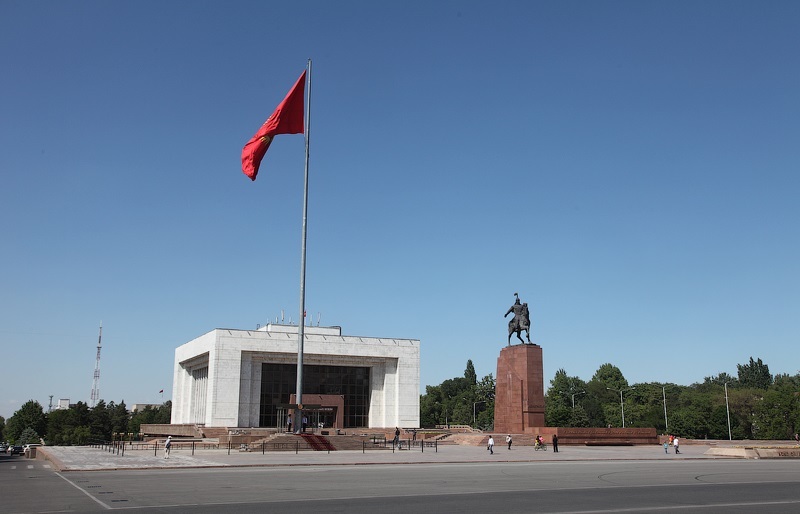
IN THE PHOTO: STATUE OF MANAS AND KYRGYZ FLAG, CENTRAL SQUARE, BISHKEK, KYRGYZSTAN
The Kyrgyz national musical instrument is “Komuz”. “Komuz” is a three-stringed instrument played by plucking and usually held like a guitar. Professional komuz players and singers, known as “Akyn”, can demonstrate their skills by playing komuz while juggling it or even turning it upside down.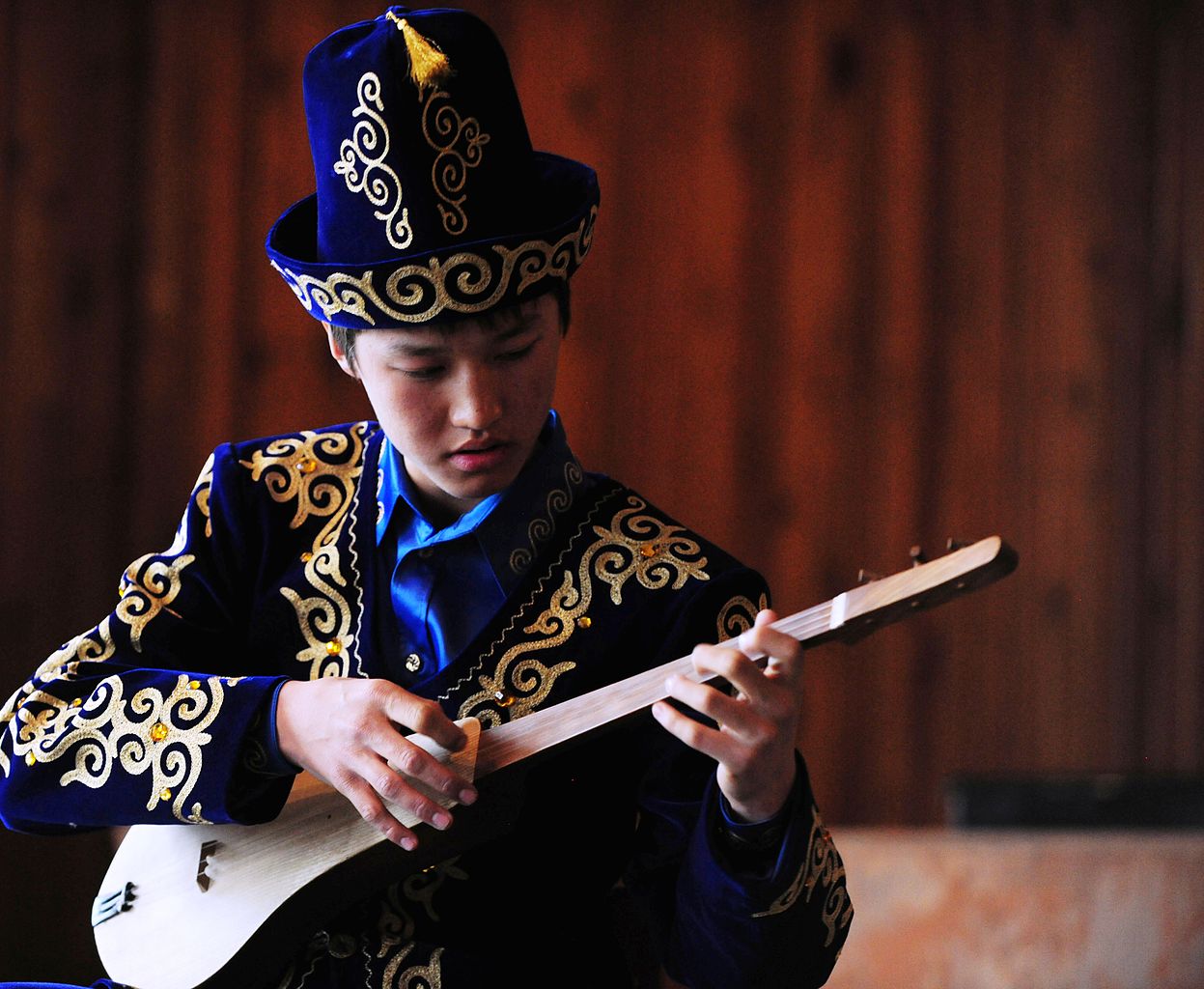
IN THIS PHOTO: KYRGYZ STUDENT IS PLAYING KOMUZ
Kyrgyzstan is also famous for its textile production. Kyrgyz women create amazing hand-made carpets and rugs, called “shyrdak”, bags and even home slippers made of felt. Such carpets and home slippers are perfect for cold winters as they are thick and warm, while bags, in addition to their ethnic and folkloristic design, are also eco-friendly. These goods are very colorful with beautiful traditional Kyrgyz ornament that people very much love to use to decorate their houses, therefore bringing some traditional touch to their homes.
For a full mindmap behind this article with articles, videos, and documents see #culture
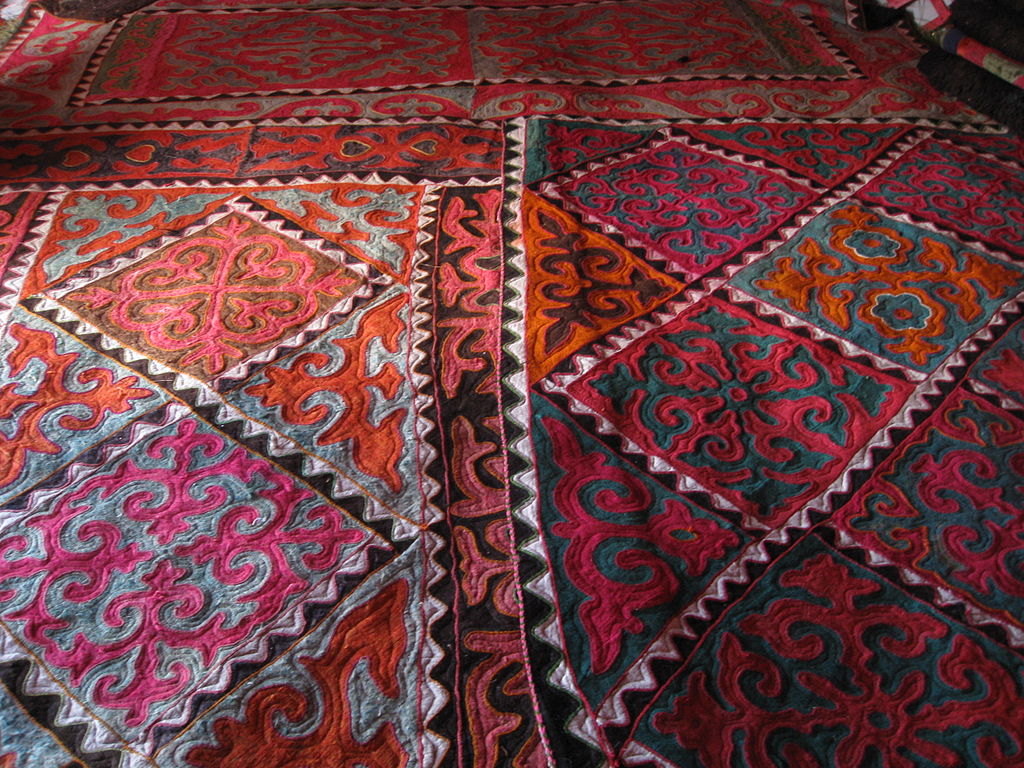
IN THIS PHOTO: KYRGYZ FELT CARPETS. PHOTO CREDIT: FLICKR/PATRICK BARRY
Kyrgyz people have always tried their best to preserve culture and traditions and to pass it to the next generation. Despite the hard times of economic instability Kyrgyzstan and its people understand that in order to spiritually revive our society, a careful attitude toward culture is of great importance.
In Kyrgyzstan, 2016 is declared the Year of Culture and History in order to strengthen and further develop Kyrgyz cultural heritage. Kyrgyz Embassies around the world conduct celebrations to present Kyrgyz culture to other nations.
Recommended reading: “IN PICTURES: THE LAST NOMADIC PEOPLE OF NEPAL – BBC NEWS“
—
Special thanks to the Embassy of the Kyrgyz Republic in India for partially providing info and pictures in this article.