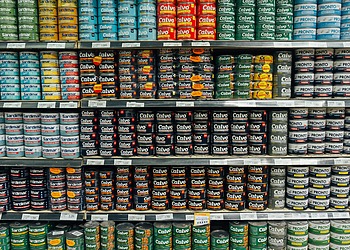
Can we really talk about an Art market? Is it even a market in the traditional sense? Because I’m in the art business, people often walk up to me with questions and statements that appear to betray either misgivings or, as I understand it, misunderstanding of the true nature of the Art market. Talking about the art market is like trying to open a Manzoni can (the famous “Merda d’artista”)
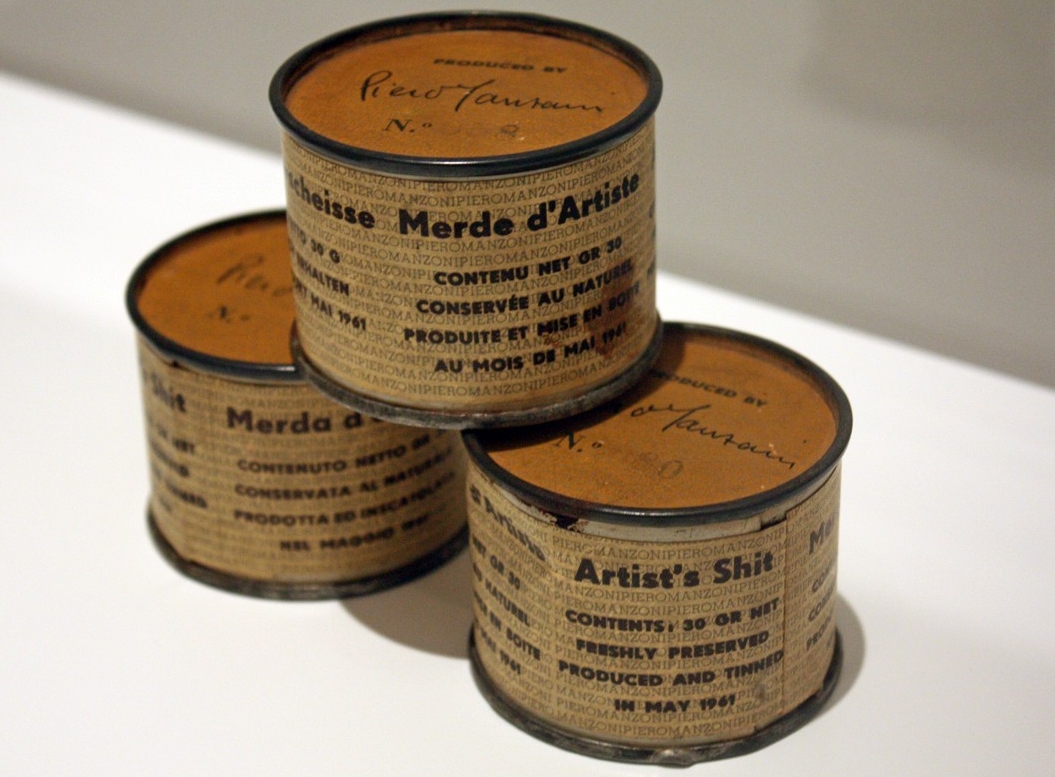 In the photo: Merda di artista by Manzoni
Let’s start with the notion of what constitutes a “market”. At its most basic, a “market” is the meeting point of demand and offer on goods and services supplied – in this case, artwork. Normally, the providers of good and services try to respond as well as they can to consumer needs.
How do you define “needs”? In the 19th century, economists came up with the notion of “utility”: people are willing to spend money in function of how useful a good or service is to them. And how useful this will be depends in turn on where you are situated in the income curve. The poor crave the satisfaction of “basic needs” (food, shelter…) as well as higher needs such as health care and education that allow them access to income-earning jobs.
The wealthy, obviously, go beyond “basic needs”: they want something else, they move to luxury goods. As a result, the supply of luxury goods has nothing to do with the satisfaction of “basic needs” like education or health care; it is based on likes and dislikes, on fashions that come and go, on innovations that become suddenly popular. To predict where the market is going, you no longer have hard facts to go on. You have only unstable, unpredictable and impulsive facts…
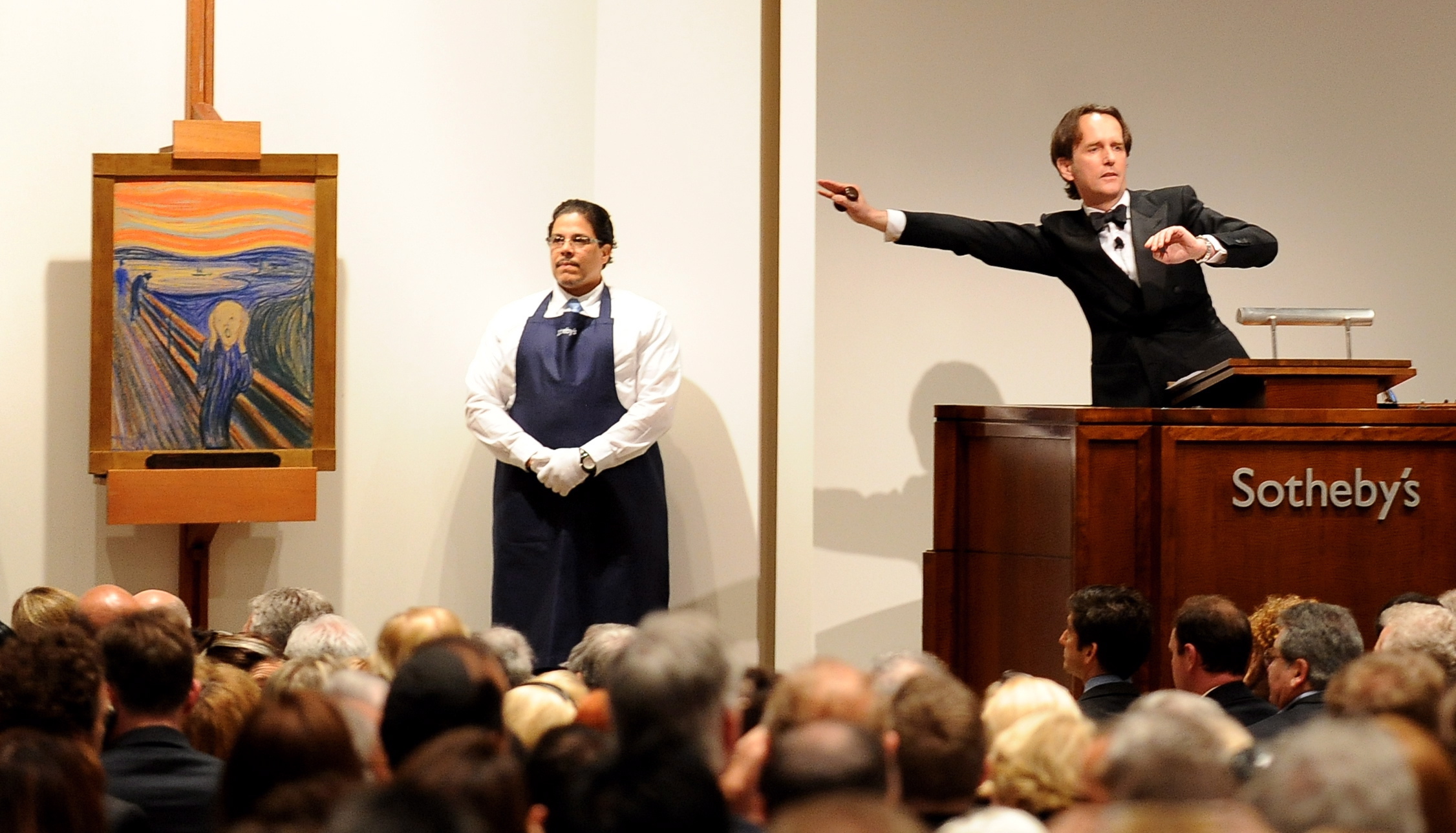 In the photo: Sotheby’s selling the Scream by Munch for $120m – May 2nd 2012, New York
And that is precisely the case of the Art market, the ultimate “luxury goods” market. Art is one of the most extreme forms of luxury, and there is a good reason for this: the Art market is not merely an expression of luxury to satisfy rich people’s whims – it is the highest expression of Culture. It is Culture in the making. There is a transcendental element in the Art market that is found in no other marketplace where goods are exchanged.
Does all this mean that nothing can be said about the Art market, that there is no way to uncover trends, that it is forever unknowable?
Not quite. Consider the Art market structure; it is built in two segments, one that is short-term, the other long-term. Think of it as a two-floor building:
- On the ground floor: this is a short-term market, the exchange of artwork happens often and at a fast pace, there is a high turnover; you have a market driven by a pool of stakeholders trying to play the art market by financial rules with little or no back-up from art experts and specialists, i.e. museum curators, art historians, experts and technicians of the art; for example, the new artists born at the end of the seventies and eighties have reached in less than a few years six figures prices for their work (Parker Ito, Josh Smith, Oscar Murillo, Ethan Cook). Here the investment ethos trumps the love for Art.
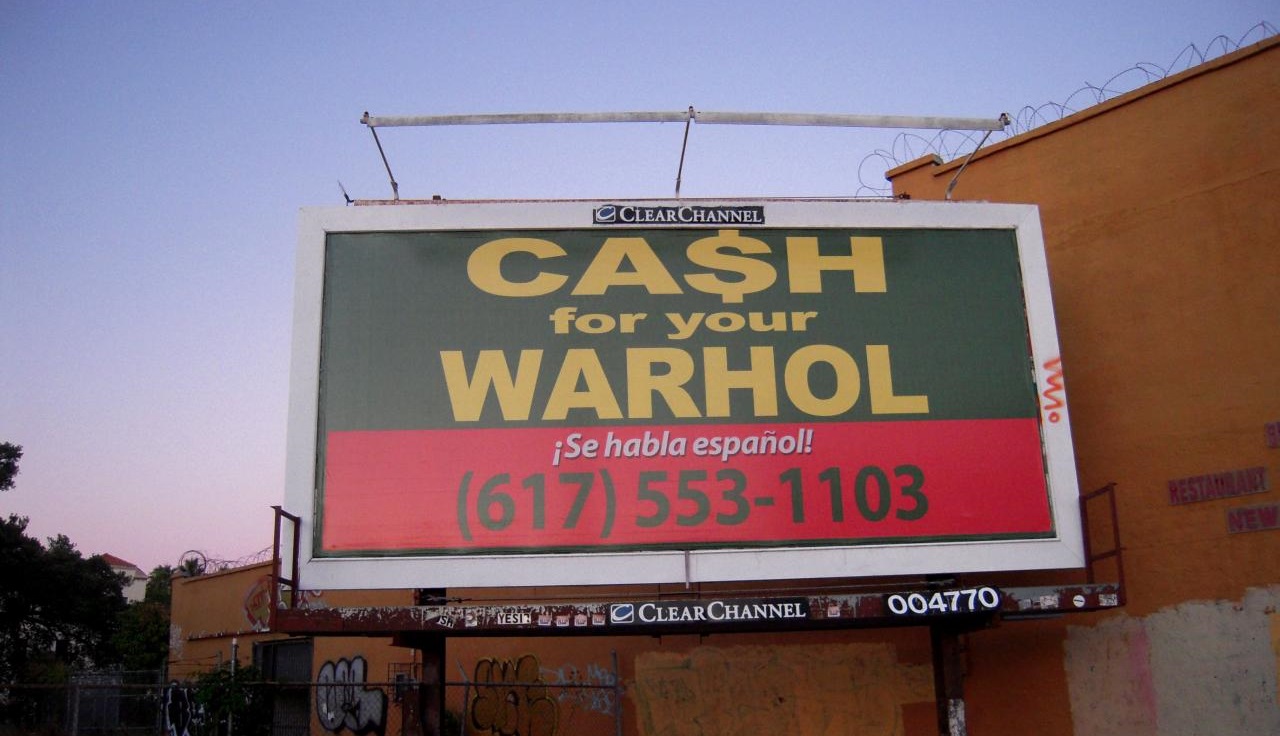
- On the higher floor: this is the long-term market, exchanges are slower and fewer, art collectors keep the artwork longer, sometimes for a lifetime; love for Art is at the forefront; the market is driven by genuine emotion that Art provokes in the viewer, by taste and inclination, by knowledge of the artists’ lives and empathy with the message they seek to pass on. At the same time, more ephemeral, hard-to-predict factors also drive the market, like fashion, rumours, even the players’ perception of the market as a game. Or, if you prefer, the noise coming from the ground floor comes up to the higher levels and affects exchanges here too. Market data is therefore necessarily volatile and cannot be fact-based nor can it be serviced by mathematical models to identify trends or extract stable facts and figures. There are no reliable steady track records that can build up confidence in any given artist – except for the more obvious ones, like Picasso, Andy Warhol – all deceased artists that have taken their place in Art History. I won’t go into their careers but even Picasso and Warhol follow trends and are unpredictable.
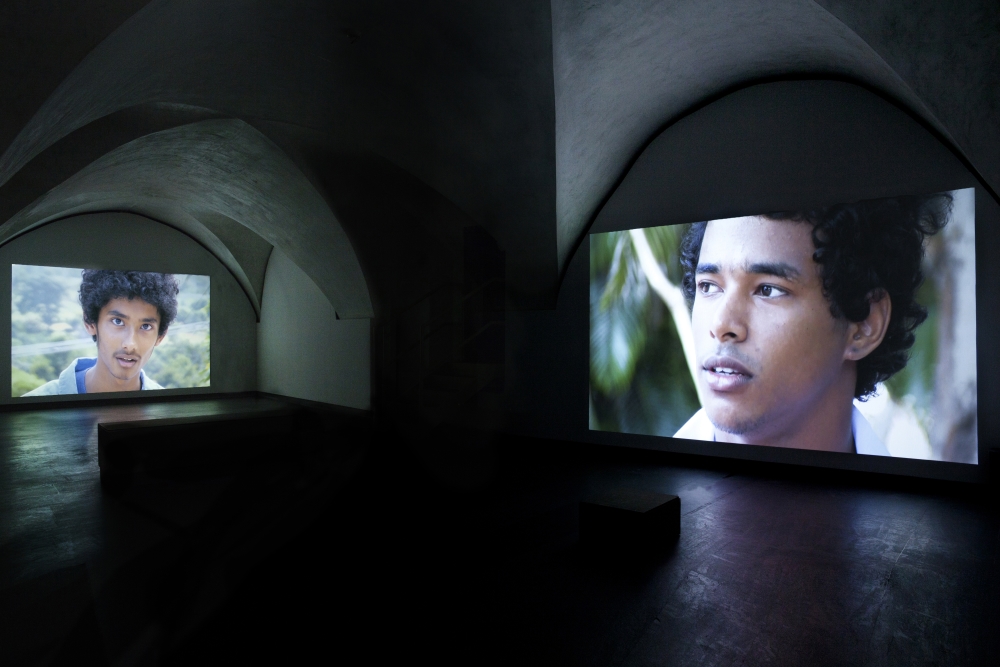
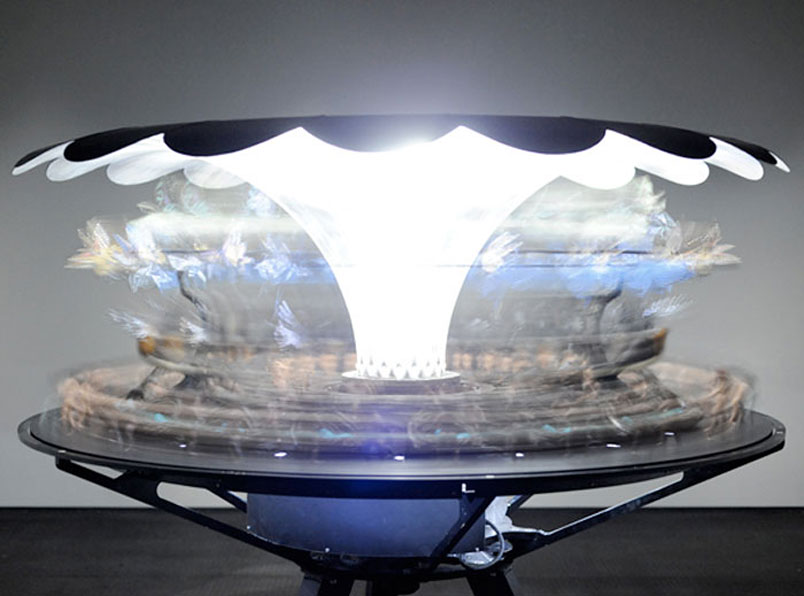 In the photo: The Garden of Unearthly Delights. Animated by a mechanized zoetrope by Mat Collishaw
Is there really a market or is it more the fortuitous encounter of a certain buyer and a certain seller at a given moment…
Yet, that sense of aimlessness may only be temporary and reflect the way the Art market is today. Assuming the present on-going recovery in America will expand to the rest of the world, chances are that the Art market will steadily attract new and bigger audiences; and as the market expands, offering a chance to more new artists to find their audience, chances are that reliable market trends with emerge. And, as the Art market behaves more like a “normal” market, with predictable data and trends, one may expect that a growing number of contemporary artists will find their place in History.
How soon is this likely to happen? Probably much sooner than anyone thinks. All it takes is a prolonged period of prosperity that will lift ever more people in the income brackets where serious investment in Art becomes possible.